Winter habitats – a zoom talk by Des Sussex, Biodiversity and Conservation Manager, 13 December 2023
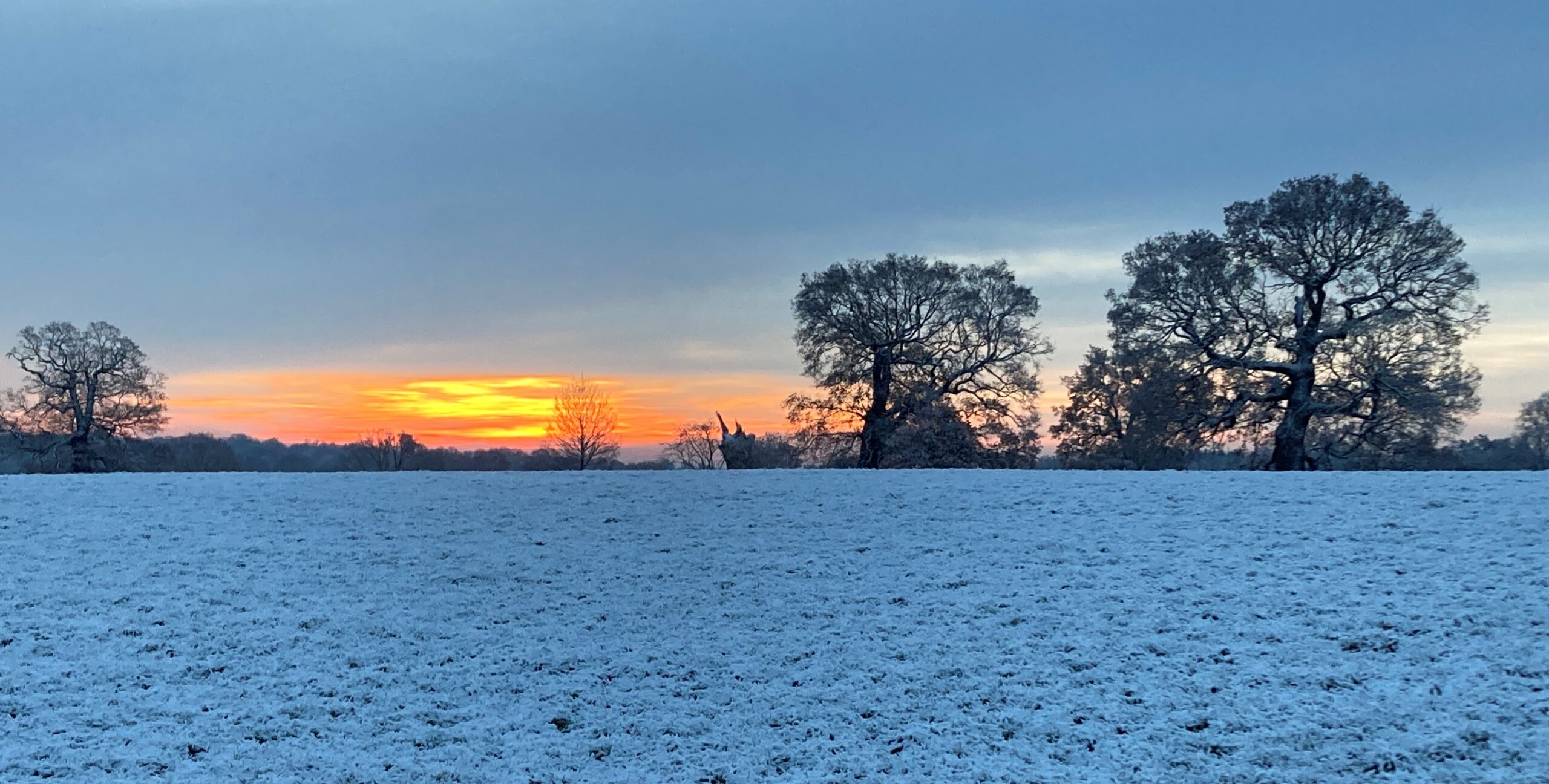
Des gave a fabulous talk about winter habitats on the Windsor Estate. It was lovely to be able to sit back and enjoy a glass of something warming whilst we looked at his beautiful wintry photographs of Windsor Great Park.
Des discussed the below categories, explaining how these species survive in the cold:
- Mammals
- Birds
- Insects
- Plants
The changing climate
We learned that the type of weather we have had over the last couple of years has had an impact not only on the plant-life but also on our wildlife. Migration patterns, for example, can change and the creatures’ habits can change too.
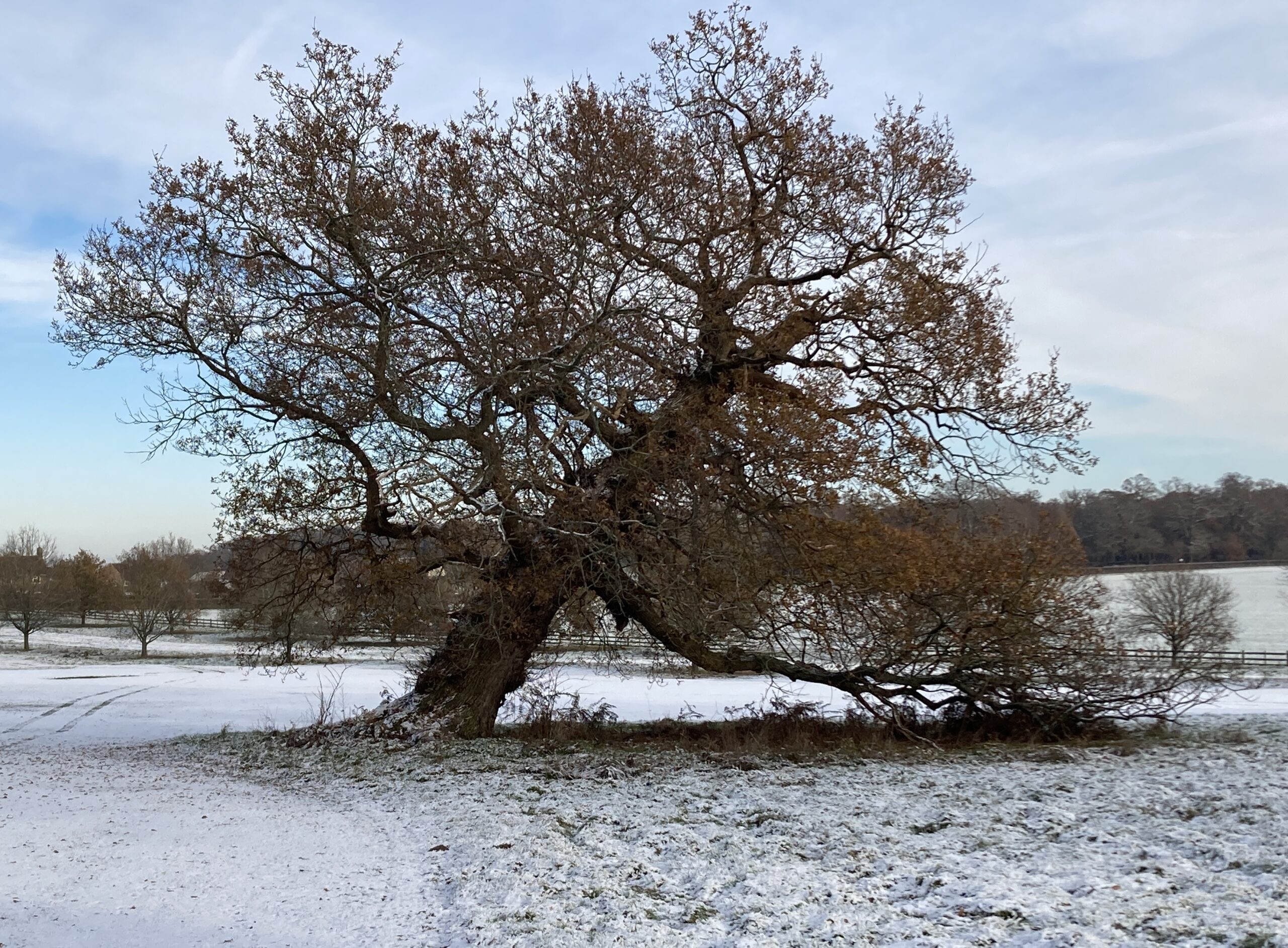
Des explained that the little hedgehog, which normally hibernates over cold winters, might instead hunt for slugs and snails in the milder, wetter winter weather. But the wet and freezing weather can provide opportunities too; the damage the winter weather can do to bark and branches, can also create microhabitats for smaller residents.
Trees are vital habitats in winter
Surviving the winter
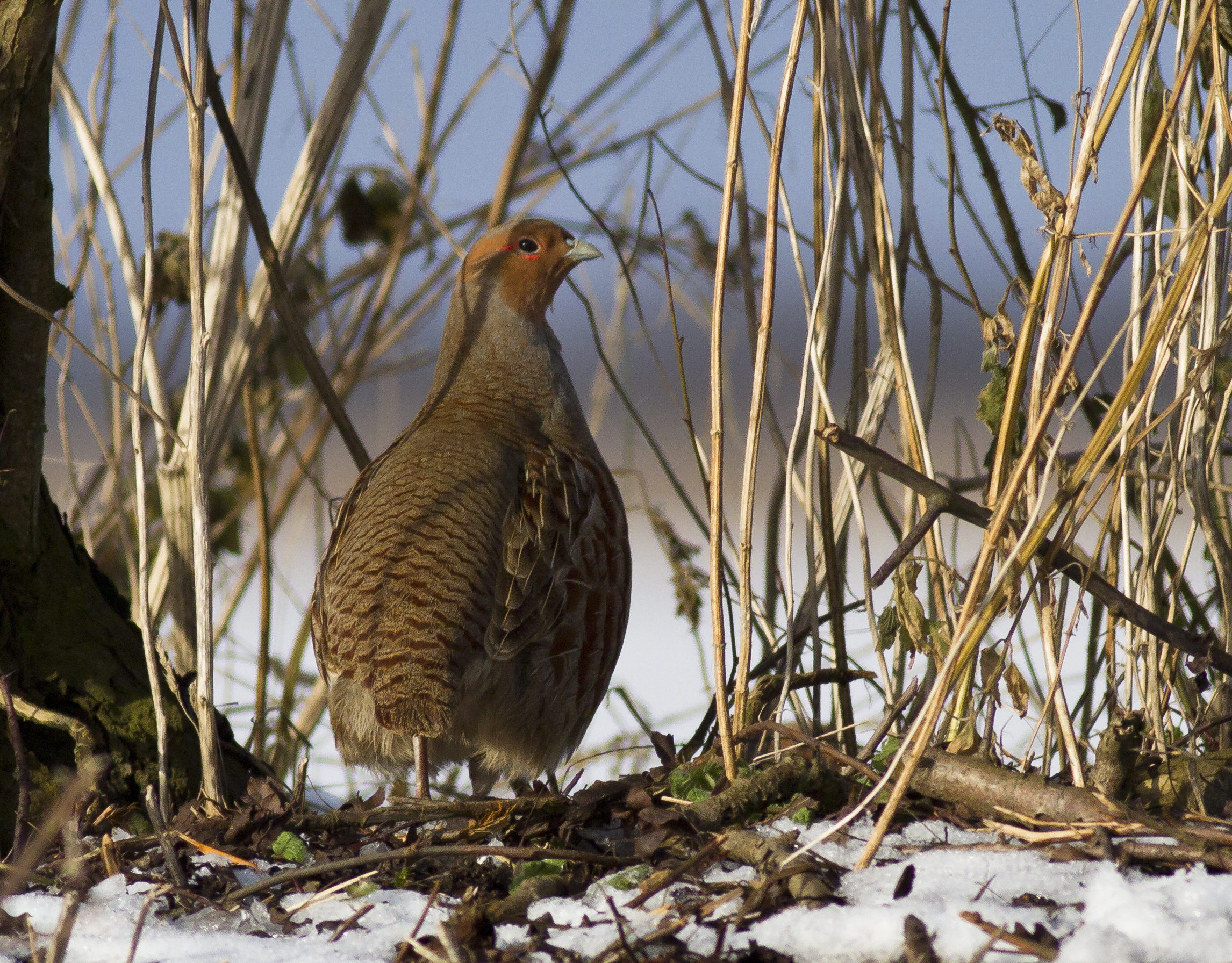
Larger grazing mammals must work hard at finding food and Des showed us some beautiful pictures of the deer in a snowy Windsor Great Park. Birds can also suffer in winter, such as the grey partridge which lives in the farms around Windsor Great Park. Unfortunately, their numbers have declined by over 90 percent in the wider countryside.
The grey partridge will feed on spilled grain, but the change in farming methods has reduced this source of food. Some birds travel long distances to look for food and some important species of waterfowl overwinter in Windsor Great Park.
Hawthorn in hedges or shrubs is a massive food source for creatures such as voles and mice, as well as birds.
Butterflies, of which there are about 25 species in Windsor Great Park, survive as chrysalises, caterpillars or as eggs, although the Red Admiral can overwinter as an adult, sheltering in sheds, tree hollows or dense shrubs such as ivy. Moths are active in the winter too, such as the Common Winter Moth, which likes woodlands.
Bats hibernate in winter; they live on insects which are in short supply during the cold weather. They also need a safe and sheltered roosting places, and new provision has been made for them in Windsor Great Park.
How to help wildlife over winter
Des gave us some tips on how to help the wildlife in our gardens:
- Create or leave gaps under fences and hedges so that hedgehogs can travel in search of food
- Leave hollow stems: insects over winter in them as well as log piles and tree stumps and birds such as the Goldfinch benefit
- Regularly clean any feeding stations; Greenfinches have really declined, and can easily pick up diseases from neglected birdfeeders
Prior to Des’s talk, we were challenged by some Dingbats (word puzzles) provided by Diana Bendall, Chair of The Friends. Some were tricky, and we all had fun trying to work them out.
Our thanks to Des and to Diana for making the evening so informative and so entertaining.
Written by Gill Sloan, Joint Event Co-ordinator for The Friends of The Savill Garden