Winter welly walk in The Savill Garden, 20 January 2024
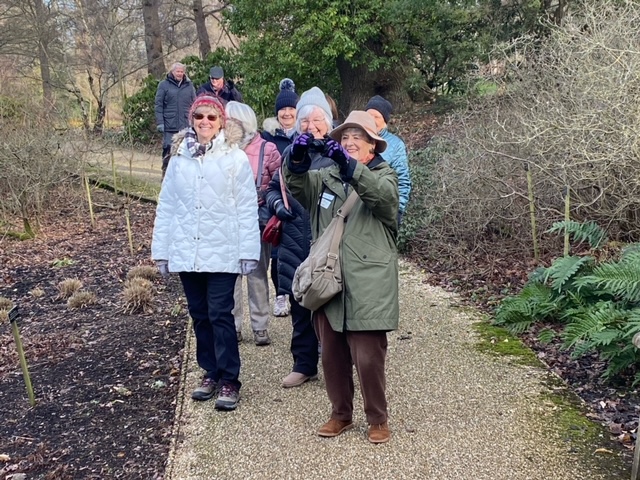
We gathered on what was the 17th annual January Winter Welly Walk in morning sunshine. Five (5) groups of around fifty (50) Friends experienced scents and colour of The Savill Garden, and each group chose their two ‘plants of the day’. Here are some of them, amongst the many wonders in the Garden that day.
All had a wonderful morning, in great company with Friends to kick off a new year in the Garden.
The Winter Garden
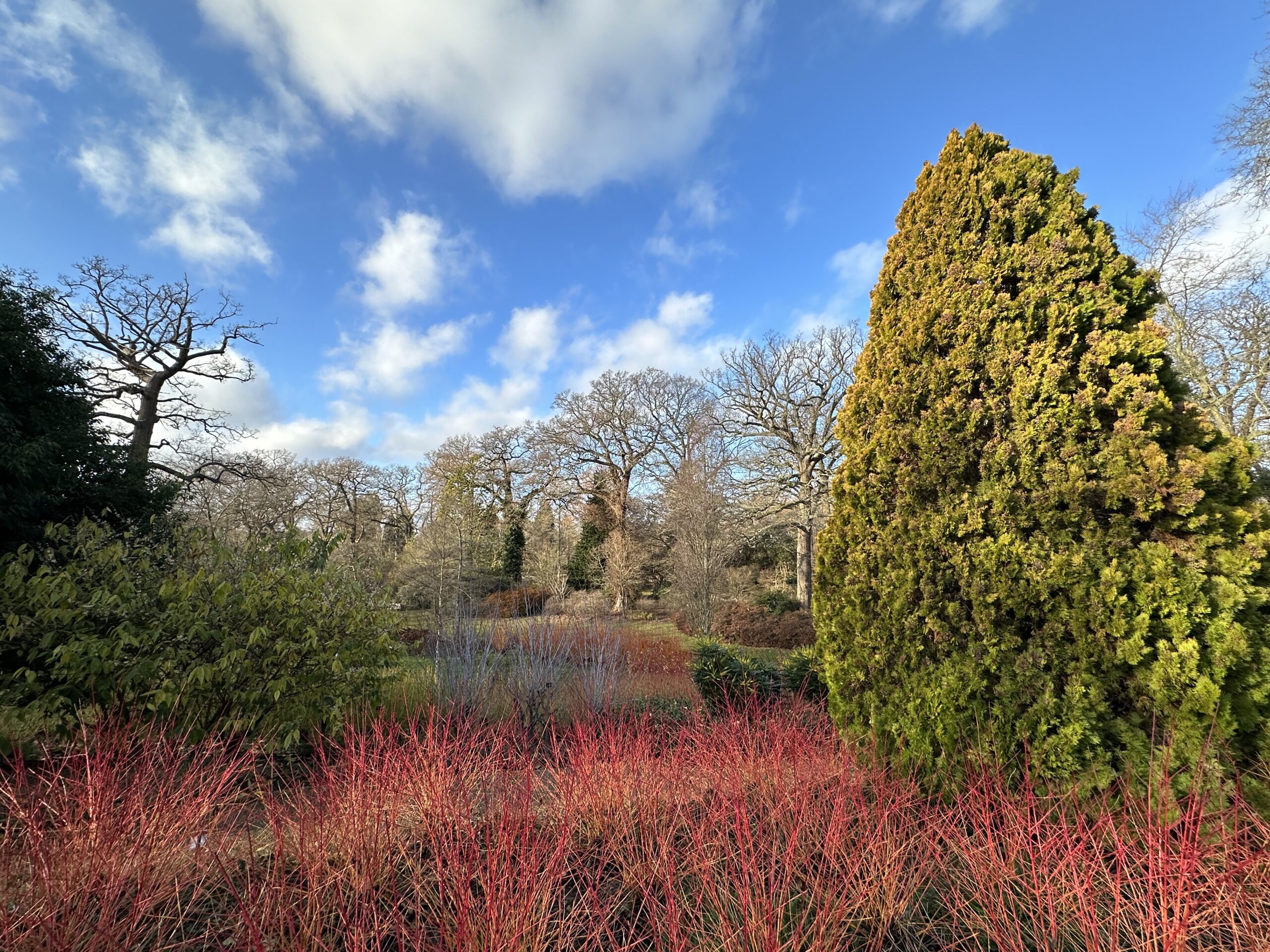
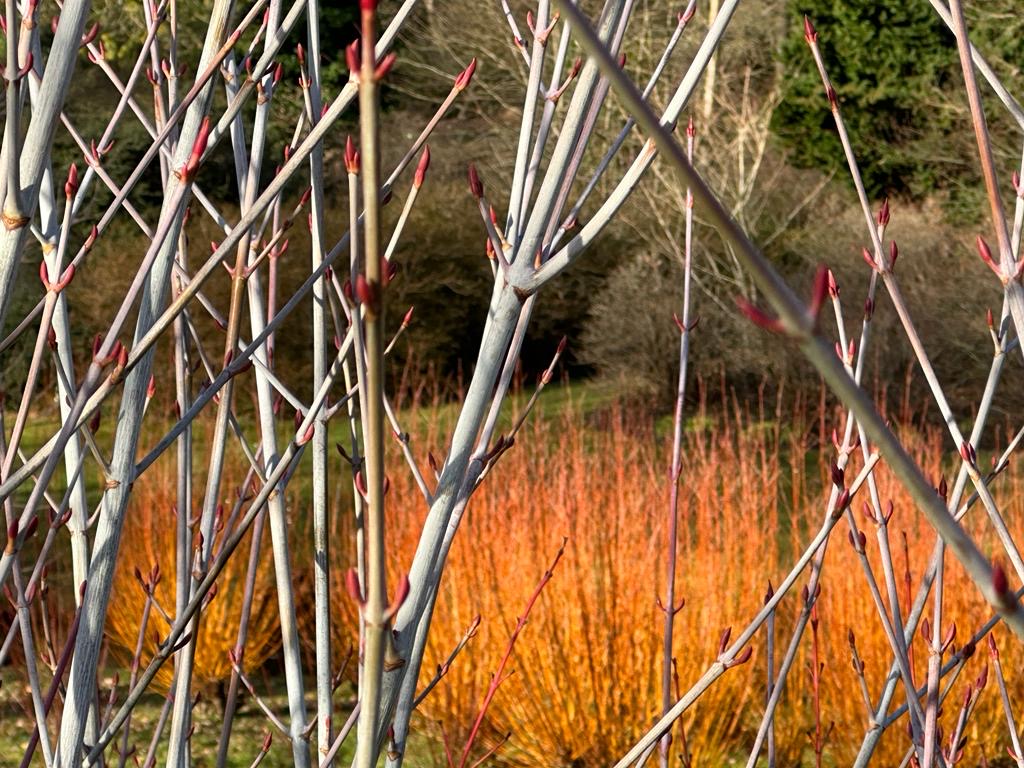
John Anderson, Keeper of the Gardens describes the dogwoods in The Savill in winter as a ‘wow factor.’ The bright orange ‘Anny’s Winter Orange’ is planted in large numbers and looked spectacular.
Just opposite these dogwoods are the coppiced Acer tegmentosum ‘Valley Phantom.’ The white striped bark of the Manchurian maple always looks spectacular at this time of year and were described by former Keeper of the Gardens Mark Flanagan as a choice maple. He named this cultivar after The Valley Gardens.
There were many groups of snowdrops to be spotted around the Garden and those looking particularly good and come out early are planted amongst the Himalayan birch trees near to the winter beds.
Acer tegmentosum ‘Valley Phantom’
Witch hazel
Some groups met at various points in Spring Wood and on Middle Ride where we enjoyed the scents of the witch hazels.
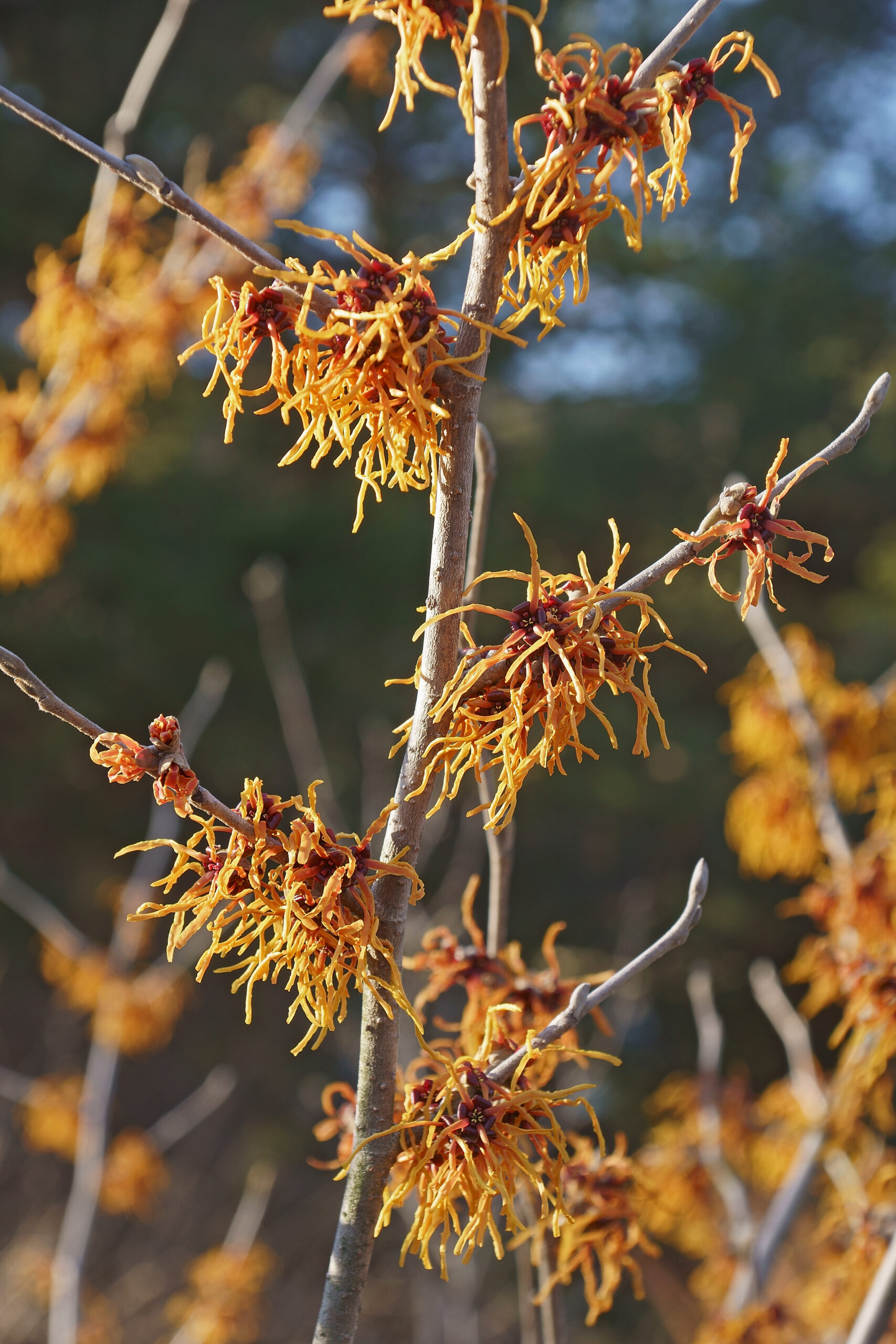
A particularly old and large Chinese witch hazel is to the left of the Middle Bridge and further up is the large upright Hamamelis x intermedia ‘Bernstein’ (meaning amber due to its combination of yellow and red flower) which stopped us in our tracks. This hybrid witch hazel was bred in Germany and has the sweetest smell from the path.
Hamamelis x intermedia ‘Bernstein’
Dry Garden
One of the groups walked to the Dry Garden which provided a view of the architectural stems standing up well to the winter weather. When the Garden is stripped back in winter with little foliage and flowers, the skeletal structures and seedheads here provide welcome interest.
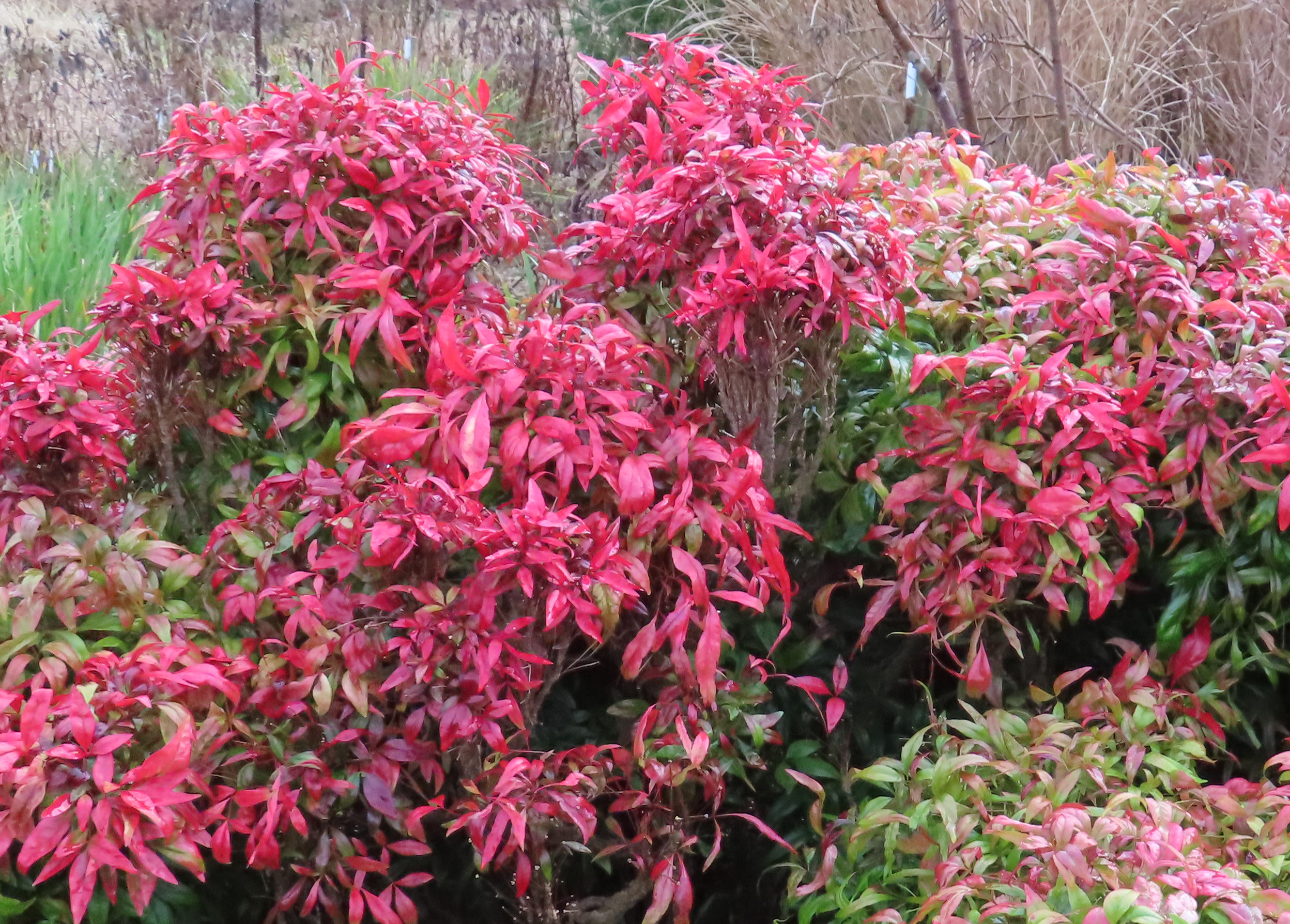
The group did find super foliage though with the sight of the bright red leaves of the Heavenly Bamboo – Nandina domestica ‘Pygmaea.’ A small evergreen shrub guaranteed to form an ever-changing display anywhere in the garden all year round.
Nandina domestica ‘Pygmaea’
The Queen Elizabeth Temperate House
On a cold day it is sometimes a welcome respite to visit the Queen Elizabeth Temperate House with many interesting plants and flowers to be seen in winter months.
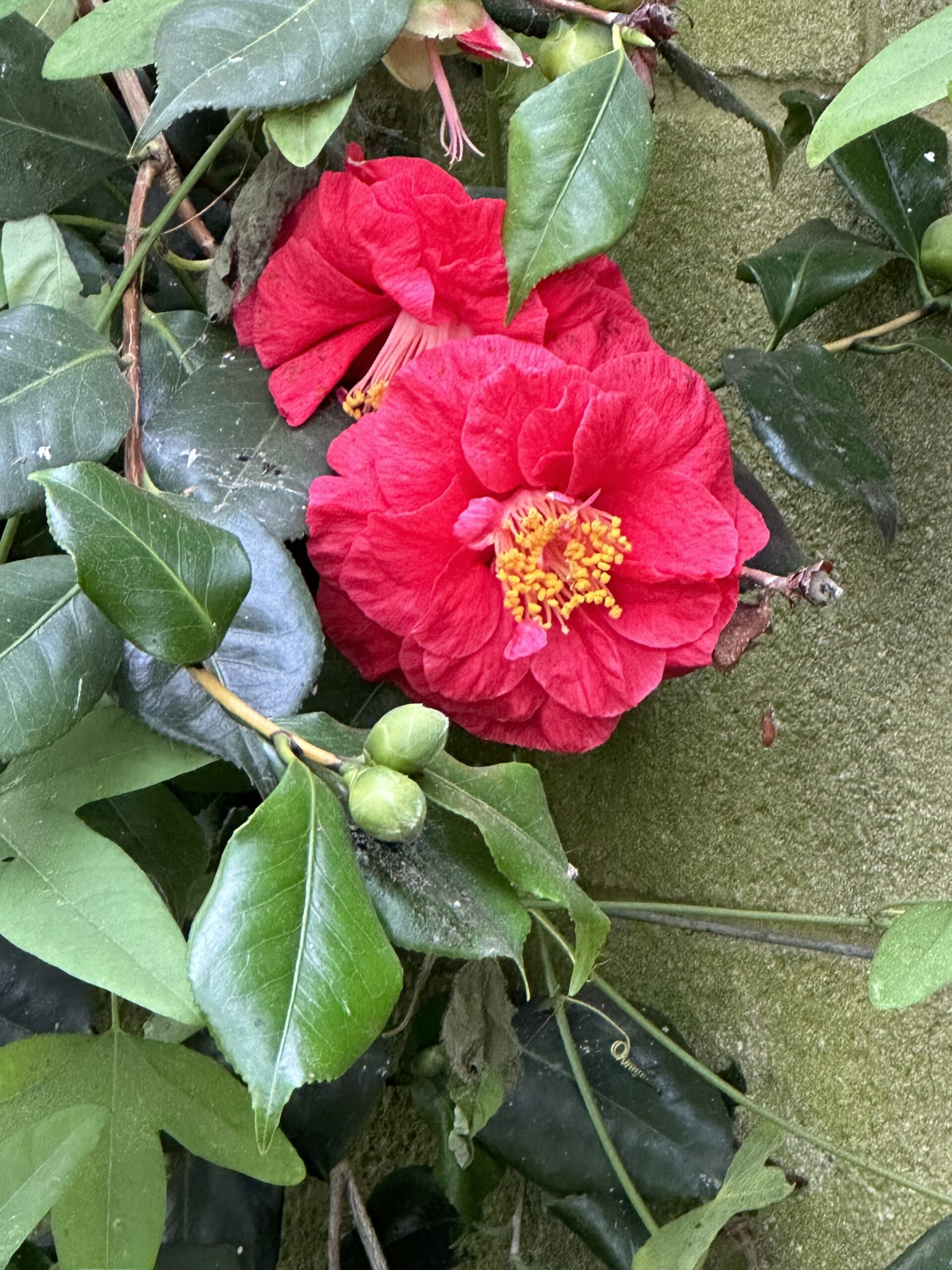
The plant of the day was Camellia ‘Satan’s Robe,’ large deep red flower and spreading plant growing against the wall. It takes its name for its fiery colour and elegant appearance.
Hellebores
The new plantings of Helleborus across many parts of the Garden were a welcome sight and we loved all of them.
How is it possible to choose one of them for our plant of the day? A good contender would be Helleborus x ballardiae ‘Camelot’ in the winter beds near the Visitor Centre, a cultivar of the hybrid named after the so called ‘Queen of Helleborus,’ the late British Horticulturist Helen Ballard.
Friends on the winter welly walk
Plant of the day
On our way back to the Visitor Centre another contender for plant of the day was the stunning scarlet screen of the osiers. These willows frame the Garden from the viewing platform, an iconic view of The Savill Garden
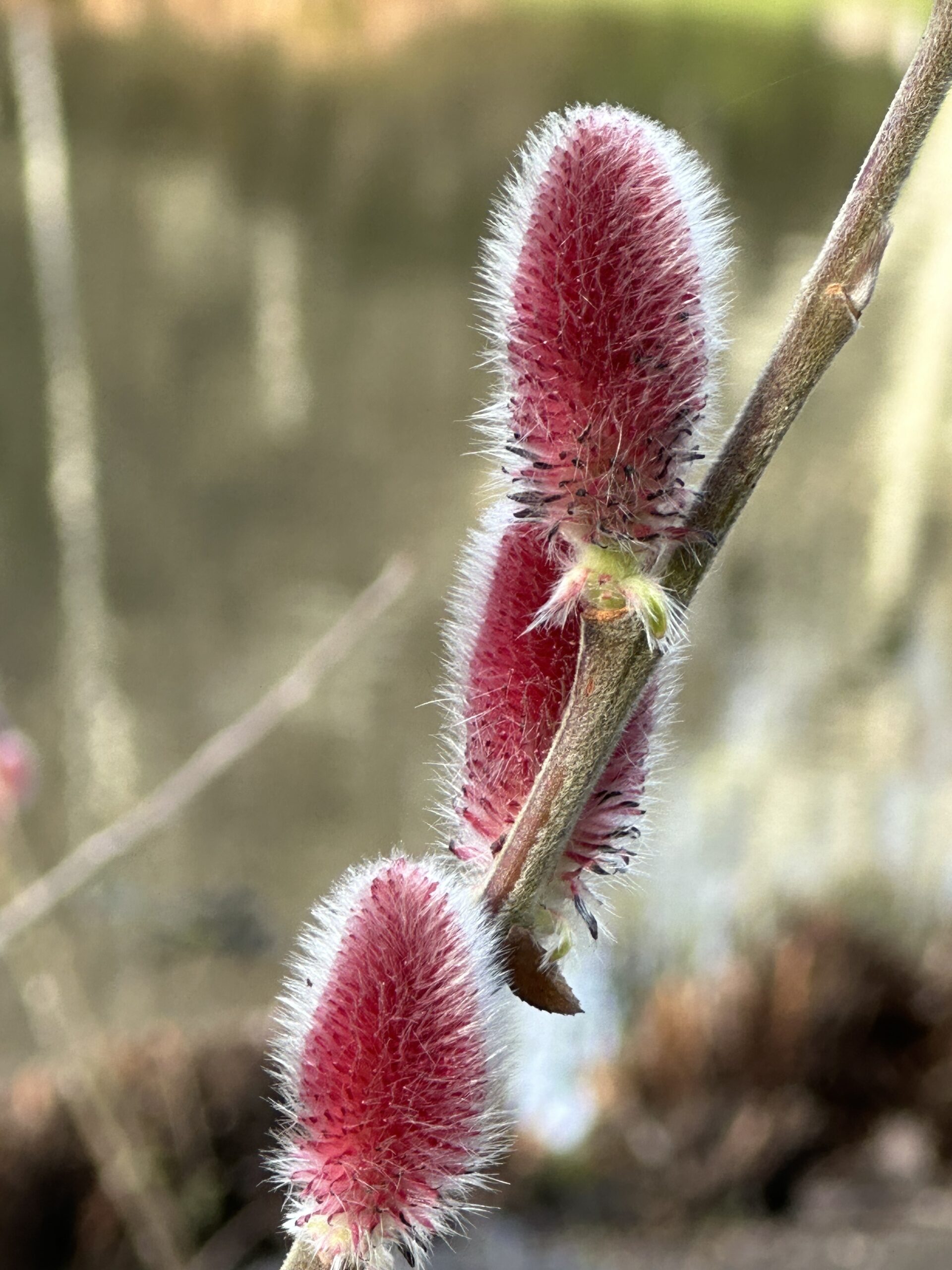
Finally, one of the groups chose a plant we see in flower briefly at this time of year, the Japanese pussy willow. The soft pink catkins of Salix gracilistyla ‘Mount Aso’ are native to and named after one of the largest volcanos in the world, located in southern Japan. This plant is often used in Japanese flower arrangements as a symbol of love.
Salix gracilistyla ‘Mount Aso’
With thanks to everyone who walked this year and especially to the guides on another successful annual winter welly walk event. There was no rain this time and no wellies were required.