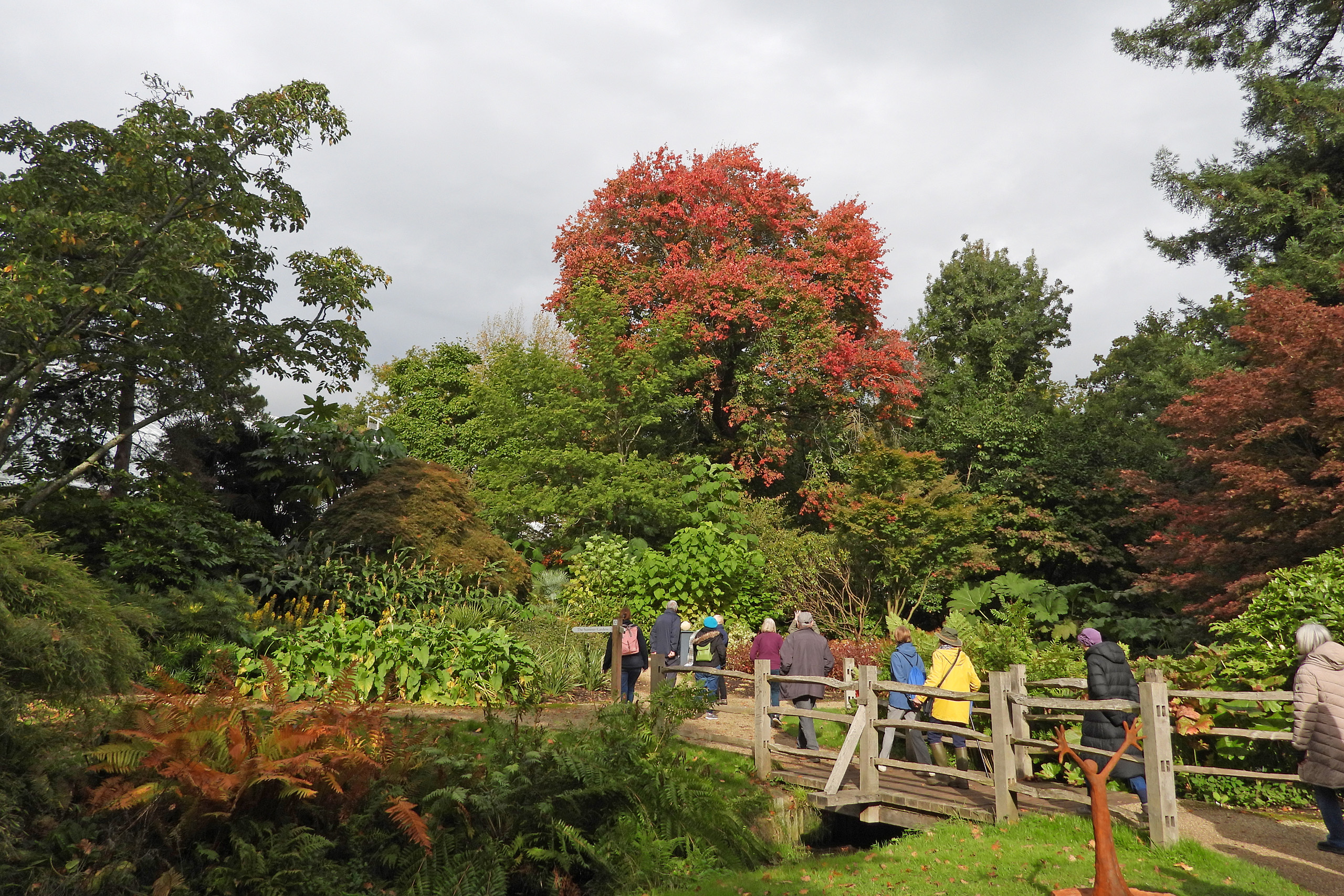
On an overcast Saturday morning in October about 50 Friends gathered at The Savill Garden Visitor Centre entrance ready for the annual Autumn Walk led by the Keeper of The Gardens John Anderson.
As the autumn colour was only just beginning to appear, John decided to lead us through The Savill Garden highlighting recent developments and interesting trees and plants.
Entrance borders
Starting at the map, John explained how the view into the Garden had been opened up to make the entrance more appealing and described the plans for new tree planting on the lawn to the right to provide spring and summer colour, including Prunus x yedoensis, Paulownia kawakamii and Catalpa ovata.
He also mentioned that the Gunnera manicata is now considered to be an invasive species and is subject to the Wildlife & Countryside Act which bans it from sale and cultivation, but it can still be grown as long as it is carefully managed to prevent it spreading beyond the Garden.
Gunnera in The Savill Garden
Legacy planting
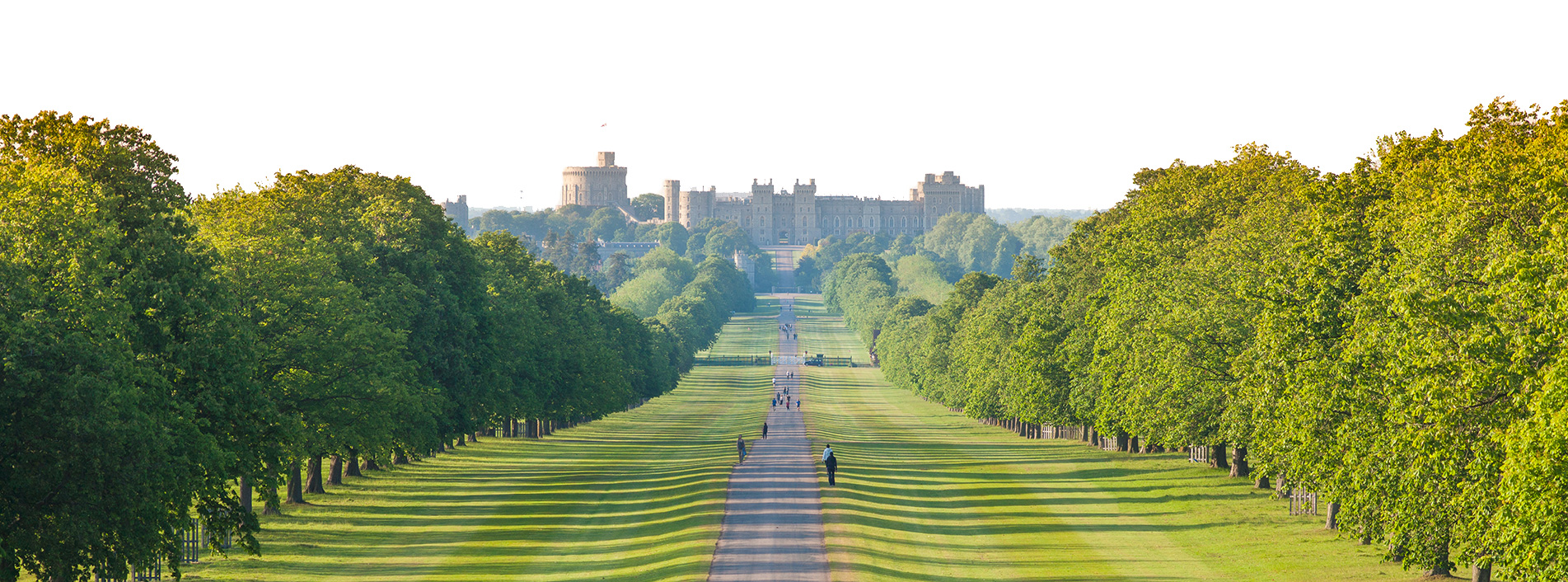
Moving on, we caught a glimpse of a large Liquidambar styraciflua (Sweet Gum) in the distance, the sole remnant of an avenue leading to the Obelisk, the rest of which had been replaced by oaks some years ago. John mentioned other avenues in Windsor Great Park, including his plans to replant The Long Walk, and Queen Anne’s Ride, which is probably the longest avenue of trees in Britain, but is far shorter than the world record of 47km for a tree avenue in China.
We paused at the Carya cathayensis labelled in memory of Mark Flanagan and originally discovered by him and Tony Kirkham in a market in Shanghai. This is a champion tree, one of the few examples of the species in this country.
Our next stop was at the Camellia japonica ‘Her Majesty Queen Elizabeth II’. It was bred in Georgia, United States in the 1950’s, named with Her Majesty’s consent, and gifted to her. It has been propagated by the Gardens Team to ensure its survival as it is the plant in the Garden that is most frequently enquired about. This is a plant to seek out in the spring when it is in flower.
Casson Bridge
Returning to garden improvements, we heard that work on the Casson Bridge should get underway next year, the plan being to use a steel substructure to support a new wooden bridge of the same design, with some sort of non-slip surface. We then saw the recently completed work to raise the crown of a Quercus myrsinifolia (Bamboo Oak) in the Winter Garden, opening up the view and soon to be underplanted with Cyclamen.
New Zealand Garden
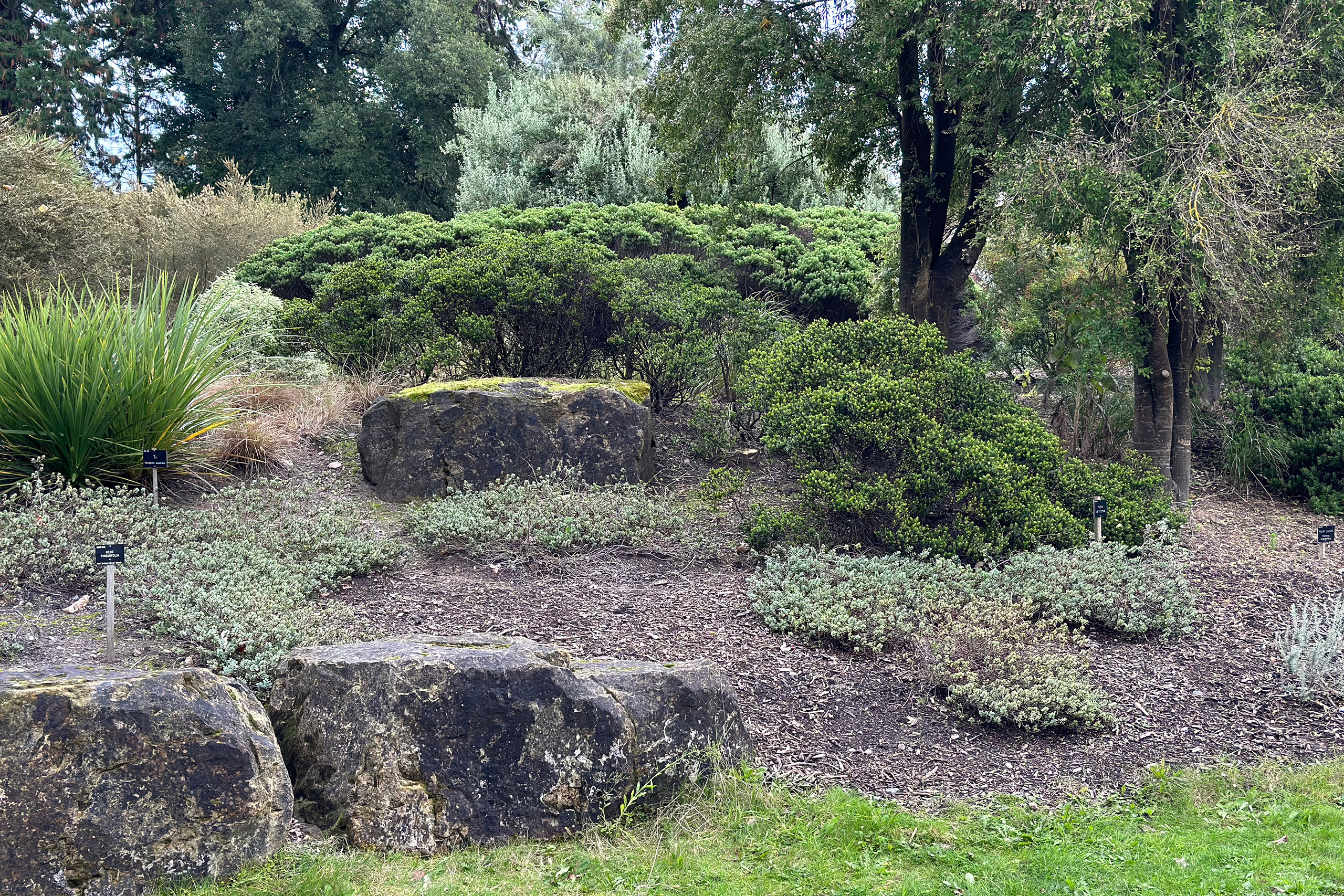
Moving on to the New Zealand Garden, which was badly hit by the extreme frost in 2022, John explained that this area was now getting more attention, with a dedicated gardener, and was responding well to heavy pruning and new planting, including Australasian species such as Pittosporum adaphniphylloides with its distinctive orange berries.
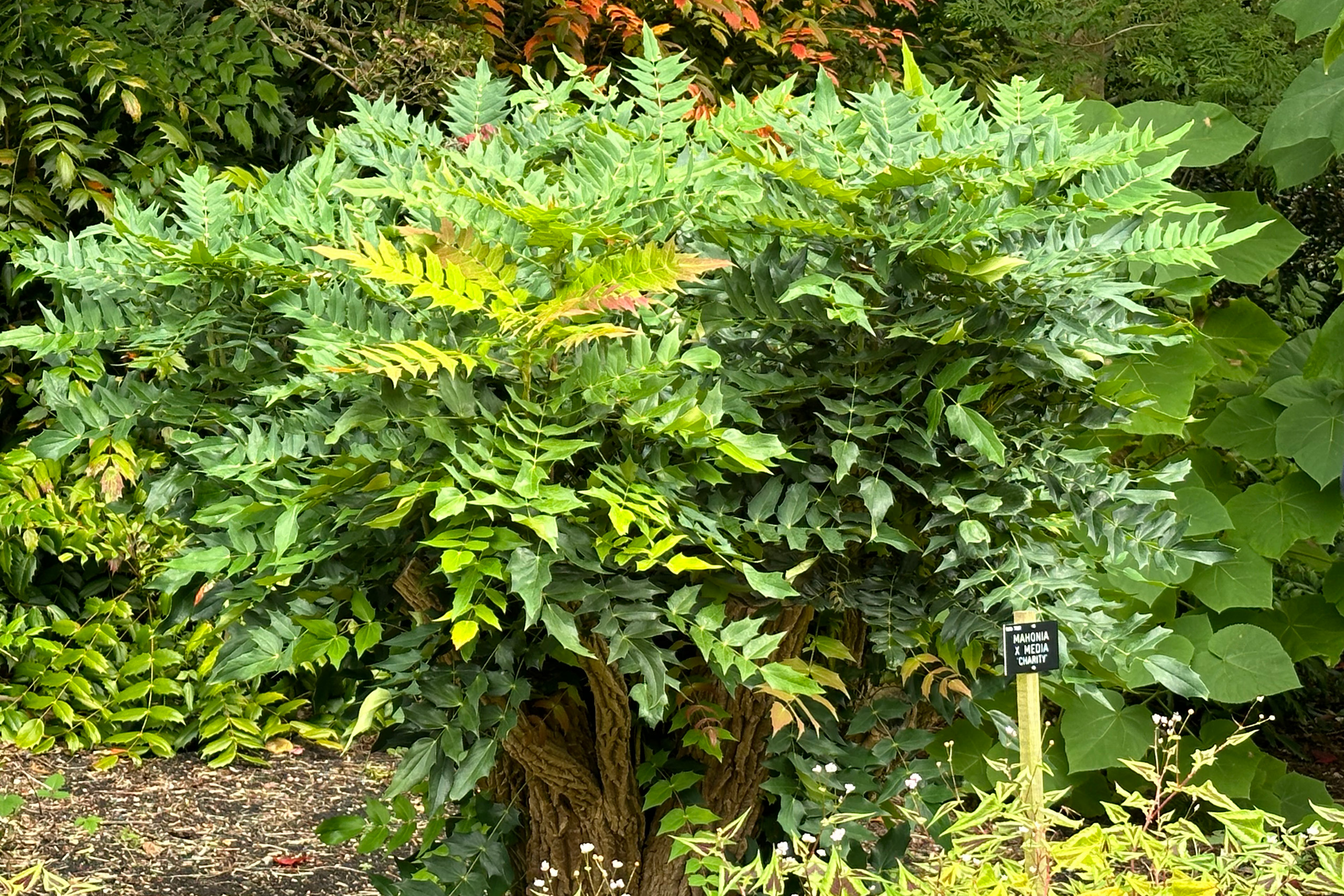
Mahonia x media ‘Charity’
Summer Gardens
Making our way towards the glasshouse, we stopped at a Nyssa sinensis (Chinese Tupelo tree) by the stream which was not showing much colour. John explained that he was hoping to add other varieties that would be more attractive, including the return of ‘Savill Sparkler’.
John also pointed out the Mahonia x media ‘Charity’ in the sub-tropical garden, which has been cut back hard and is recovering well. He explained that he had now confirmed from the archives that this was not the original plant named by Hope Finlay, but that the original could still be found at the top of Summer Wood.
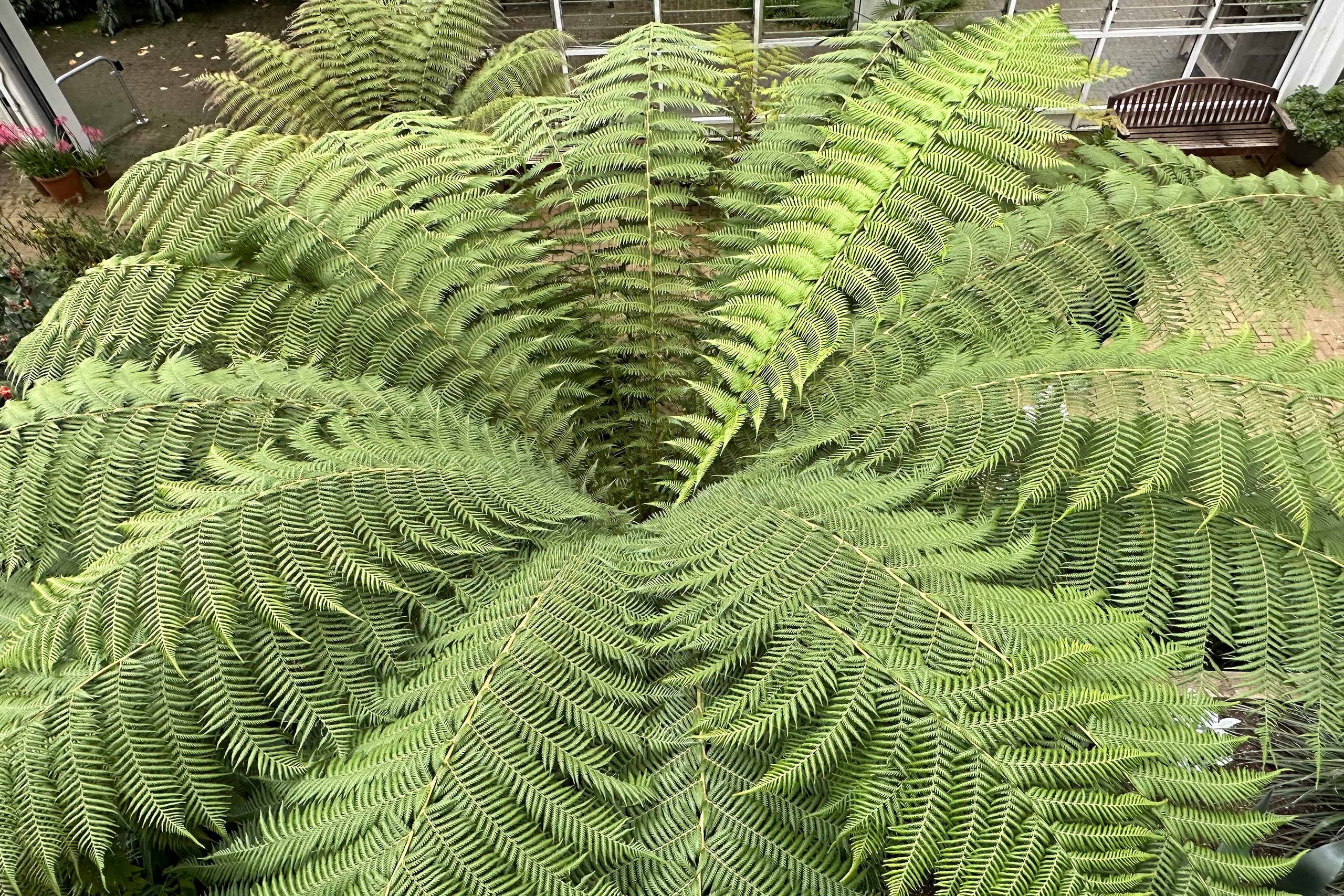
A fern seen from above in The Queen Elizabeth Temperate House
The Queen Elizabeth Temperate House
In the glasshouse, we saw the improvements to the layout and the planting, including a wider range of tree ferns, and a Wollemi pine. These will add height and provide more interest to the view from the gantry.
The Friends are purchasing a support system for the large rear wall so that new climbers can also be planted.
Planting for the future
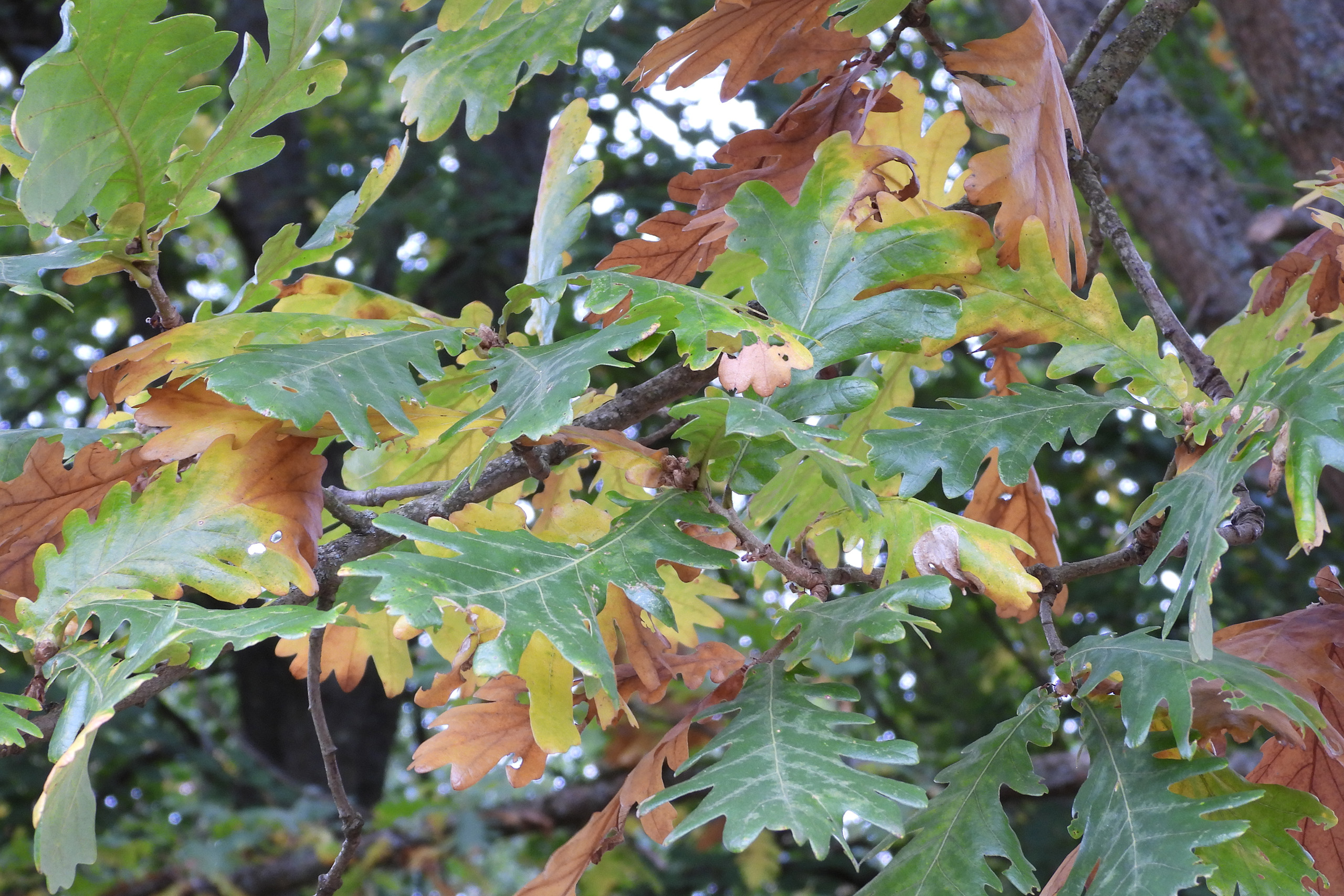
On our way back towards Middle Ride, John highlighted Quercus frainetto, the Hungarian oak, one of his “trees of the future”, which may one day replace Quercus robur in the landscape due to climate change.
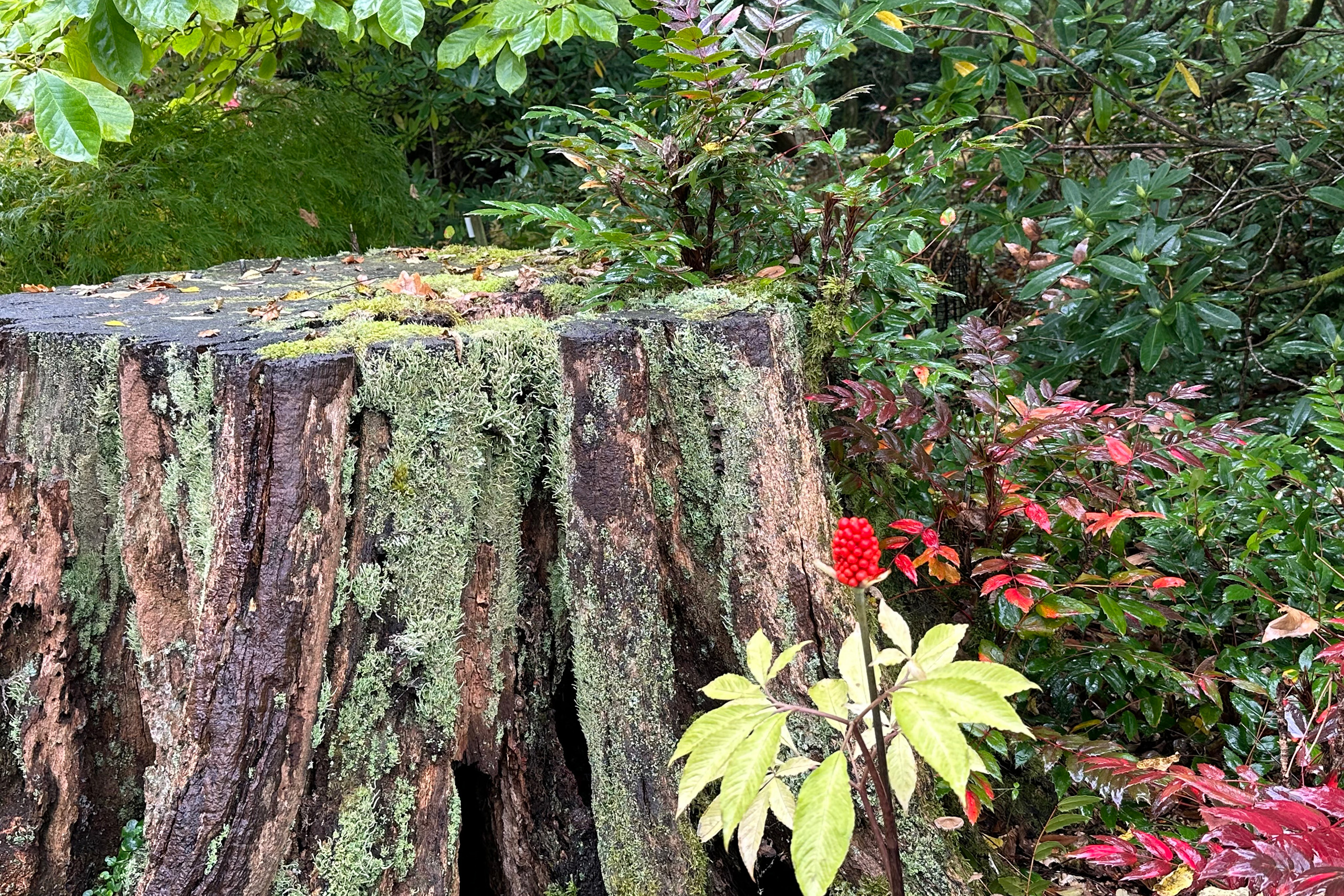
We also marvelled at the way a Mahonia nervosa had started to colonise a tree stump in the Summer Garden. We then thanked John for giving up his Saturday morning and providing such an interesting walk.
A tree stump with Mahonia nervosa