On 13 August 2024, 40 of us visited this hidden gem in Middlesex, near Uxbridge, split into two groups.
Half of us went on a morning tour, and half on the afternoon one, with all of us meeting up at lunch time to enjoy home-made quiche and salads, followed by home-made cake and tea.
Friends at Church Gardens
The history of Church Gardens
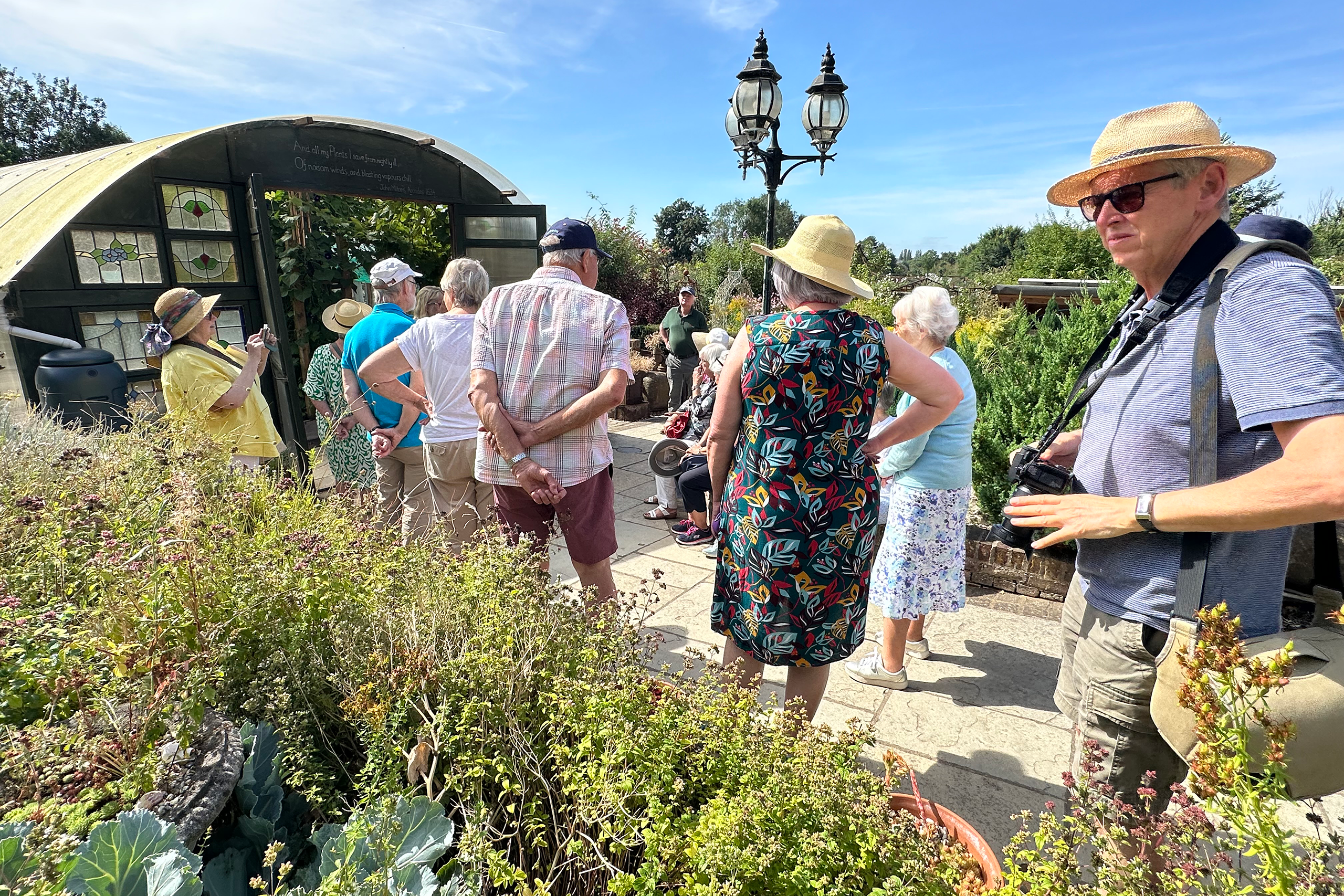
The morning tour started with Kay McHugh, owner and Head Gardener, welcoming us and giving us a brief history of Church Gardens.
It is the remains of the formal walled garden of Harefield Place, once owned by the Countess of Derby. The existing house was once the coach house and stables, and the last occupant was Connie, a daughter of one of the former tenants.
Connie lived there all her life in the same conditions as her family had in the previous century. She had no services in the house which had a mud floor, no running water, and used oil lamps and candles she made herself. She died in October 1970, after which the house was condemned as unfit for human habitation.
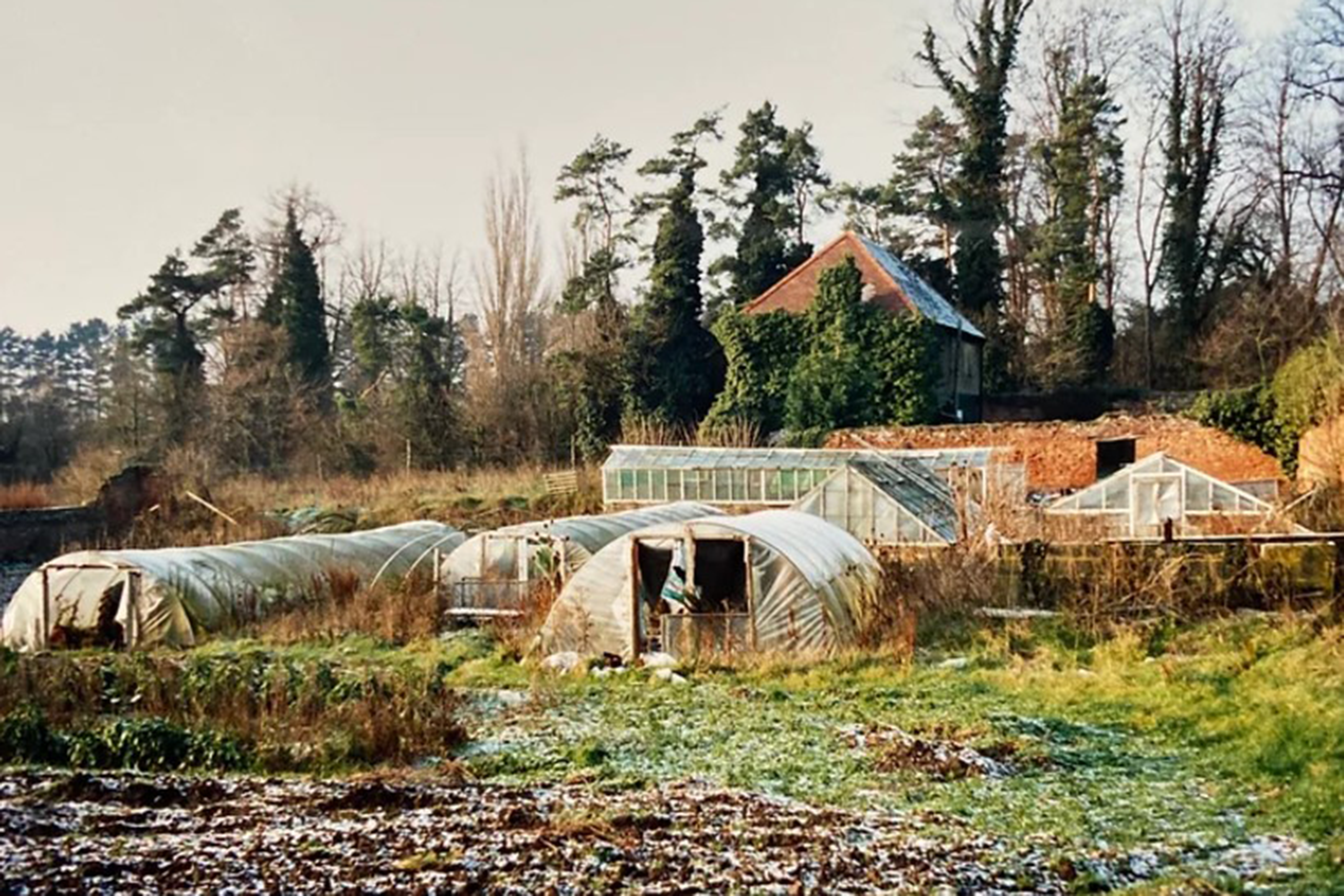
The land had been used for a variety of things, and the walled garden had been ploughed, so no infrastructure remained.
Restoration works
When Kay and her husband, Patrick McHugh, first bought the property in 1996 they had no idea of the extent of their purchase and the gardens were derelict.
The restoration has clearly been a work of love for the family, who all lend a hand in some capacity, although everyone is very clear that Kay does the majority of the work, including planning the next projects. She enthusiastically told us about all that they had done – all by themselves, including building the tearoom and putting in the pond during the Covid lockdown – and all that she was planning to do.
These plans include the restoration of the 17th century wall which is ongoing. The bricks are reclaimed as far as possible, although some have been specially made. We met Chris, the expert bricklayer, the only non-family person working with the McHughs.
Garden features
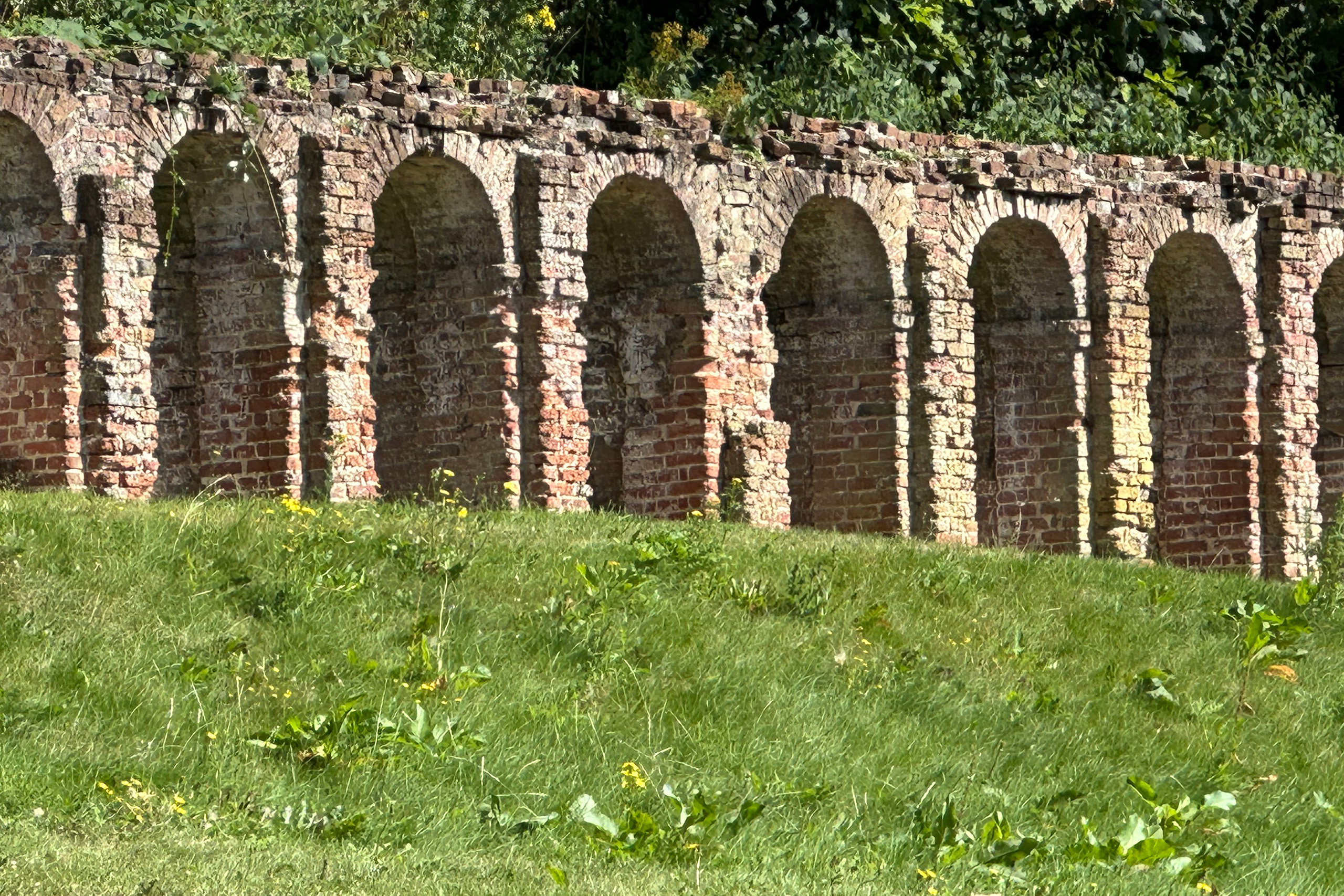
The walled garden itself is set within the larger garden, which is itself walled, and contains the arcaded wall, a possibly unique feature set atop a terrace, where Kay and her family have planted with 28,000 crocus bulbs.
Dotted around the grassed area in front of the terrace are some magnificent cobnut trees which were planted in the 19th century and are themselves of historic importance.
The Arcaded Wall at Church Gardens
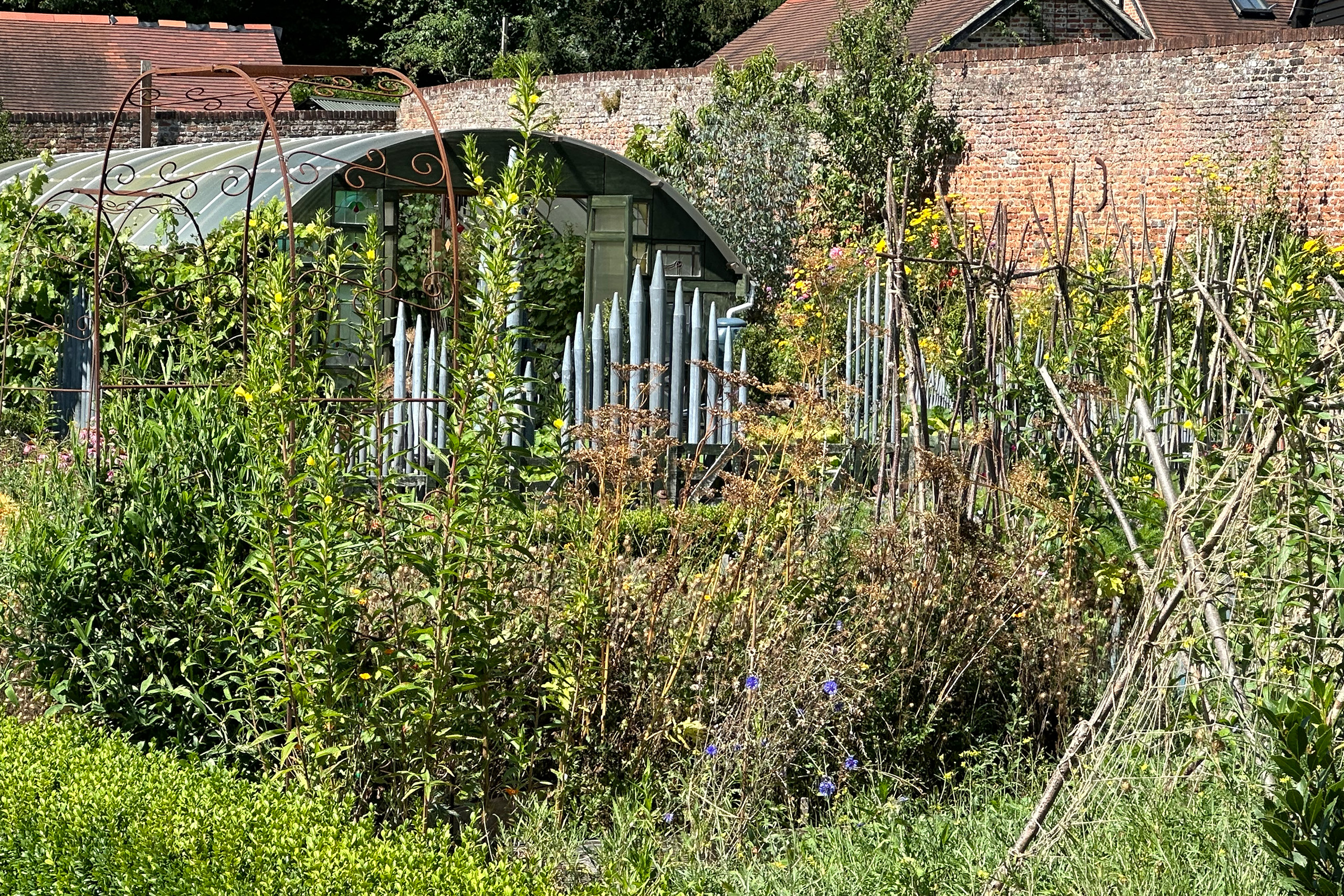
Kay first showed us the polytunnel which has now been turned into a more robust structure using polycarbonate sheeting, with surprisingly beautiful stained-glass windows at either end. Kay is a great believer in recycling, and many of her projects include reclaimed pieces that are being put to good use, although not necessarily what they were originally intended for.
Kay calls the polytunnel the “engine house of the garden”. She sows seeds, starts tubers on, stores harvested crops, and grows a variety of edibles (salads, melons, cape-gooseberries, including 24 varieties of tomatoes) in the beds.
Garden planting
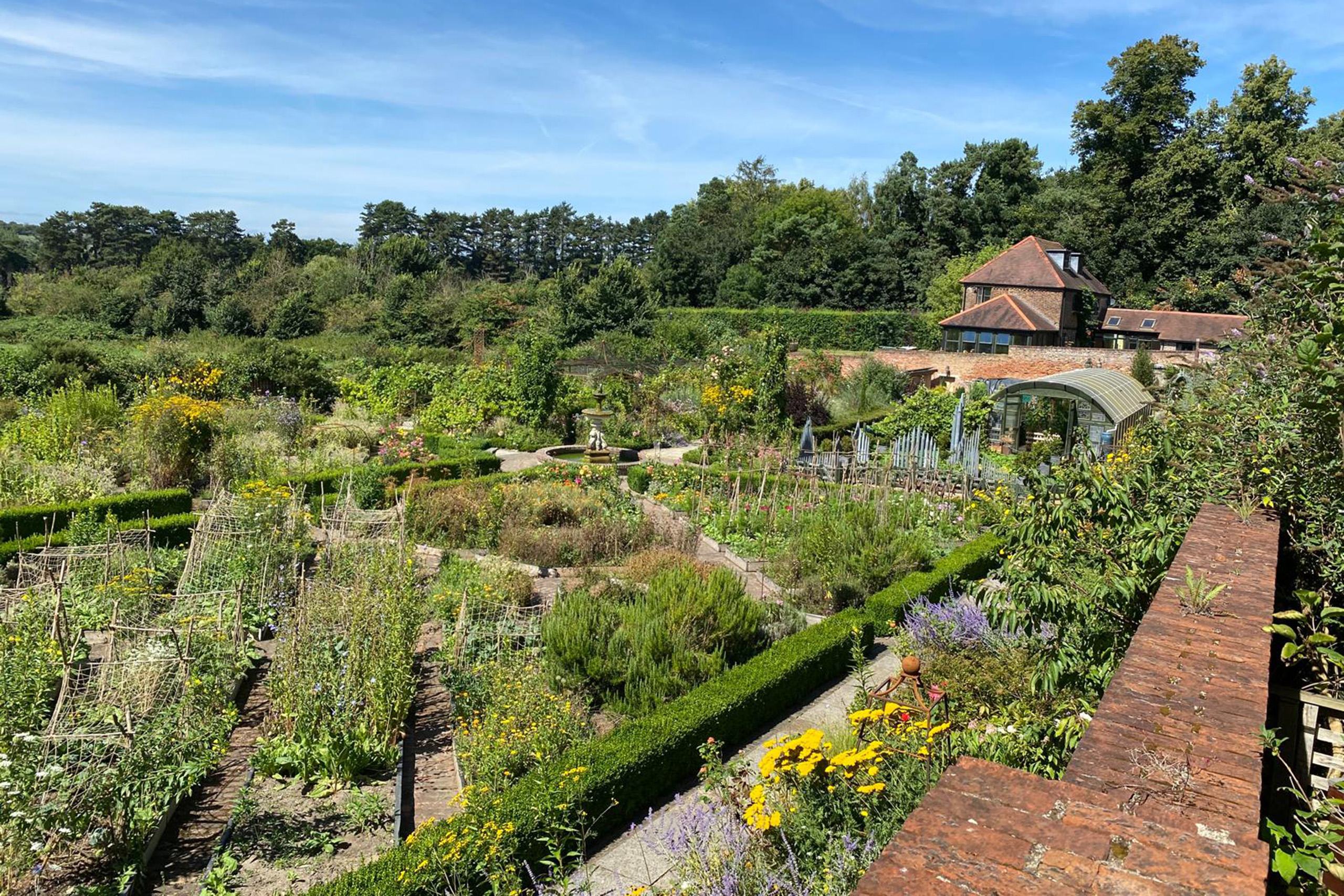
The garden itself is rectangular, and there are herbaceous borders down both the long sides, with the centre being divided into smaller rectangular segments, each with their own purpose.
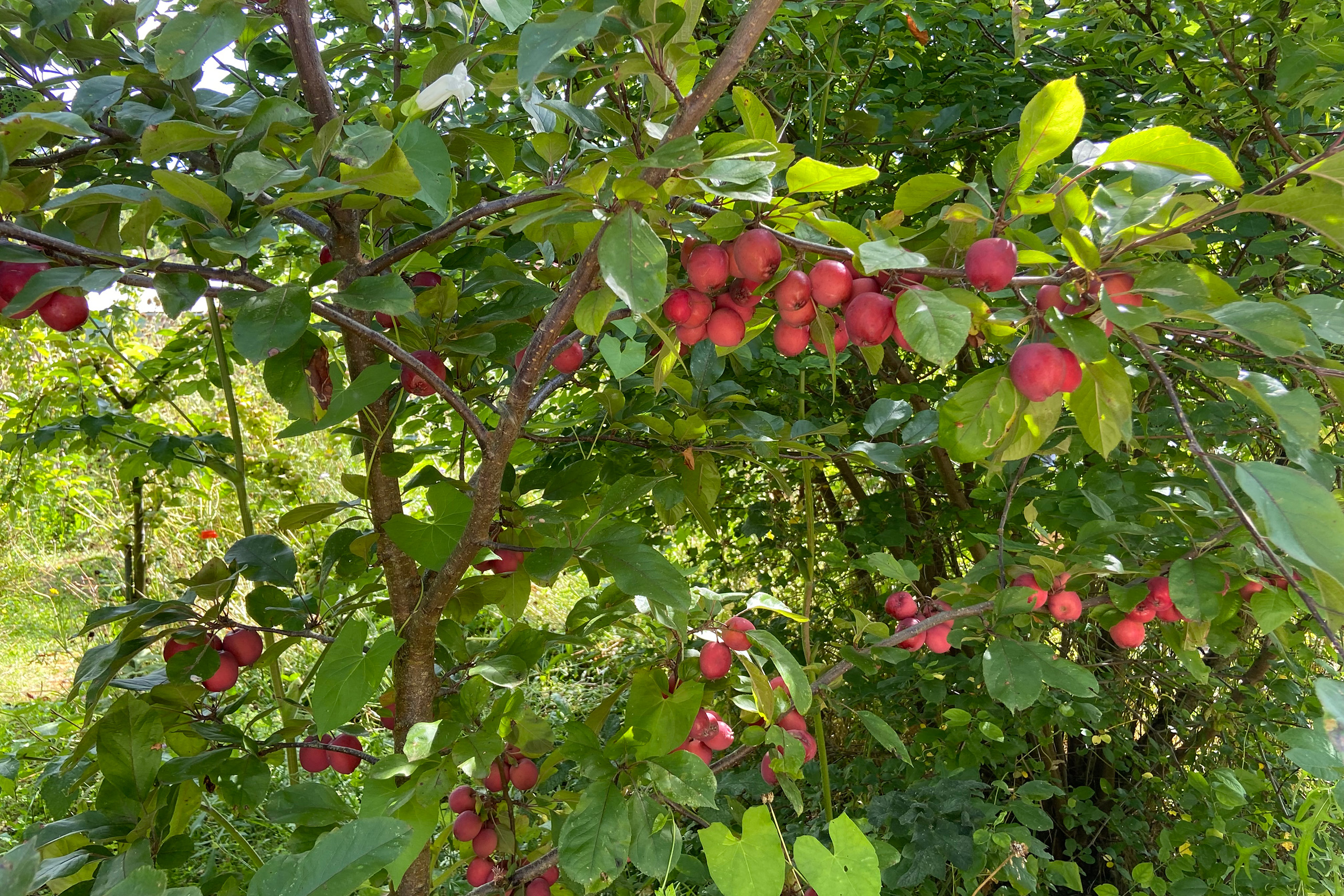
There is an imposing fruit cage in which Kay grows raspberries, strawberries and currants, not to mention a very vigorous hybrid blackberry. Fruit grows elsewhere in the garden too, along the walls and in a mini orchard which at the time of the visit had some beautiful crab-apple trees in full fruit.
Crab apples growing from a tree
Half of the garden is given over to vegetables, some of which we sampled at lunchtime. Although not self-sufficient, the vegetable garden provides a great deal of food for the family. Kay, an organic gardener, incorporates companion planting, so although the vegetable garden had masses of vegetables (potatoes, brassicas, sweetcorn, courgettes, chard, celeriac, endive), it was also a riot of colour with evening primrose, borage, calendula and alyssum exuberantly adding to the immense charm of the garden.
A magnificent vine mount on the top of which was a beautiful “paradise garden” was at the centre of the garden and it was a wonderful place to view the garden as a whole. No space is wasted: underneath the vine mount is a dark room for growing mushrooms.
The pumpkin patch was filled with pumpkin and squash plants (all of which Kay waters by hand) but also included reclaimed and recycled organ pipes from the next-door Parish Church. It made a fabulous feature and shows what a bit of imagination and a desire to not waste anything can do.
A garden feature of reclaimed organ pipes
Finishing the tour
We finished our tour by walking round the perimeter of the whole garden, inspecting newly planted apple trees and hearing about the edible woodland Kay has planted which includes cranberry, raisin tree, pineapple guava, Japanese ginger and pawpaw.
This is a fascinating, welcoming place and with so much to see, it is well worth a visit, not least to discover the next projects Kay is planning.