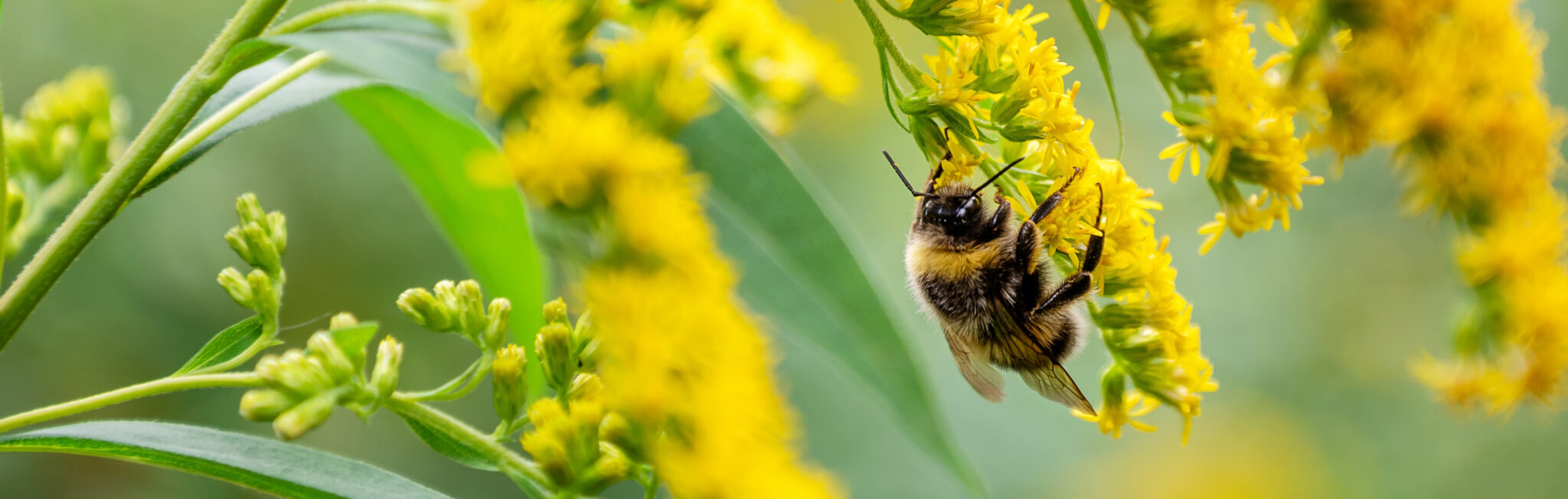
Bumble Bee on Yellow Goldenrod.

Bees

Invertebrates are crucial for pollination, soil health, and food webs, relying on diverse habitats. Grasslands, wood pasture, ponds, and ditches provide essential resources and movement corridors. Effective management – such as sensitive grazing, wetland restoration, and preventing over-shading – maintains resilience and biodiversity. Without these measures, fragmentation leads to decline. Integrated management across the Windsor Estate sustains ecosystems and vital natural services.

Common Carder Bee

The common carder bee is a fluffy, gingery bumble bee that can often be found in gardens and woods, and on farmland and heaths. It is a social bee, nesting in cavities, old birds’ nests and mossy lawns.

Find out more
Common Carder Bee
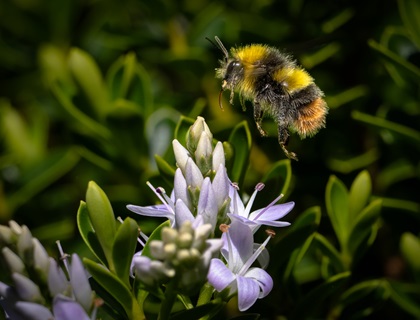
Early Bumble Bee

The Early Bumble Bee has a bright orange tail and lemon-yellow bands on its body. It is very common and can be found in all kinds of habitats in early spring.

Find out more
Early Bumble Bee
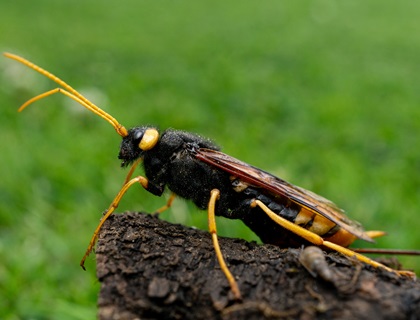
Giant Wood Wasp

The giant horntail is a massive sawfly that is also known as the ‘giant woodwasp’ or ‘greater horntail wasp’. Found near pine woods, or places where pine timbers are used.

Find out more
A closeup image of a giant wood wasp insect with yellow legs standing on the stone
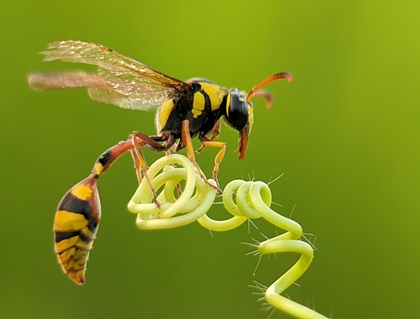
Heath Potter Wasp

The Heath Potter Wasp is a rare, solitary wasp species found primarily on heaths in southern England. Known for its remarkable nest-building skills, the female wasp meticulously crafts a small, spherical pot from mud to house her young.

Find out more
Heath Potter Wasp
Ruby-tailed Wasp

If seen up close, the glittering Ruby-tailed wasp is, perhaps, one of the UK’s most beautiful insects. A solitary wasp, it can be found in sandy and rocky habitats like quarries, outcrops and walls.

Find out more
A closeup shot of a ruby tail wasp on a rock surface
Sabre Wasp

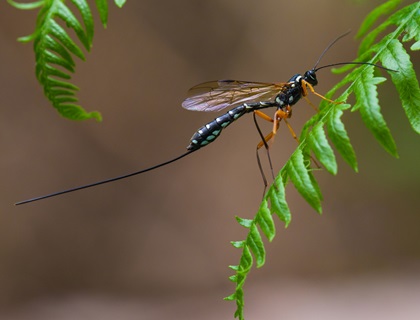
The Sabre Wasp, also known as the Giant Ichneumon Wasp, is the largest ichneumon wasp found in the UK. Despite its fearsome appearance and long, needle-like ovipositor, it is harmless to humans and does not sting. Maintaining dead wood and standing dead timber in woodlands is crucial for the survival of the Sabre Wasp.

Find out more
Sabre wasp resting on green bracken
White-tailed Bumble Bee

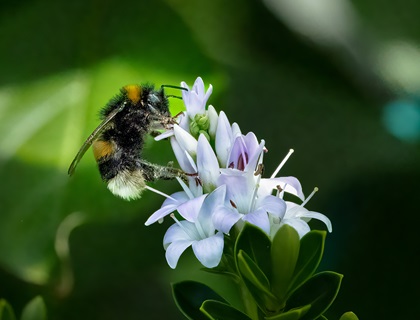
The white-tailed bumblebee is black-and-yellow bee with a bright white ‘tail’. A social bumble bee, it can be found nesting in gardens and woods, and on farmland and heaths.

Find out more
White-tailed Bumble Bee
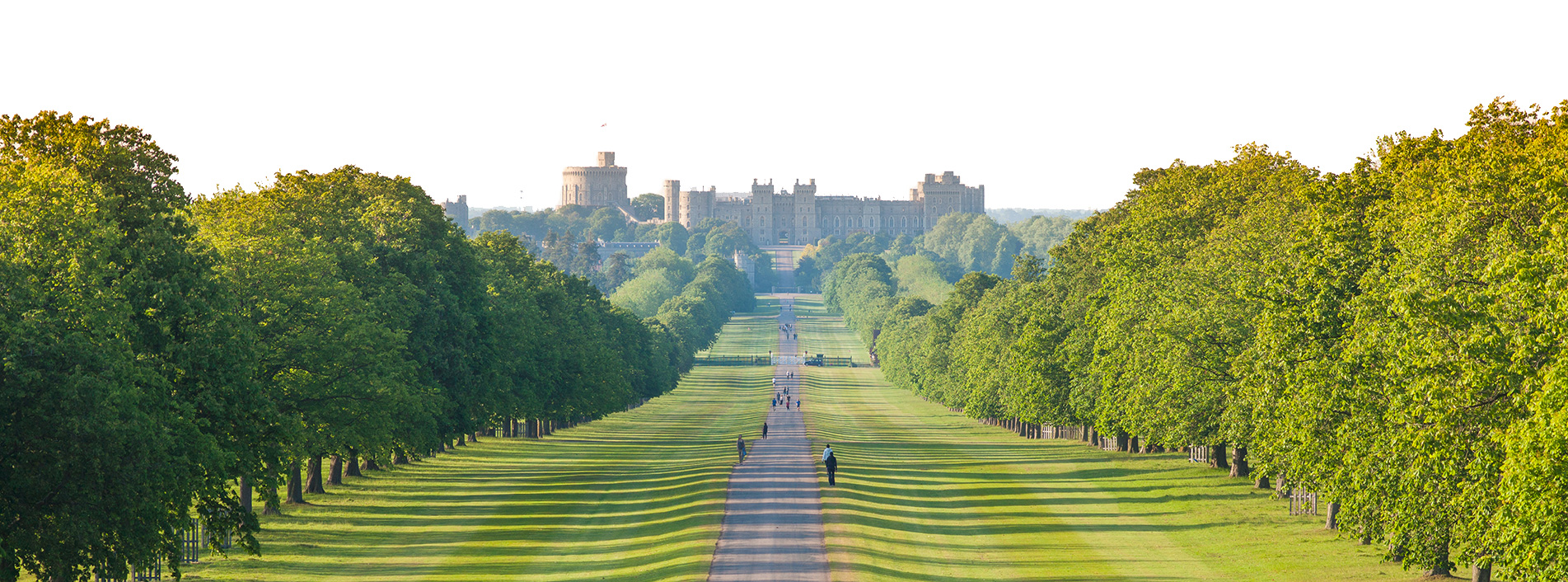
Windsor Great Park
Windsor Great Park

More from us

News & Articles

FAQs

Careers

Get in touch

Contact us

Newsletter

Sign up to our newsletter

The Crown Estate logo.

User support

Accessibility

Site map

Our policies

Terms of use

Privacy statement

Cookies statement

Modern slavery act

Freedom of information

Designed by Bewonder*