Common Blue butterfly.

Butterflies & moths

Butterflies are not only beautiful but also vital to the UK’s natural environment. Across the Windsor Estate, the rich variety of habitats, landscapes, and land uses supports an impressive array of butterflies and moths.

Thirty-three species of butterfly and 600 species of moth have been recorded. Their numbers and diversity serve as indicators of environmental health. Discover more about these fascinating species below.

Burnet moth

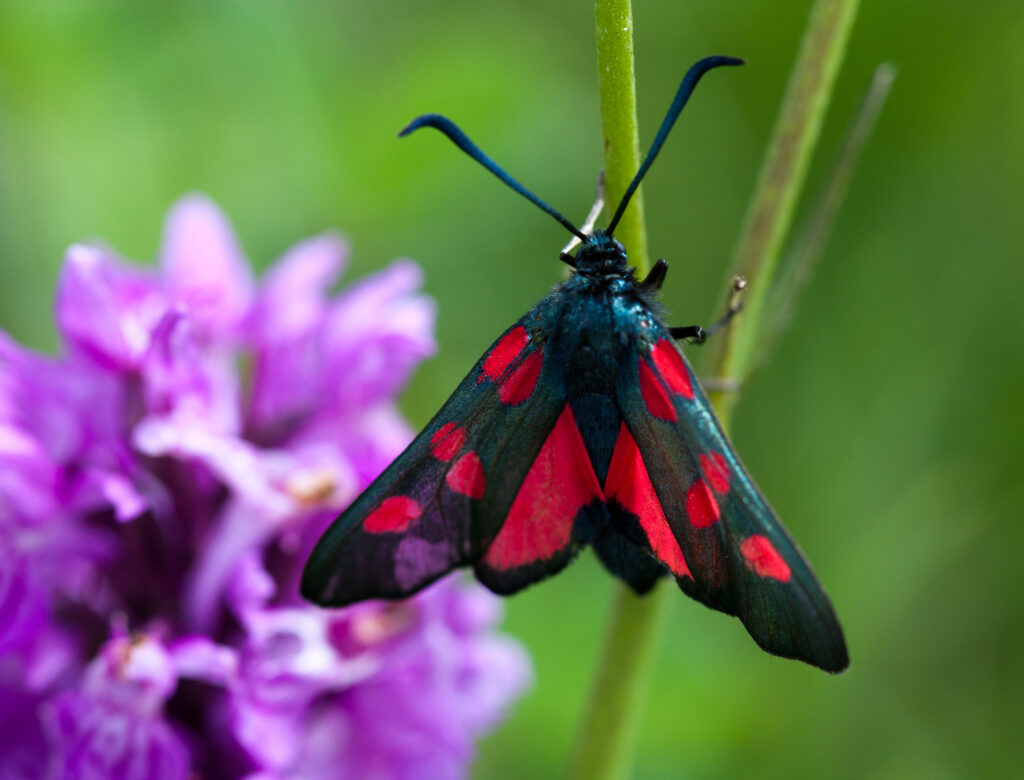
The burnet moth is a striking day-flying moth, easily recognised by its metallic black wings with vivid red spots. Common in wildflower-rich grasslands such as Stag Meadow and the Cavalry Exercise Grounds, it feeds on nectar from knapweed and thistles. Its caterpillars feed on bird’s-foot trefoil and overwinter in cocoons before emerging in summer.

Find out more
Five spot Burnet Moth. 420 x 320
Cinnabar moth

The cinnabar moth is a striking, day-flying species with bold black and red markings, often seen in grasslands and meadows. Its caterpillars are bright orange and black, feeding on ragwort, which makes them toxic to predators. Ragwort itself is harmful to livestock, particularly when it becomes mixed into hay. On the Estate, we have a programme in place to control this plant within the Park.

Find out more
Cinnabar moth.
Clouded Yellow butterfly

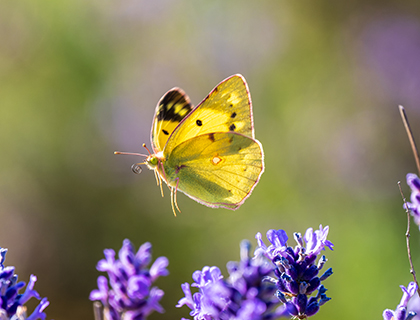
The Clouded Yellow is one of the truly migratory European butterflies and is a visitor to Windsor Great Park. They can be seen in any habitat, but congregate in flowery places.

Find out more
Clouded Yellow butterfly in flight.
Common Blue

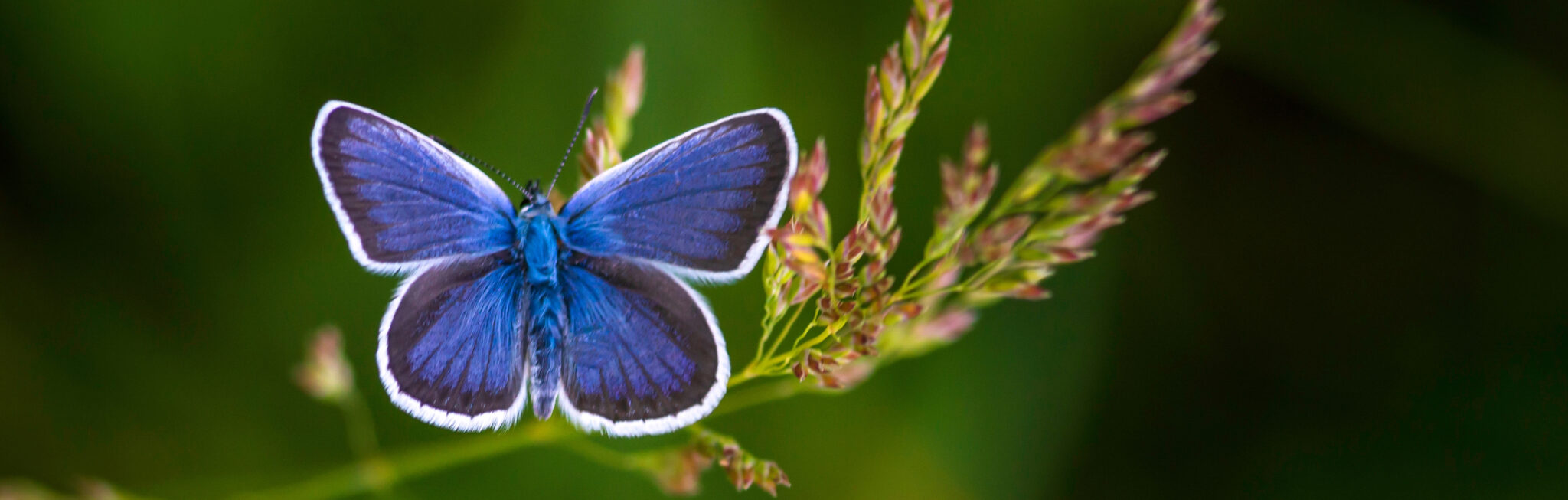
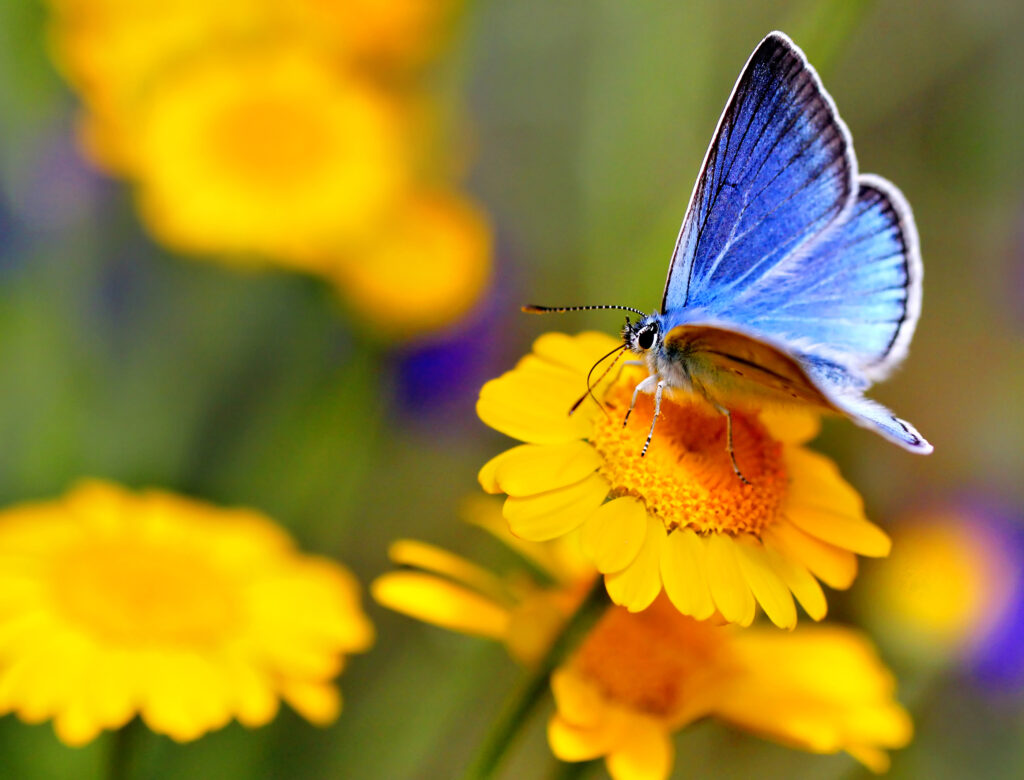
The common blue butterfly is found in many of the flowery grasslands in Windsor Great Park, such as the Picnic Field car park by Queen Anne’s Ride. Males have vivid blue wings, while females are more brown with a blue dusting. They lay their eggs on bird’s-foot trefoil, and the caterpillars feed on legumes, supporting pollinators and biodiversity.

Find out more
Common Blue butterfly.
Grayling butterfly

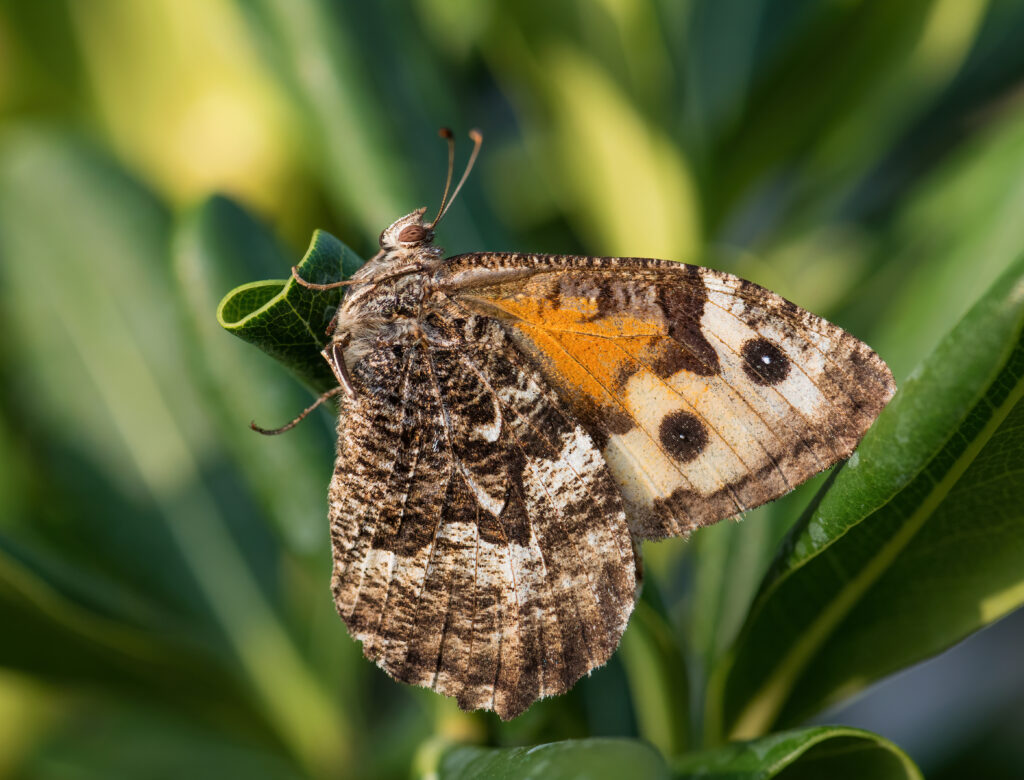
The grayling butterfly is a well-camouflaged species found in dry grasslands in Swinley Forest, Swinley Park and Buttersteep. Its mottled brown wings blend perfectly with bare ground, helping it avoid predators. Active in summer, it often rests with wings closed. The species is one of our conservation priorities.

Find out more
Grayling butterfly.
Green Hairstreak butterfly

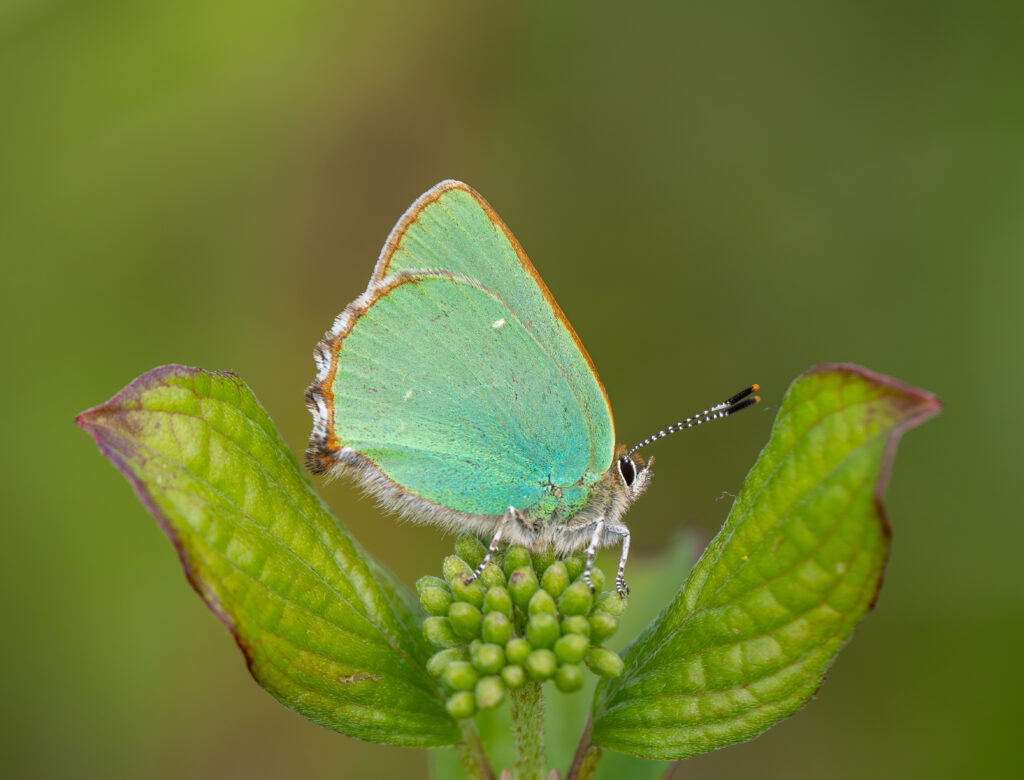
The green hairstreak is a small, vibrant butterfly with bright green underwings that help it blend into vegetation. Found in heathlands, grasslands, and scrub, it feeds on flowers like bird’s-foot trefoil and gorse. Adults are active from April to June, while caterpillars feed on host plants before pupating in leaf litter.

Find out more
Green Hairstreak butterfly.
Humming-bird Hawk-moth

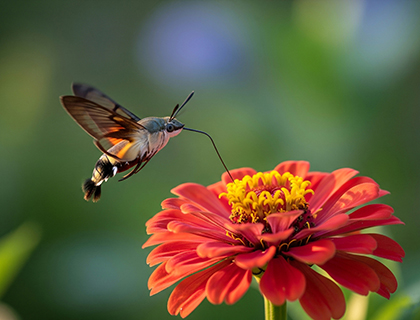
The Humming-bird Hawk-moth is one of the more fascinating insects that can be spotted around Windsor Great Park during the warmer months. Often mistaken for a bee or even a tiny hummingbird in flight, it can be identified by its orange-brown hindwings, greyish-brown forewings and distinctive black-and-white chequered body.

Find out more
Hummingbird Hawk Moth feeding off of an orange flower.
Jersey Tiger

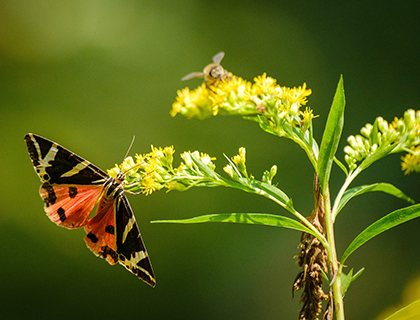
This moth can often be seen visiting flowers on warm days in Windsor Great Park, particularly Buddleia and other nectar-rich plants. It is also active at night and may be attracted to light. The species thrives in a variety of habitats across the Estate, including gardens, hedgerows, rough grassland and woodland edges.

Find out more
Jersey Tiger Moth
Large Skipper butterfly

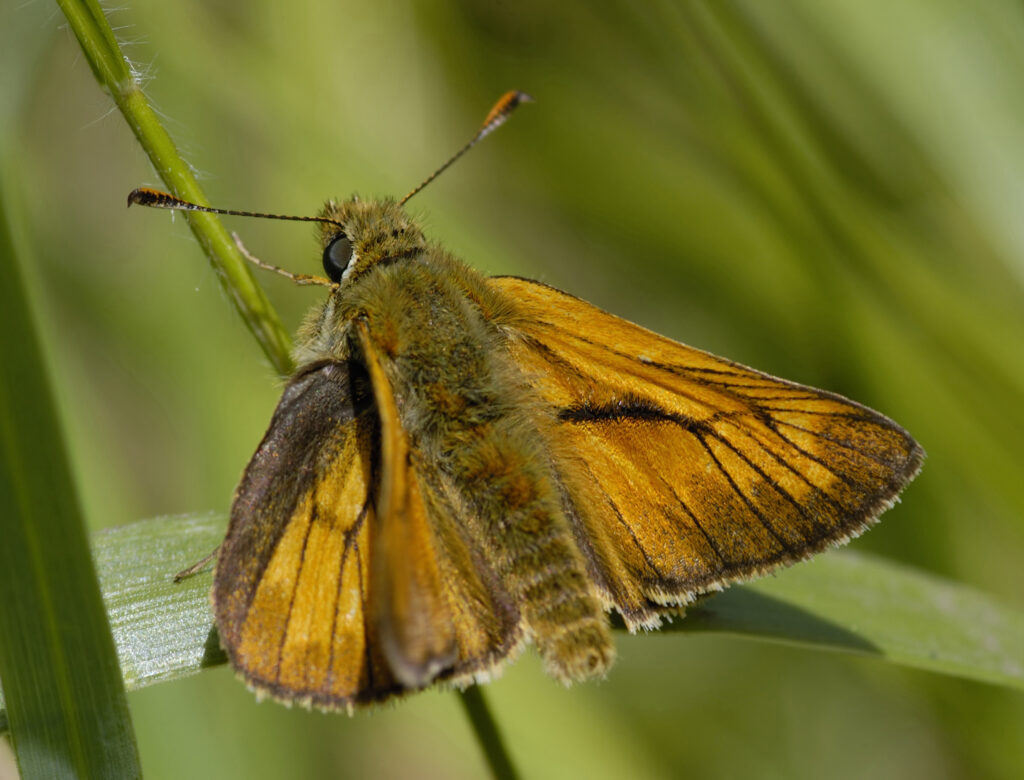
The large skipper butterfly is a fast, darting species found in sunny grasslands, hedgerows, and woodland clearings. Recognisable by its golden-orange wings with dark borders, it’s active from June to August. Females lay eggs on coarse grasses like cock’s-foot. Caterpillars shelter in folded leaves, overwintering before pupating in spring.

Find out more
Large Skipper butterfly.
Marbled White butterfly

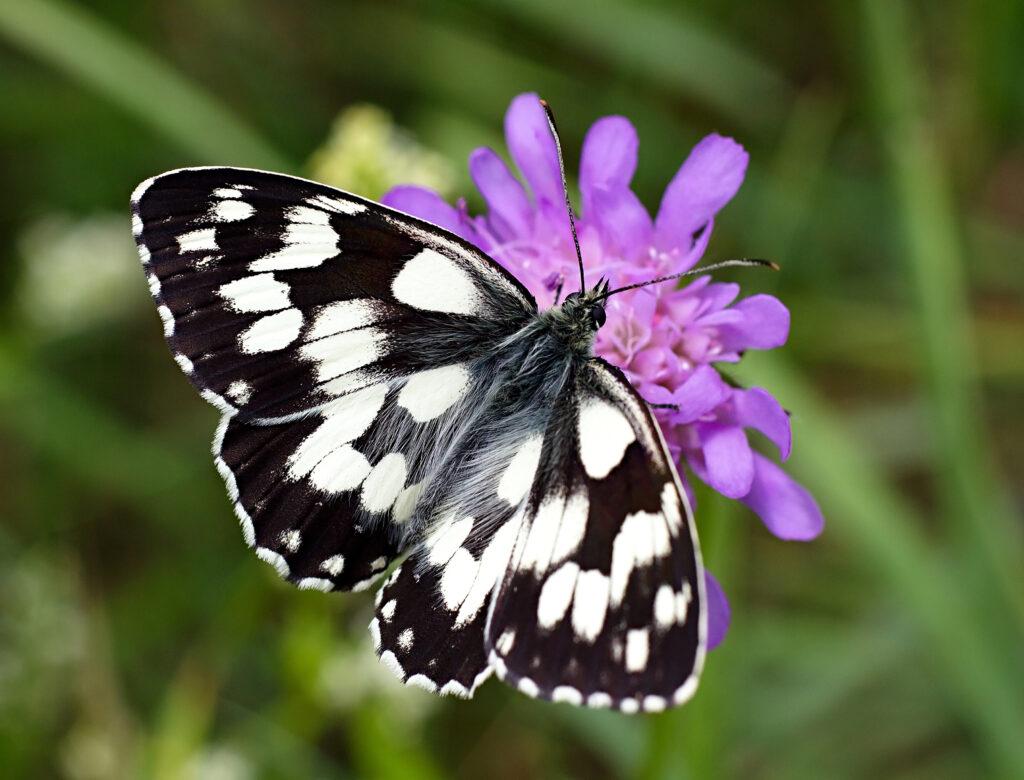
The marbled white butterfly is a striking black-and-white species found in sunny grasslands and meadows, such as Stag Meadow and the Flying Strip. Despite its name, it belongs to the browns family. Adults are most visible in June and July, feeding on wildflowers. We manage the grasslands carefully to provide a diversity of habitats that support its full life cycle.

Find out more
Marbled White butterfly.
Orange-tip butterfly

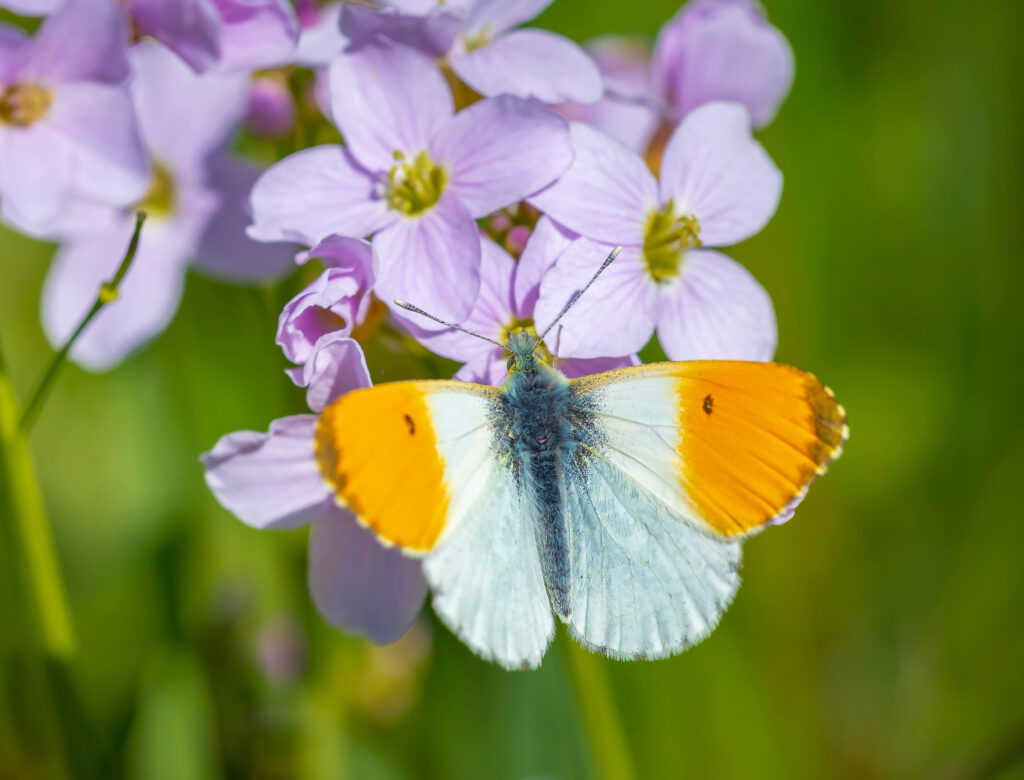
The orange-tip butterfly is a familiar spring species in Windsor Great Park and its woodlands, easily recognised by the bright orange wingtips of the males. It favours damp meadows, hedgerows, and woodland edges. Females lay their eggs on plants such as cuckooflower, which is abundant in the open parkland during spring. The caterpillars feed on seed pods before pupating and overwintering as chrysalises.

Find out more
Orange-tip butterfly.
Painted lady butterfly

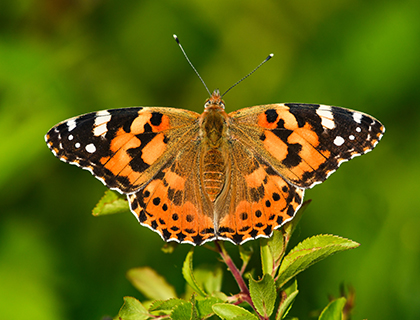
The Painted Lady is one of the most remarkable butterflies that can be seen in Windsor Great Park. A long-distance migrant, it undertakes extraordinary journeys to reach Britain, creating some of the most impressive butterfly migrations recorded. In a good year, these striking butterflies can be spotted across the Estate, favouring sunny, open habitats such as meadows, grasslands and heathland, but appearing almost anywhere nectar-rich flowers are found.

Find out more
Painted Lady butterfly with wings wide open resting on some greenery.
Silver-studded Blue butterfly

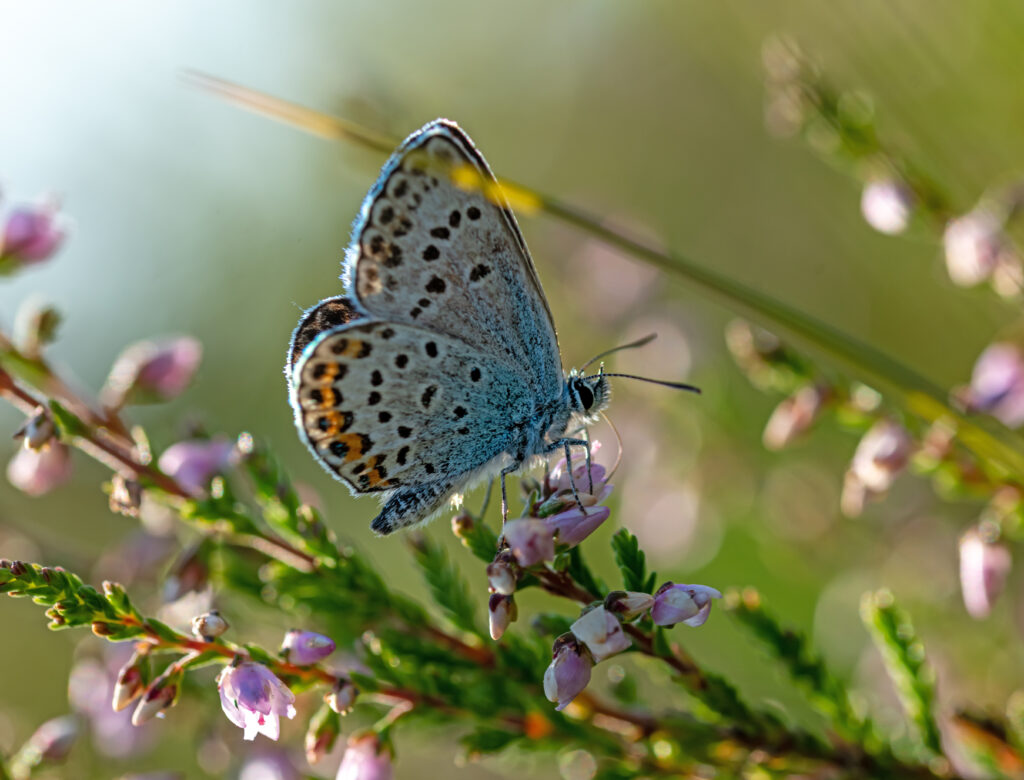
The silver-studded blue butterfly is a national priority for conservation and is found in heathlands within Swinley and Buttersteep Forests. Our habitat management efforts have helped the species to spread to many new areas of the Forests over the past ten years. Males have bright blue wings with silvery spots on the underwings. The rely on ants to protect their caterpillars which feed on heather and gorse.

Find out more
Silver-studded Blue butterfly.
Small Copper butterfly

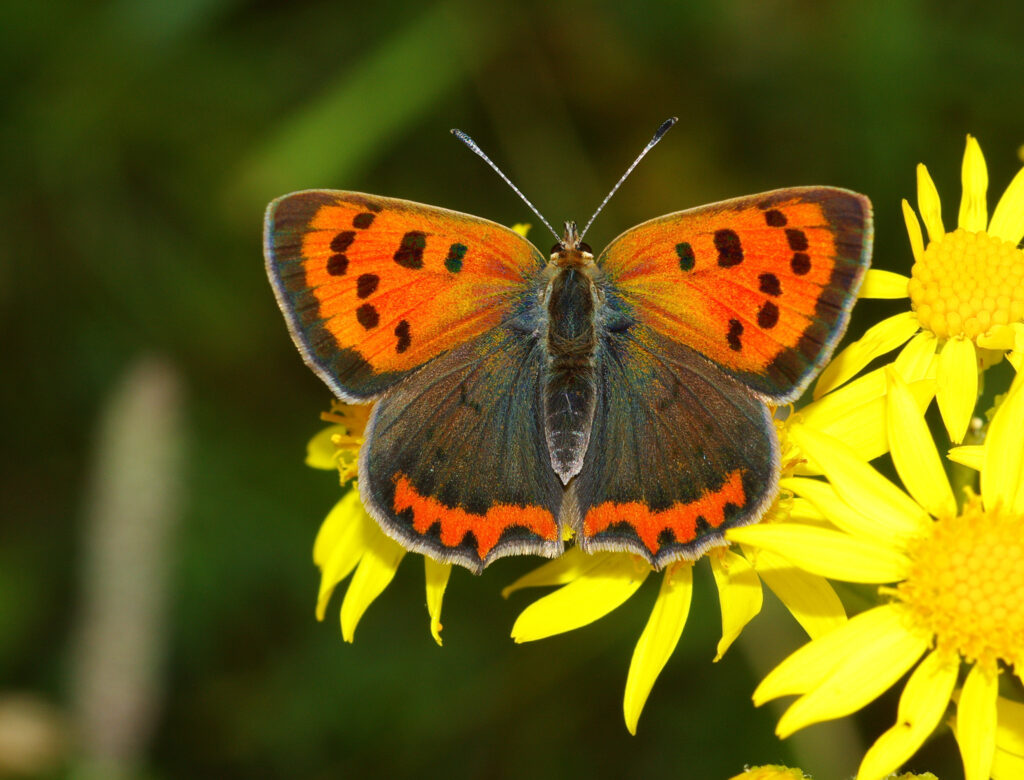
The small copper butterfly is a vibrant, fast-flying species often seen in sunny grasslands, meadows, and gardens. Males are territorial, displaying bright orange wings with dark borders. Females lay eggs on sorrel and dock plants. The caterpillars feed on leaves before pupating, with multiple broods appearing from spring through autumn.

Find out more
Small Copper butterfly.
Small Heath butterfly

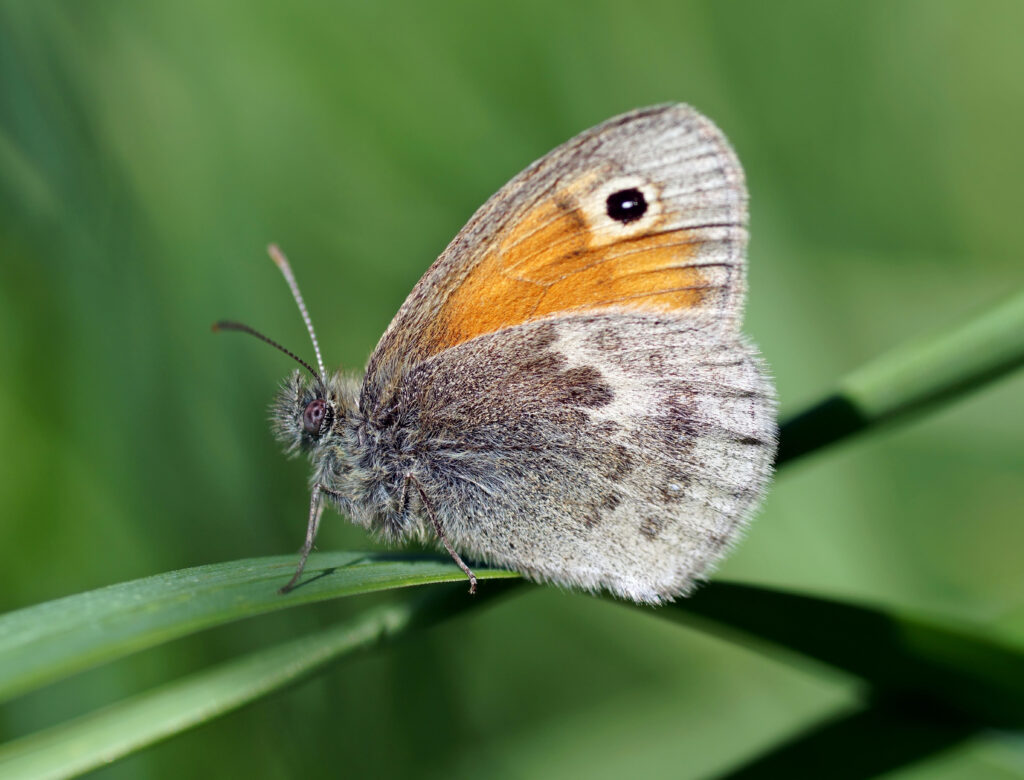
The small heath butterfly is a delicate, low-flying species found in grasslands, meadows, and heathland. It has pale orange-brown wings with a distinctive eyespot and often rests with wings closed. Active from spring to autumn, it lays eggs on fine grasses. Its subtle colouring helps it blend into dry, grassy habitats.

Find out more
Small Heath butterfly.
Windsor Great Park
Windsor Great Park

More from us

Stories from the Windsor Estate

FAQs

Careers

Get in touch

Contact us

Newsletter

Sign up to our newsletter

The Crown Estate logo.

User support

Accessibility

Site map

Our policies

Terms of use

Privacy statement

Cookies statement

Modern slavery act

Freedom of information

Designed by Bewonder*