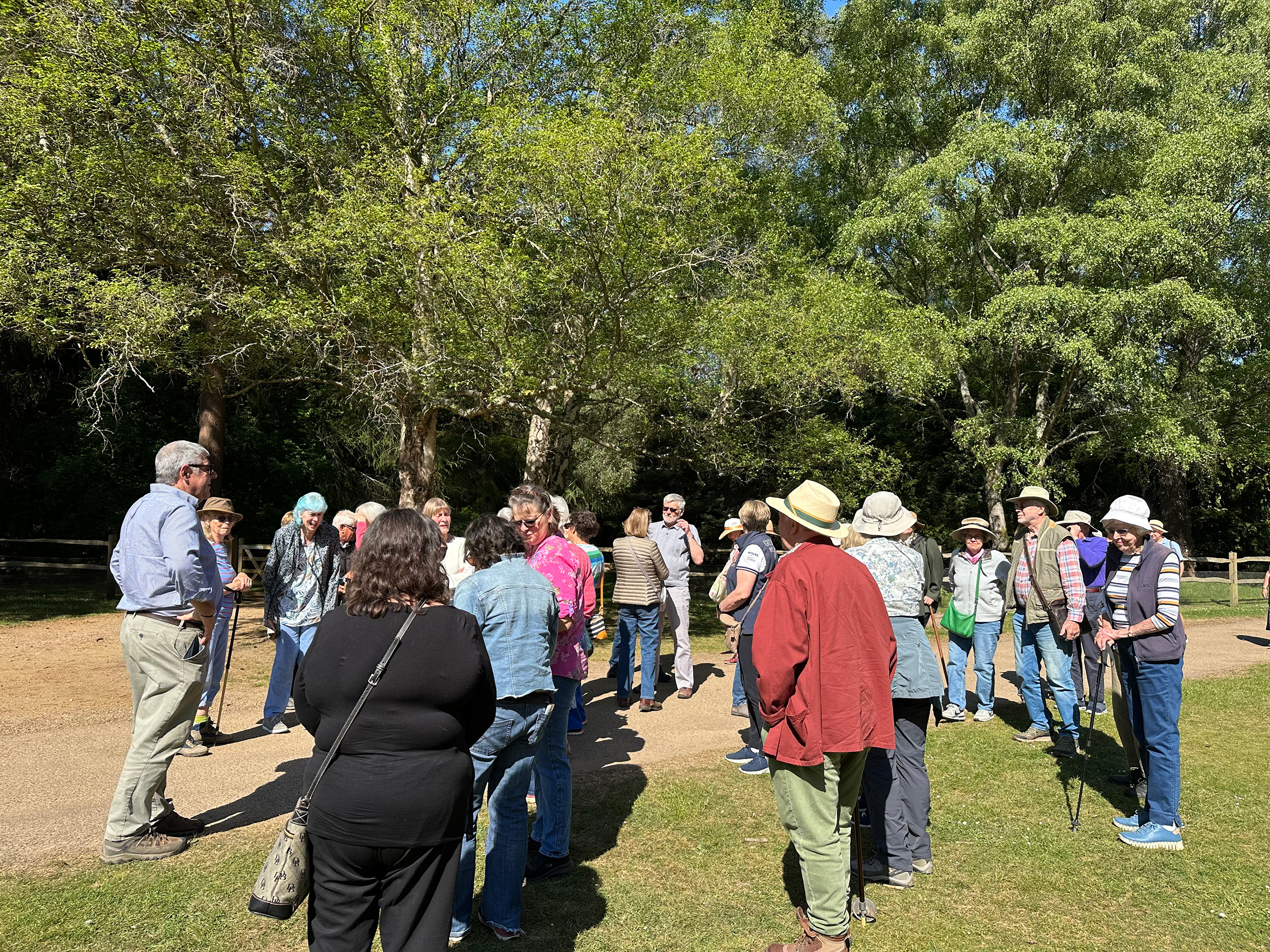
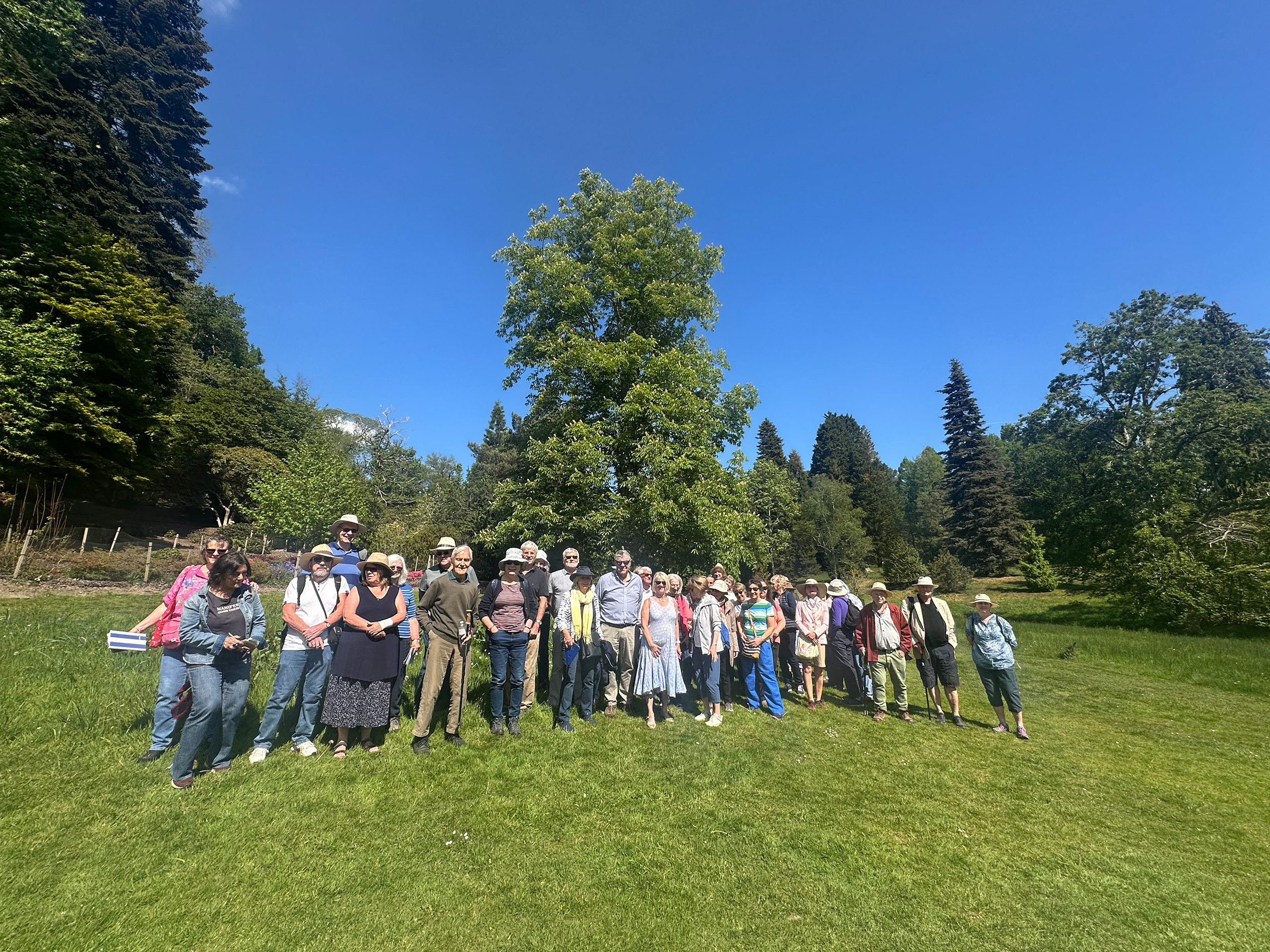
Early on a sunny May morning, nearly 50 Friends and guests met at The Savill Visitor Centre for the annual spring walk.
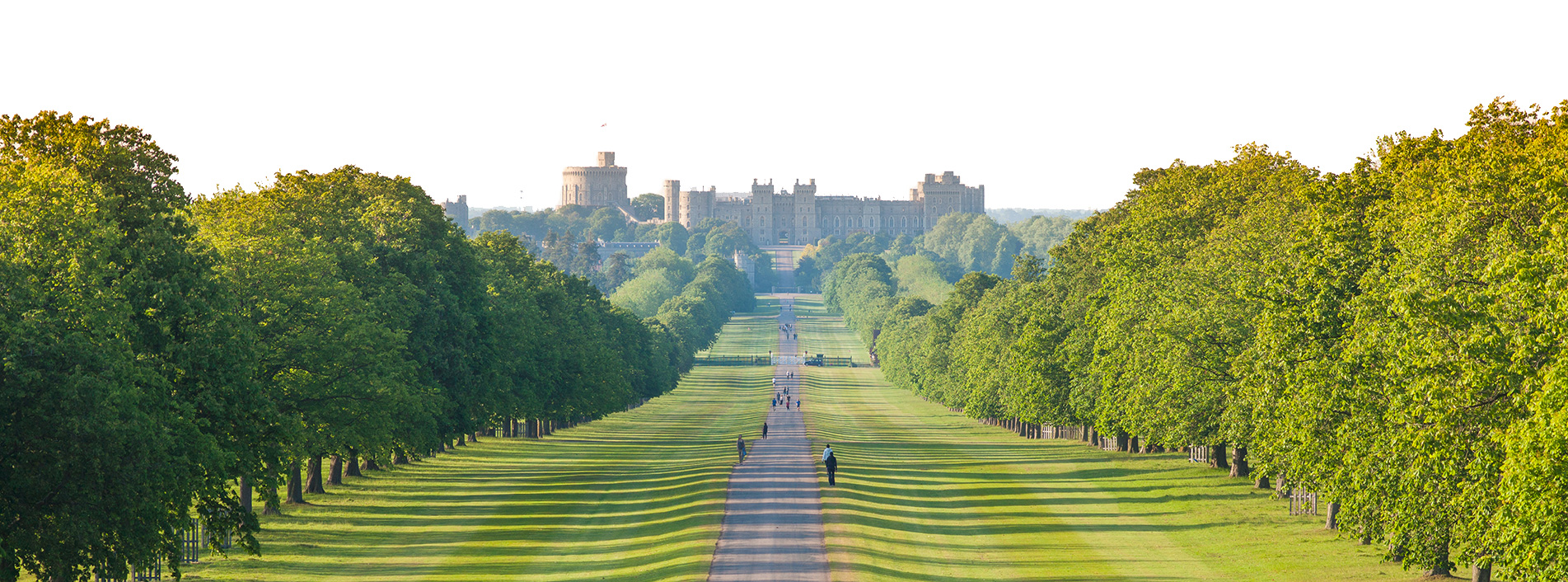
We started by boarding a coach which took us into Windsor Great Park through Bishopsgate and drove slowly past the polo fields to the Heather Garden where we were met by John Anderson, the Keeper of the Gardens.
Azalea Valley
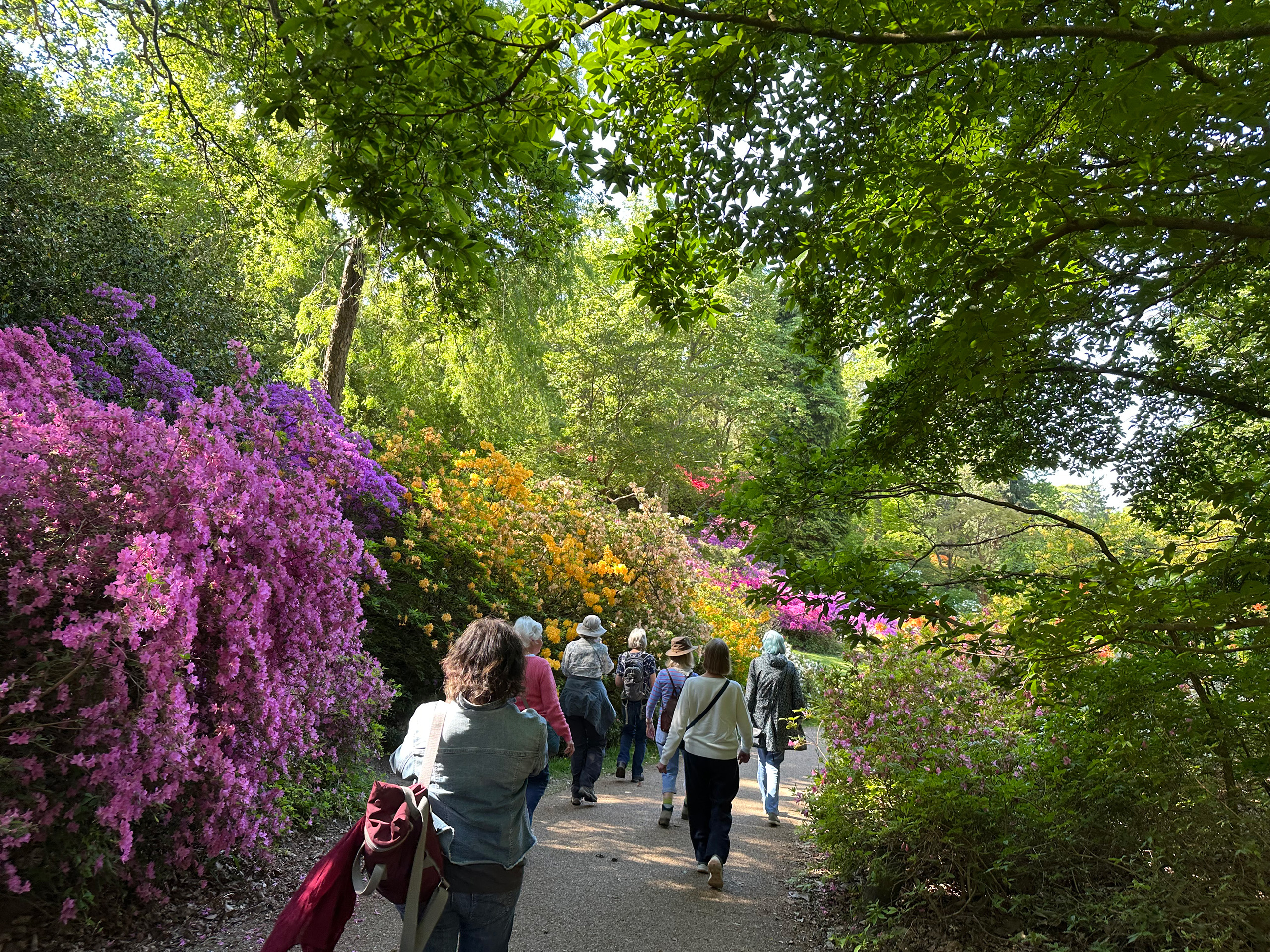
This year our walk started along the path into Azalea Valley, where we were soon immersed in a kaleidoscope of colour and scent. Due to the warm, dry weather the shrubs were producing leaf and flowers at the same time, so perhaps not as showy as some years, but were looking good.
John highlighted the structure of the woodland that surrounded us, with a canopy of oak sheltering trees such as magnolias and acers, over the shrub layer of azaleas, and then the underplanting of bulbs and other perennials.
We moved further down the valley to the Birch collection, which was underplanted with highly scented yellow azaleas. John pointed out one of his favourites, Magnolia obovata, which was not yet in flower, but with its upright buds beginning to appear.
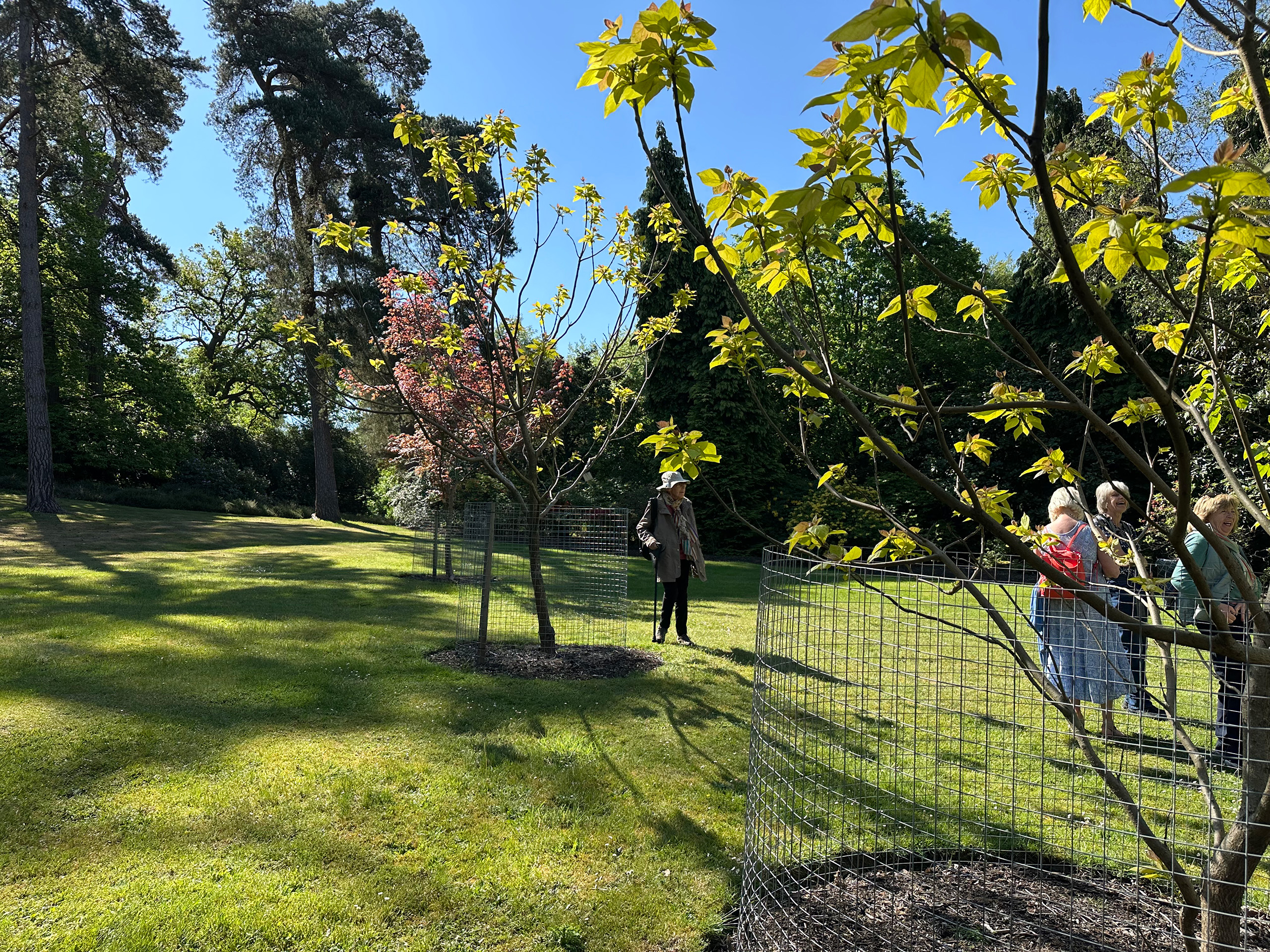
Continuing down the valley we encountered some recently planted Indian Bean trees (Catalpa bignonioides ‘Aurea’ and Catalpa fargesii) which provide attractive foliage after the Azaleas have finished flowering.
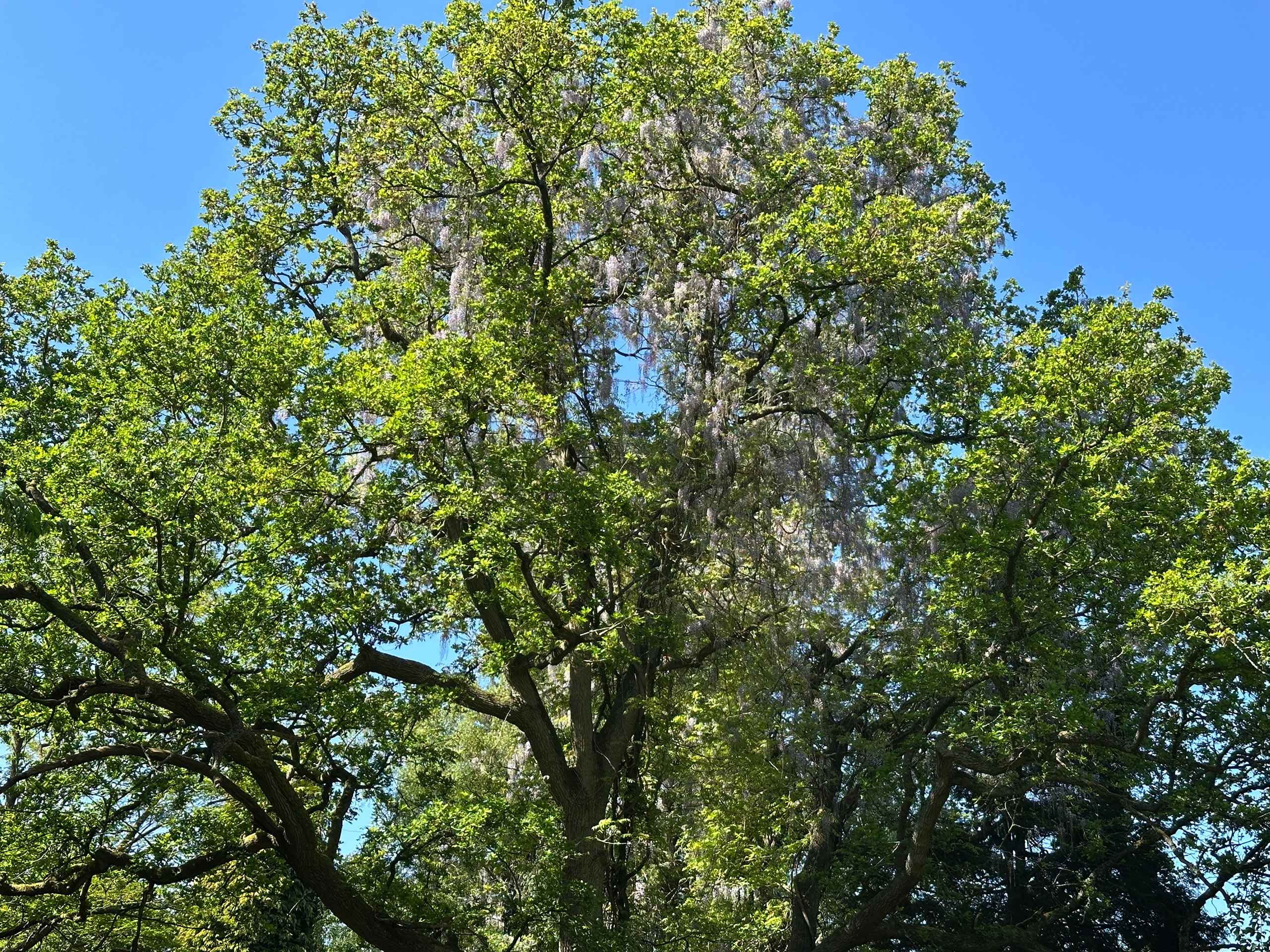
As we moved on, some of us noticed the Wisteria in full flower, high up in an Oak tree, but difficult to spot against the bright blue of the sky.
Nearby we stopped at the collection of “bird” Azaleas, some of which are proving very tricky to propagate and grow on. The team are still trying to fill some gaps in the collection.
Newly planted Indian Bean trees.
Wisteria growing on an Oak tree.
Resilience
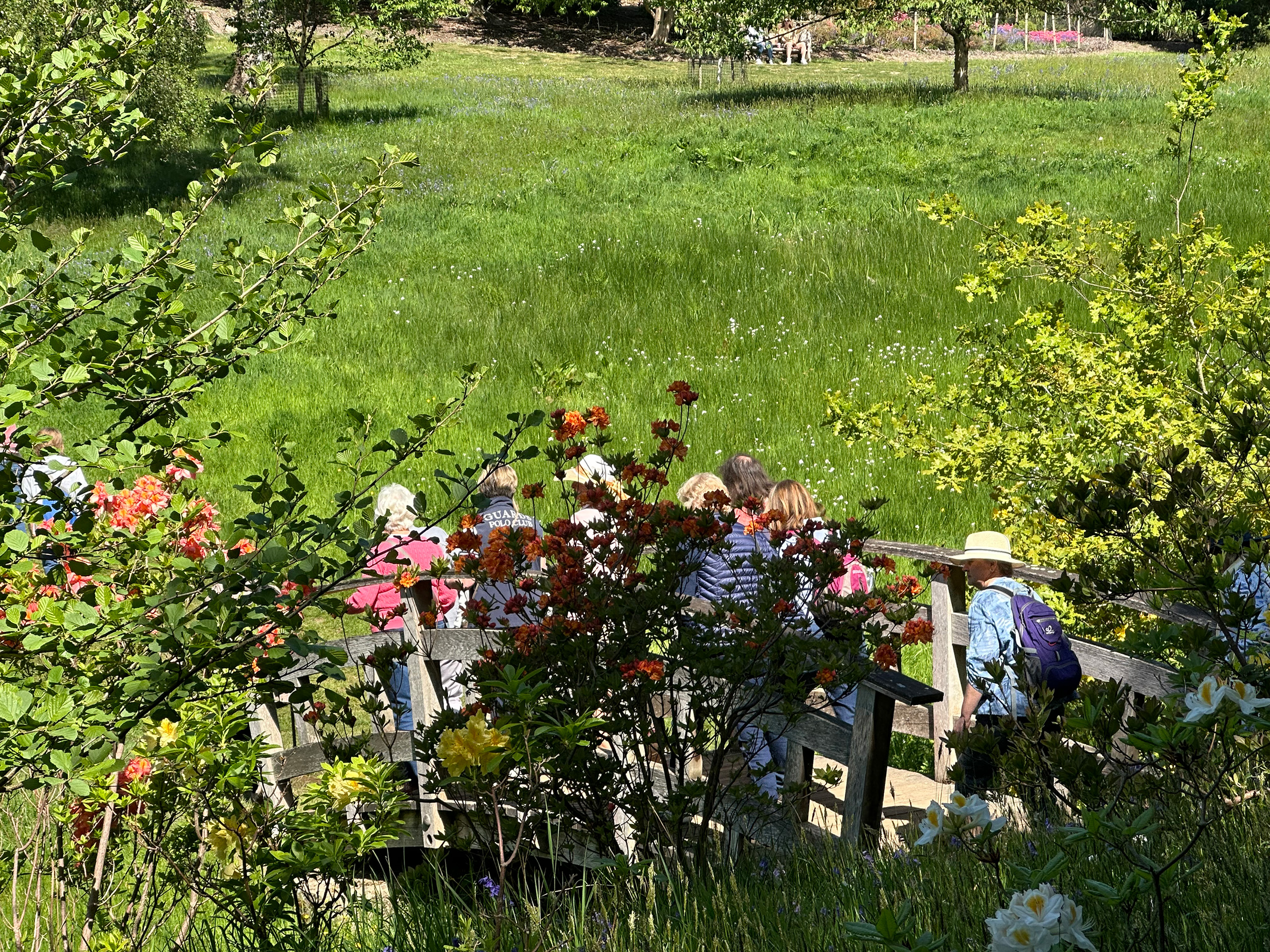
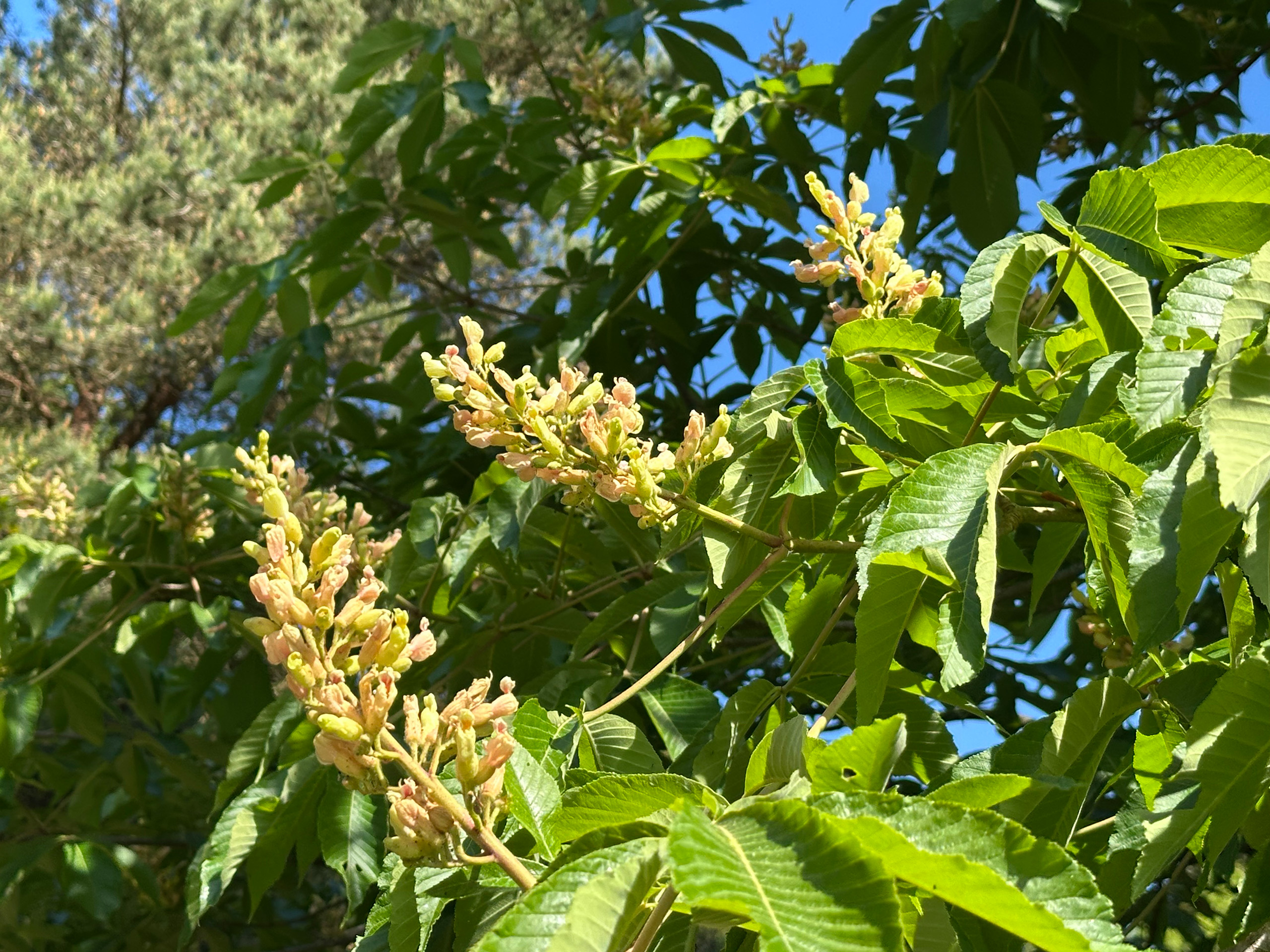
We then took a hike over the humpbacked bridge and up the steep hill to reach an unusual tree, the yellow flowering Buckeye chestnut (Aesculus flava) from North America.
Nearby were some newly planted Mahonia aquifolium, which provide good resilient underplanting once established, are attractive to bees, absorb the heat and provide cover for wildlife. These are also useful for roadside planting and delineating walkways.
Crossing the bridge in the Valley Gardens.
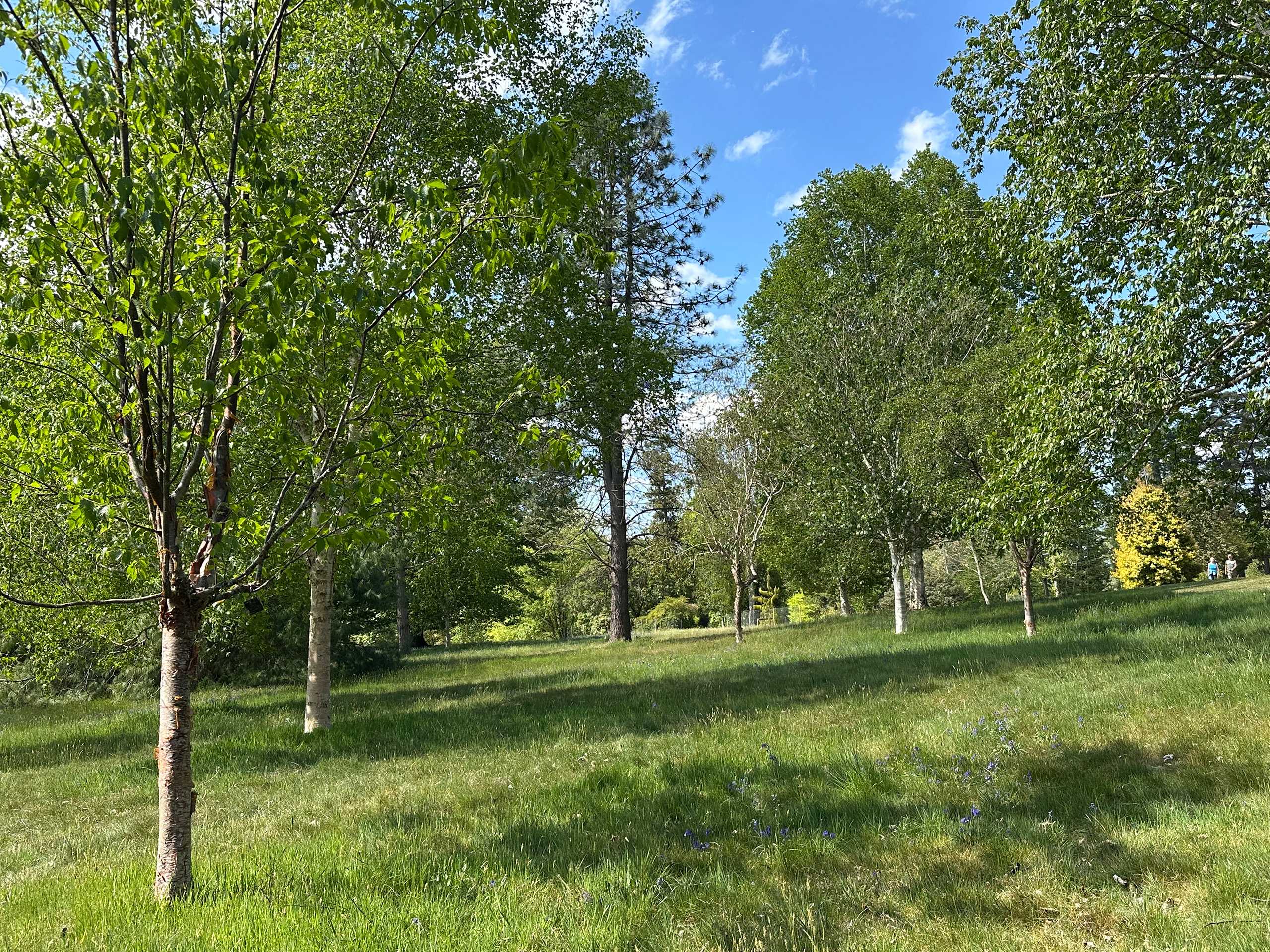
Our next stop was at the National Collection of birches, some of which, particularly the North American Betula occidentalis are struggling due to climate change and their meadow-like location.
As we stood there we discussed the management of the long grass. This can benefit the trees as it shields the roots and takes up less nutrients and water, however bracken, nettle and docks can also become established. Without the resources to dig these out, chemical sprays need to be used occasionally. This is carefully managed and is not “rewilding”.
National Collection of birches.
Cloning for the future
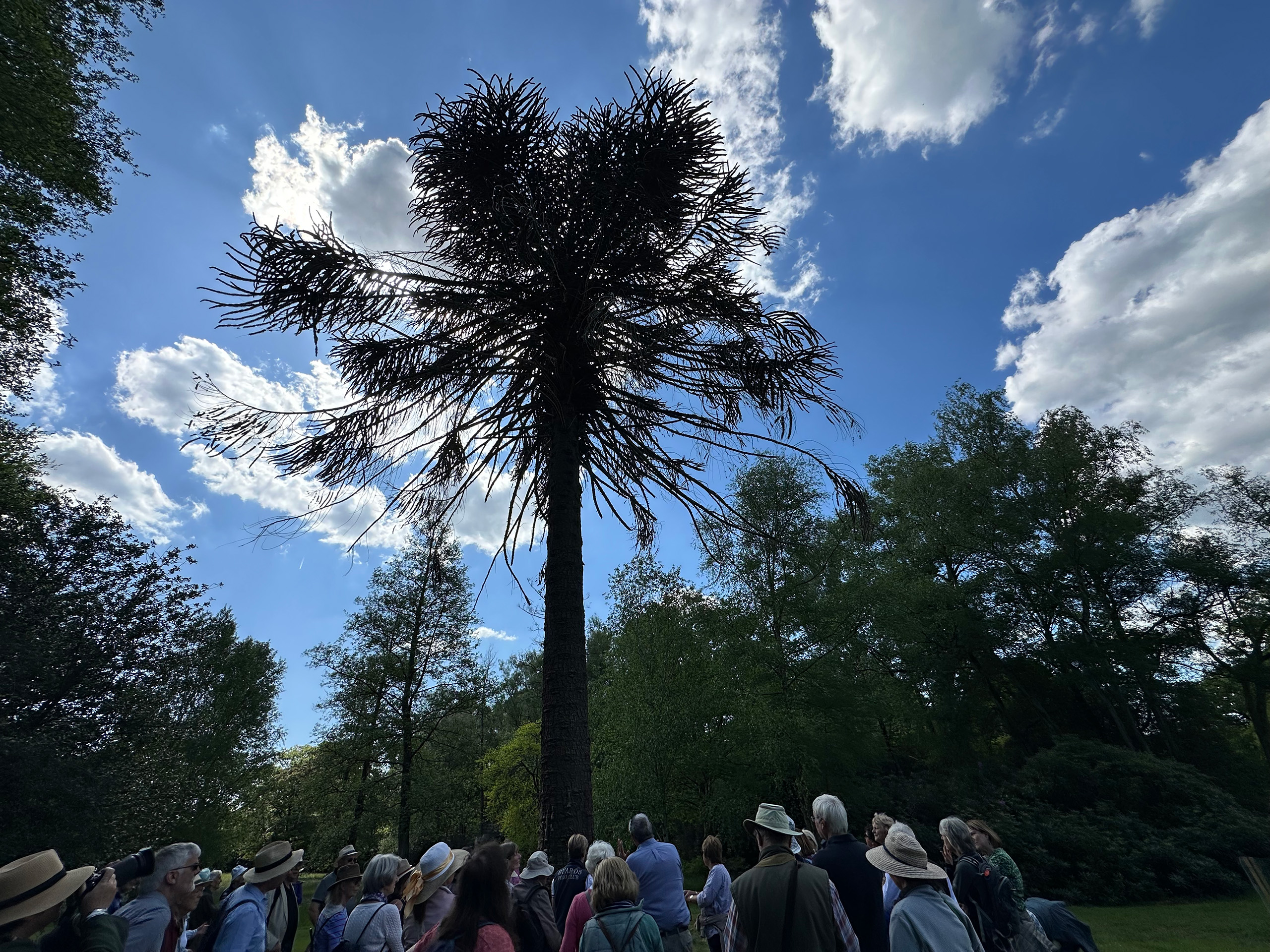
Passing the holly collection, which needs some attention, we arrived at the majestic Monkey Puzzle (Araucaria araucana), one of the earliest recorded exotic trees in the Valley Gardens, probably dating from the 1890’s.
The Monkey Puzzle was sadly cut down this summer because of its poor condition, however nearby are several recently planted saplings together with a number of its cousin the Wollemia nobilis, cloned from trees in the National Park in Australia and part of an international “meta-collection” to protect the species from being decimated by bush fires caused by climate change.
A similar approach is being taken by the team to protect our ancient oaks, both in Windsor Great Park and elsewhere in the country, by cloning them and distributing them to cooler parts of the country. For example, the Major Oak in Sherwood Forest may not survive this year, but following one successful graft, its genetic material will hopefully continue.
Returning
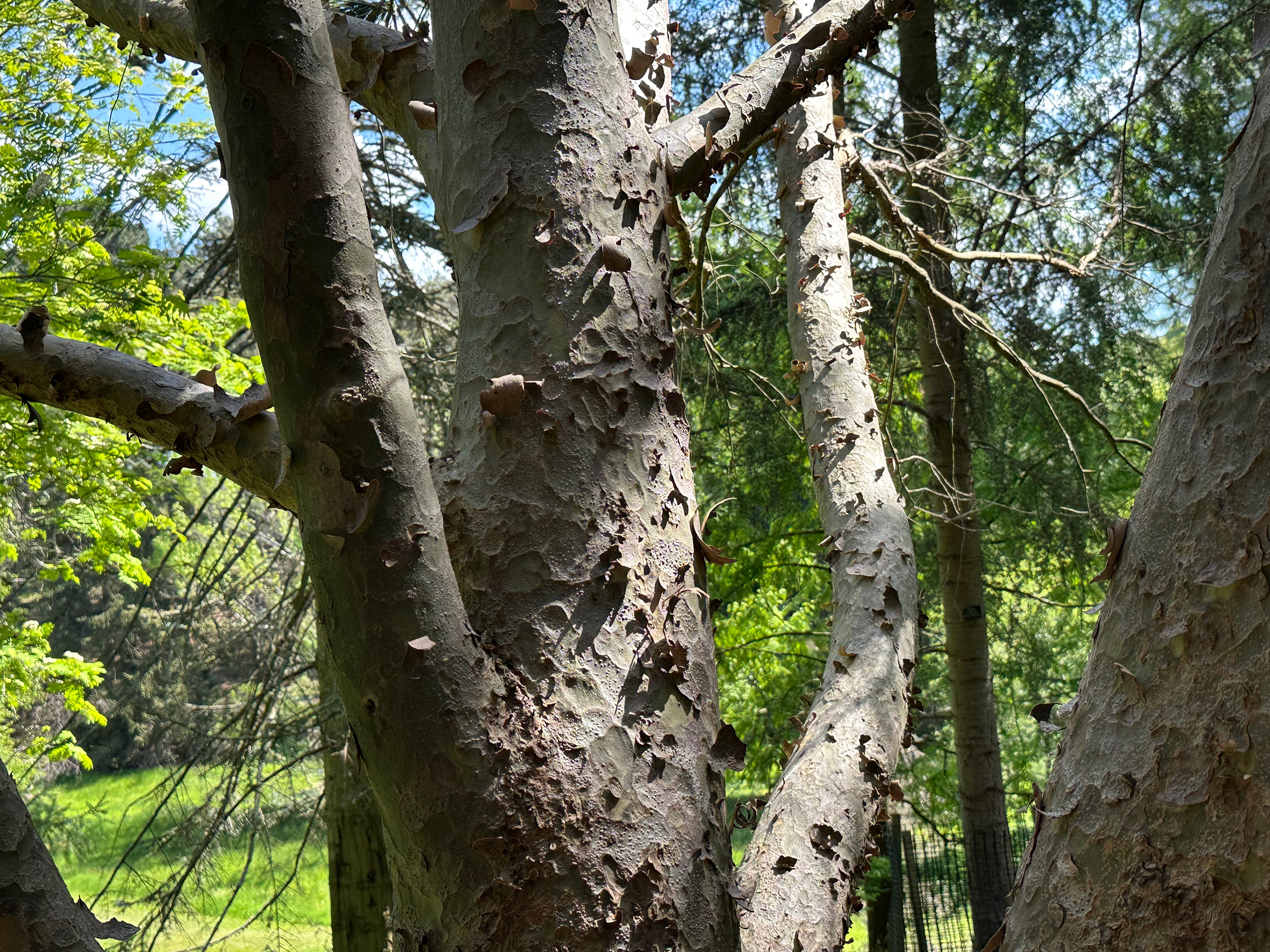
We then trekked back by way of Breakheart Hill and the Heather Garden, stopping to look at some outstanding trees on the way, including Drimys winteri (Winters Bark) with white starlike flowers; the vivid lime green leaves of Quercus rubra ‘Aurea’; and the attractive peeling bark of Pinus bungeana; stopping finally at the Aesculus turbinata (Japanese horse chestnut) planted in memory of the previous Keeper of the Gardens Mark Flanagan.
After two hours of a very informative walk, most of the group took advantage of a ride back to The Savill Garden Visitor Centre by coach, although a few decided to continue on foot. Many thanks to John for another outstanding journey through a small part of The Valley Gardens.
The peeling tree bark of the Pinus bungeana.
The Friends of The Savill Garden.