One of the largest and most interesting group of bulbs we cultivate in our gardens are native to South Africa.
Dierama
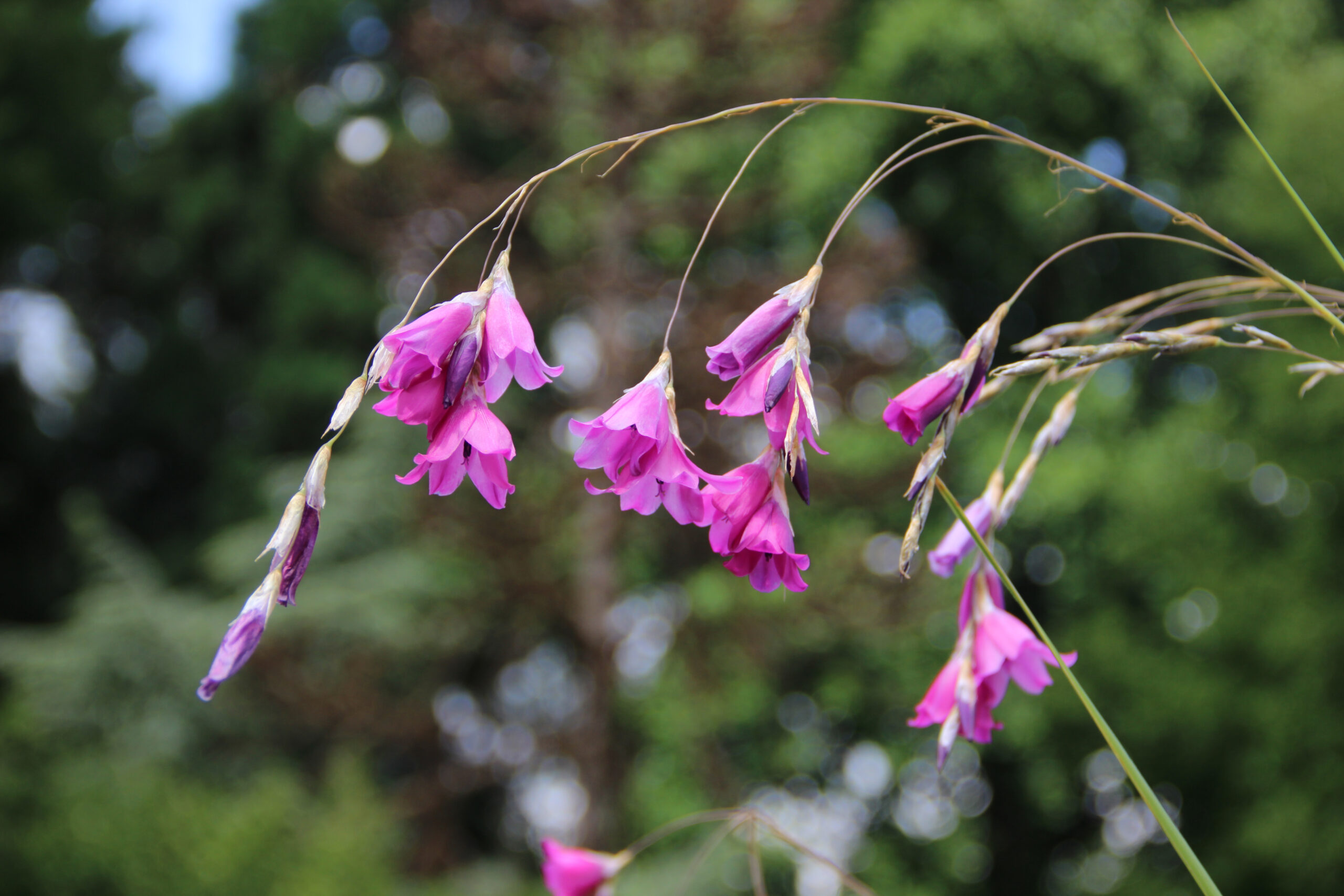
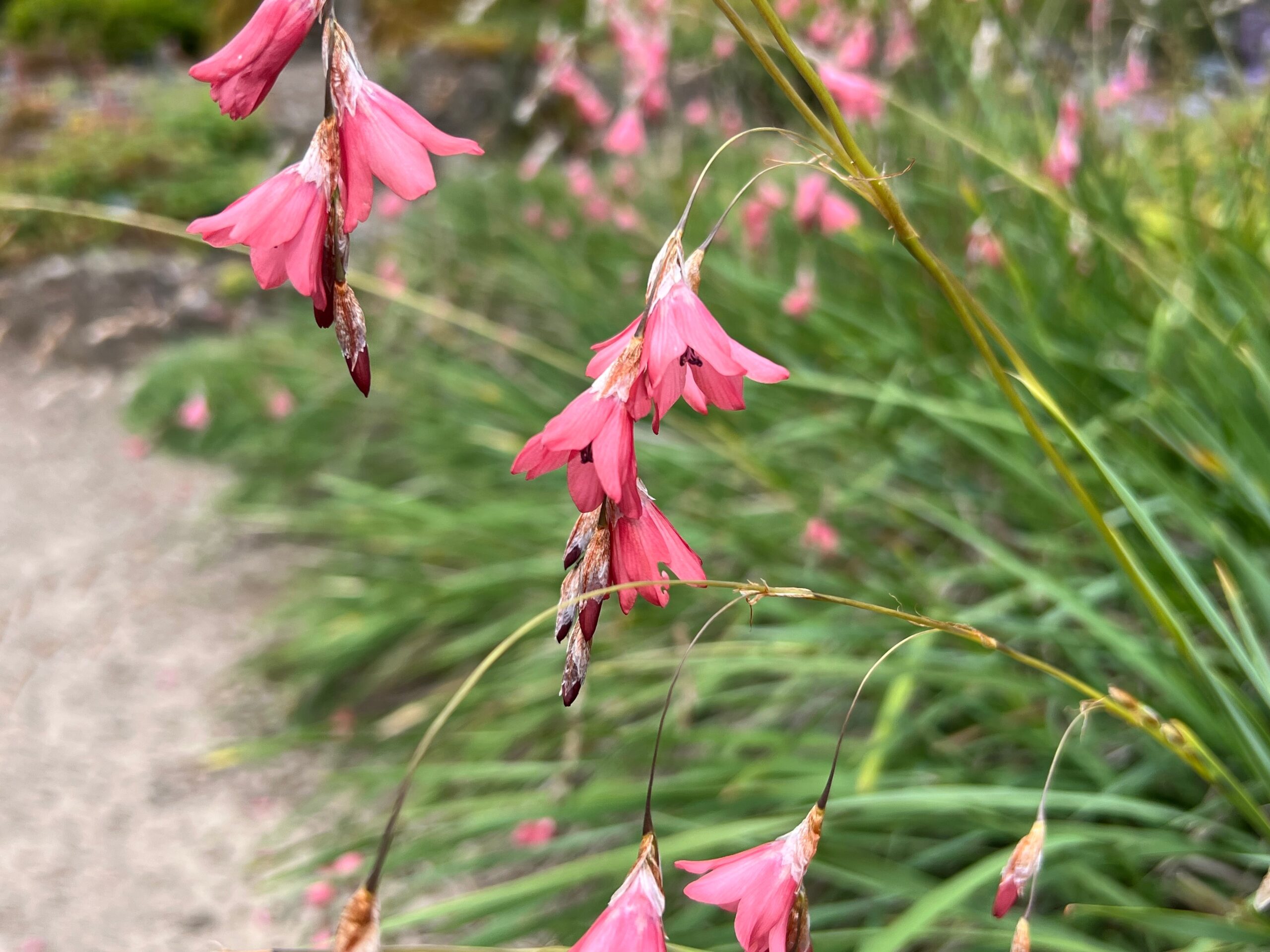
With this group are some of my favourites including the Angel’s Fishing Rod and Wandflowers (Dierama spp.) and are mostly found in the KwaZulu-Natal to the eastern region of South Africa.
The most popular species is D. pulcherrimum with its tall grass-like foliage and a long arching panicle of flowers that can reach over 2 metres in length. The rich pink almost papery flowers hang down like bell flowers along the stems giving a magical effect.
The shorter Fiery Wandflower (D. igneum) is a shorter and slow growing species with beautiful salmon pink flowers.
D. jucundum with its pale mauve flower is also a desirable species and effective for the drier Mediterranean gardens like the Dry Garden in The Savill Garden. The best time to see these beautiful plants is in June and July.
Watsonia
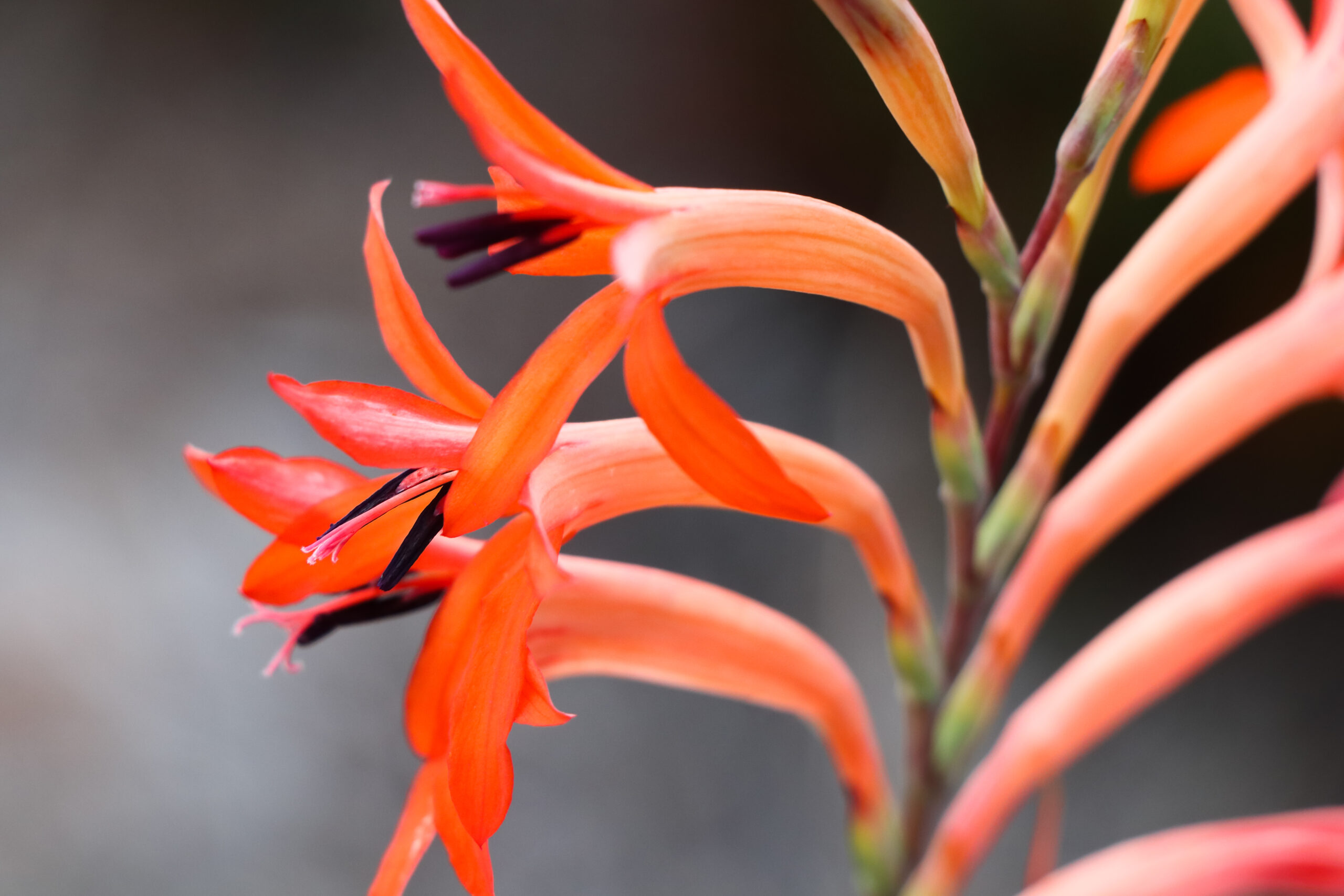
For a rich palette of colour then look no further than the Watsonia (Bugle Lily), a similar species to Dieramas as they both belong to the Iris family in Iridaceae.
The genus was named after Sir William Watson an 18th Century British botanist.
They are part of the Fynbos flora, a small belt of natural shrubland in South Africa, and are ideal for planting in the Dry Garden.
In The Savill Garden we have 3 species and hybrids that do very well. Watsonia pillansii is a robust strong growing evergreen cormous plant with bright orange flowers. The W. ‘Stanford Scarlet’ bears scarlet flowers and W. versfieldii boasts white flowers in late summer.
Agapanthus
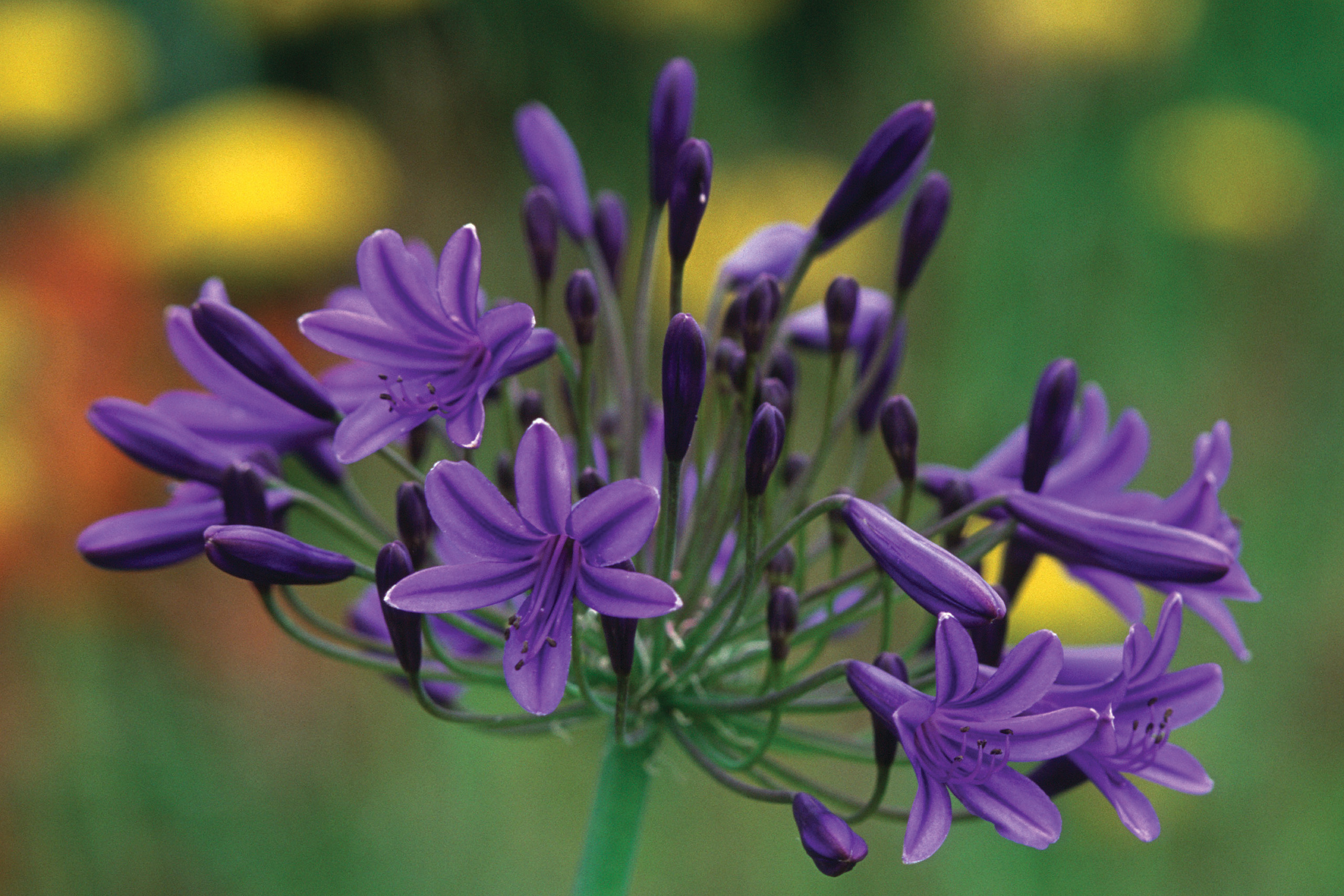
Outside the Golden Jubilee Garden on the Spring Wood side of the Yew hedge is a long reticular border with a collection of Galtonia candiscans, Kniphofia and Agapanthus.
The Agapanthus collection in The Savill Garden has a close affinity to many of the Royal Residences, with names including:
- A. ‘Clarence House’
- A. ‘Sandringham’
- A. ‘Windsor Castle’
- A. ‘Castle of Mey’
Over the years the collection has become tangled, and several have been lost due to climate impact and pest and diseases. There is now a plan to rebuild the collection over the next few years.
The Agapanthus were named by the then Keeper of the Gardens John Bond VMH so that they would be included in a RHS Agapanthus Trial.
Involved in the trial was Lady Christine Skelmersdale, a leading bulb expert and owner of Broadleigh Bulb Nursery.
Sometime after the trial John Bond invited Lady Skelmersdale to Windsor where he shared the Windsor collection with Broadleigh Gardens.
Agapanthus ‘Windsor Castle’
Galtonia candicans
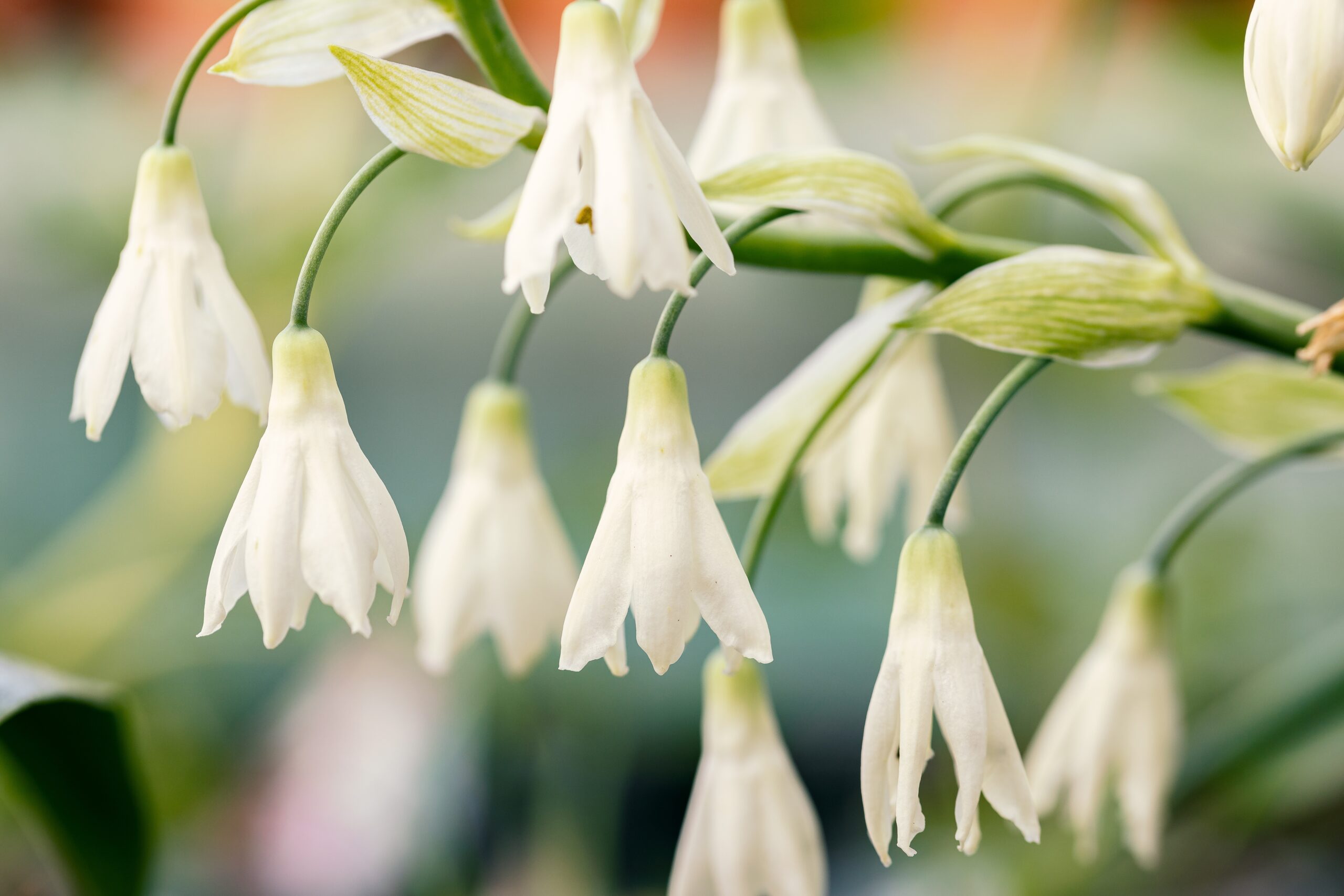
Growing in the Monocot Border with the Agapanthus is Galtonia candicans (Summer Hyacinth).
This vigorous species with strap-shaped foliage and ivory white snowdrop-like flowers looks superb during mid-summer.
Rhodoypoxis baurii
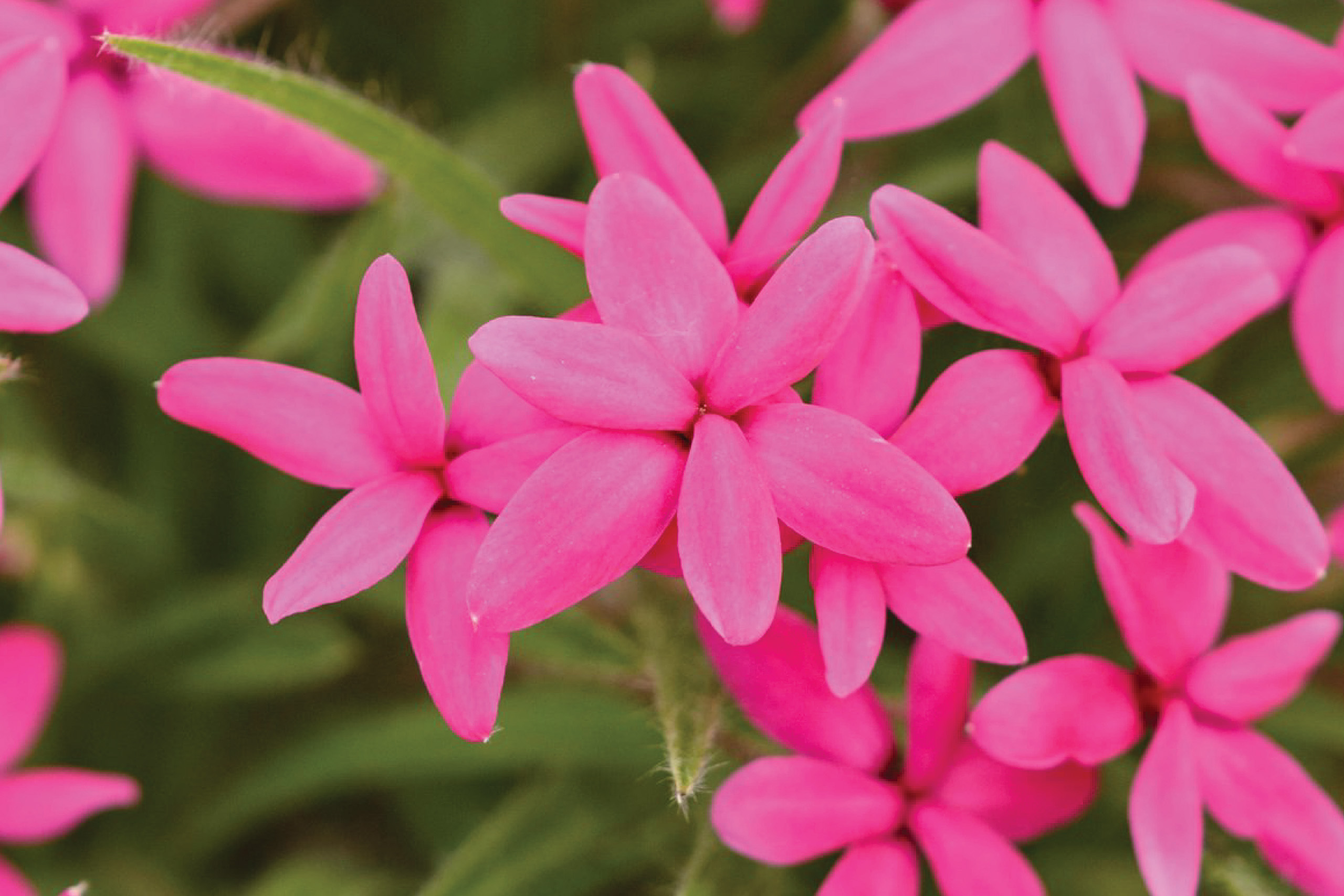
Over by the raised alpine beds there are a few good examples of Rhodohypoxis baurii including R. baurii ‘Tetra Rose’ that bears star-shaped pink flowers; R. baurii ‘Dusky’ and R. baurii ‘Pink Ice.’
They are found growing in damp meadows in Lesotho and Swaziland in South Africa.
Eucomis
Another interesting small genus with big impact in summer is the genus Eucomis (Pineapple Lilies).
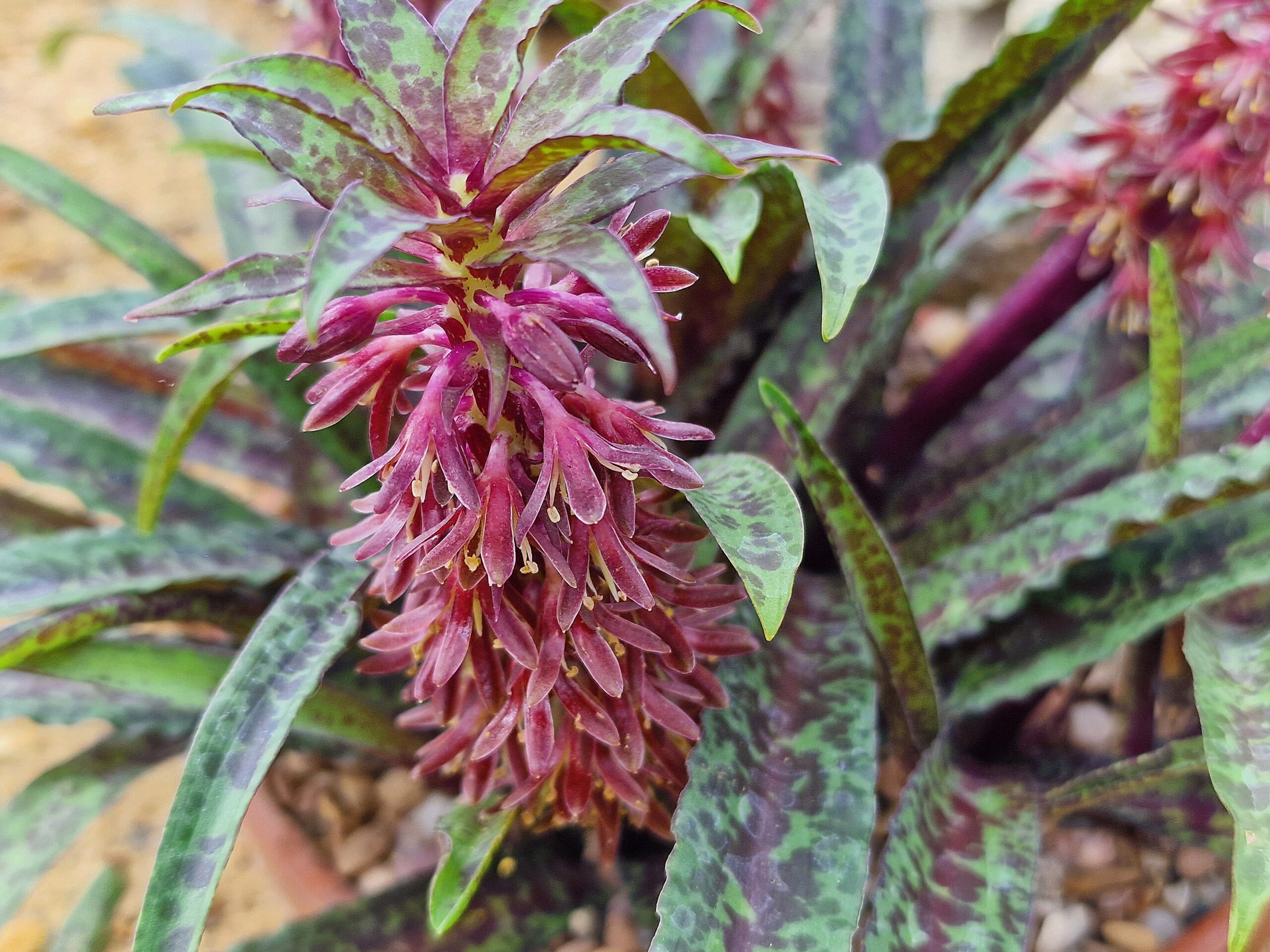
In the Temperate House there is a dwarf Eucomis vandermerwei with dark wavy foliage and purple-edged green bracts.
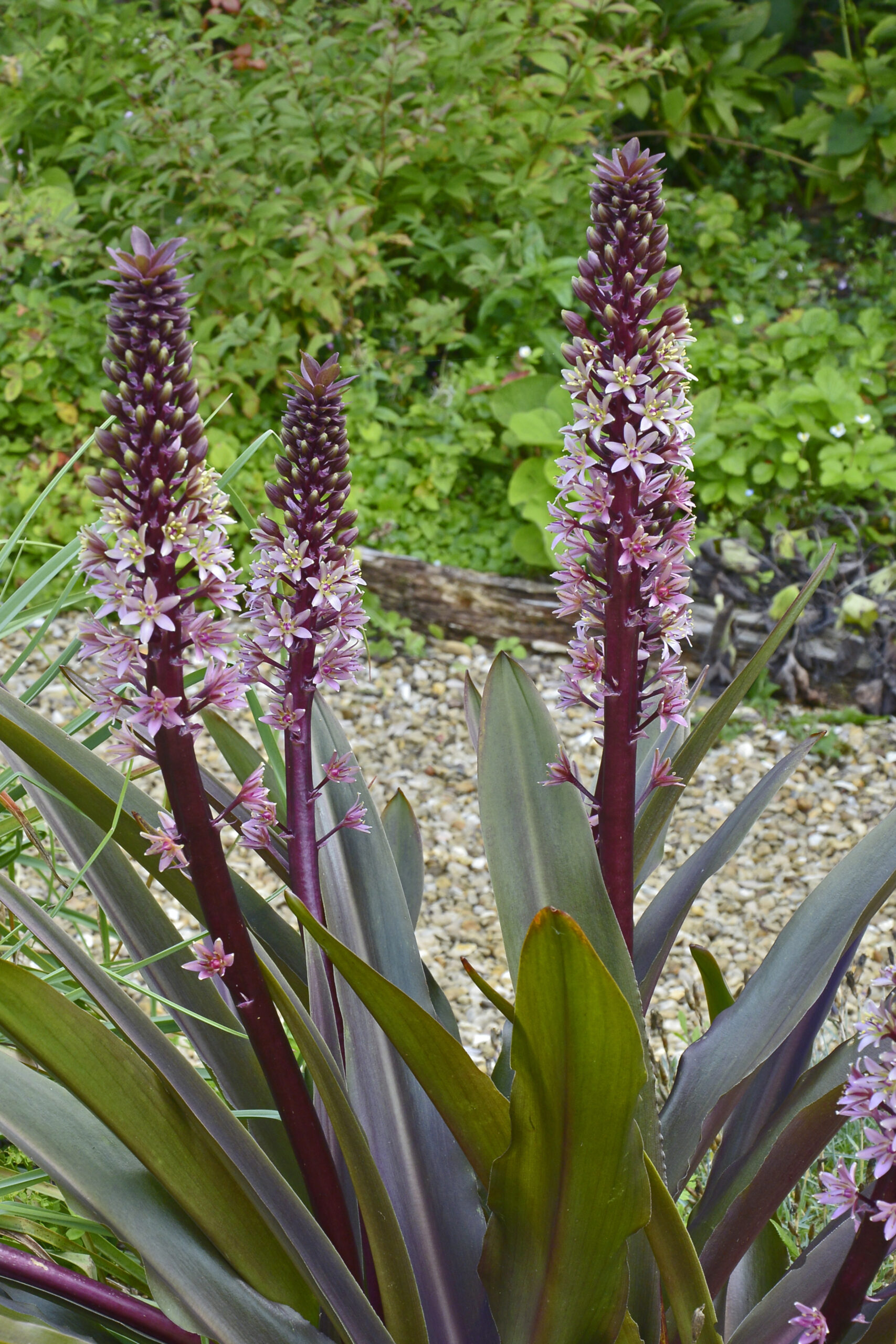
Eucomis comosa ‘Sparkling Burgundy’ is a popular and easy bulb that requires a well-drained fertile soil. This variety was grown in the Dry Garden for a few years and will be replaced in the next growing season.
Eucomis comosa ‘Sparkling Burgundy’
Crocosmia
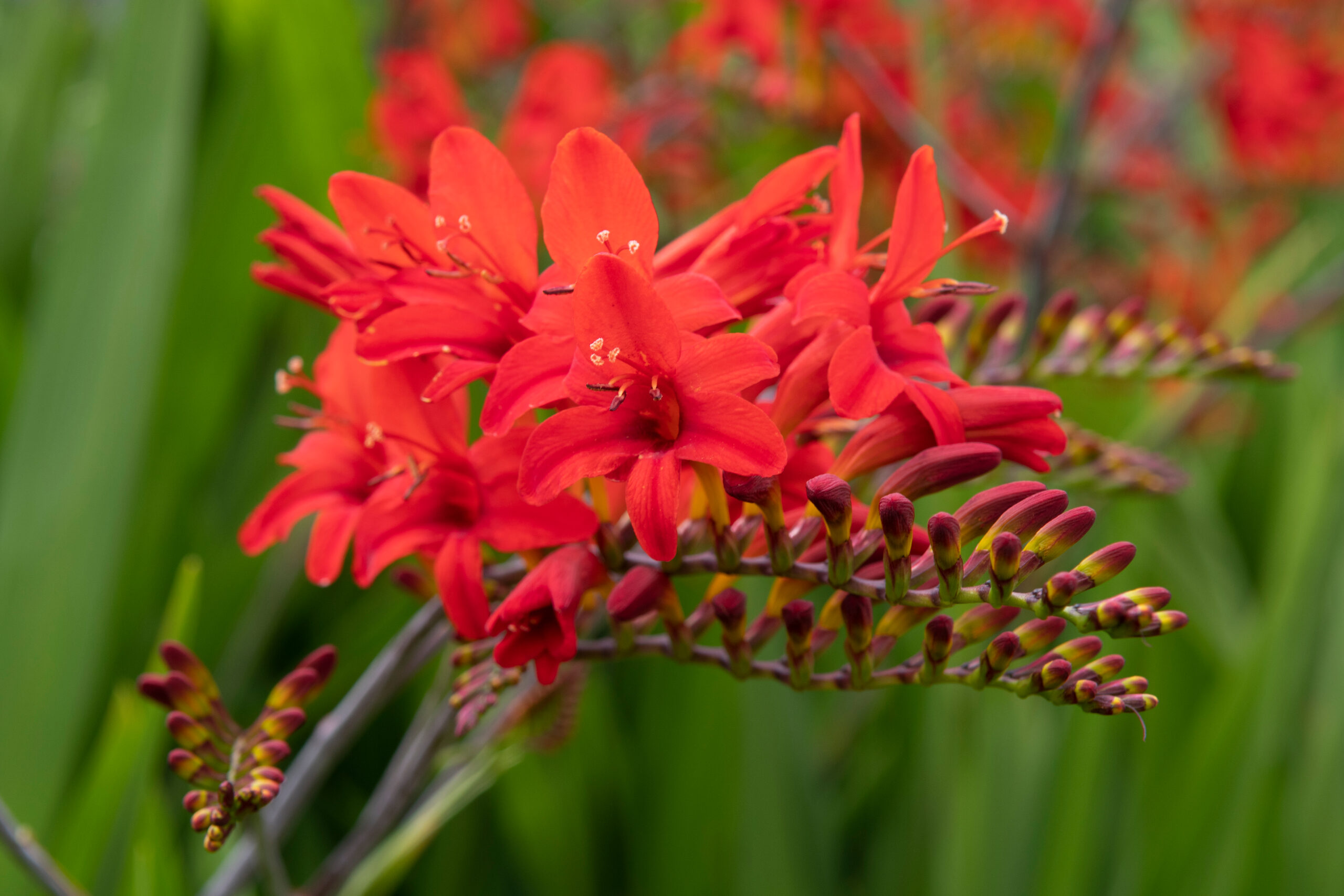
Another favourite is group is Crocosmia – especially the Crocosmia paniculata ‘Cally Sword’, a very vigorous free flowering and tall plant with orange-red flowers in mid to late summer. This can be best seen in the sub-tropical border on the edge of Spring Wood.
In the Herbaceous Borders there are a number of particularly good cultivars including Crocosmia ‘Lucifer’ with fiery red flowers.
Nerine bowdenii
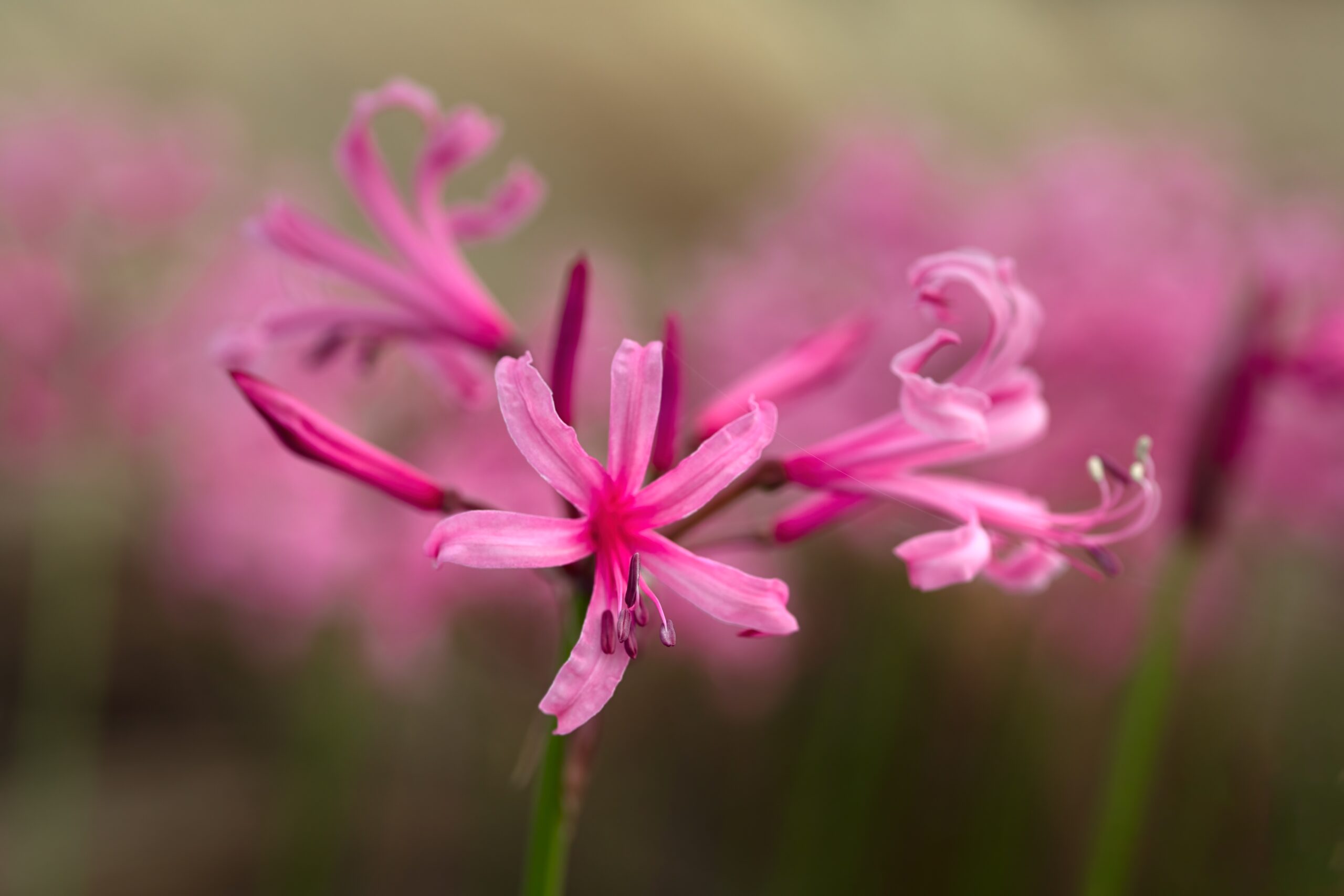
Lastly the autumn flowering bulbs of the Nerine bowdenii are a must for those sunny dry areas, especially the very floriferous N. bowdenii ‘Mark Fenwick’ or N. bowdenii ‘Pink Triumph’.
Written by John Anderson, Keeper of the Gardens