On a Saturday morning in March, 50 Friends and guests assembled outside The Savill Garden Visitor Centre. The road diversions due to the M25 closure hadn’t prevented anyone arriving and the sun was out after a wet week.
Friends divided into five groups, led by our garden guides Barbara, Brenda, Robbie, Susan, and Sian, walked in a staggered start to The Valley Gardens. Each guide varied the route slightly.
Obelisk Pond
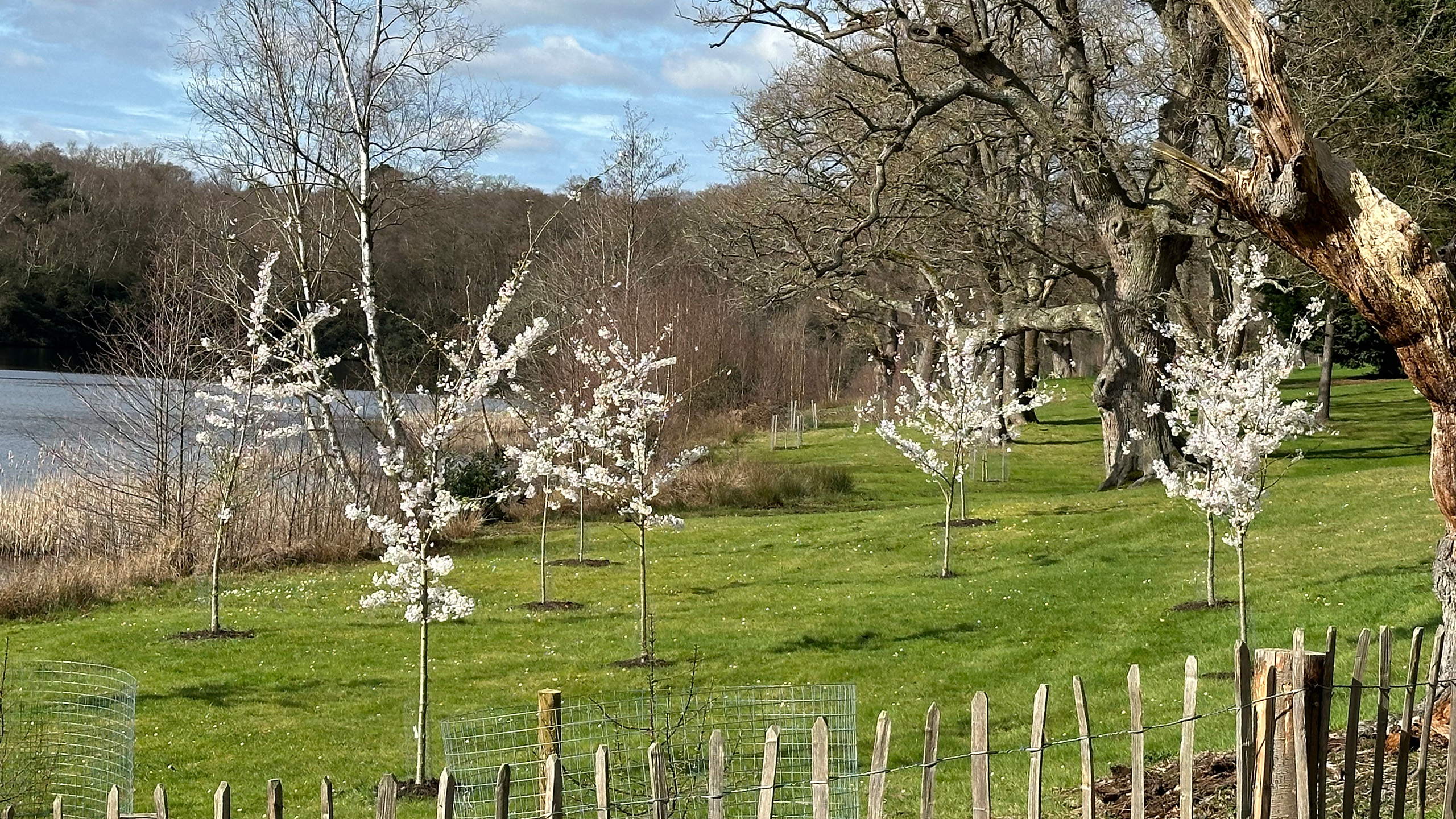
The first stop on my walk was by the Obelisk Pond, where several cherry trees have been planted as part of the Sakura Cherry Tree Project.
This initiative celebrates 150 years of Japan-UK friendship and highlights the ongoing cooperation between our two nations.
Launched by Prime Minister Shinzo Abe and then Prime Minister Theresa May in 2017, the project involves planting over six thousand cherry trees throughout the UK, starting in 2020. The cherry blossom (Sakura), which is Japan’s national flower, symbolises the enduring bond between our countries.
We also discussed the evolving landscape of trees around the pond, noting the changes brought about by the seasons and the new additions.
The landscape has undergone significant changes with the removal of Betula pendula and Rhododendron ponticum due to severe dieback caused by the droughts from 2018-2022. To enhance the autumn scenery, these have been replaced with trees known for their vibrant autumn colours.
- Liquidambar styraciflua ‘Royal Lodge’: Known for its spectacular autumn hues
- Nyssa sylvatica: Several named clones grafted by the propagation team using scion material from the National Collection at Exbury Gardens, Hampshire
- Liriodendron tulipifera (Tulip Tree): Grafted from the best-coloured specimens found near Carters Bar
These new plantings are expected to create stunning reflections in the water during the autumn season.
The Valley Gardens
As we reached The Valley Gardens, we paused to learn about the history of magnolias.
The first Himalayan magnolia, Magnolia campbellii, was discovered in 1855 and subsequently introduced into cultivation in Ireland in 1865. It took 20-30 years before it first flowered, finally blooming in 1884.
On this walk, we were particularly interested in the deciduous Asiatic magnolias, which typically display their flowers from February to April, usually before the leaves emerge. There are two National Collection holders for these magnolias: Windsor Great Park and Caerhays in Cornwall.
We then made our way through the Heather Garden, up and down the Valleys admiring the many magnificent specimens.
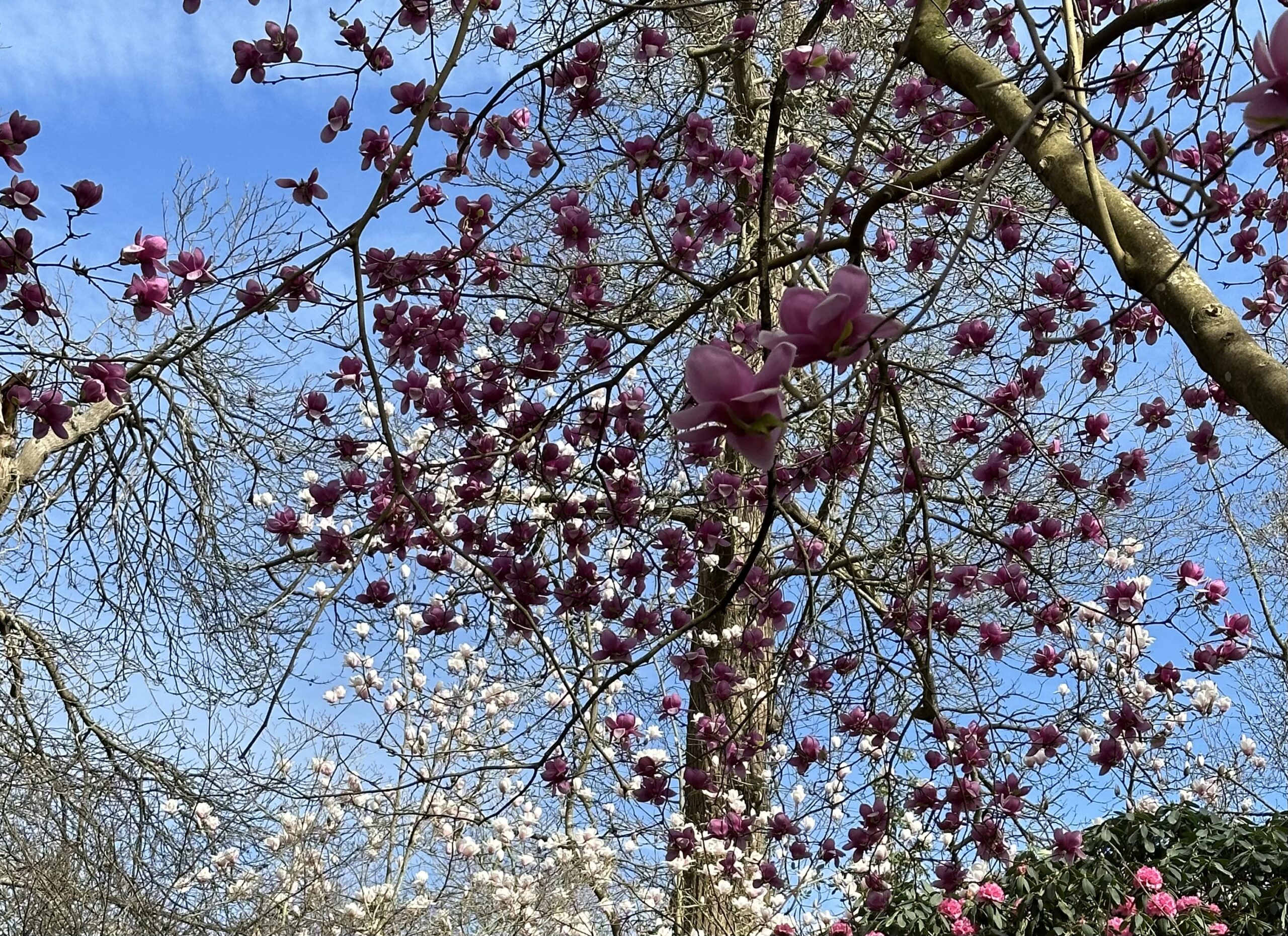
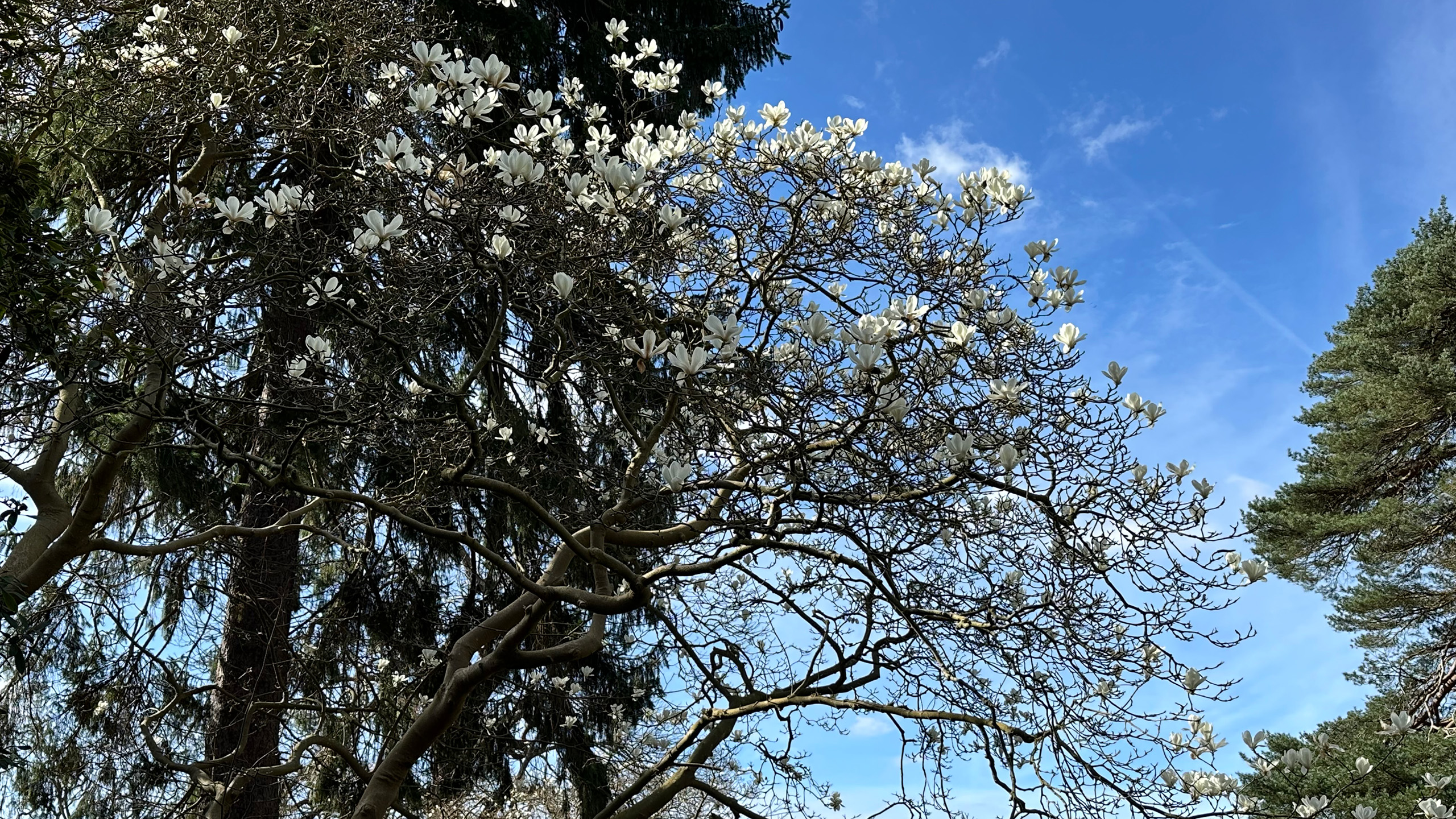
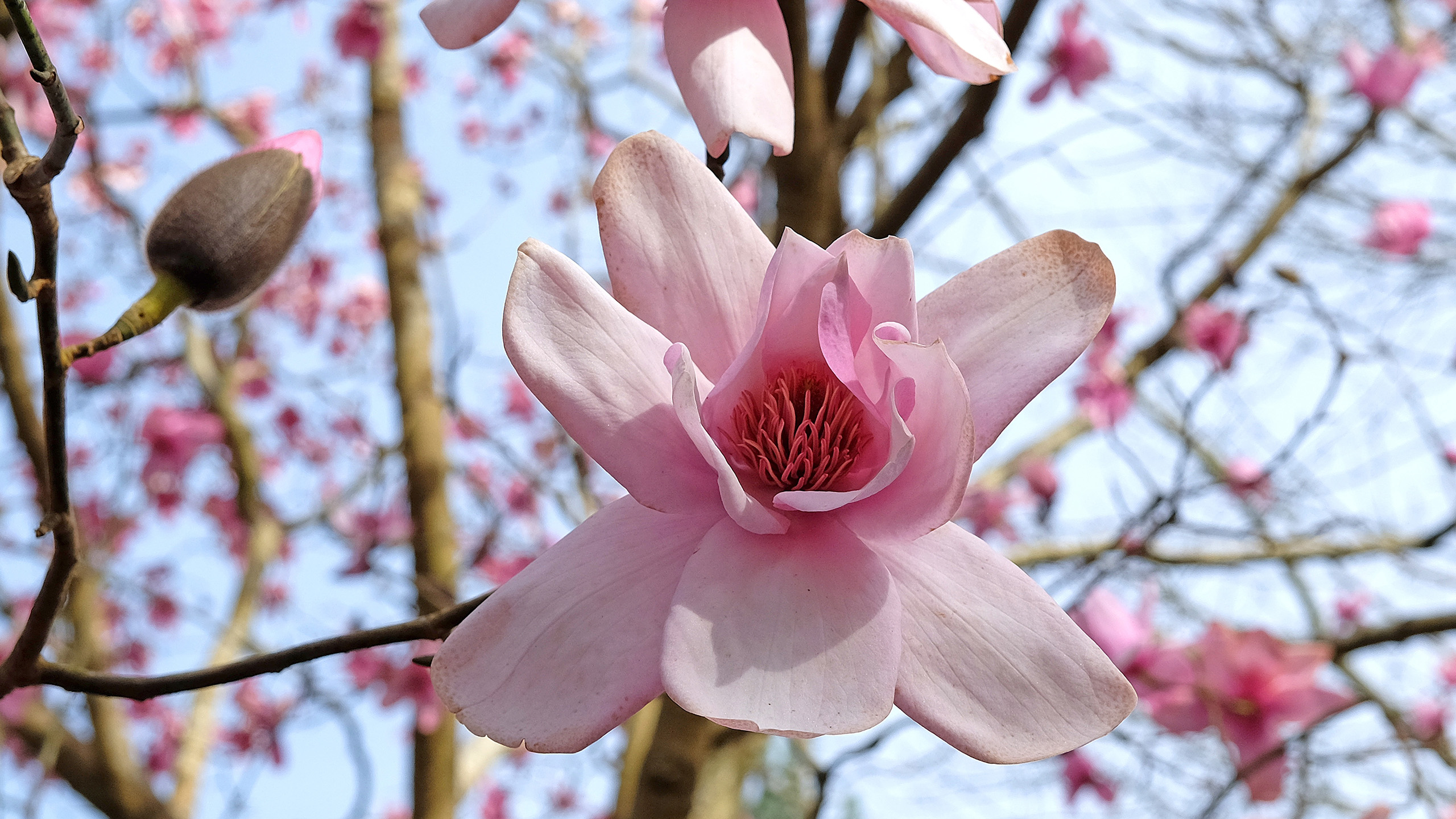
Some of the highlights were seeing the Magnolia ‘David Clulow’ with large white cup shaped flowers, and a very special Magnolia sprengeri diva planted in 1968 by Queen Elizabeth II which has pink flowers and is lightly scented.
The specimen stands proud on the edge of the Winter Garden below the Heather Garden.
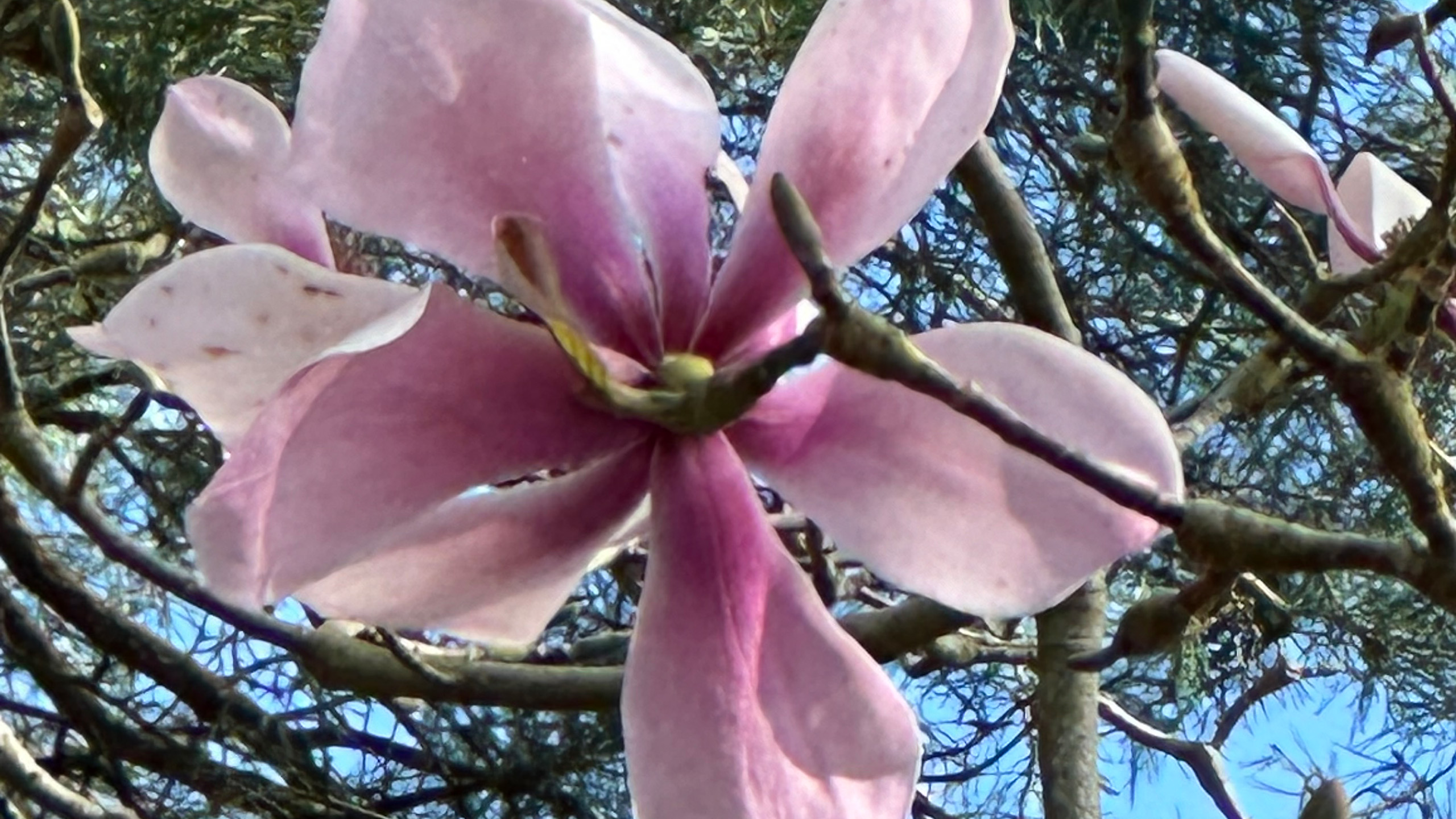
Magnolia campbellii ‘Charles Raffill’ which has spectacular large rose purple tepals which appear white on the inside, is one of the original seedlings raised by Charles Raffill at The Royal Botanic Gardens, Kew in 1946.
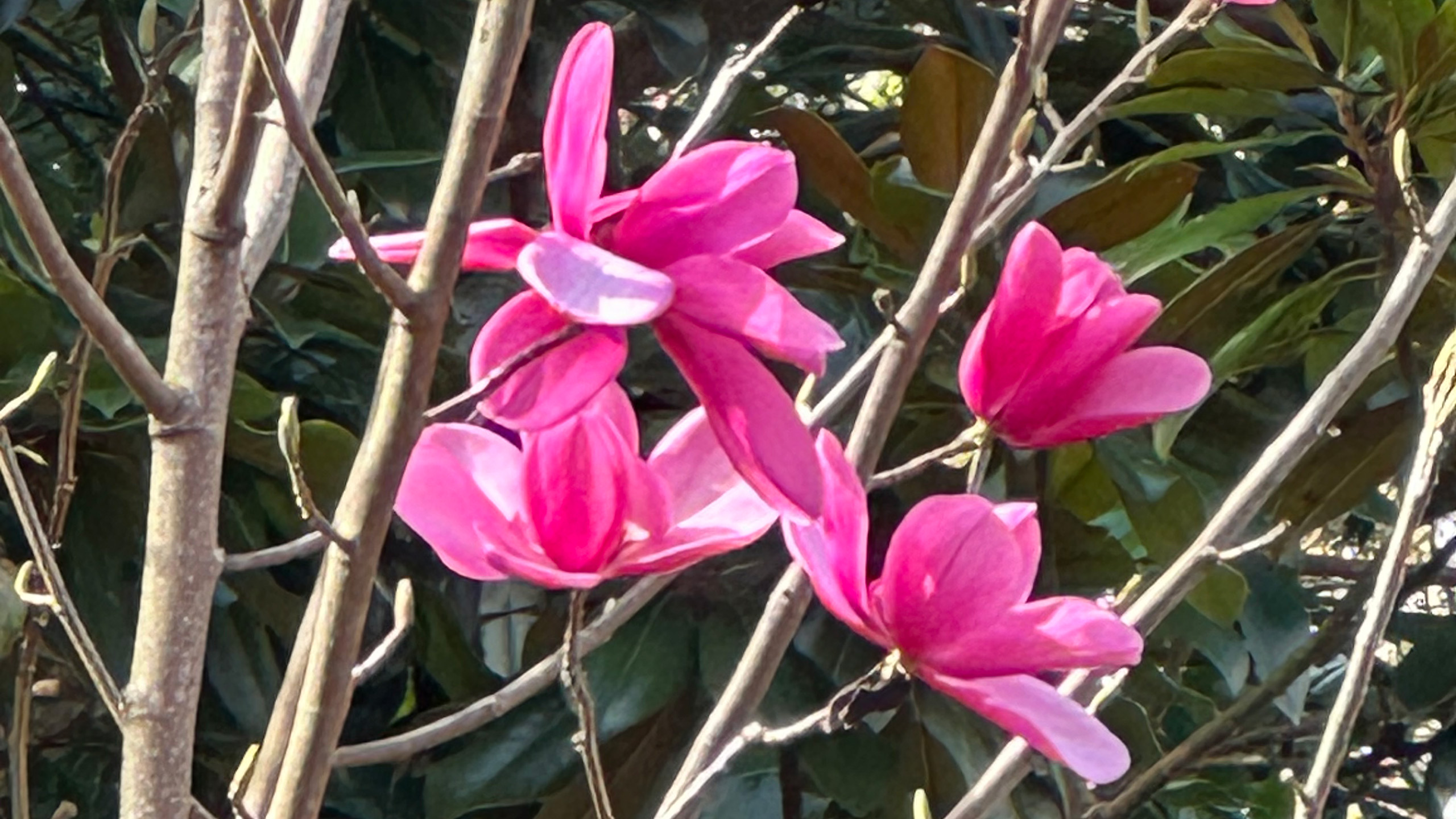
Magnolia ‘Aurora’ is a small upright tree with deep pink flowers and blooms can appear from an early age.
Magnolia campbellii ‘Charles Raffill‘
We returned to the Visitor Centre for a well-earned coffee and made it just before the rain returned. Many thanks to the guides for sharing their knowledge and producing an interesting walk.
Written by Maggie Elkin, Joint Event Coordinator