It was a gloriously warm sunny day on 11 May when some 50 Friends joined John Anderson, Keeper of the Gardens, on our annual spring walk in the Valley Gardens.
Once again, we made the journey from The Savill Garden to Valley Gardens in a coach and then spent two hours being led up-hill and down-hill following what one participant described as a “magical mystery tour” of the area north of the Punchbowl.
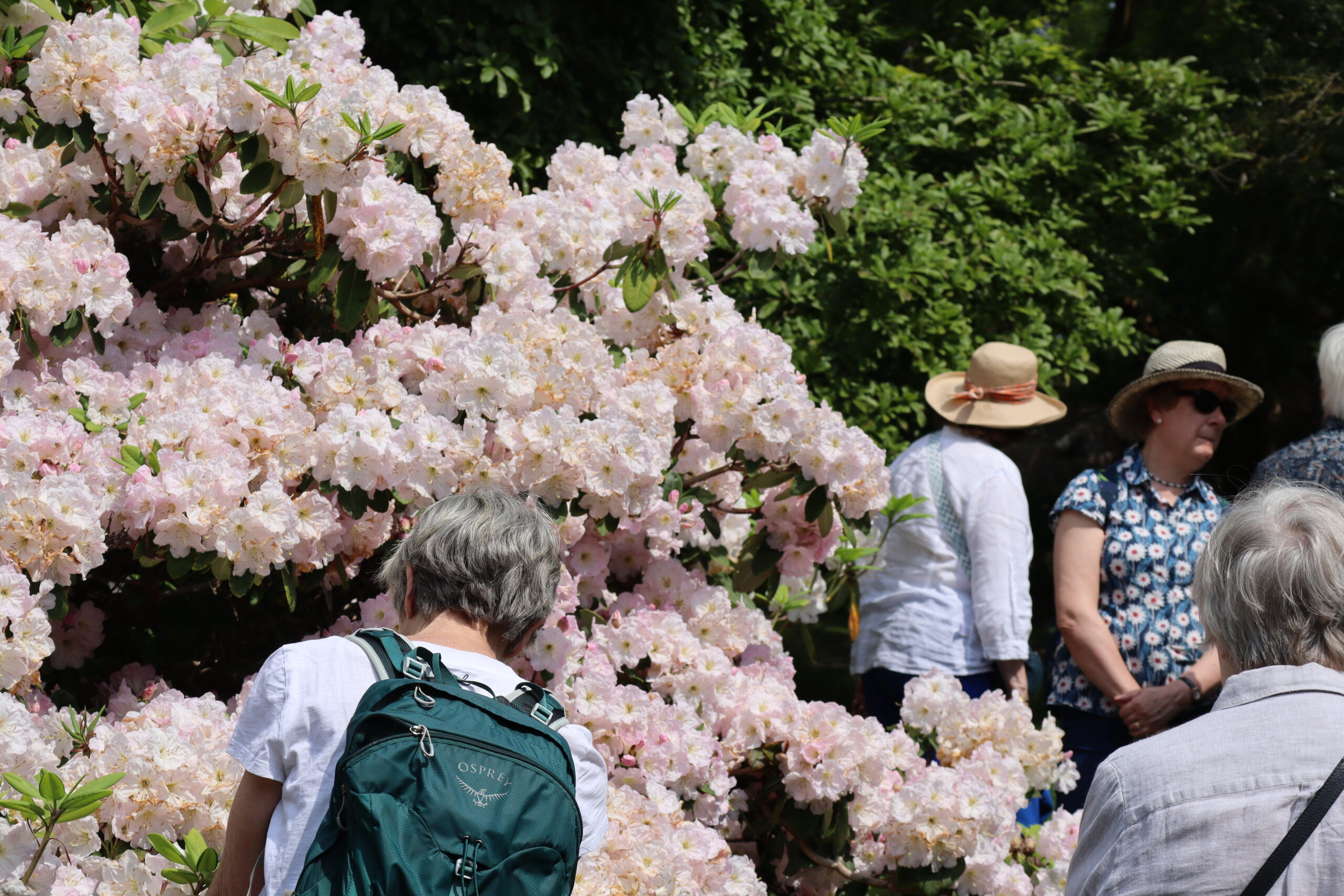
The Friends beside a large rhododendron
Climate change
John was very keen to talk about the problems being experienced with climate change and the different weather conditions which many of the plants and trees were having difficulty coping with.
Consequently, he said, trees were being planted which came from the West Coast of the US and other areas including the Mediterranean which were more used to warmer weather, but which could also endure some colder temperatures.
In the last two years we have experienced temperatures as low as 14C to -6C which is more damaging to plants than drought especially in November.
Storm damage
Over the years he said Valley Gardens had lost a number of trees from high winds and replacements took many years to mature which meant that in some areas the rhododendrons in particular were being exposed to very warm summers to which they were not suited.
We stopped by a wonderful grove of beeches which had been planted after the Great Storm of 1987.
He said we may lose some trees in the future due to climate change, in particular birch, cherry and sorbus which are affected by the heat and others which were hit by high winds. John said many of the older oaks were more able to adapt.
In the meantime, field maples and hornbeam are able to cope much better and were being planted.
One thing John stressed was that Valley Gardens was a contrived landscape and had been planted over the years – everything has to be managed to give the wild and pretty look.
Seasonal highlights
We stopped to take in some wonderful dogwoods (Cornus ‘Venus’ & Cornus x rutgersensis ‘Auora’) near the bomb crater – a relic of the Second World War – which were doing extremely well.
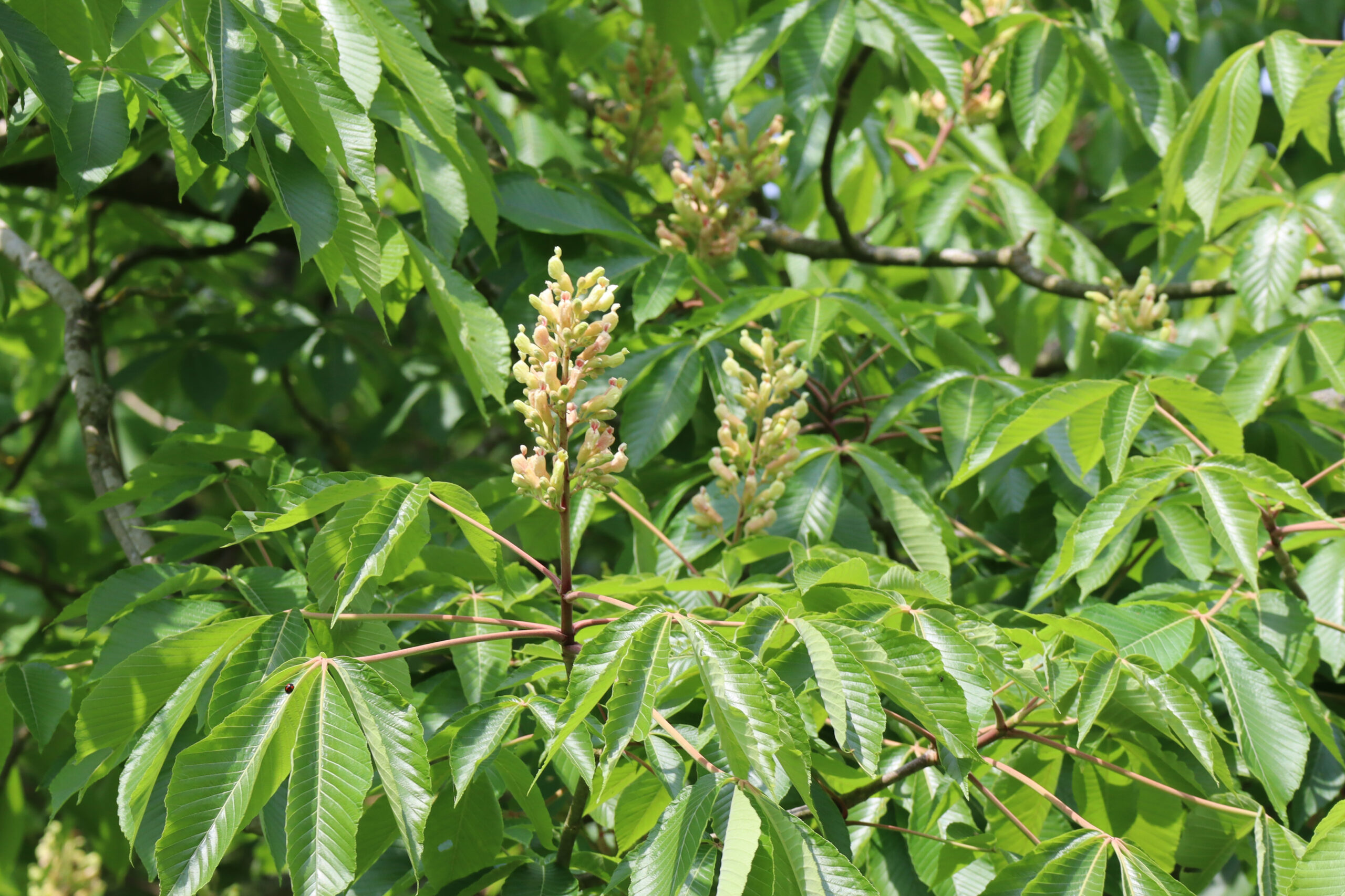
Further on we saw a beautiful yellow-flowering chestnut tree, in the US called the yellow buckeye (Aesculus flava), which comes from the east coast of America.
Another stop was to see a wisteria which had climbed to the very top of a tall oak tree which proved you didn’t have to prune to encourage flowering just to fit into the space we had – and this one had been left to find its own way with amazing results.
One very interesting plant we stopped at was the cucumber magnolia (Magnolia acuminata) which had rather small somewhat insignificant yellow flowers, but which John said was the plant from which many yellow magnolias had been bred.
Another very interesting plant we saw was the winter’s bark tree (Drimys winteri), the bark of which Captain John Wynter (who sailed with Sir Francis Drake) had given to his crew to fight off scurvy.
High Flyer’s Hill
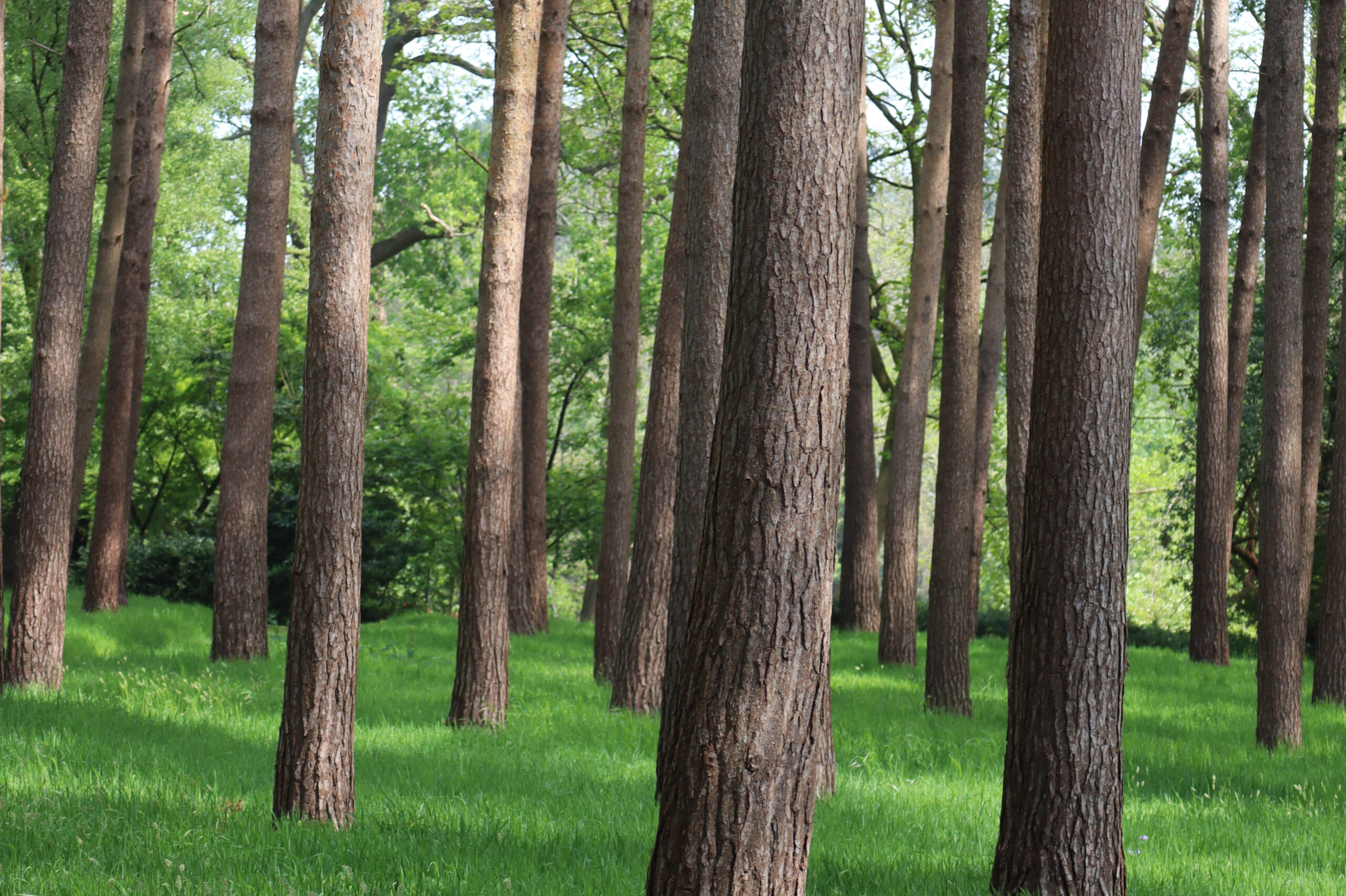
Having made our way along Breakheart Hill we walked along High Flyer’s Hill where we saw a magnificent grove of Scots pine which formed a valuable windbreak and under which grew long lush green grass.
John said this grove caused a lot of interest from many Europeans who visited as they were not used to seeing the green grass growing so well under pines.
We also passed some of the newly planted rhododendrons which have recently been transplanted from Deer Dell in Hampshire and which seem to be very happy in their new home.
Returning to The Savill Garden
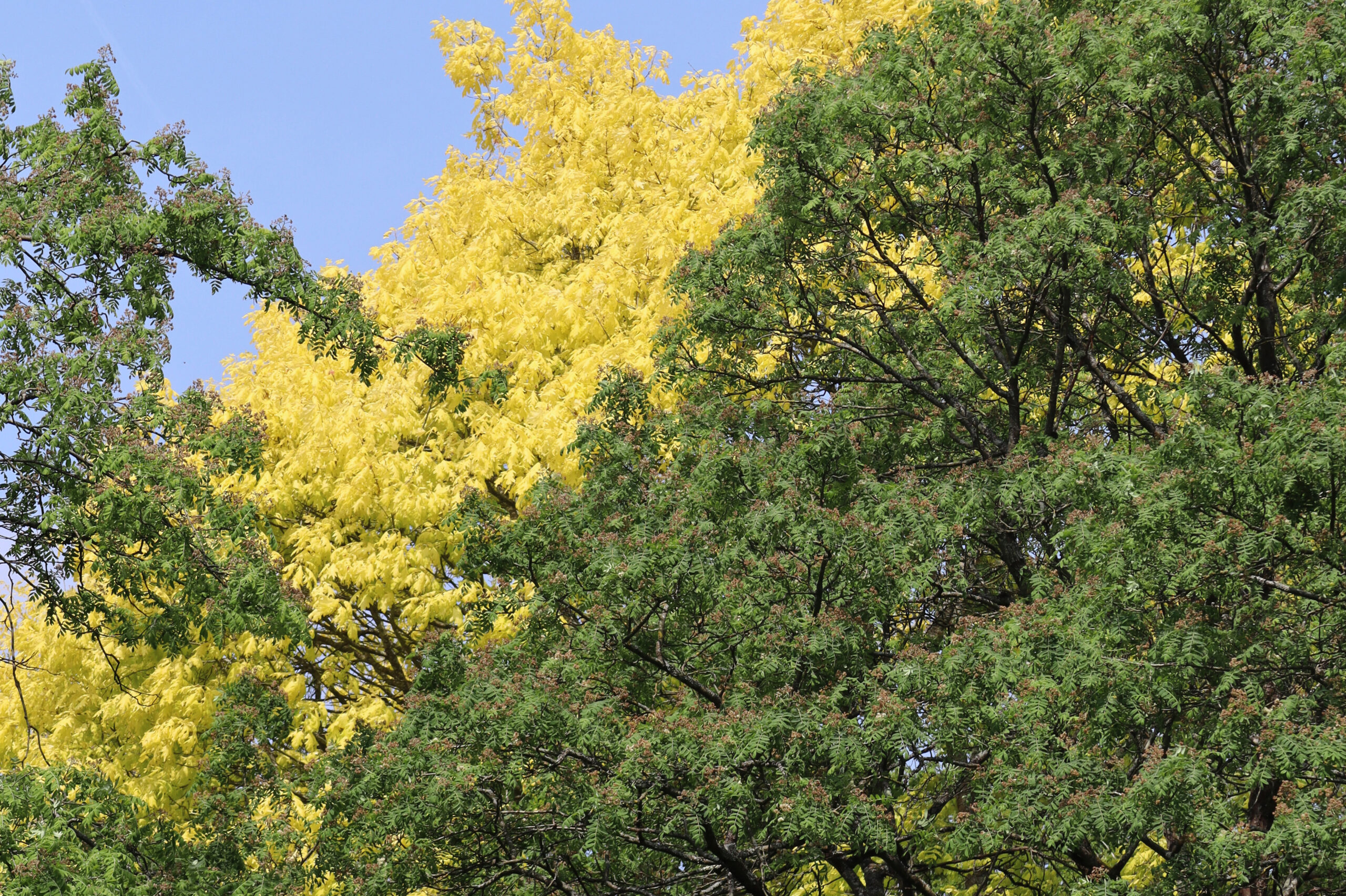
Our final “wow” plant was the magnificent yellow leafed oak tree (Quercus rubra ‘Aurea’) which shone so amazingly against the brilliant blue sky.
When people were wondering where we were we spotted cars parked by the Smith’s Lawn Polo Club and so we made a right turn back into the Heather Garden and through it to rejoin our coach for the return to The Savill Garden – a group of very tired but very happy people so grateful for all the information John had shared with them.
Written by Brenda Tong, Friends of The Savill Garden