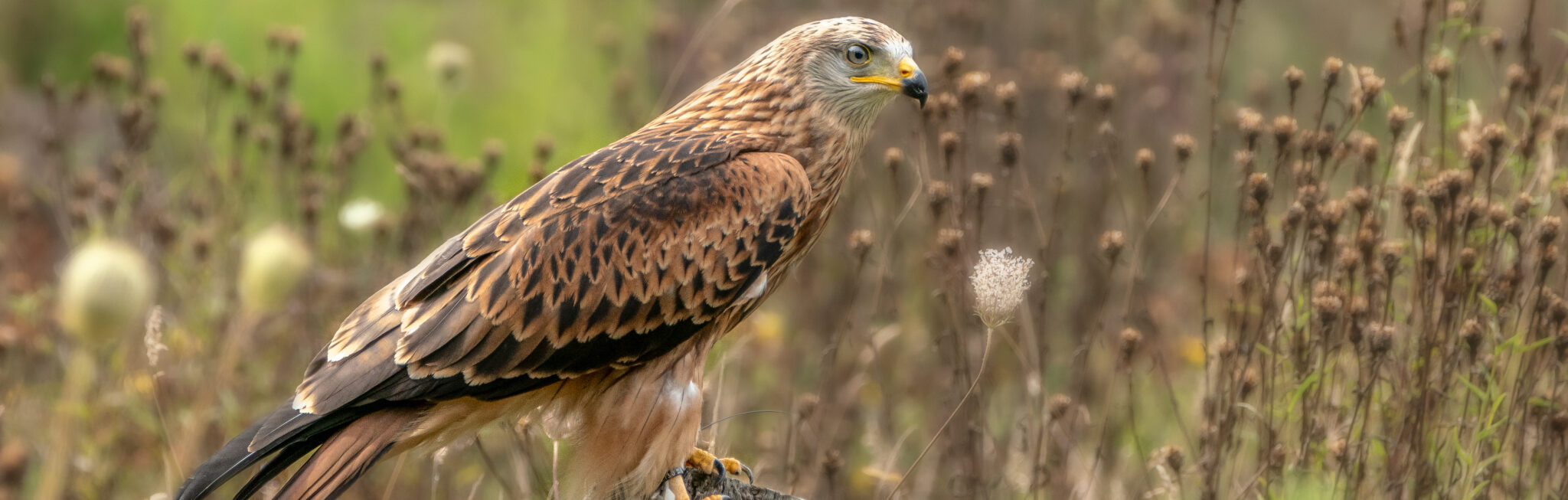
Red Kite.

Birds

The ancient trees, diverse woodlands and numerous water bodies across Windsor Great Park and the wider Estate create a rich mosaic of habitats, making them ideal nesting grounds for a variety of fascinating bird species. Discover more about these birds and the environments they thrive in.
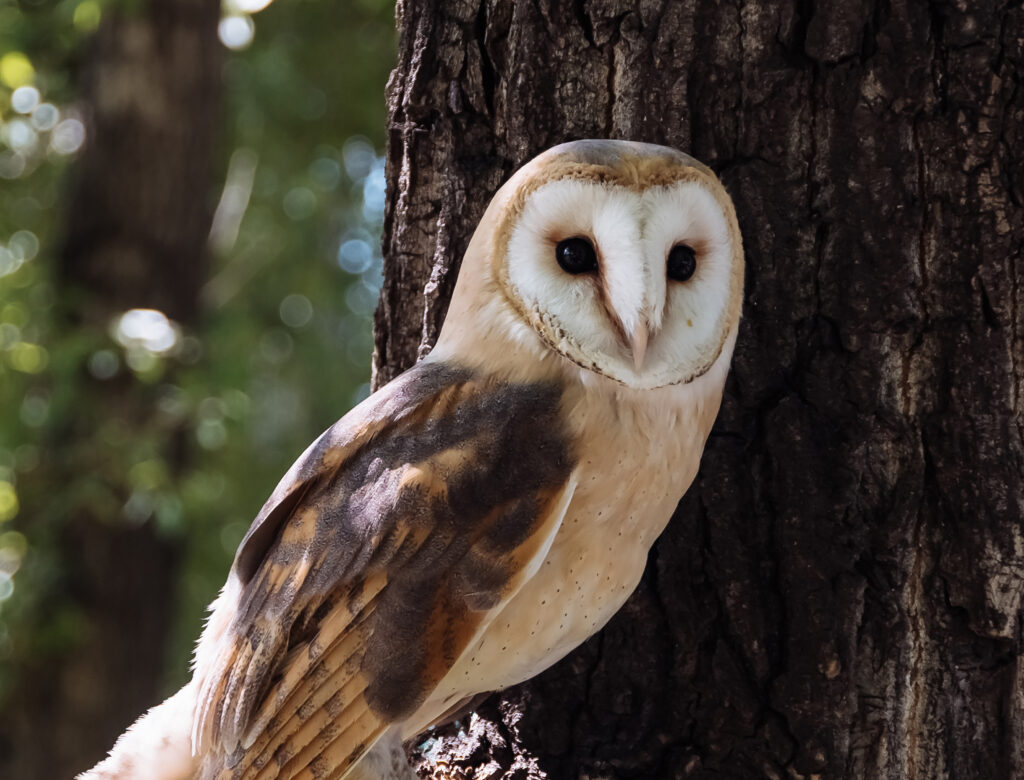
Barn Owl

With a heart-shaped face, beige back and wings and pure white underparts, the Barn Owl is a distinctive and much-loved countryside bird. Our careful management of old trees provides hollow branches for them to nest in, and our varied grassland management provides plentiful voles and mice which they need for food.

Find out more
Barn Owl.
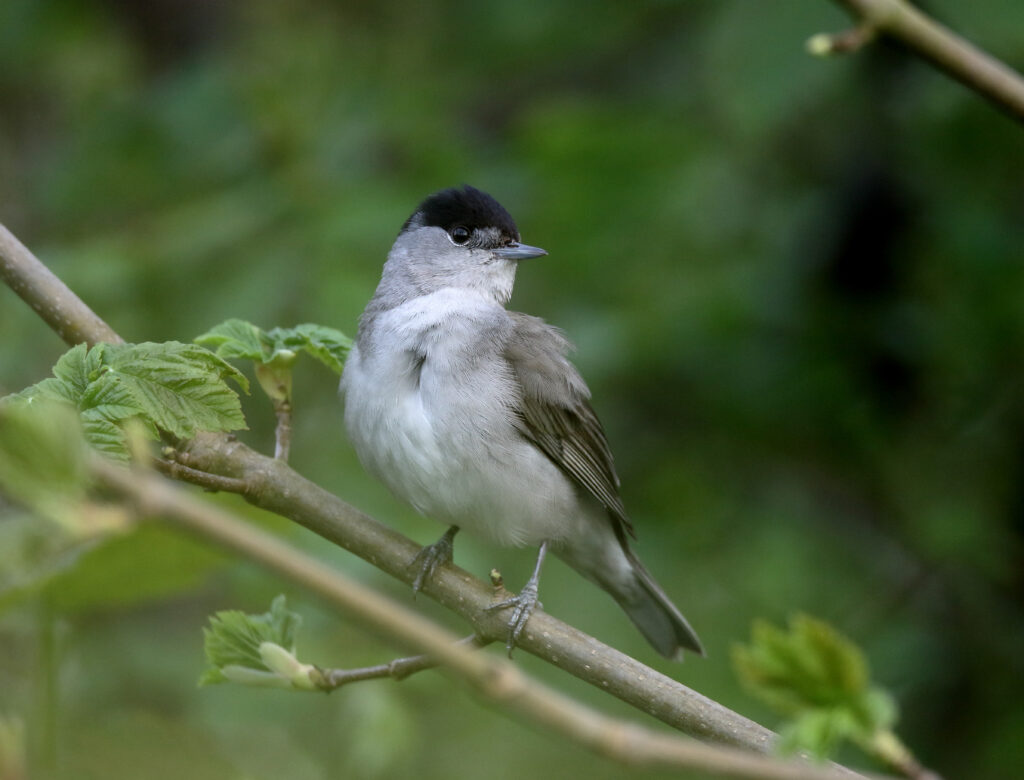
Blackcap

The Blackcap is a distinctive greyish warbler. The top of the male’s head is black (its black cap) while the female’s is chestnut brown. Its delightful fluting song has earned it the name ‘northern nightingale’.

Find out more
Blackcap.
Buzzard

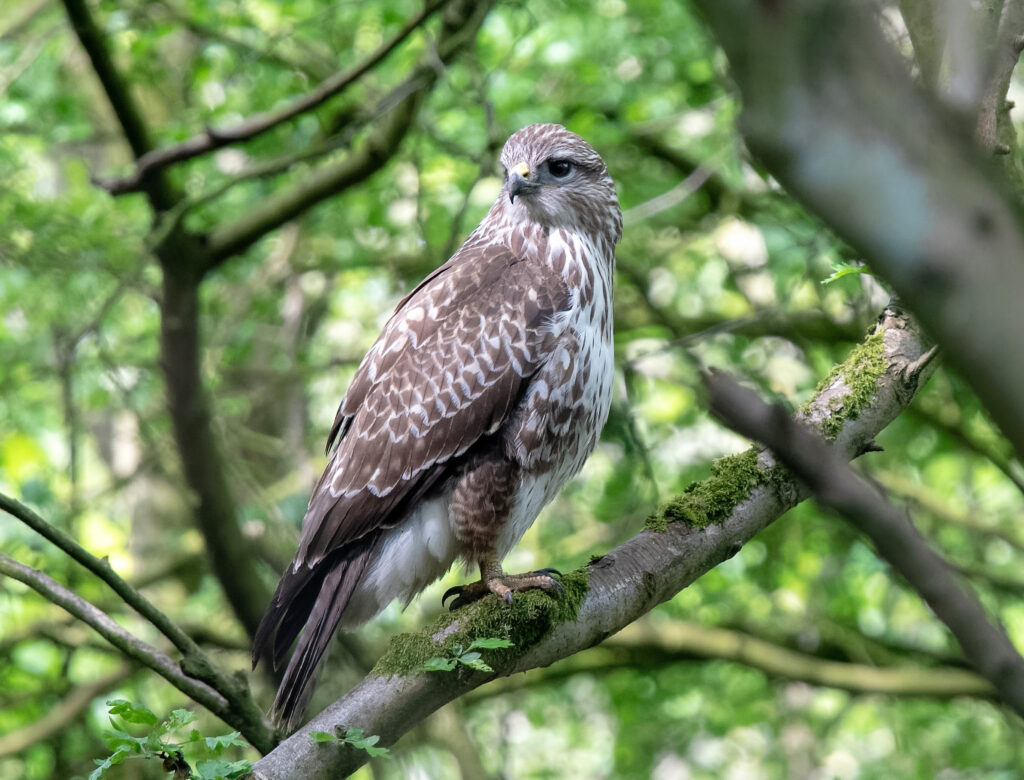
Now the most common and widespread UK bird of prey, the Buzzard is quite large with broad, rounded wings, and a short neck and tail. When gliding and soaring, it will often hold its wings in a shallow ‘V’ and the tail is fanned.

Find out more
Buzzard.
Canada Goose

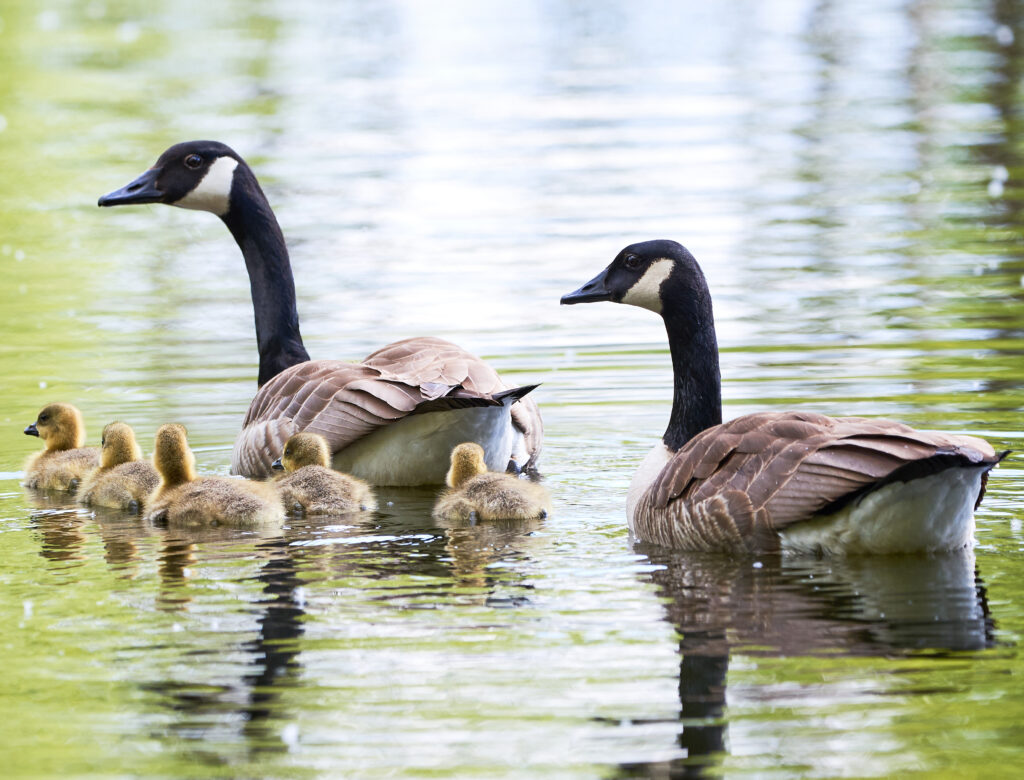
The Canada Goose is a large bird, easily recognised by its black head and neck, contrasted with a prominent white throat patch. Originally native to North America, it has now become abundant in many areas, and can be a problem to water quality and smaller water fowl.

Find out more
Canadian Geese with Chicks.
Chiffchaff

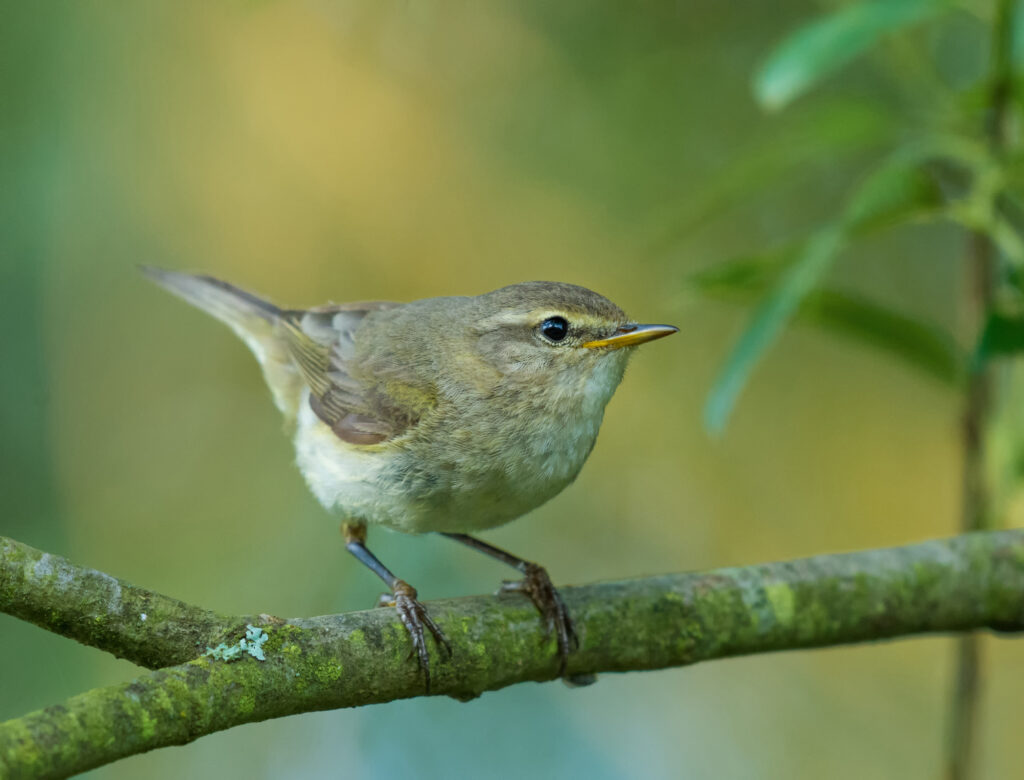
The Chiffchaff is a small, olive-brown warbler that visits Windsor Estate in spring, filling the woodlands with its distinctive “chiff-chaff” song. Preferring mixed woodland and shrubby areas, it feeds mainly on insects and spiders, making the Estate’s diverse habitats ideal for foraging. This early migrant is often among the first signs of seasonal change, heralding the arrival of warmer days across Windsor’s scenic landscapes.

Find out more
Chiffchaff.
Cormorant

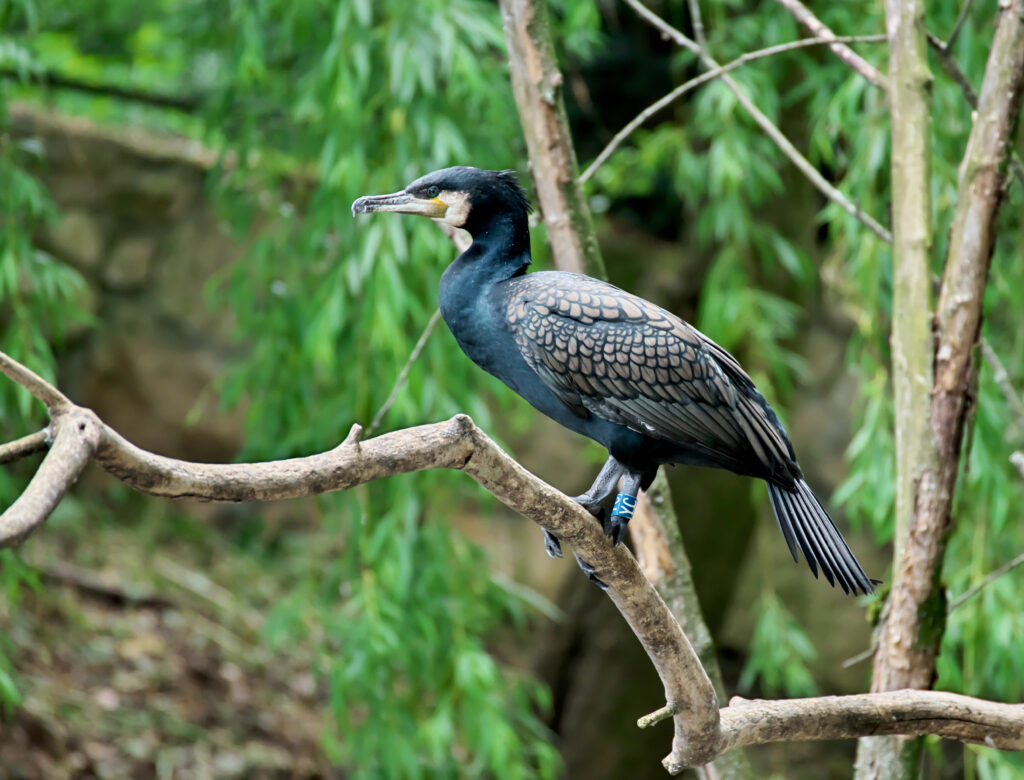
The Cormorant is a large, black aquatic bird that stands out due to its size and dark plumage. With its long, sinuous neck, it has a strikingly prehistoric look. It is often spotted perched with its wings spread wide to dry.

Find out more
Cormorant.
Dartford Warbler

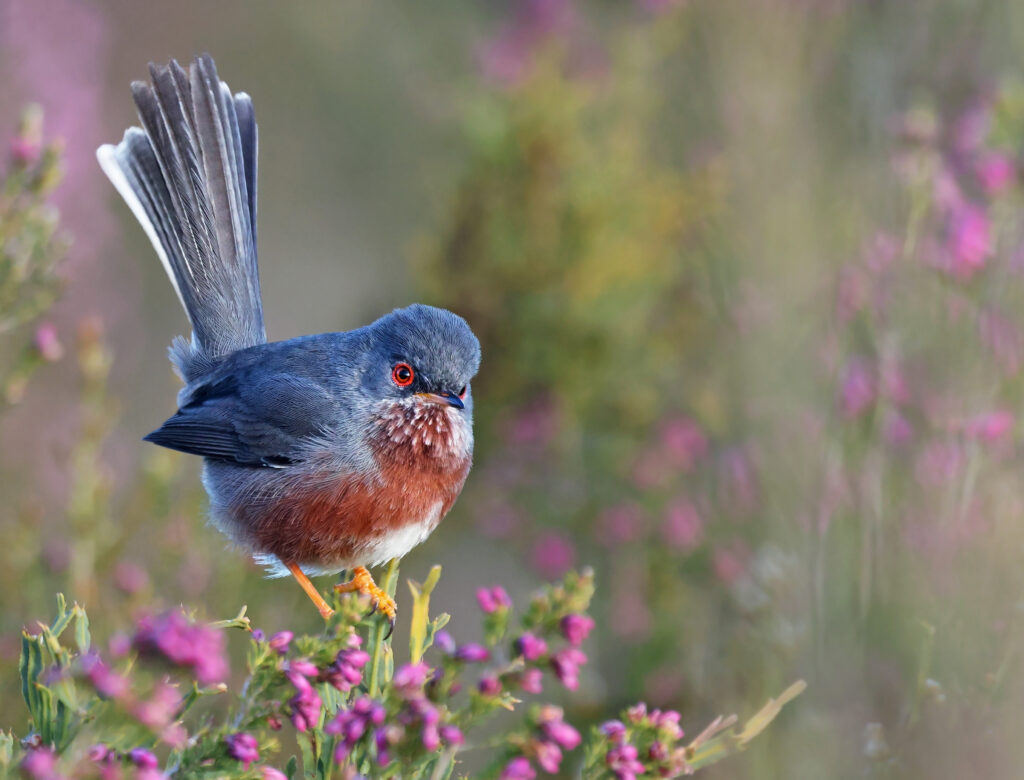
This small, dark, long-tailed warbler will perch on top of a gorse stem to sing, but is often seen as a small flying shape bobbing between bushes. It is one of our key conservation targets, and has nested in heath and scrubland in Crowthorne Woods, Swinley Forest and Buttersteep Forest.

Find out more
Dartford Warbler.
Egyptian Goose

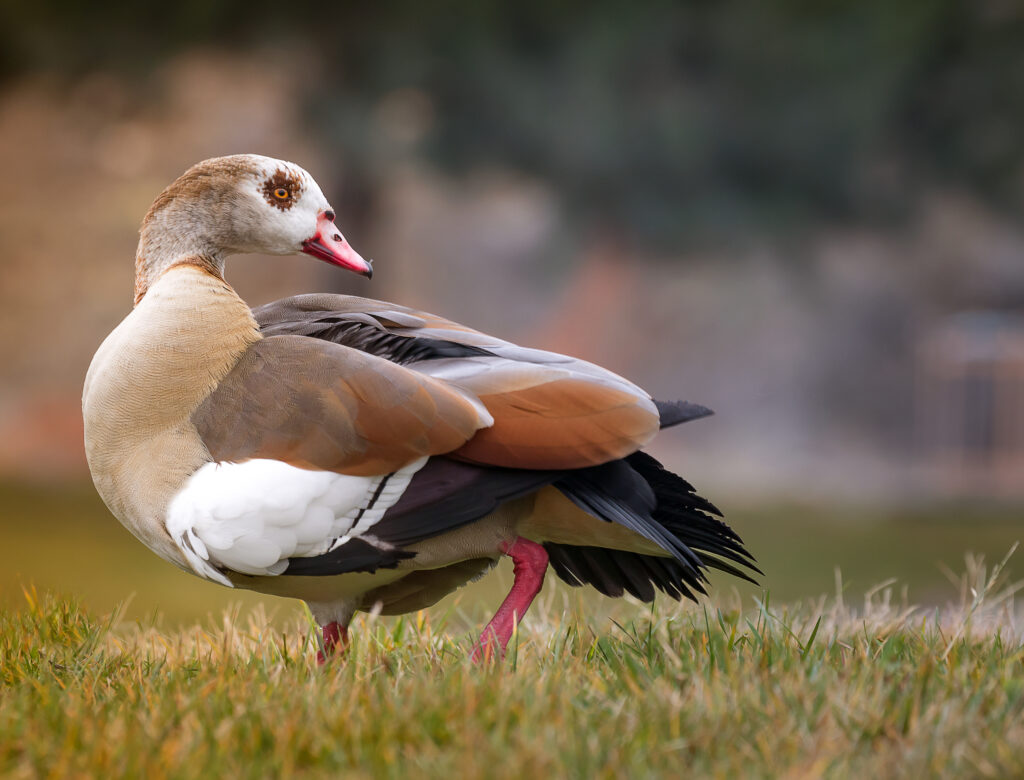
This pale brown and grey goose, a relative of the Shelduck, is easily recognised by its distinctive dark brown eye patches and bold white wing markings visible in flight. Originally introduced to ornamental ponds, it has escaped into the wild and is rapidly increasing in numbers. It nests in large tree holes, often starting early in the year, with families of goslings commonly seen at the village ponds in late winter.

Find out more
Egyptian Goose.
Eurasian Coot

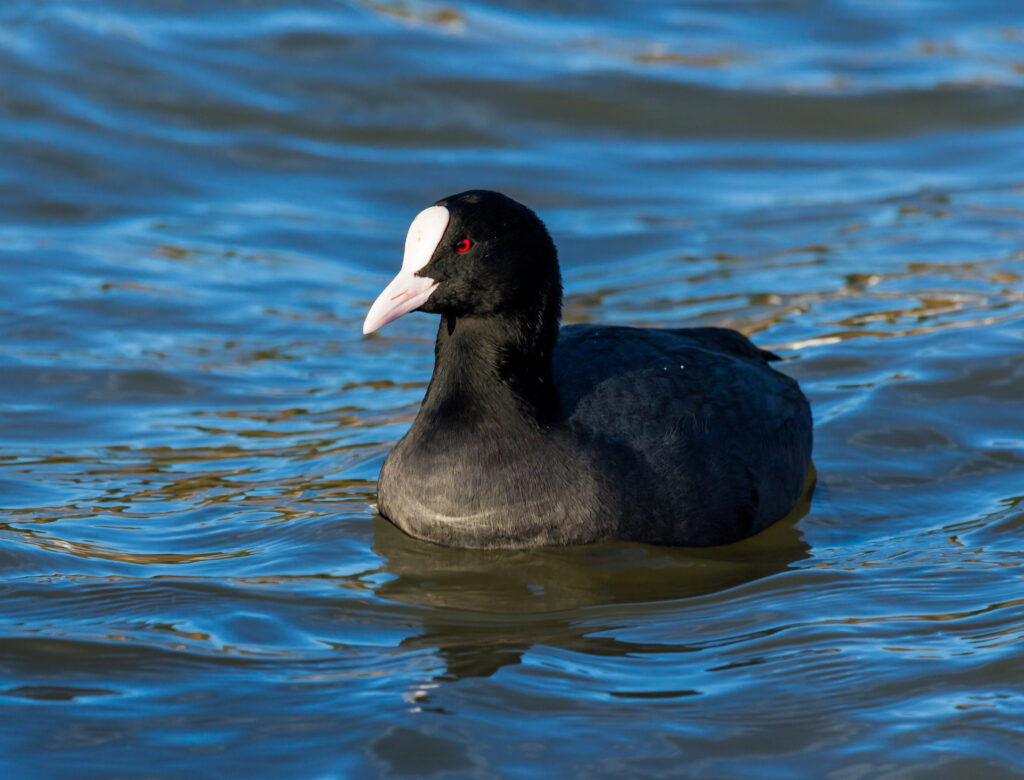
The Eurasian Coot is a fully black waterbird, noticeably larger than its relative, the Moorhen. It is easily recognised by its striking white bill and the prominent white frontal shield above it—hence the nickname ‘bald’. Its toes are equipped with lobed flaps of skin, which function similarly to webbed feet, aiding its swimming ability.

Find out more
Eurasian Coot.
Fieldfare

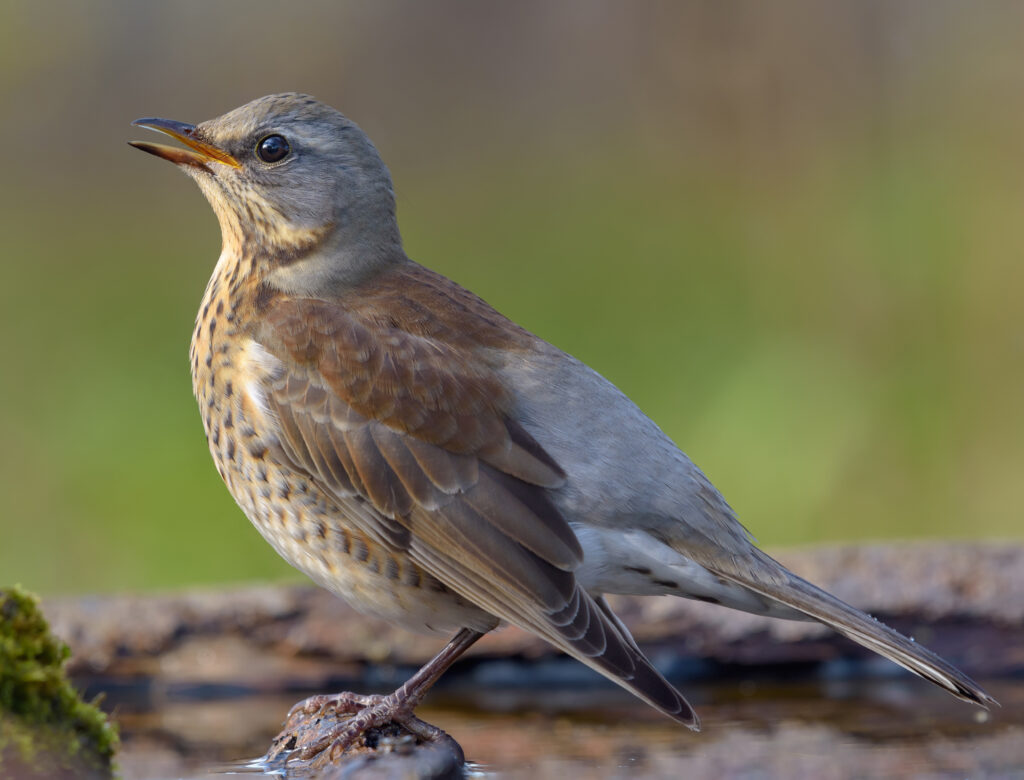
The Fieldfare is a large, colourful thrush with a grey head, chestnut back, and speckled breast. A winter visitor to the UK, it forms noisy flocks feeding on berries and insects. Native to northern Europe, it migrates south in colder months and is red-listed in Britain.

Find out more
Fieldfare.
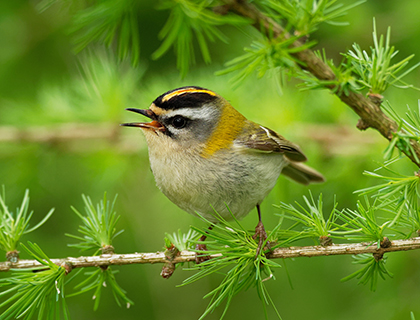
Firecrest

The Firecrest, one of Britain’s tiniest birds, is a rare gem occasionally spotted in Windsor Estate’s mature woodlands and ornamental gardens. Distinguished by its fiery orange crown bordered with black and white, it thrives among conifers and dense shrubs. This insectivorous species feeds on small invertebrates, making the Estate’s varied habitats ideal for its winter foraging. Its presence adds a touch of brilliance to Windsor’s rich avian diversity.

Find out more
Firecrest bird sitting on a branch with green foliage.
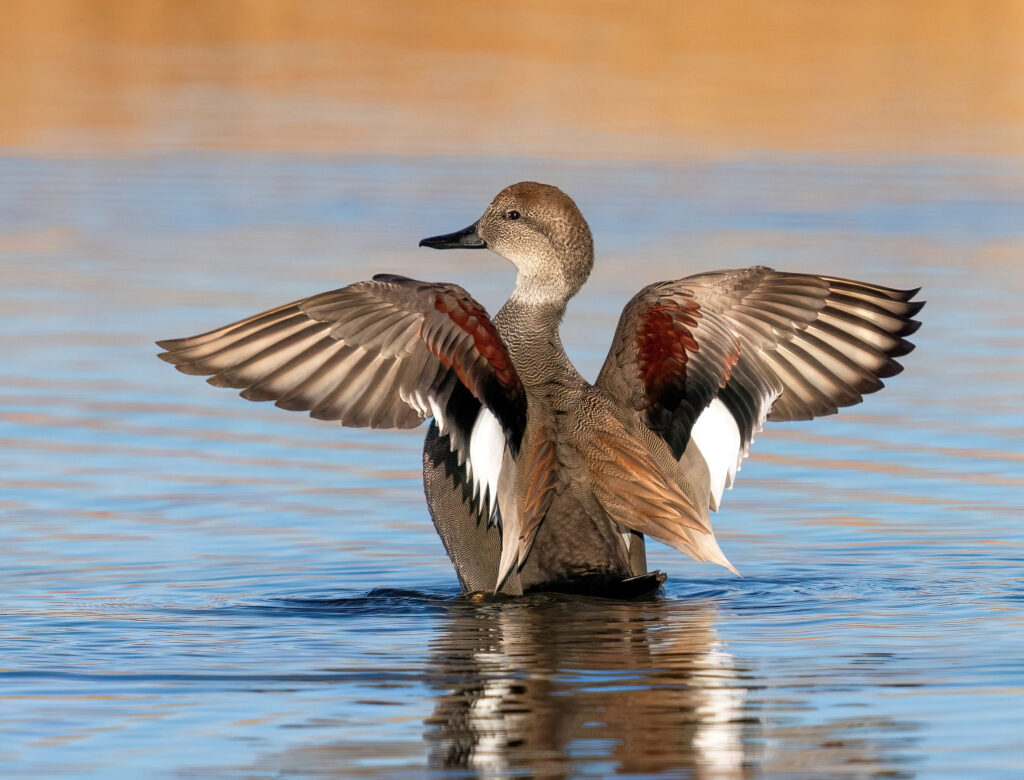
Gadwall

The Gadwall is a subtly elegant dabbling duck, slightly smaller than a Mallard, distinguished by its predominantly grey plumage and striking black rear. In flight, it reveals a distinctive white wing patch. Up close, its grey feathers are intricately patterned with fine stripes and speckles, giving it a refined and detailed appearance.

Find out more
Gadwall Duck.
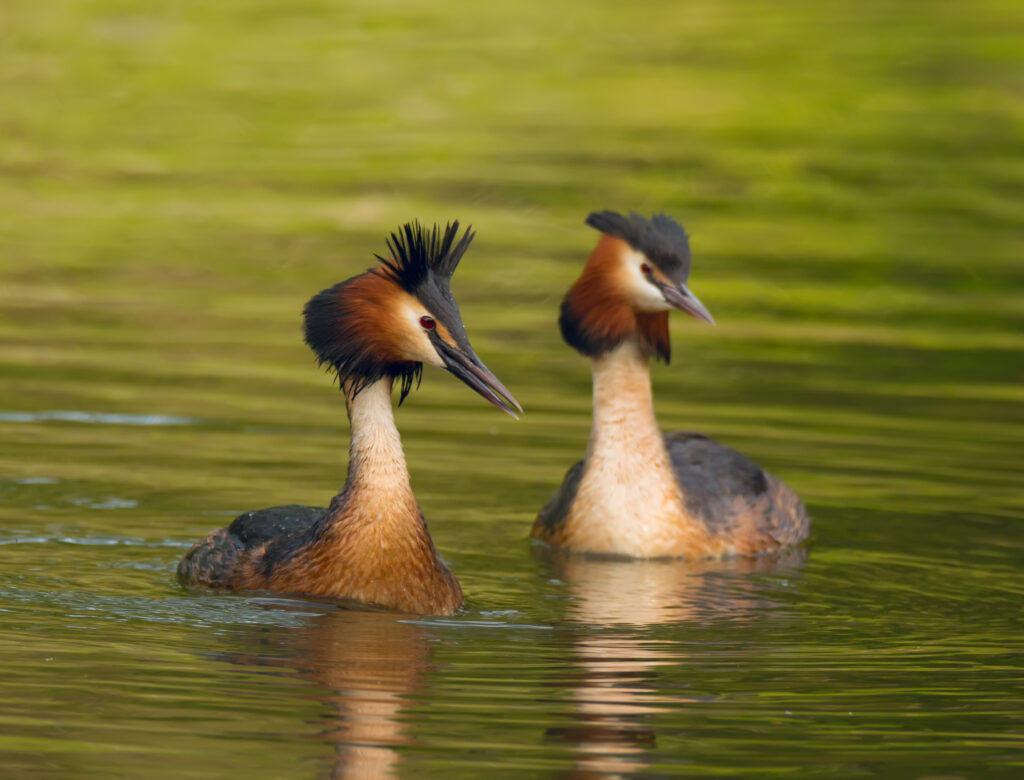
Great Crested Grebe

The Great Crested Grebe is a graceful and charming waterbird, easily recognised by its ornate head plumes. Once nearly driven to extinction in the UK due to demand for its decorative feathers, the species has since made a recovery. Rather than flying, these birds prefer to dive – both to catch food and to evade danger.

Find out more
Pair of Great Crested Grebe.
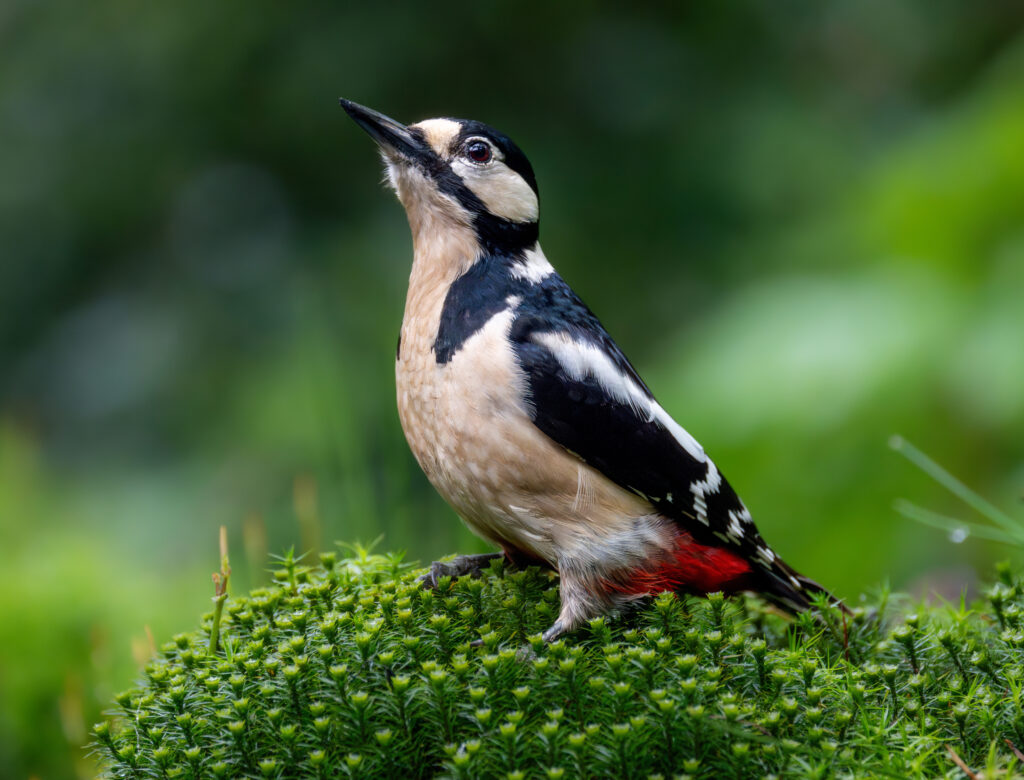
Great Spotted Woodpecker

The Great Spotted Woodpecker is a striking black-and-white bird with a red patch on its belly and, in males, a red nape. Common in our woodlands and Forests, it feeds on insects, seeds, and nuts, and is known for its loud drumming on tree trunks.

Find out more
Great Spotted Woodpecker.
Grey Heron

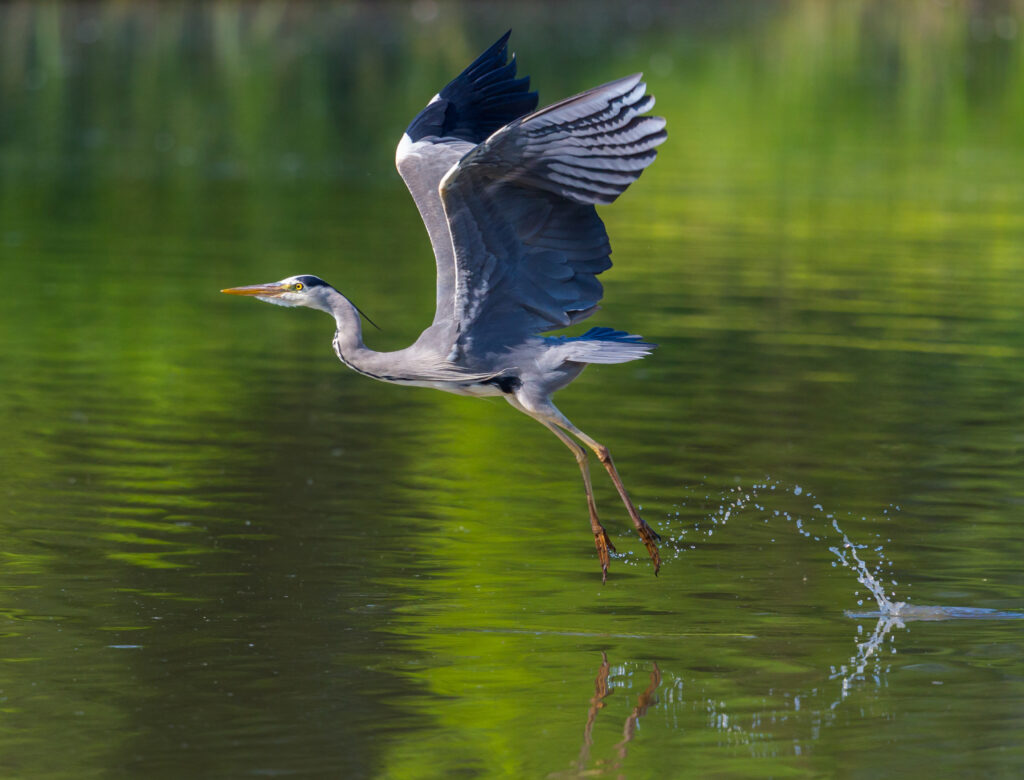
Grey herons are unmistakable birds – tall and elegant, with long legs, a sharp beak, and striking grey, black, and white plumage. They nest in small colonies in the treetops at undisturbed locations within Windsor Great Park, and can be seen hunting around lakes, meadows and parkland.

Find out more
Grey Heron.
Jackdaw

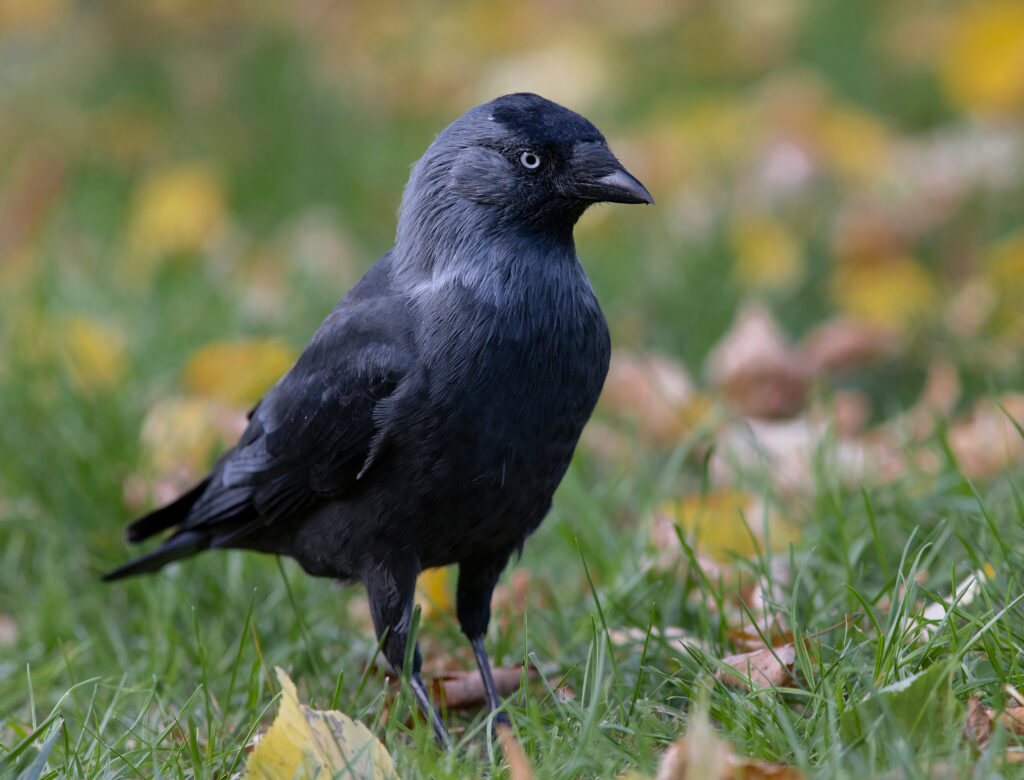
This is a small black crow with a distinctive silvery sheen to the back of its head. Its pale eyes stand out from its plumage. The Jackdaw’s call – a familiar hard ‘tchack’ – gives it its name. It will often nest in chimneys, buildings, rock crevices and tree holes.

Find out more
Jackdaw.
Kestrel

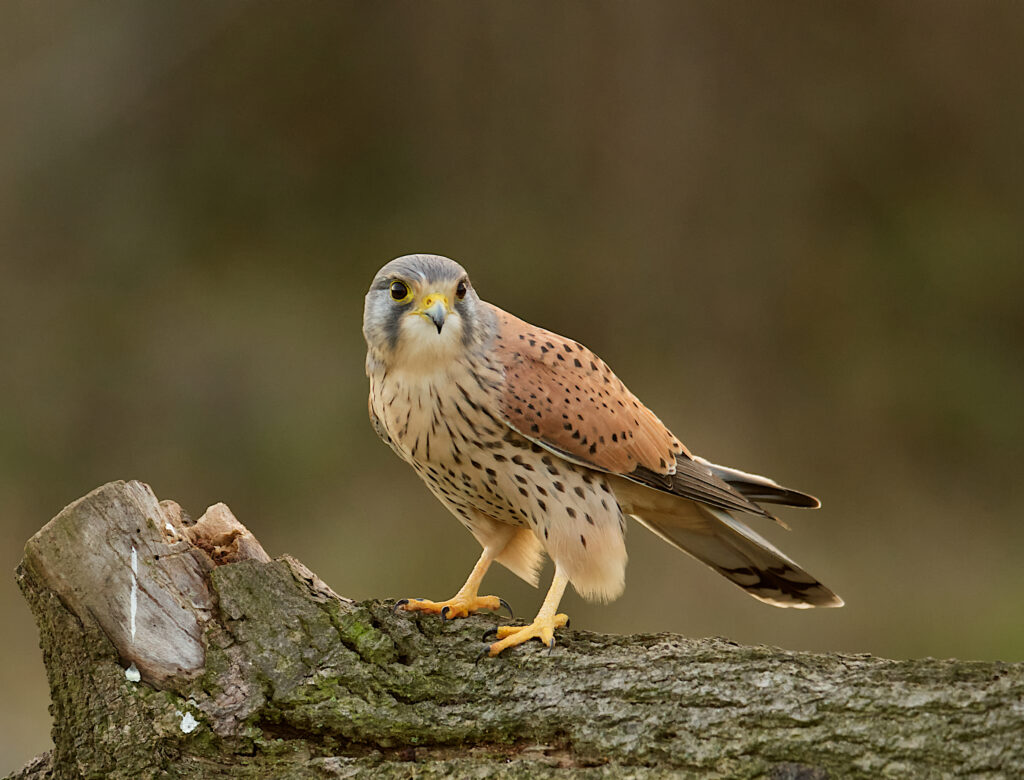
The Kestrel is a small falcon known for its hovering flight over open countryside. Males have grey heads and tails; females are browner. It hunts mainly voles and small mammals, nesting in tree holes or buildings. Once common, numbers have declined, earning Amber conservation status.

Find out more
Male Kestrel.
Little Egret

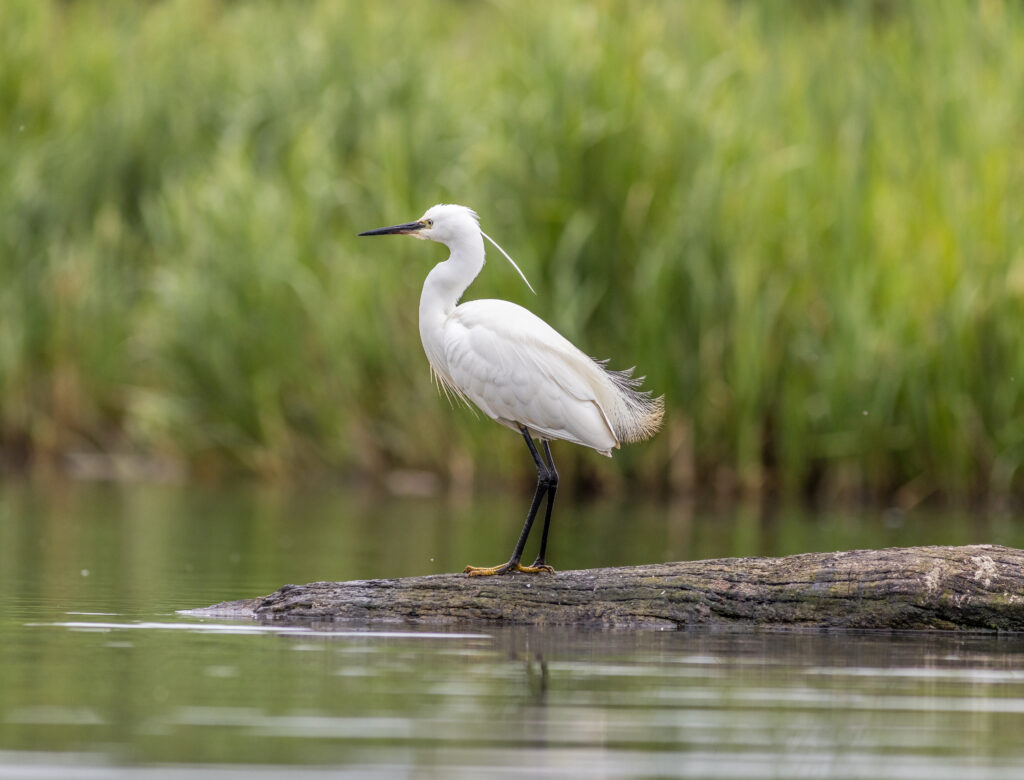
The Little Egret is a small, elegant white heron distinguished by its delicate plumes on the crest, back, and chest, along with black legs, a slender black bill, and striking yellow feet. It began appearing in notable numbers in the UK in 1989 and successfully bred for the first time in Dorset in 1996.

Find out more
Little Egret.
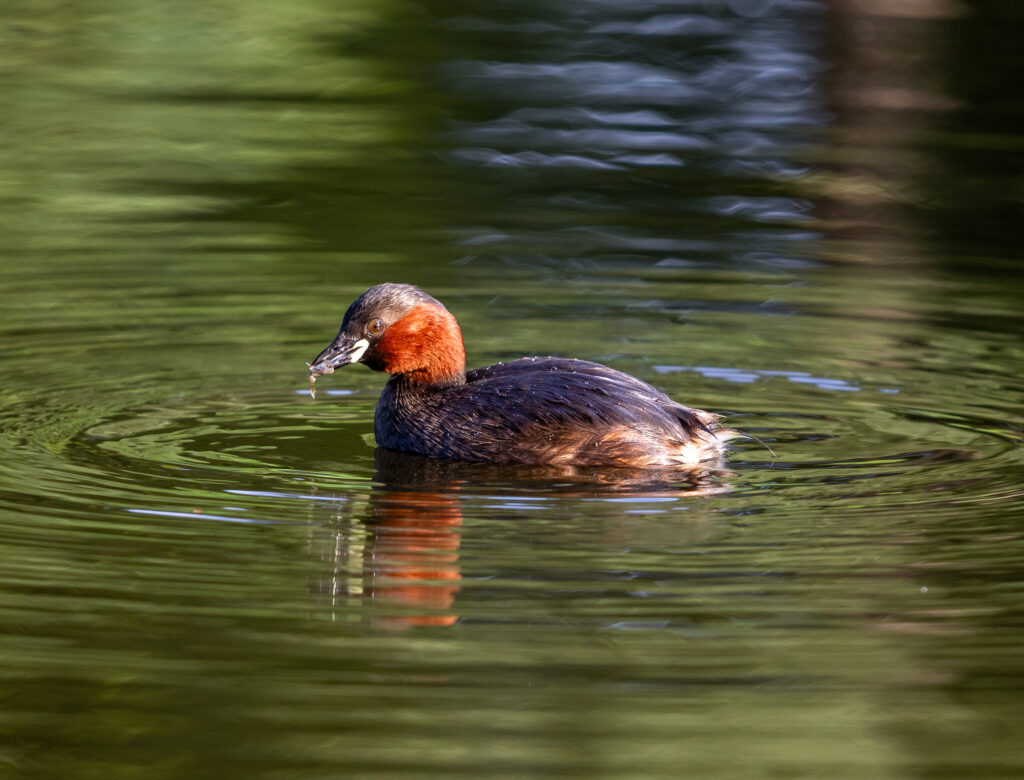
Little Grebe

The Little Grebe is a compact, rounded waterbird, often recognised by its characteristically fluffy-looking rear. It frequently dives when startled, resurfacing discreetly some distance away. It lives on ponds like Ox Pond and Rapley Lake, where there is plenty of food and tall reeds for cover and shelter.

Find out more
Little Grebe.
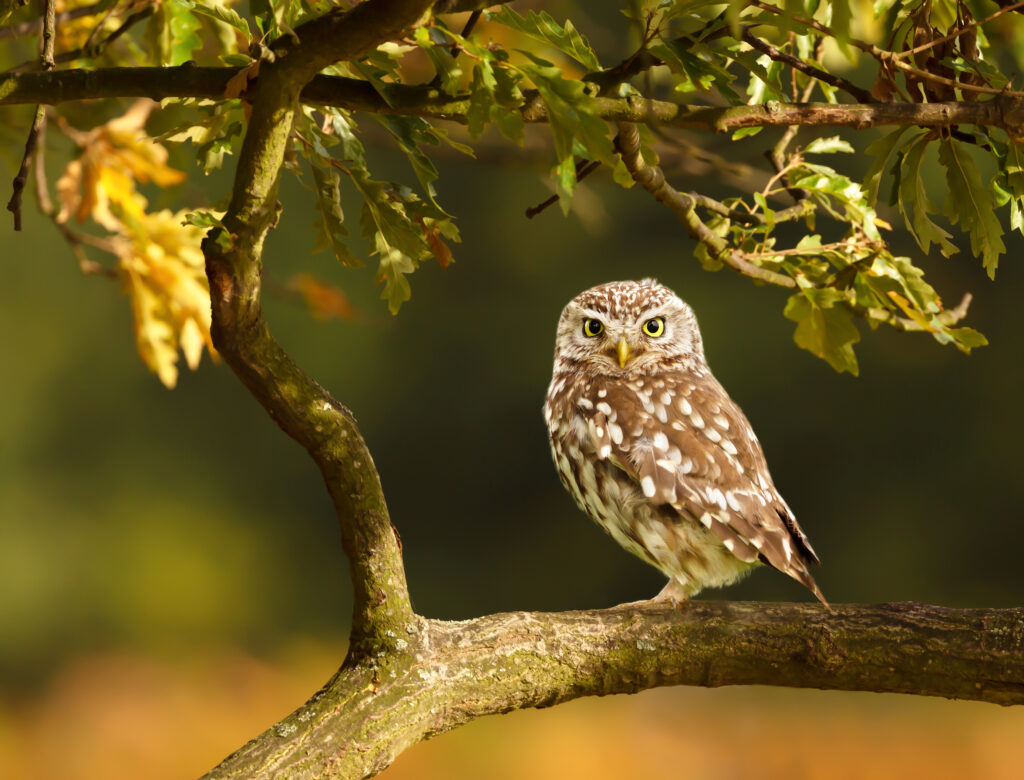
Little Owl

This small owl was introduced to the UK in the 19th century. It can be seen in the daylight, usually perching on a tree branch, telegraph pole or rock. It will bob its head up and down when alarmed.

Find out more
Little Owl.
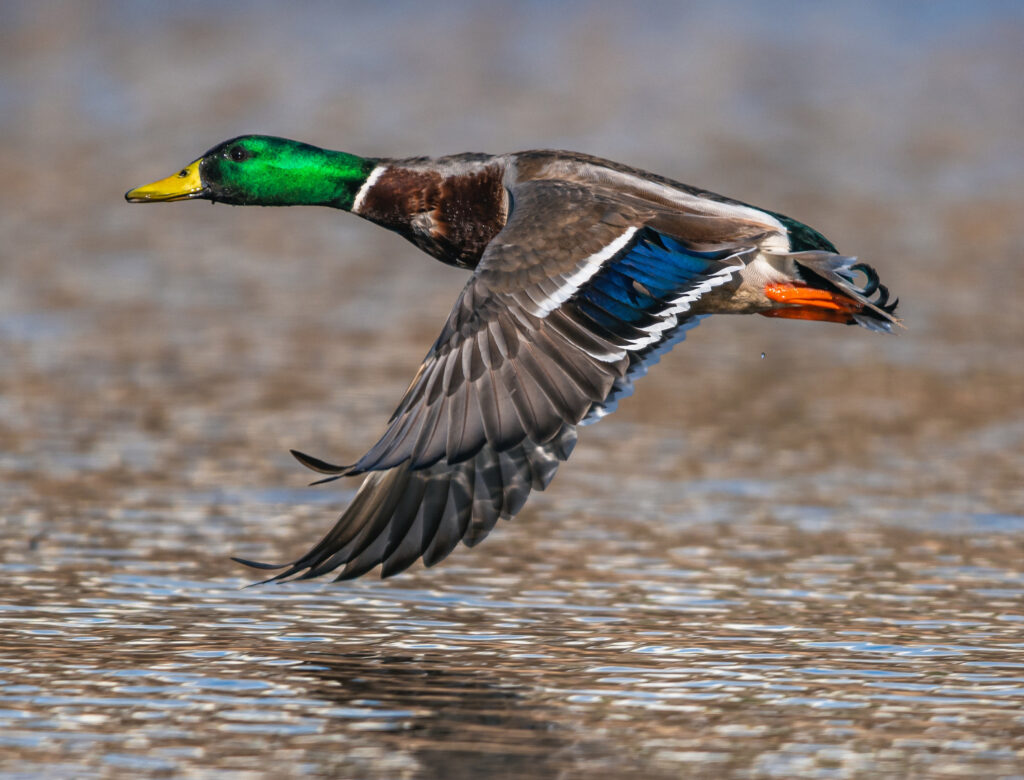
Mallard

The Mallard is a large, robust duck with a long body and a broad bill. Males are easily recognised by their glossy green heads, yellow bills, rich purple-brown chests, and grey bodies. Females, in contrast, are mostly brown with orange bills. Mallards are widespread across the UK, breeding throughout both summer and winter wherever suitable wetland habitats exist—though they are less common in upland areas.

Find out more
Mallard Duck.
Windsor Great Park
Windsor Great Park

More from us

News & Articles

FAQs

Careers

Get in touch

Contact us

Newsletter

Sign up to our newsletter

The Crown Estate logo.

User support

Accessibility

Site map

Our policies

Terms of use

Privacy statement

Cookies statement

Modern slavery act

Freedom of information

Designed by Bewonder*