When we say ‘whopper’ we mean ‘something that is ‘extremely or unusually large’ and when it is given as a name to a cultivated plant there is high expectation.
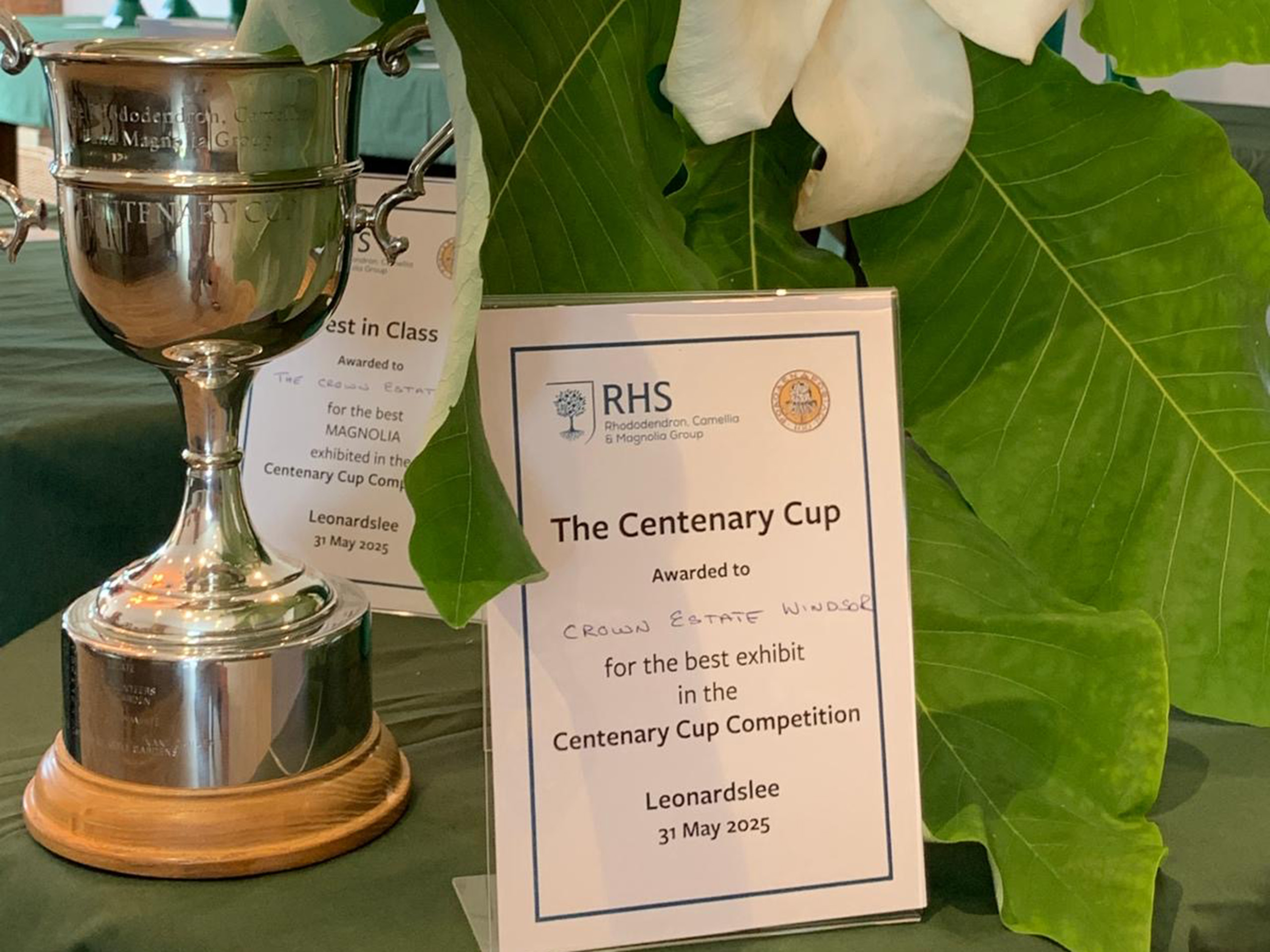
On the last day of May 2025, the RHS Rhododendron, Camellia and Magnolia Group held its final show of the season and as part of the day awarded the Centenary Cup, so called because it was launched in 2016 in The Society’s centenary year.
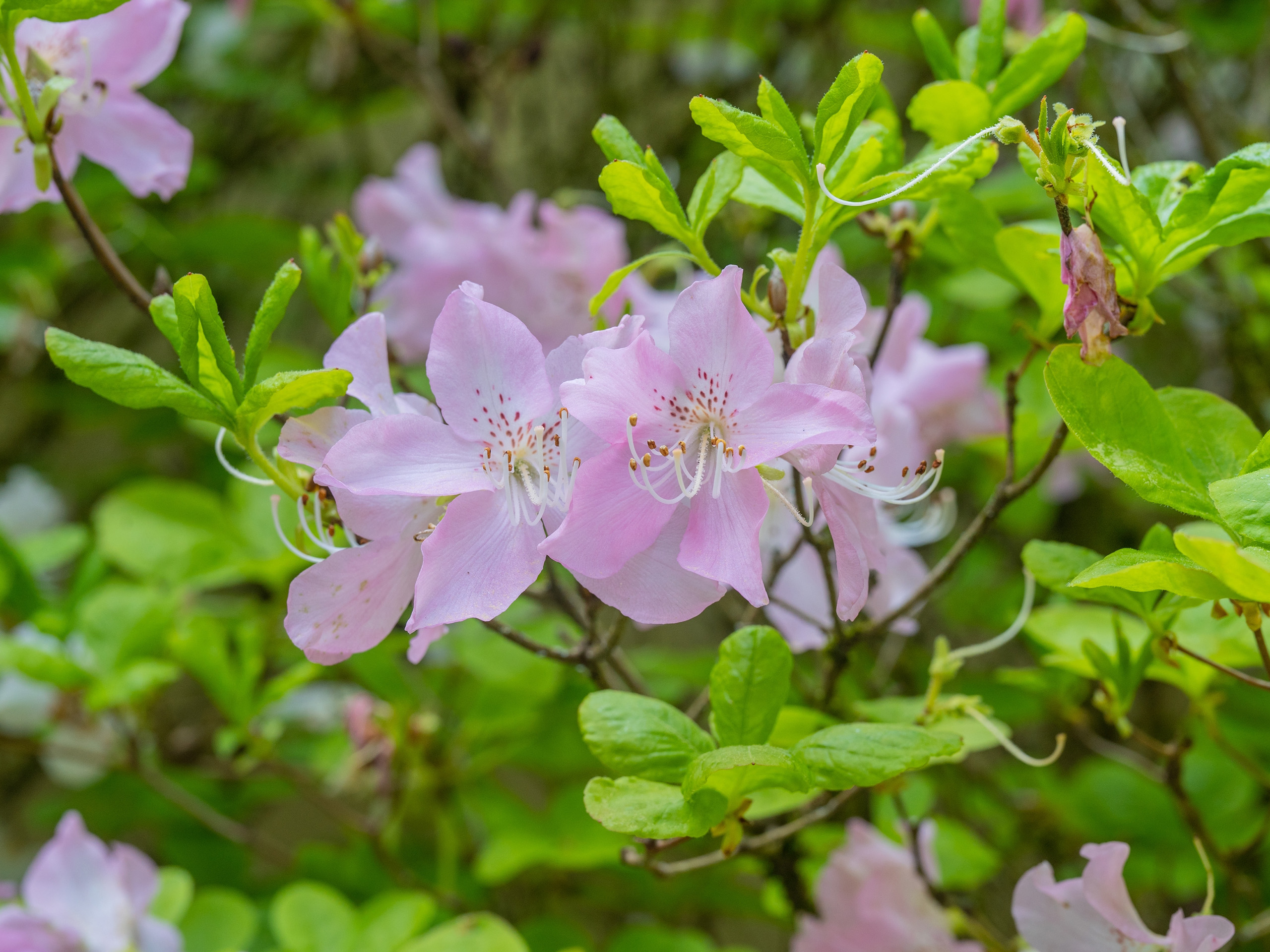
That year in 2016, the cup was won at RHS Wisley by The Crown Estate for an exhibit of a splendid deciduous and pale pink Rhododendron schlippenbachii. Native to Korea and Japan, it is called the ‘royal azalea’.
Rhododendron schlippenbachii.
The RHS Rhododendron, Camellia and Magnolia Group Show
Fast forward to this year and at 7.30am on the morning of the show, two of the Windsor Garden team, Selena Mansell and Chloe Wragg arrived at Leonardslee Gardens in Sussex. They were in a Windsor Great Park car, big enough for a whopper of a flower.
There was a sense of excitement as there is with any show, especially one of this historic plant society of the RHS, with many great horticulturists showing their plants.
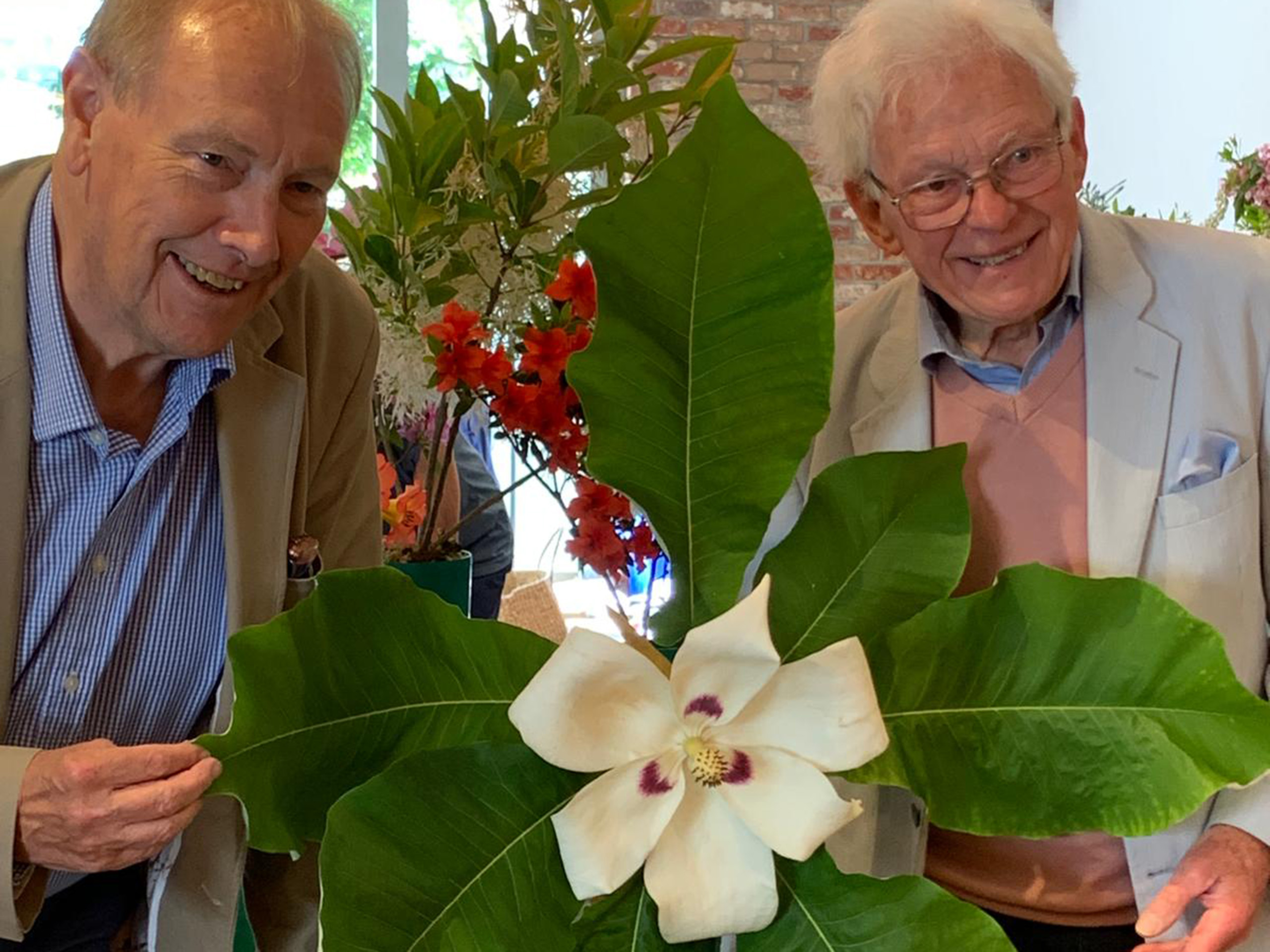
Winners of this cup are worthy, especially as this year the judges were Roy Lancaster CBE VMH (Victoria Medal of Honour) and Jim Gardiner VMH. The cup is awarded to the best exhibit in the show of all eight classes.
Judges Jim Gardiner and Roy Lancaster.
The journey of taking a large exhibit to a show must be nerve wracking. Everything needs to be perfect. Gasps were heard as the team from Windsor Great Park walked in with trays of magnolia flowers.
A history of Magnolia successes
In April, The Crown Estate had already won the most points for the magnolia class at the Spring Show at RHS Wisley, as they had done in 2024 and many years before going all the way back to the 1950’s.
By the end of May, once all the early flowering Asiatic magnolia have finished flowering there are different magnolia to choose from at Windsor to bring to a prestigious show. Think tropical, big leaf, with super large flowers – these are the American species of the east coast.
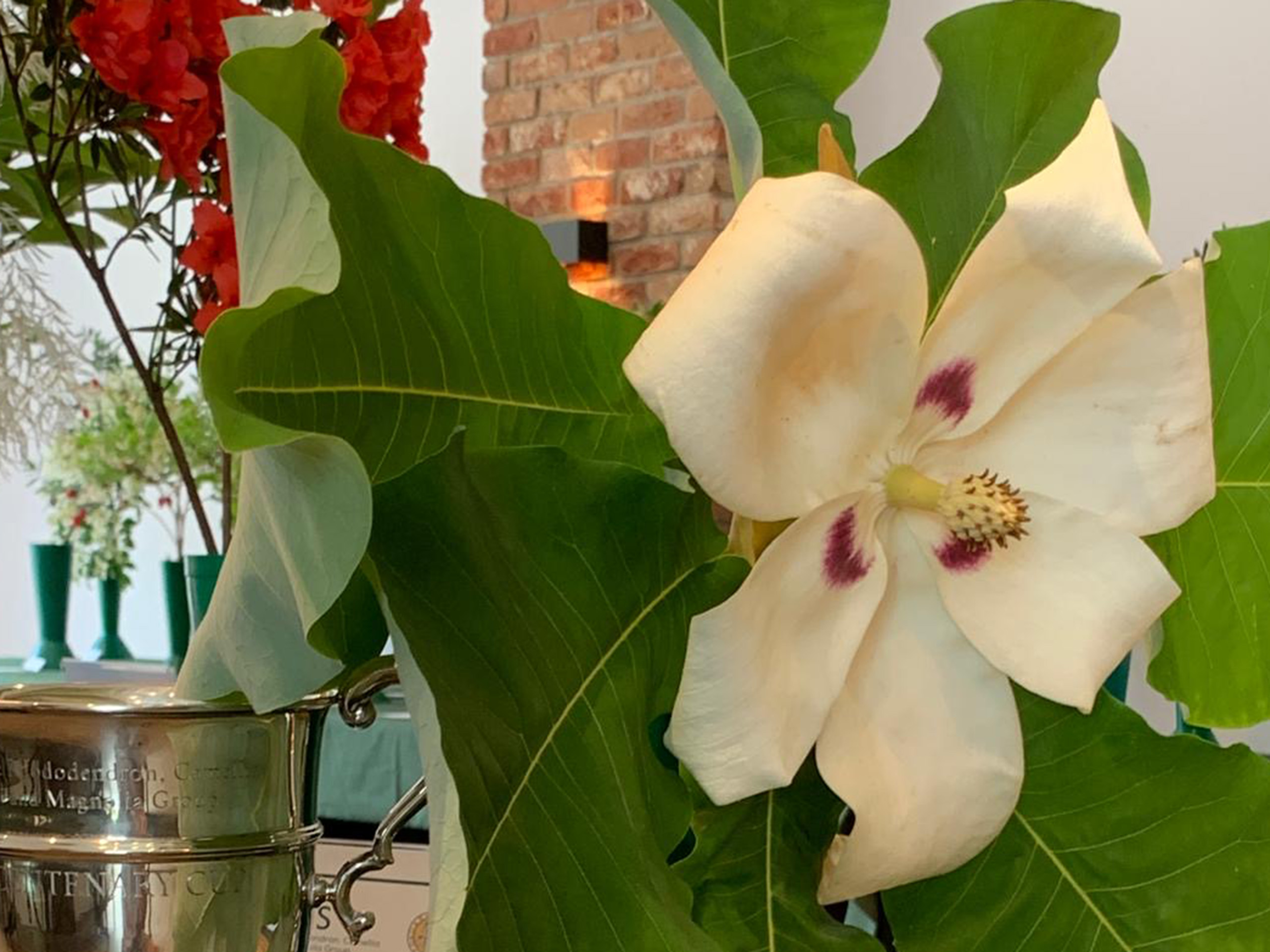
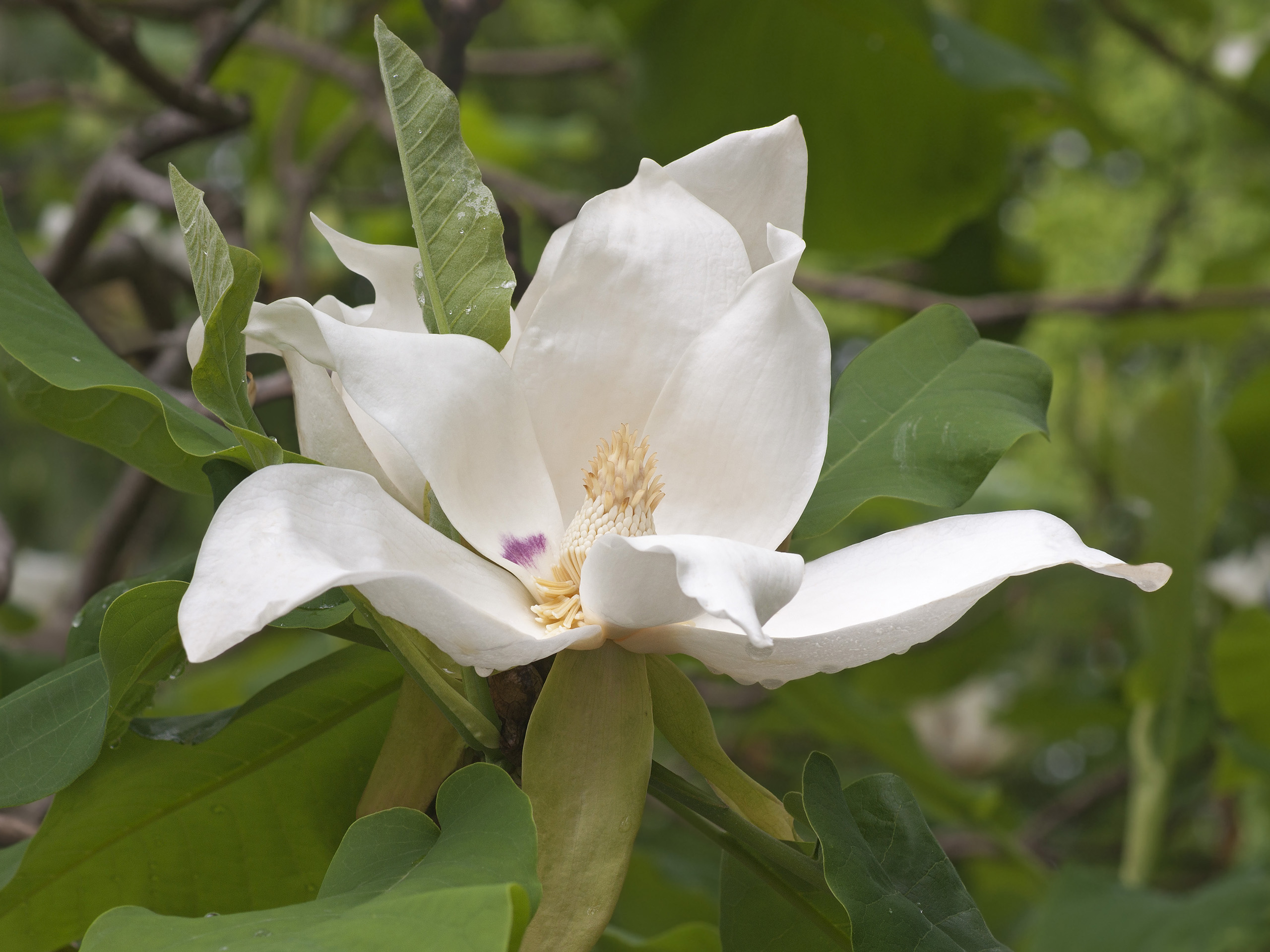
The winning exhibit which Chloe Wragg and Selena Mansell brought, was a hybrid (an offspring of two plants and trees which have been hybridised by a breeder), and the two magnolia parents are Magnolia macrophylla ‘Whopper’ and Magnolia macrophylla var. ashei. The origin of this hybrid is unknown to us at this present time (although believed to be of American origins), and how it came to be in our collections at Windsor.
Magnolia macrophylla ashei.
The common name for Magnolia macrophylla is the bigleaf Magnolia, being the largest of all the magnolia with huge banana like leaves. Native to the Appalachian Mountains of southeast America and states such as Alabama, it was first introduced to the UK in 1880. They like a hot sunny and sheltered spot in the garden.
In 1974 a renowned magnolia breeder, Joe McDaniel from Illinois raised a macrophylla which had exceptionally large flowers, extra tepals (thick petal like structures) and a deep purple base inside the flower. As it was a distinct cultivar, he named it ‘Whopper‘ and it has turned out to be an exceptional plant.
The other parent of the winning magnolia is also a macrophylla and a variety which is smaller and more compact called M. macrophylla var. ashei. The variety is so small in fact that it grows slowly to around 5m, and so the result of the hybrid is a tree that has huge flowers which are at eye level.
A history of magnolias at Windsor Great Park
The first magnolia tree arrived at The Savill Garden in 1935, followed by Thomas Hope Findlay arriving as Keeper in 1946. From then magnolia started to feature prominently as they have been continuously ever since.
John Bond, Keeper of the Gardens from 1975 to 1997 introduced many magnolia species and hybrids into the Gardens, so much so that in 1983 he registered a National Collection of Magnolia with Plant Heritage (then known as the NCCPG).
Selena and Chloe picked out the winning magnolia the evening before the show in The Valley Gardens and carefully escorted it to Sussex early the next morning. Chloe and Selena said afterwards when asked about it. “For this show there were only two of us going, we didn’t want to collect lots of material as we wouldn’t have a lot of time to stage each bloom. The Centenary Cup is a slightly different show to the others we attend and is at the end of the season. This later show date means there is a different selection of plants in bloom to choose from. We wanted a small selection of interesting material to showcase our collections.
“As with all our shows when cutting material, we were looking for a perfect bloom; unblemished, at the perfect stage of recently opening and with perfect foliage. Accounting for the hot weather and thee potential for blooms to go over faster than they normally would at the earlier shows, we hedged our bets and took cuttings of material at a few stages of the flower buds opening.
“Transporting the Magnolia macrophylla ‘Whopper’ x ashei proved a little more challenging than usual due to the sheer scales of the bloom and leaves. Once at the show we began staging the blooms to showcase them at their best, facing the judges with the foliage framing the bloom and hoping they would hold out until the crucial 10am judging.”
It sounds so easy! We know it takes great care and skill to choose an exhibit then carefully transport it in the heat and present such a huge plant to perfection in a vase.
Although big, the leaves of Magnolia macrophylla ‘Whopper’ x ashei can reach nearly a 1 meter (3.2ft) in length. The leaves themselves are thin and papery and have a tropical like appearance. The variety blooms in late May to early June, with creamy white and highly scented flowers that can reach 50cm (1.6ft) across. Huge and breath-taking, and along with many other magnolia macrophylla which were brought to the show, the species created an exciting buzz for visitors.
Many questions regarding this particular hybrid are now taking place, with the intrigue regarding it at the show leading to conversations about its origin. Hopefully with many seeing it through RCMG (Rhododendron, Camellia and Magnolia Group) publications, someone may come forward with more information.
In 2021 John Anderson Keeper of The Gardens wrote about the magnolia collection at Windsor for the RHS:
“There are many layers to the magnolia collection at Windsor; from the varied landscapes in which they have been planted to the diverse selection of species and hybrids. The vision of the previous Keepers and the generosity of magnolia enthusiasts, institutes and private collectors who have gifted plants over the past 90 years. I consider myself privileged to be working amongst this inspiring collection of magnolias at Windsor.”
Congratulations to all the Garden Team for all their exhibits and successes at RHS shows this year.
Written by Sian Thomas, Friend of The Savill Garden Guide with contributions from John Anderson, Keeper of the Gardens, Selena Mansell and Chloe Wragg. Thanks to Robbie, Sampson Savill Garden Guide for the photography.