When collecting your pre-booked carer ticket or when purchasing one for the day, you will need to present one of the listed supporting documents for the disabled visitor at The Savill Garden Visitor Centre:
Season of mists and mellow fruitfulness, Ode to Autumn by John Keats
Autumn is known as one of the four temperate seasons on Earth, and in the temperate and sub-polar regions of the globe, autumn marks the transition from summer to winter.
However, when the season of autumn starts can vary. Every year, there are two separate dates which could be said to mark the start of autumn.
One is defined by the Earth’s axis and orbit around the Sun and varies a little each year, always beginning on the day when the hours of daylight and night are equal. This is known as the Autumn Equinox and this year begins on 23 September.
The alternative date for autumn is kept by the meteorological calendar, and always begins on 1 September and ends on 30 November. This allows for consistent record keeping when comparing years.
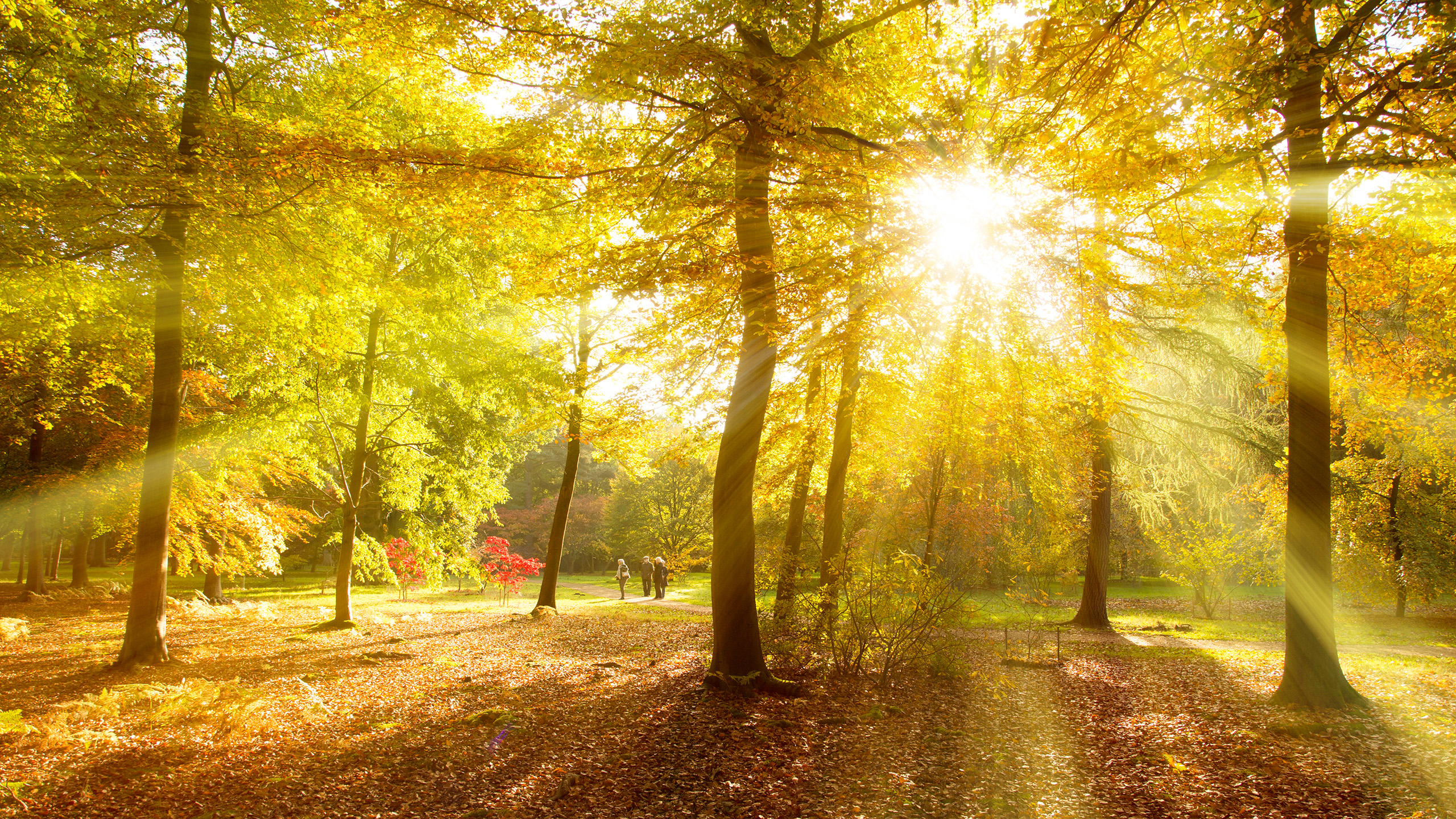
Chapel Wood
The origins of autumn
So, why do we call this season autumn? Well, the easy answer to this is that the name comes from the Latin word autumnus, which may have even earlier roots in the Etruscan language, via the Old French word autumne, which later became automne. However, the word autumn was rarely used in the United Kingdom until the 16th Century, instead the season would be referred to as Harvest.
However, as more people gradually moved from working the land to living in towns, the word harvest lost its reference to the time of year and came to refer only to the actual activity of reaping, and the term autumn started to be used more commonly. However, two common Middle English phrases were also used to describe this time of the year, ‘fall of the leaf’ and ‘fall of the year’. They have now become almost obsolete in this country, but of course those phrases travelled to the New World with the English settlers that colonised the Americas, ending with the term ‘Fall’, which is still widely used today instead of autumn.
Autumn traditions
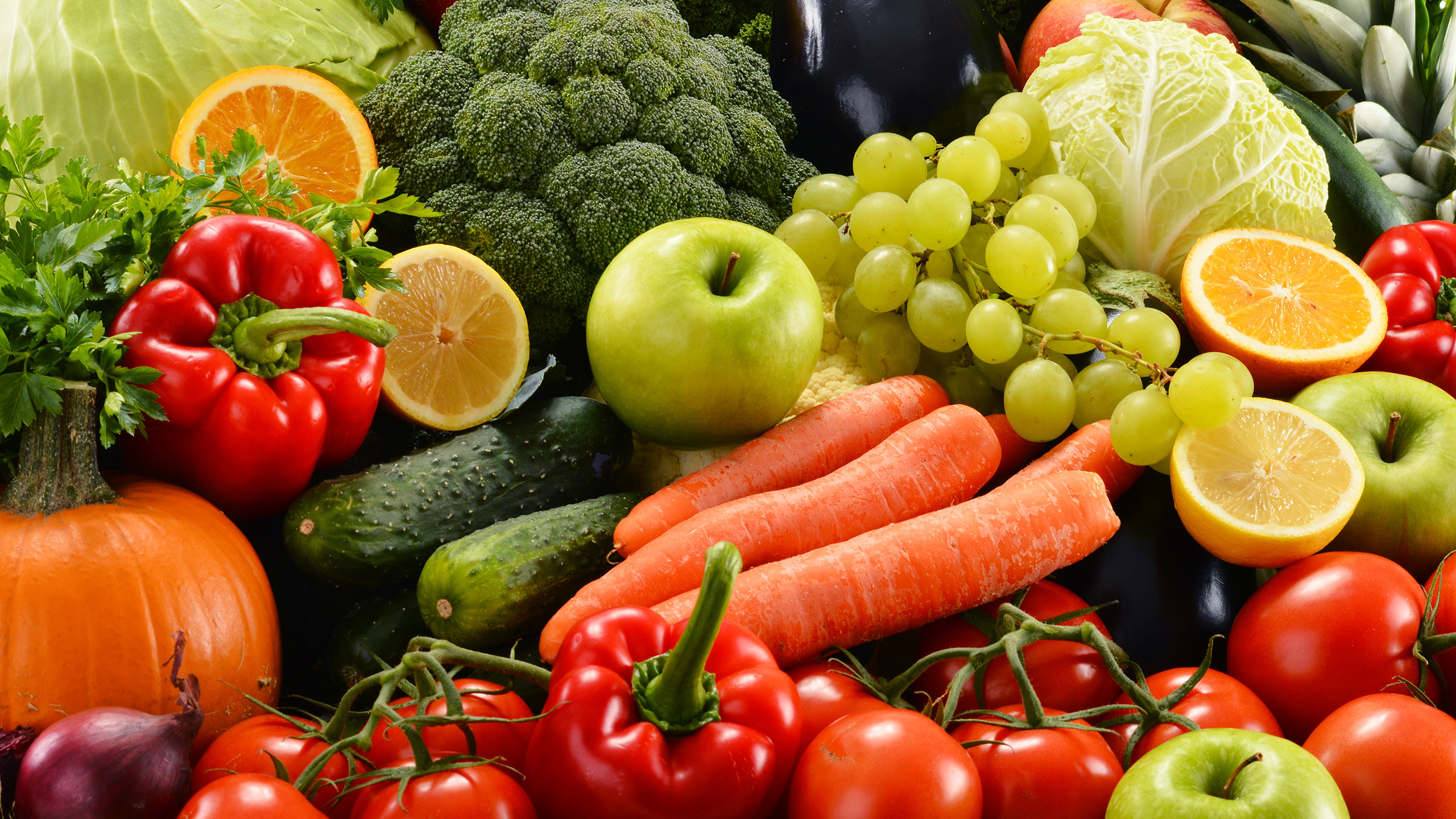
Autumn is usually depicted in art by an abundance of food, often fruits and grains or their products. Most of the traditions associated with autumn also revolve around older pagan rituals, as well as the farming cycle of Harvest and the activities associated with it, many of which continue to this day.
Autumn harvest
Most Christian churches will celebrate Harvest Festival, often with a community meal. This is an echo of older traditions when Harvest started with Lammas or Loaf-day, when an elaborate loaf, often in the form of a sheaf of grain, was made from the first of the harvested grain and ended with Harvest Home, an elaborate feast, with music and dancing to celebrate the safe harvesting of the crops.
Similar traditions take place all over the world: Ocktoberfest in Germany, which started as a celebration of a royal marriage and has now evolved into a two week extravaganza; the Chinese celebrate the mid-Autumn festival, which is linked to legends of Chang’e, the mythical Moon Goddess of Immortality, by eating moon cakes; and of course in the UK, the equinox would not be the same for some without the annual visit to Stonehenge to watch the sunrise.
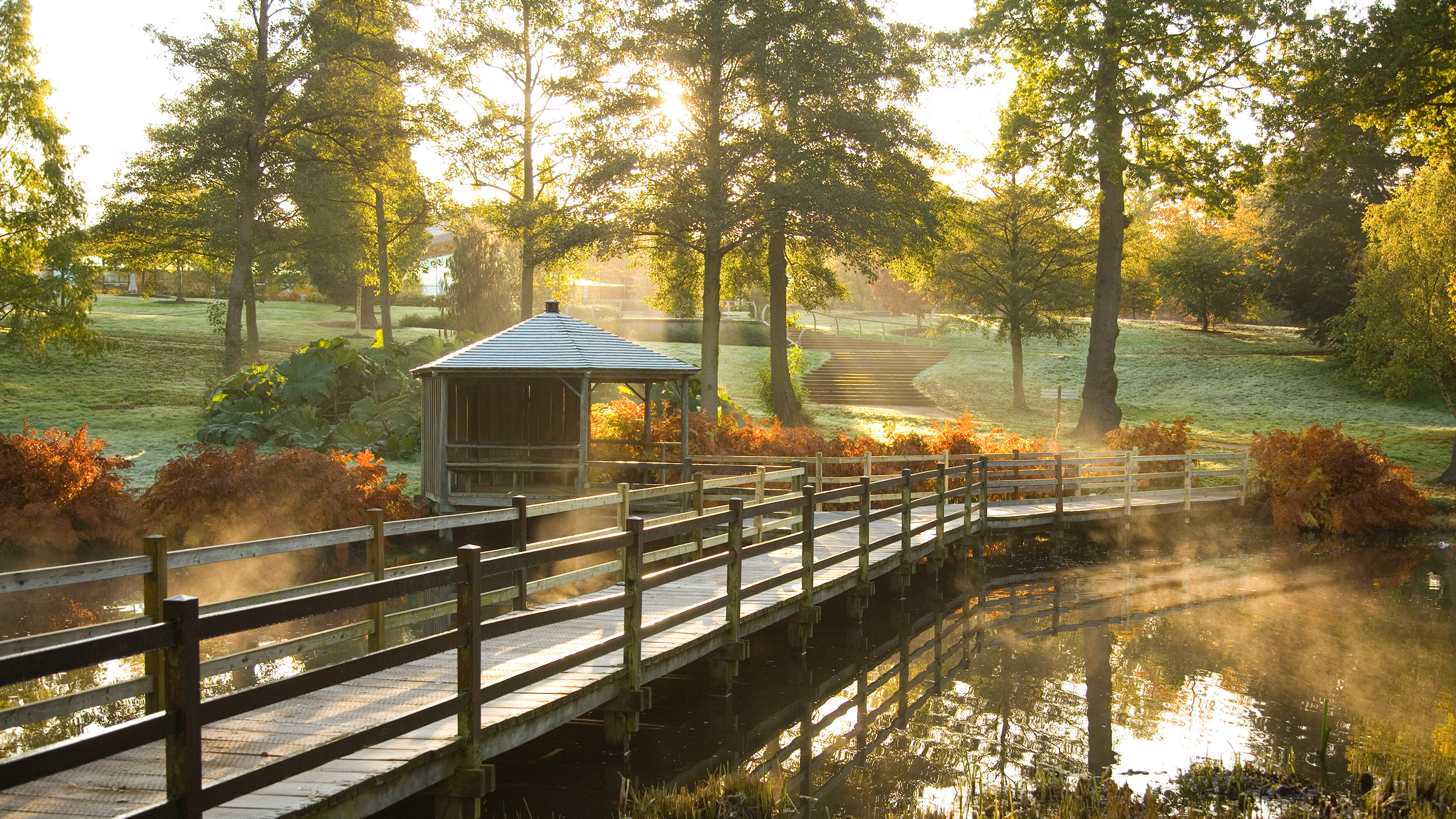
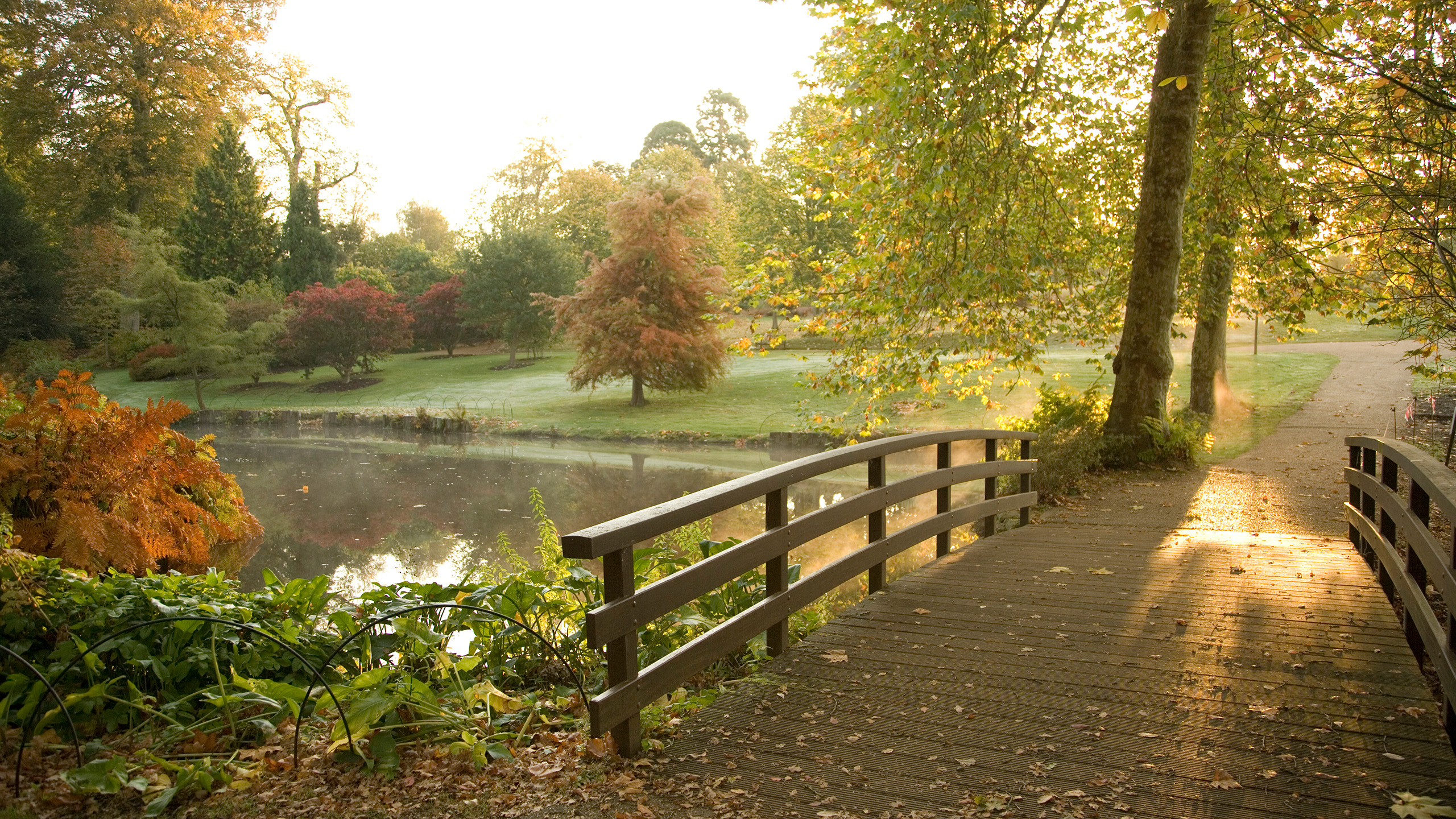
Autumn in The Savill Garden
The transition to winter
Autumn is also a time to prepare for winter, a transition from fruitfulness to the cold and often bleak times ahead. It is also often used a time to remember and celebrate one’s ancestors, as in such traditions as Michaelmas, All Souls’ Day, and All Hallows Eve, now shortened to Halloween.
One of the oldest myths associated with autumn, which reflects the cycle of life and death, is that of Persephone (also known as Proserpina). A common account of this ancient myth is that Persephone was abducted by Hades, the god of the Underworld, where he made her Queen of the Underworld. Her mother Demeter was so distraught that she neglected her role to keep the earth fruitful while she searched for Persephone all over the world, and a terrible famine resulted. Brokered by Zeus, the father of all gods, a bargain was reached where Persephone was released, but because she had eaten a pomegranate seed in the Underworld, she was obliged to return there for six months each year. During that time, her mother Demeter would again become distraught as the loss of her daughter and bring about the seasons of autumn and winter, transitioning once more to new life and spring at the return of her daughter.
Autumn colour
Above all though, in nature, autumn is about colour, a riot of glorious reds, golds, oranges and burgundies, glowing on the trees, before falling at our feet to regenerate the soil and start the cycle all over again.
In spring and summer, the majority of leaves appear green, caused by reflection of light from the pigment chlorophyll, which is found in very great abundance. However, not all leaves are the same green and this is due not only to the fact that chlorophyll is found in two forms, a and b, but there are a number of other underlying pigments present, such as anthocyanins, which are responsible for reds and purples; anthoxanthins, which reflect yellow; and carotenoids, which reflect yellow, orange, or red, although for most of the year we are not aware of their presence.
Producing chlorophyll is an energy demanding process and so in the autumn, plants conserve their energy by reabsorbing the chlorophyll from the leaves into the main plant. And then we get to see all their other stunning colours, the intensity of which can be influenced by the weather, which explains why no two autumns look the same. Cold nights destroy the chlorophyll faster, but if we get dry, sunny days this will encourage the production of more anthocyanin and so the leaves will look redder. These pigments are also responsible for the colours of the many fruits we see in autumn, enticing us and other animals to pick and eat them and thus play our role in the vital act of seed dispersal.
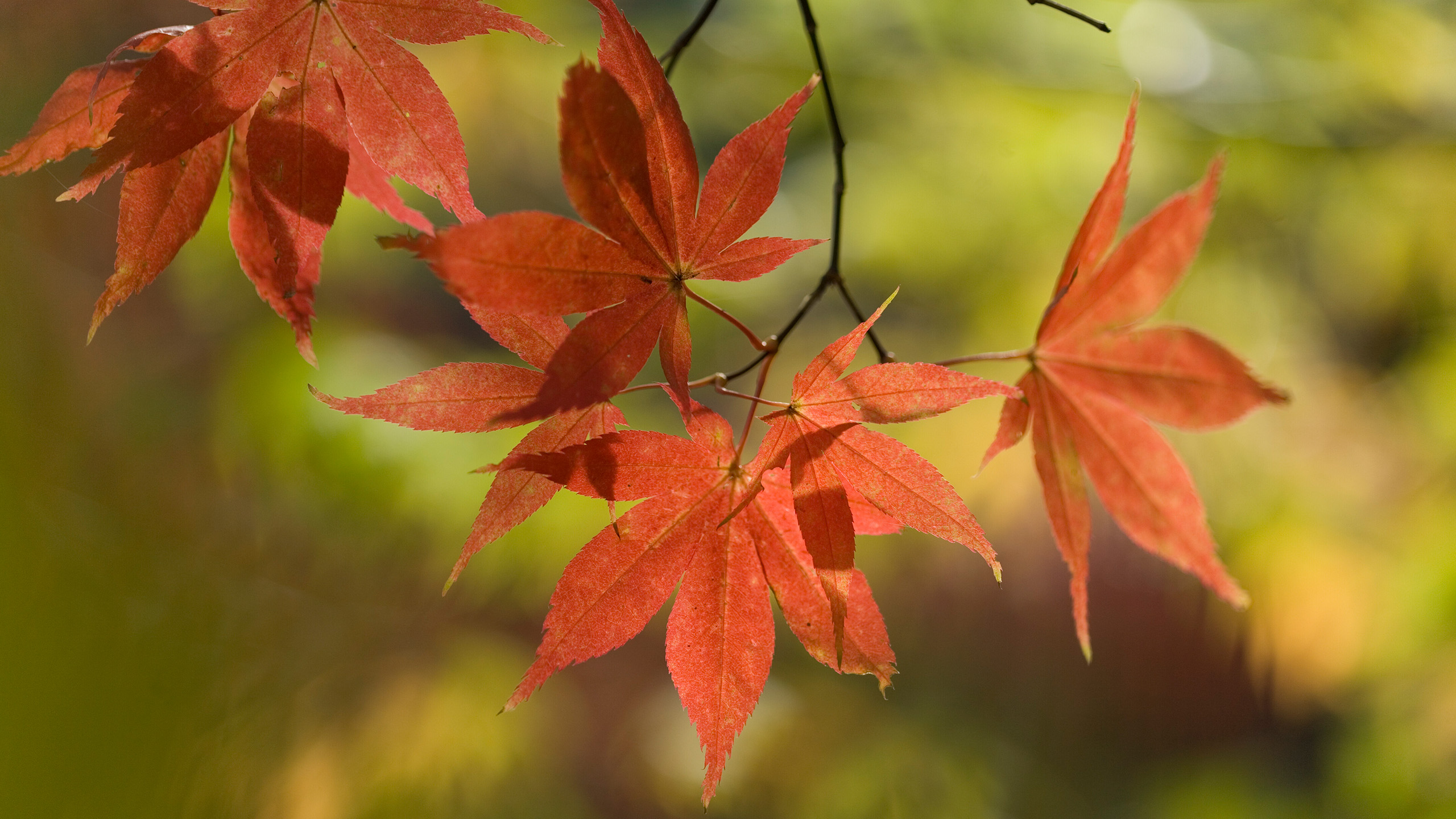
Acer palmatum
Eventually though the leaves will fall from the trees. The process responsible for this starts in the spring when a layer of cells, called the abscission layer, forms where the leaf stalk joins the main stem. During autumn, as temperatures fall, the production of the plant hormone auxin decreases, and this causes these cells to lengthen and so weaken allowing the leaves to be blown from the tree or fall from their own weight. Losing its leaves allows the trees to enter a state of dormancy and to better survive the winter conditions, preparing them for reawakening in spring and for the cycle to start over again.
Written by Diana Bendall, Chair of The Friends of The Savill Garden