On a bright Saturday morning in late February, 32 Friends and their guests gathered outside The Savill Garden Visitor Centre, for a walk to the Heather Garden lead by 4 of our garden guides, Sian, Barbara, Robbie and Liz R. The 4 groups set off independently at intervals, following the diversion past the Obelisk Pond works to the Valley Gardens.
Smith’s Lawn
Our group paused at the corner of Smith’s Lawn, near the memorial to hear about the use of the lawn as an airfield. A long association with the Royal Family began in the late 1920’s when the then Prince of Wales (later King Edward VIII) established it as his own airfield.
During the Second World War it was used for the assembly of Wellington bombers, as a landing strip for flying training and for US military personnel based at Sunninghill Park.
After the war it continued to be used by the Duke of Edinburgh, who learnt to fly a helicopter here, and was supposedly the last person to land here in the 1950’s. The Duke of Edinburgh also founded the Guards Polo Club, who continue to use Smith’s Lawn.
The memorial on Smith’s Lawn
History of the Heather Garden
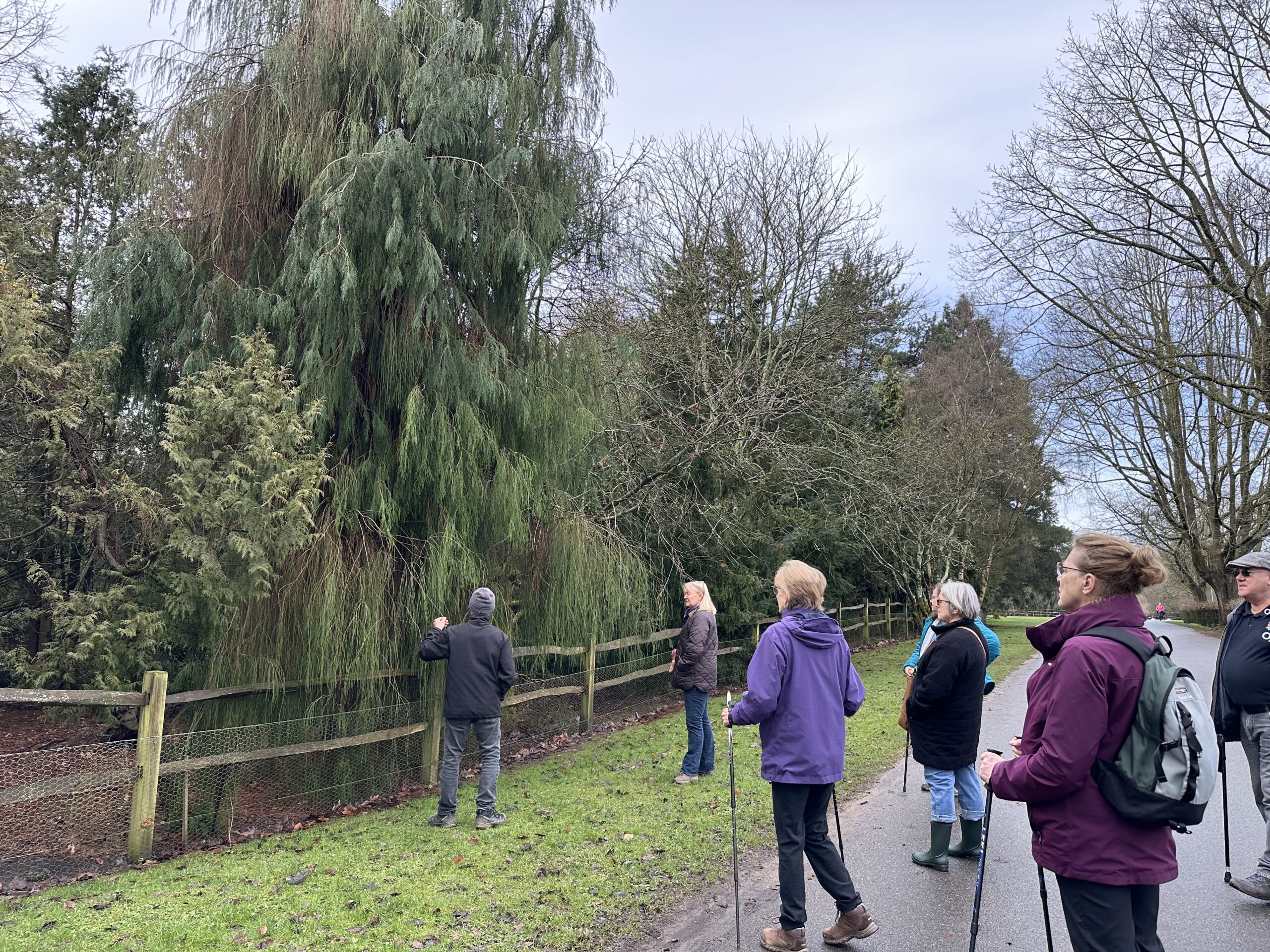
Moving on to the outside fence of the Heather Garden, we heard a little of its history.
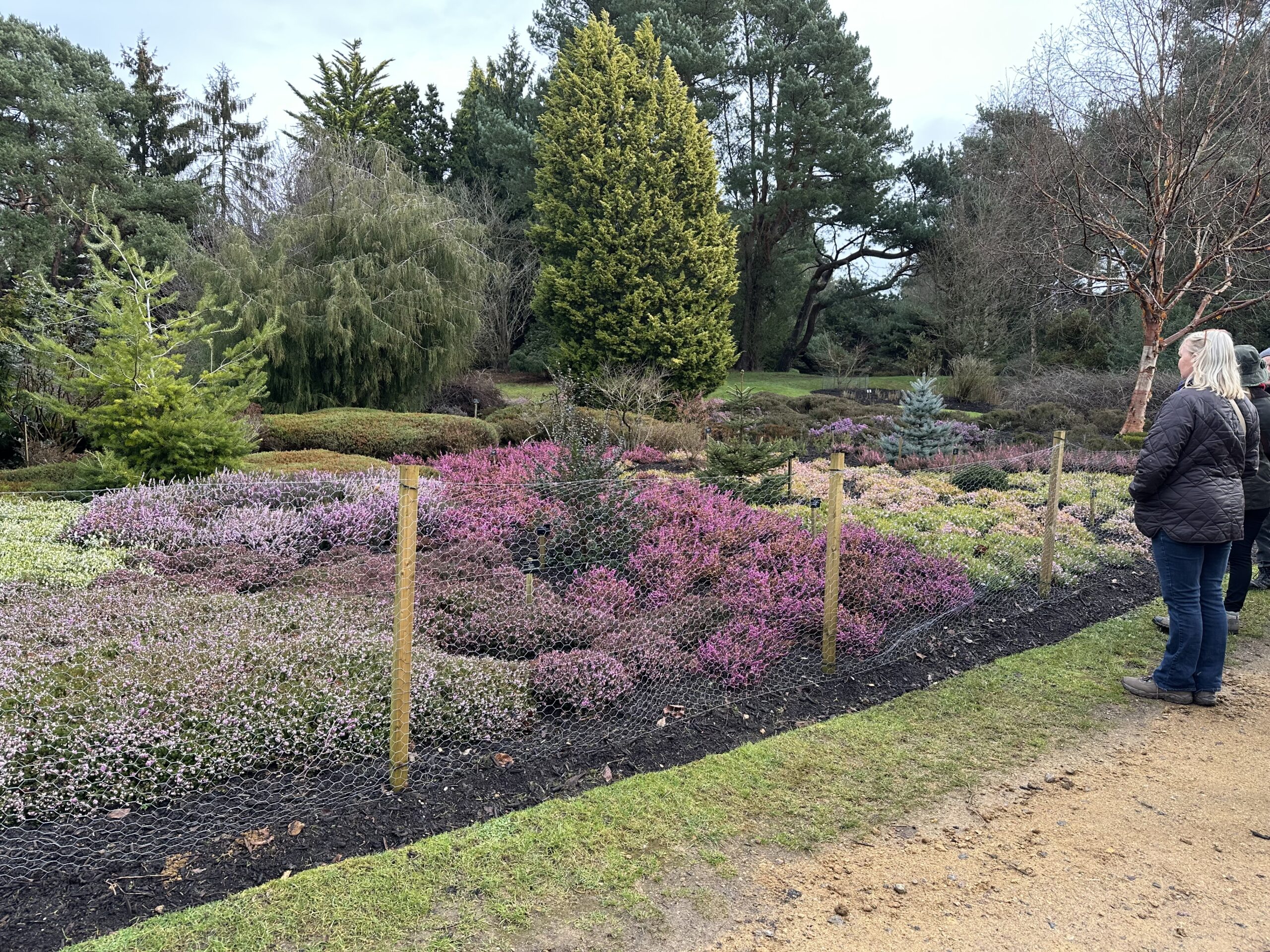
The eight acre site, which had been sand pits and heathland, was developed in the late 1950’s, and was originally planted in a naturalistic style with an assortment of erica, daboecia and calluna species.
In 1987, John Bond introduced an arrangement of island beds and added dwarf conifers and a wide range of other ericaceous plants. Many of these “dwarf” conifers are no longer dwarf, so work is now in progress to remove them and reinvigorate the garden.
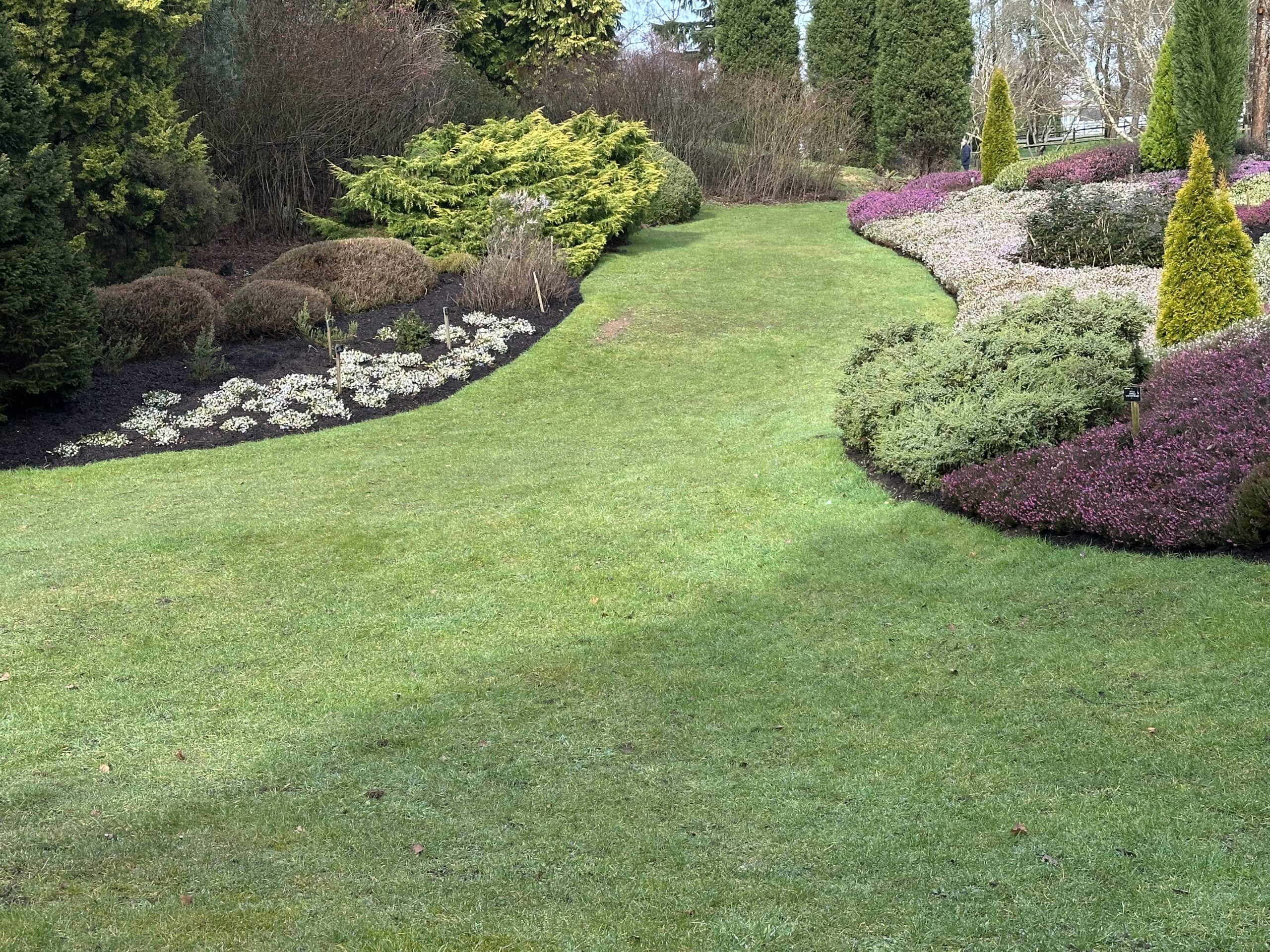
The Heather Garden from Smith’s Lawn
Heather Garden planting
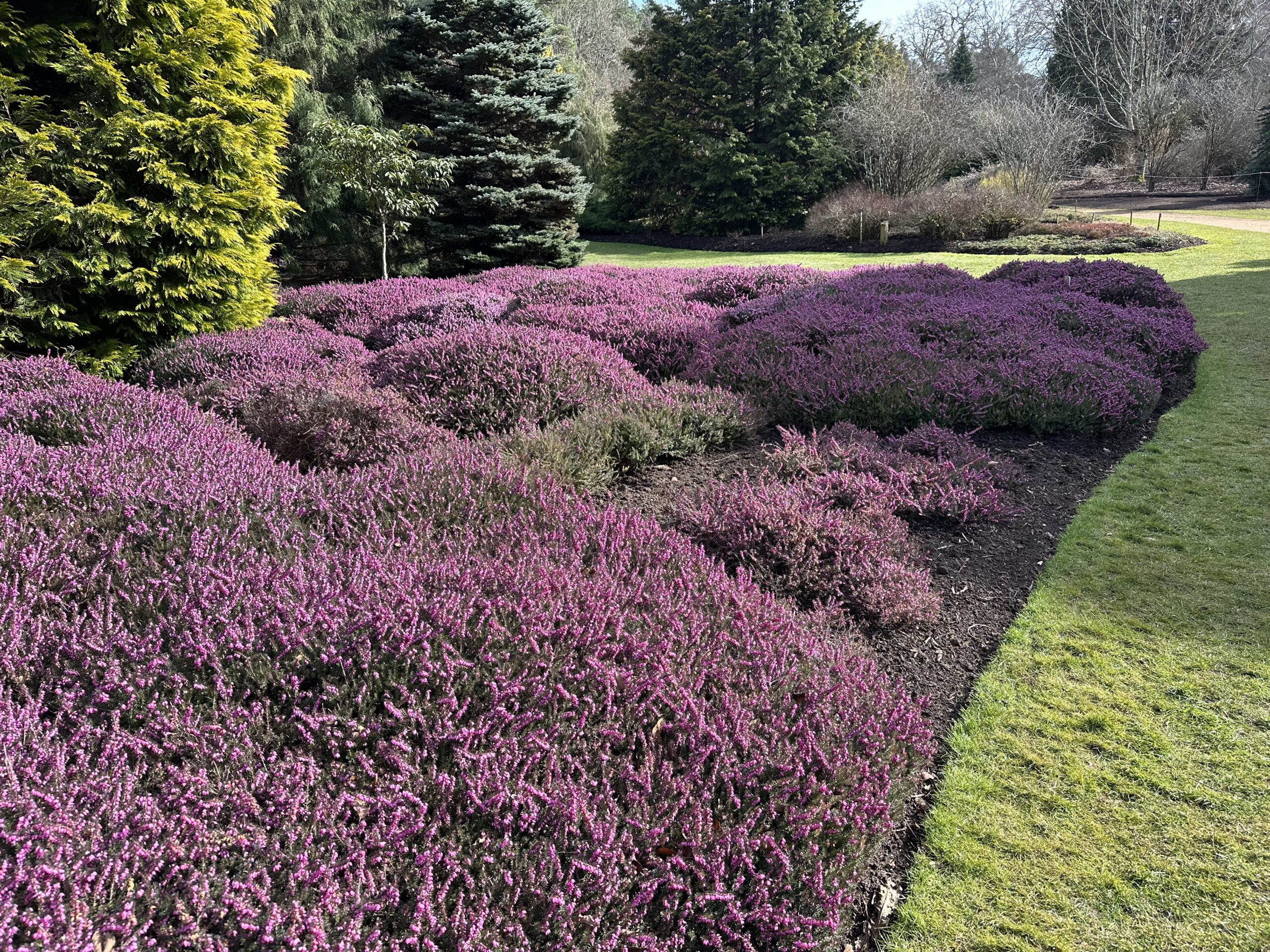
We then wandered along the fence, admiring many of the conifers planted along the boundary to provide a windbreak, before entering the Heather Garden from the far end, to be greeted by the large beds of Erica x darleyensis ‘Kramer’s Rote’ providing winter colour.
This, along with Erica x darleyensis ‘Rubina’ and Erica carnea ‘Sunshine Rambler’, are some of the new winter heathers that have entered cultivation in the last 40 years. Many beds showed signs of full or partial replanting as part of the ongoing renovation project.
Erica x darleyensis ‘Kramer’s Rote’
Replanting in the Heather Garden
A little further on we admired a Wollemi Pine (Wollemia nobilis) which has grown into a fine specimen tree. The shaping of the beds here is being altered to make the pine more prominent.
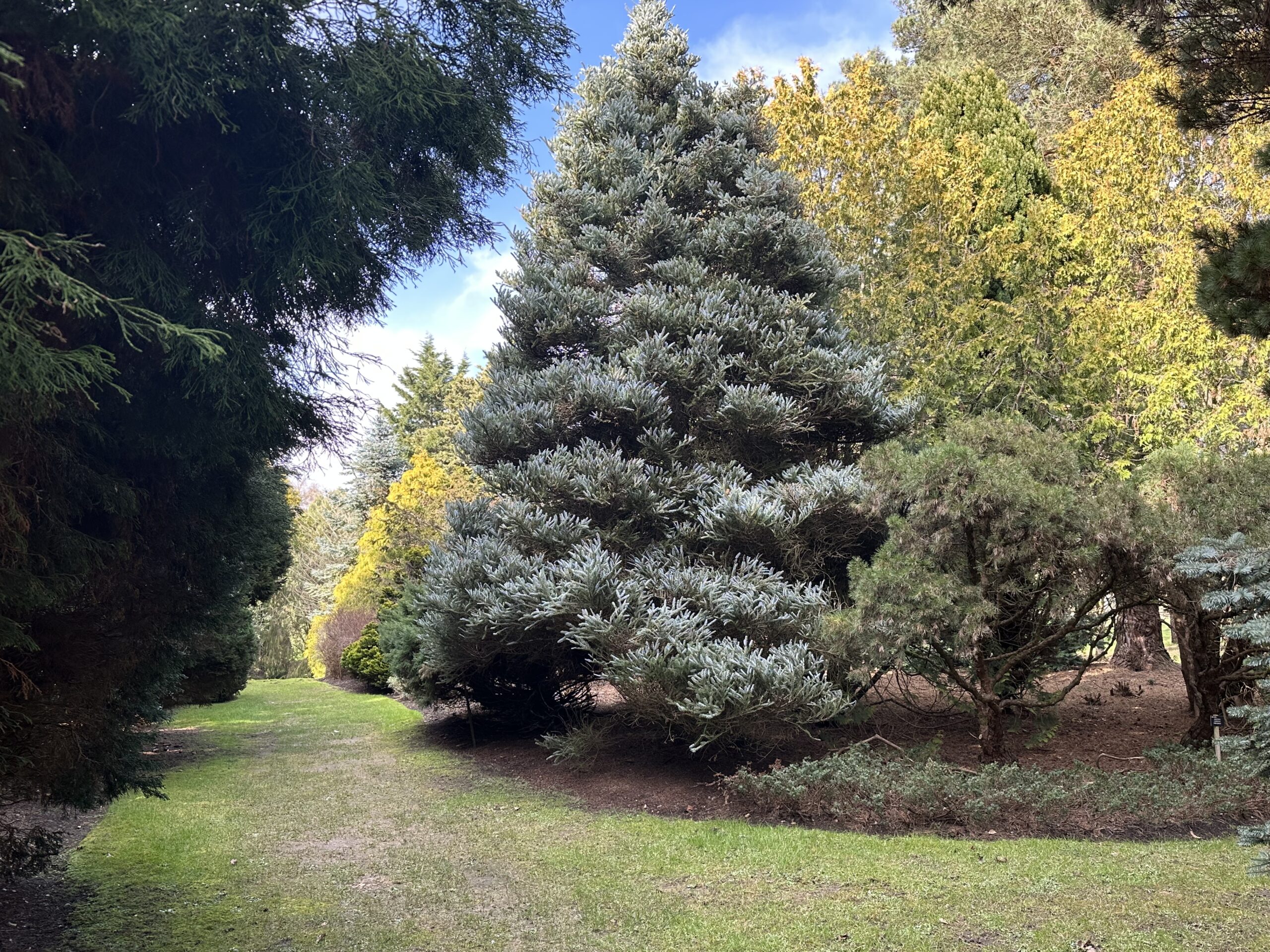
Other interesting trees we noted included; Abies koreana ‘Hortsmanns Silberlocke’, where the needles curl upwards to reveal their silver undersides; a rare Cunninghamia Lanceolata ‘Glauca’, the Chinese fir, which is now being planted increasingly in China for timber, the Pinus contorta ‘Chief Joseph’, a very unusual and popular conifer which turns completely yellow in the late winter, and Podacarpus ‘Guardsman’ whose foliage was a beautiful burgundy colour.
Abies koreana ‘Hortsmanns Silberlocke’
Another feature of the Heather Garden is the opportunity to see some fantastic Himalayan and Chinese birch trees, we particularly liked the wide girth and glowing red bark of Betula utilis subsp. Albosinensis ‘Red Panda’ and one of the groups named Betula utilis ‘Melony Sanders’ as its tree of the day for its dark mahogany peeling bark.
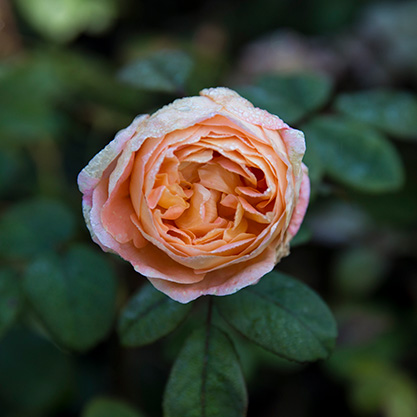
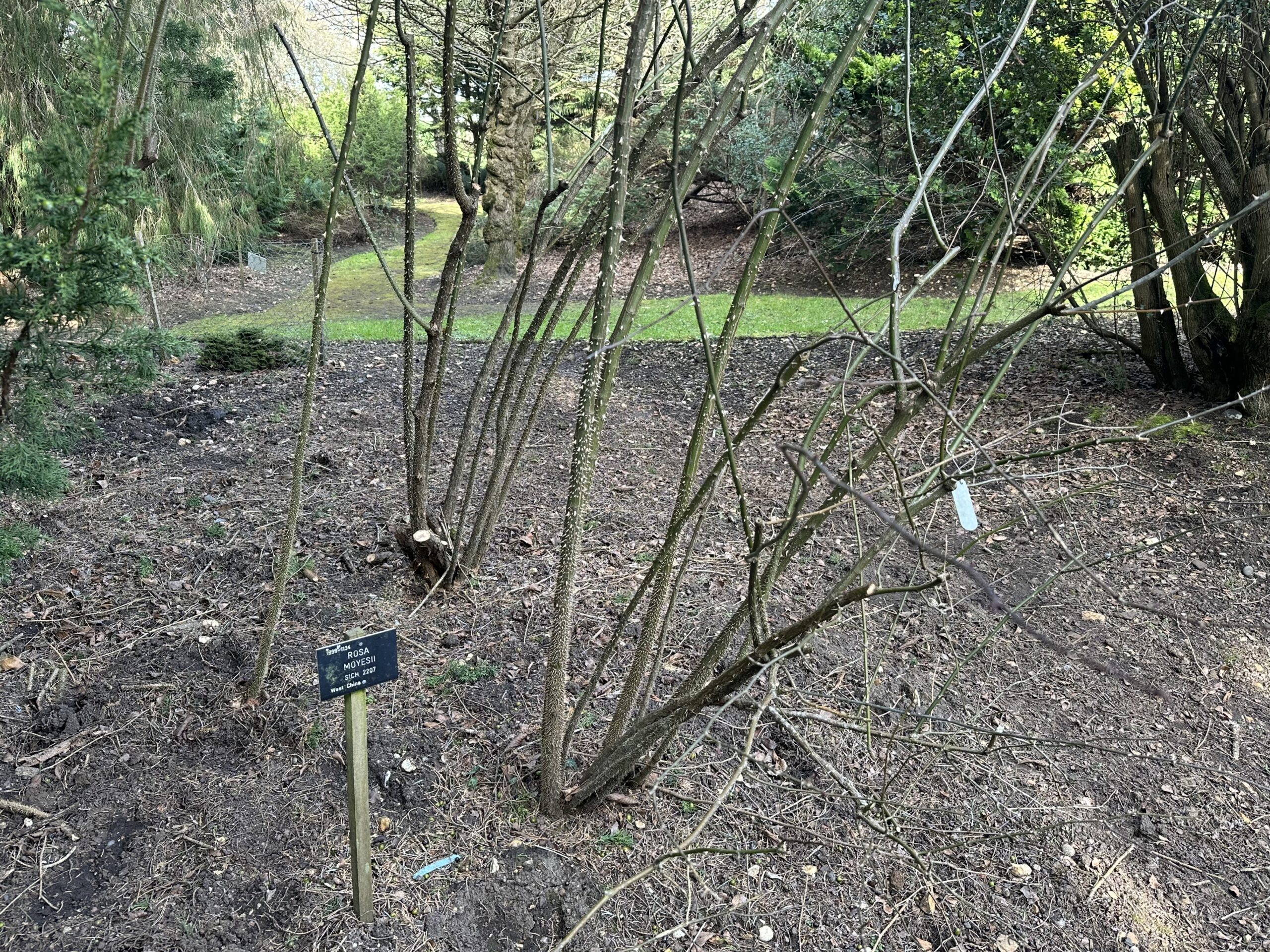
We also noticed several shrub roses amongst the conifers which had been heavily pruned. It will be well worth returning in the summer to see them in full flower as they climb through the trees.
The return to The Savill Garden Visitor Centre
After glancing down into the daffodil valley, which was still very green with the first buds starting to open, we left the Heather Garden along the Camellia Walk where many of the Camellias were also beginning to bloom, before returning to the Savill Building along the Amelanchier Avenue, noting that many new Amelanchier lamarckii had been planted in place of some of the older trees, another example of rejuvenation. These multi-stemmed trees are covered in white flowers in early spring, and will provide autumn colour later in the year.
Our thanks to all the guides for such an informative and interesting walk.