One of my favourite times of the year is autumn – especially for the spectacular leaf colour which can be seen across Windsor Great Park from so many of the North American native trees. The Gardens along with key areas of Windsor Great Park have some stunning specimens that light up the sky with dazzling displays of colour.
Hickory trees
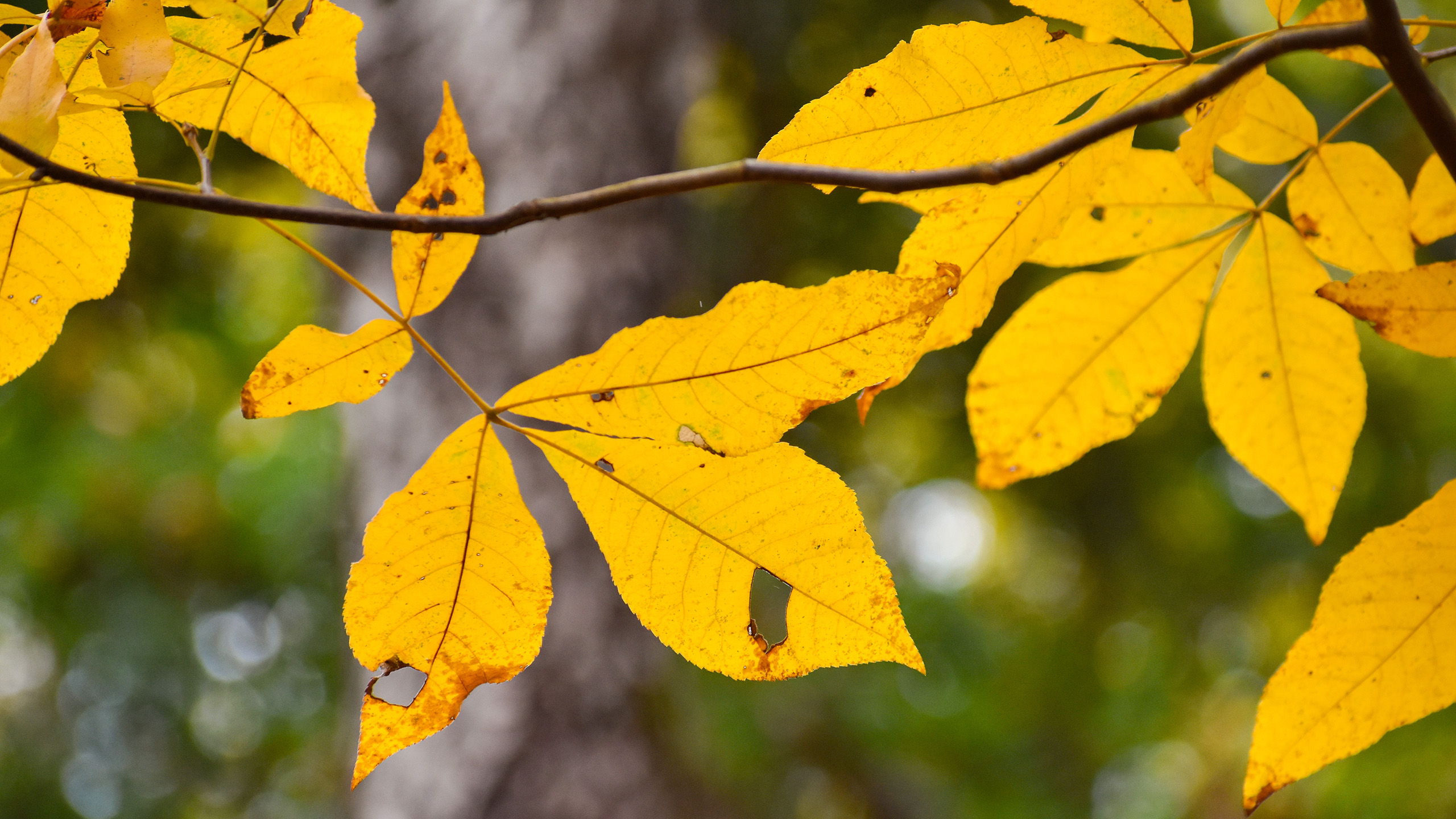
Some of the best colours can be found in The Valley Gardens at Break Heart when every October the shagbark hickory (Carya ovata) from eastern North America puts on a spectacular display of deep buttery-yellow leaf displays that tower above the rhododendron plants below. Catching it in full display on a cloudless sunny day is a magical moment. There are several hickory species newly planted throughout the Gardens to increase the interest and autumn colour.
Hickories are predominately native to Northeast America, and there are a few species from Asia, with the remarkable young tree planted in The Savill Garden by the former Keeper, Mark Flanagan, called Carya cathayensis. Another couple of hickories worth looking out for is Carya glabra (pignut hickory) and C. cordiformis (bitternut hickory) both grown as large trees in The Savill and Valley Gardens.
Acers
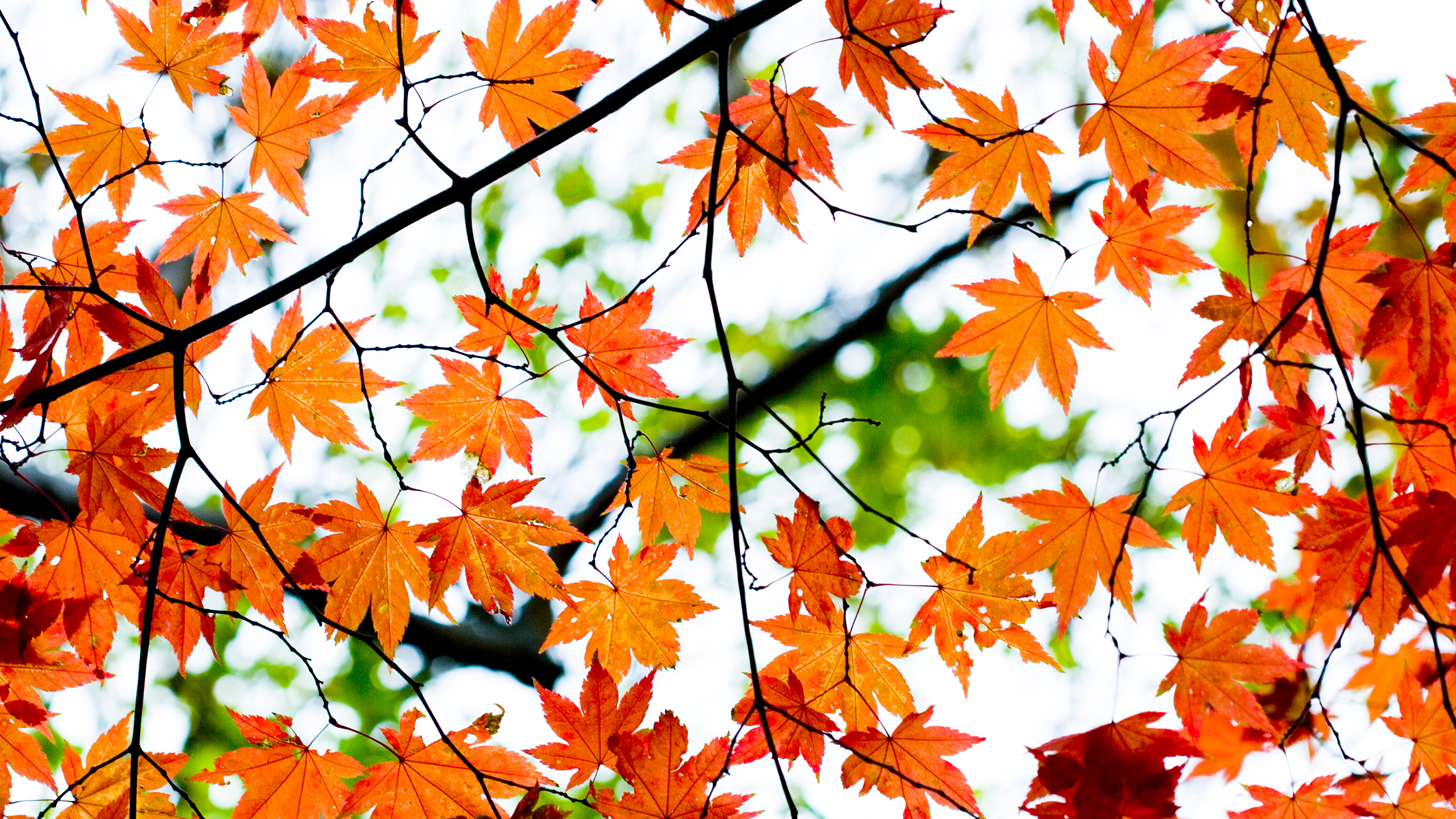
Always a showstopper is the American Maple and one of the best is the Canadian maple (Acer rubrum) as depicted on the national flag. There are some exceptionally good clones that are well represented within the various gardens including Acer rubrum ‘Scanlon’ with a narrow columnar crown and good red autumn colour; A. rubrum ‘Red Sunset’ has superseded the previous maple and is best for the fiery red foliage in October. There is a small mixed group by the Adventure Play on the Rhododendron Ride to Obelisk Lawn. Acer rubrum ‘Brandywine’ and A. rubrum ‘October Glory’ are both excellent hardy, and well adapted, Canadian maples for the UK and both produce excellent autumn colours. These latter two can be seen in The Savill Garden.
There are some interesting hybrid crosses between Acer rubrum and A. saccharinum (silver maple) both native to eastern North America. This cross has produced some of the more recent desirable and resilient hardy trees with brilliant autumn colour. The best of these is A. x freemanii ‘Autumn Blaze’ with deep orange red autumn tints. A. x freemanii is represented in The Savill Garden with a large specimen on the edge of the Herbaceous Border where the grass path divides off to the Dry Garden. The tree though an exceptionally large specimen has alas no great autumn colour.
Acer circinatum, the vine maple, introduced by the great Scottish plant hunter David Douglas in 1826, is one of the more interesting smaller maples with very distinct foliage with between seven (7) to nine (9) lobes. We have an interesting hybrid between a Japanese maple (A. palmatum and A. circinatum), which is on the boundary in Spring Wood in The Savill Garden. It’s a large multithemed tree which produces some spectacular autumn tints and one we have now grafted with younger trees soon to be planted in The Savill and Valley Gardens.
Tupelo trees
When it comes to fiery autumnal colours then look no further that the tupelo trees (Nyssa sylvatica) and its many clonal names. One of the best for early colour is Nyssa sylvatica ‘Wisley Bonfire’ that produces beautiful colours from the oranges through to the fiery reds, even as a young tree. Several other Nyssa within the collection that are very good for autumn colour are Nyssa sylvatica ’Sheffield Park’ and Nyssa sylvatica ‘Jermyn’s Flame’ and I also include two tupelos that have Windsor connections in their garden names – Nyssa sylvatica ‘Valley Scorcher’ seen as a young tree in The Savill Garden, and the original tree in the Valley Gardens down by the path to Botany Bay.
The Chinese Nyssa sinensis ‘Savill Sparkler’ was recently introduced at the top of Summer Wood, with grafts taken from a specimen at Kew Garden that is no longer there. The tupelo trees have been in cultivation for over 250 years and have remained one of the lesser-known group of trees. One of the reasons maybe that they are slow to get going and take time to reach a decent size!
Sweet gums
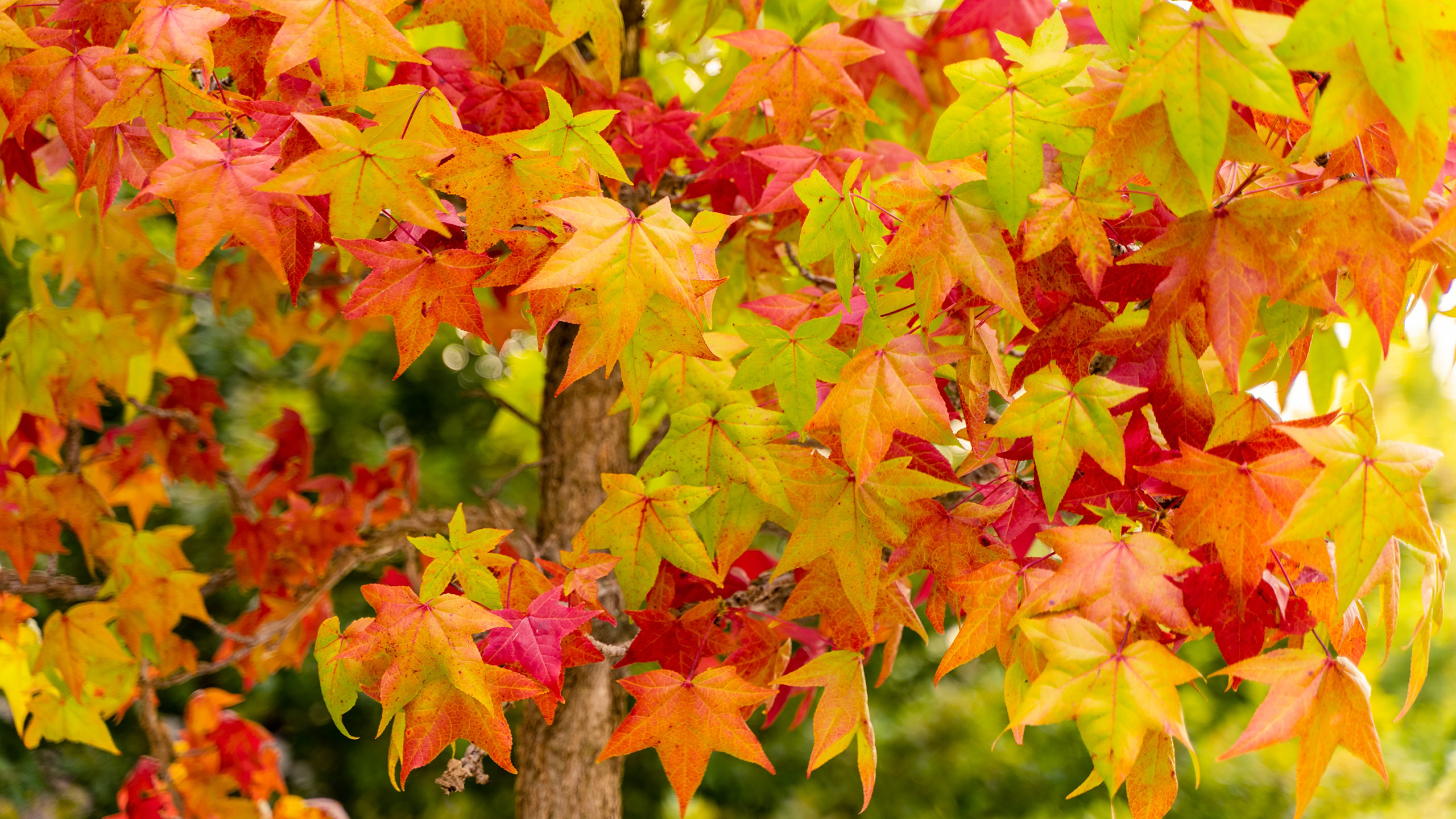
Complimenting the tupelo trees are the sweet gums (Liquidambar styraciflua), a very popular tree found in many gardens, arboretum, and parks. The best and most widely planted sweet gum is Liquidambar styraciflua ‘Worplesden’, very noticeable for its late colour often holding onto its reddish and purple leaves well into late November, usually one of the last trees to lose its leaves. It is also very recognisable for its fruits which are retained on the tree over the winter, this is both a good thing and bad as it is often noticeable that the fruits detract from the autumn colour.
There are many Liquidambars in the collection at Windsor with several recorded as champion trees. Without a doubt the finest tree for me of all the red coloured autumnal displays comes from Liquidambar styraciflua ‘Royal Lodge’ from where it is grown with many young trees now planted in both The Savill and Valley Gardens.
Tulip trees
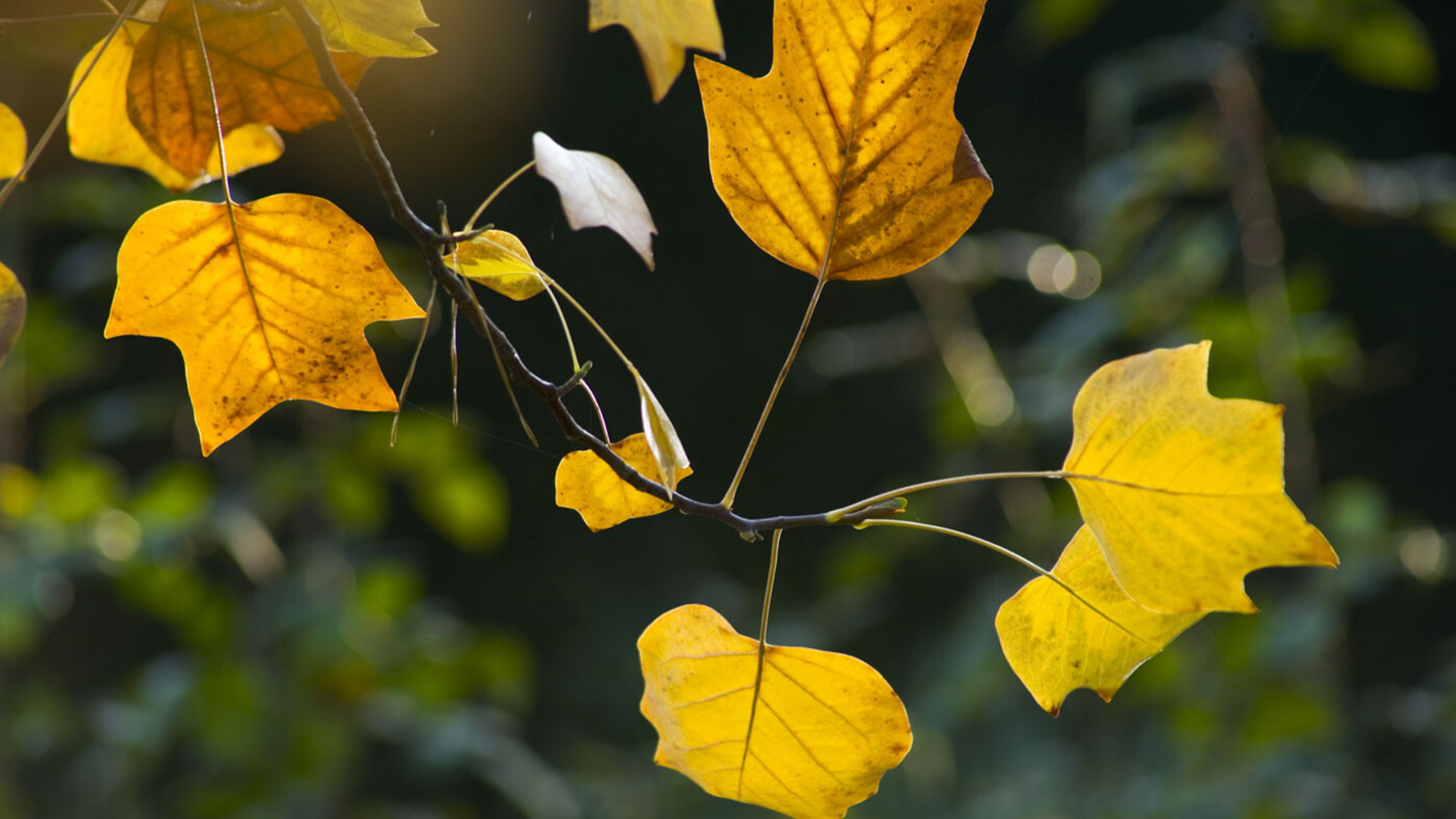
One of the signature trees of Windsor Great Park is the beautiful tulip tree (Liriodendron tulipifera), one of the best and most reliable trees for autumn colour. The tulip tree has one of the most recognisable and distinctive shaped leaves of all trees. In autumn, the foliage turns from a deep yellow to a rusty orange. There are excellent specimens in both The Savill Garden and Valley Gardens, with one of the finest clumps near Obelisk Pond on the way to Carter’s Bar. In The Savill Garden, The Queen Mother planted a variegated specimen outside the Golden Jubilee Garden on the lawn.
American oaks
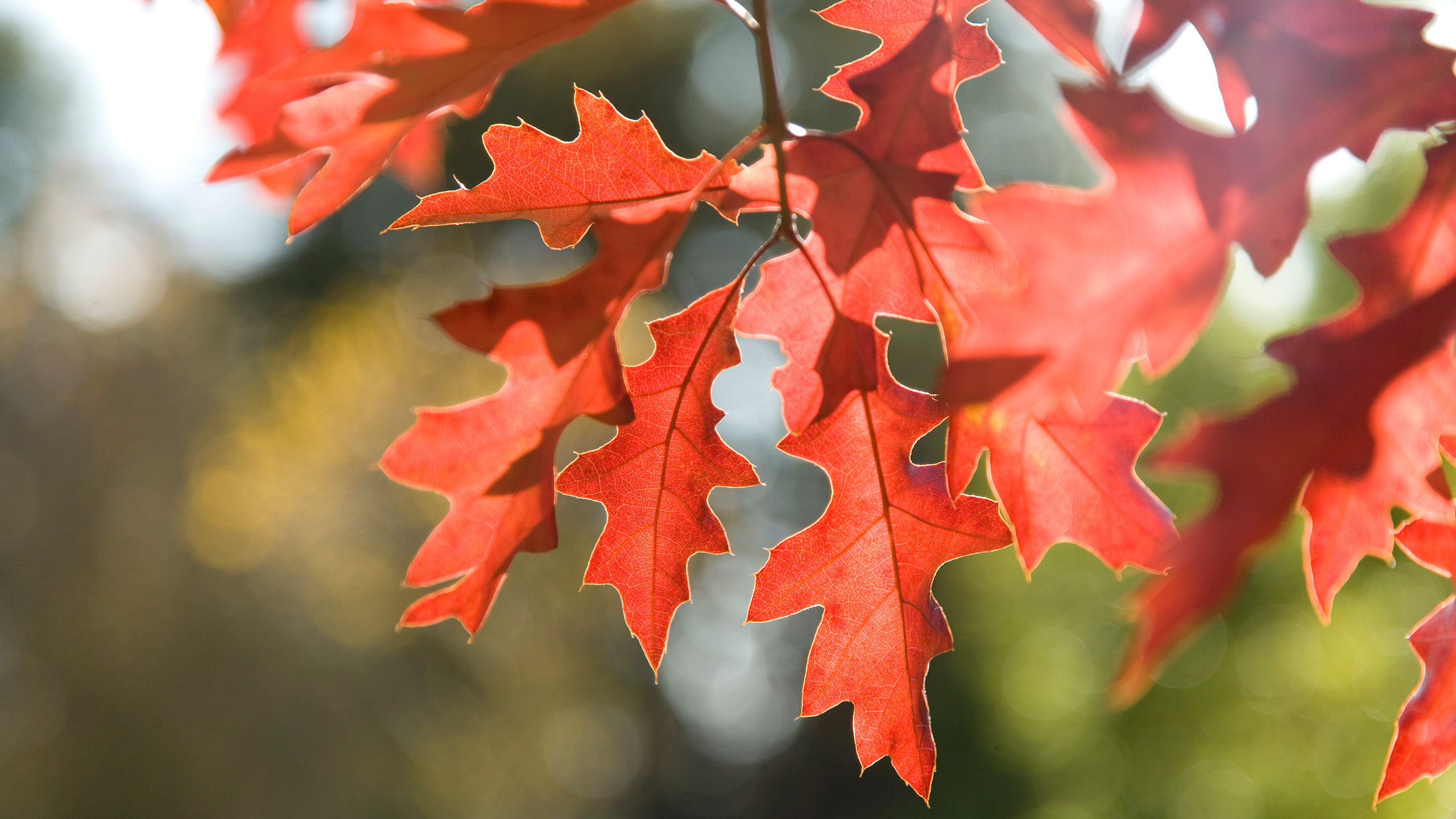
One of the largest and most variable tree groups that is well represented in the Gardens and across Windsor Great Park is the range of American oaks (Quercus spp). The most notable thing about the American oaks is the shape and size of their leaves. The American red oak (Quercus rubra) is the most represented along with the scarlet oak (Q. coccinea), along with the good selected named Q. coccinea ‘Splendens’ and can be seen along the Canadian Avenue in the Valley Gardens, several are now maturing and represented on the TROBI (Tree Register of the British Isles).
The red oaks are best seen on the Canadian Avenue along with companion plantings of tulip trees, sweet gums, and Canadian maples. The next group of American red oaks are the pin oaks (Quercus palustris) and northern pin oaks (Q. ellipsoidalis) both worthy trees for trees of the future. There are some superb specimens of the pin oak in the Valley Gardens, the 1937 Coronation Plantation and Home Park Private. The autumn colour is usually an orange/brown, holding its leaves into winter.
Sassafras
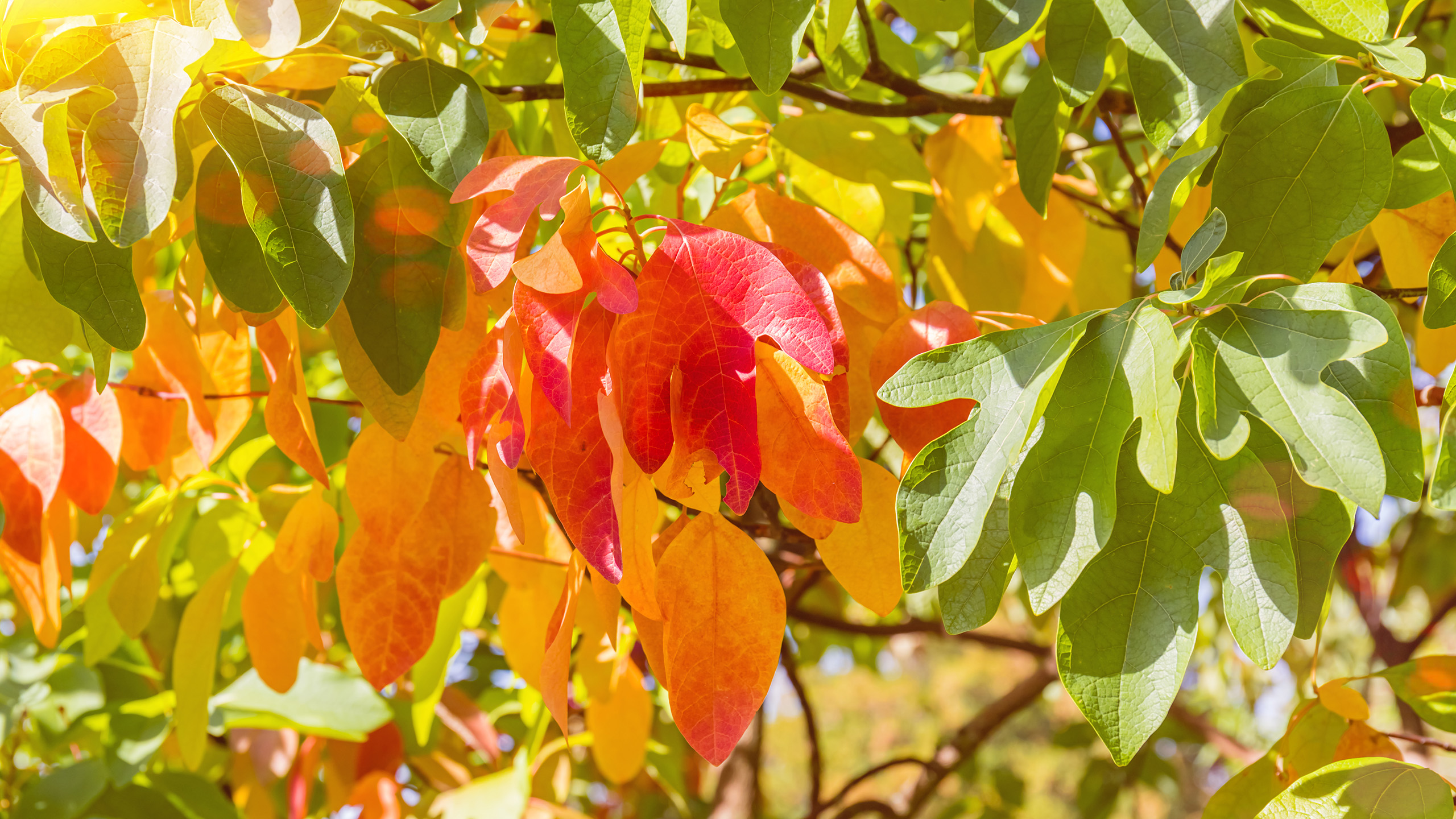
Finally, and by no means completing the list – this tree is unmistakably a gem and one of the best clumps anywhere in the UK and it can be seen in The Savill Garden. Sassafras albidum (Sassafras) is a hardwood tree with leaves that may be oval, one lobed, or two lobed and gives an excellent autumnal colour, with leaves which are often yellow, orange and red. The Sassafras in its native habitat along the eastern states of America provide a number of medicinal and culinary uses from healing wounds to root beer.
Written by John Anderson, Keeper of the Gardens