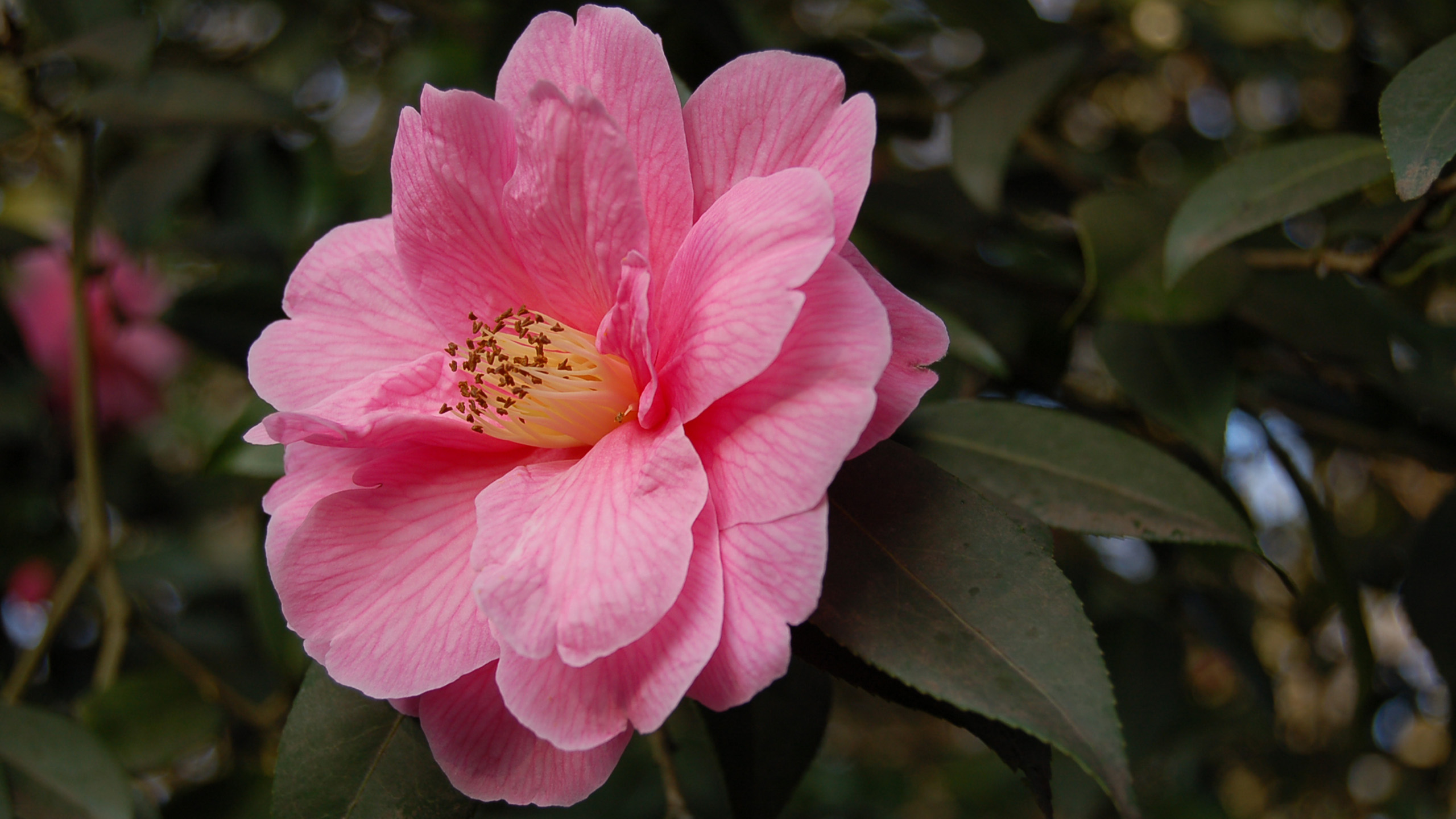
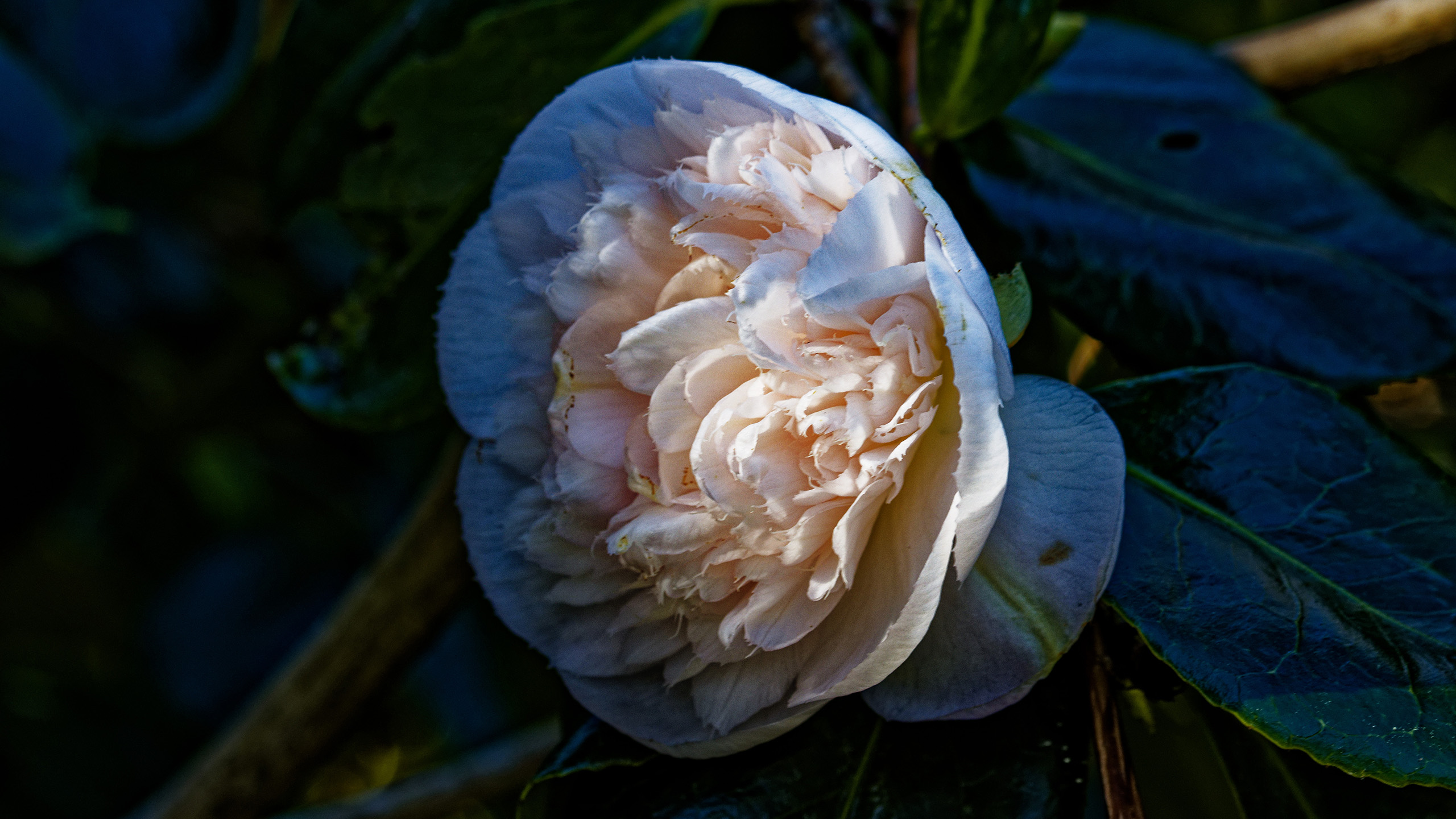
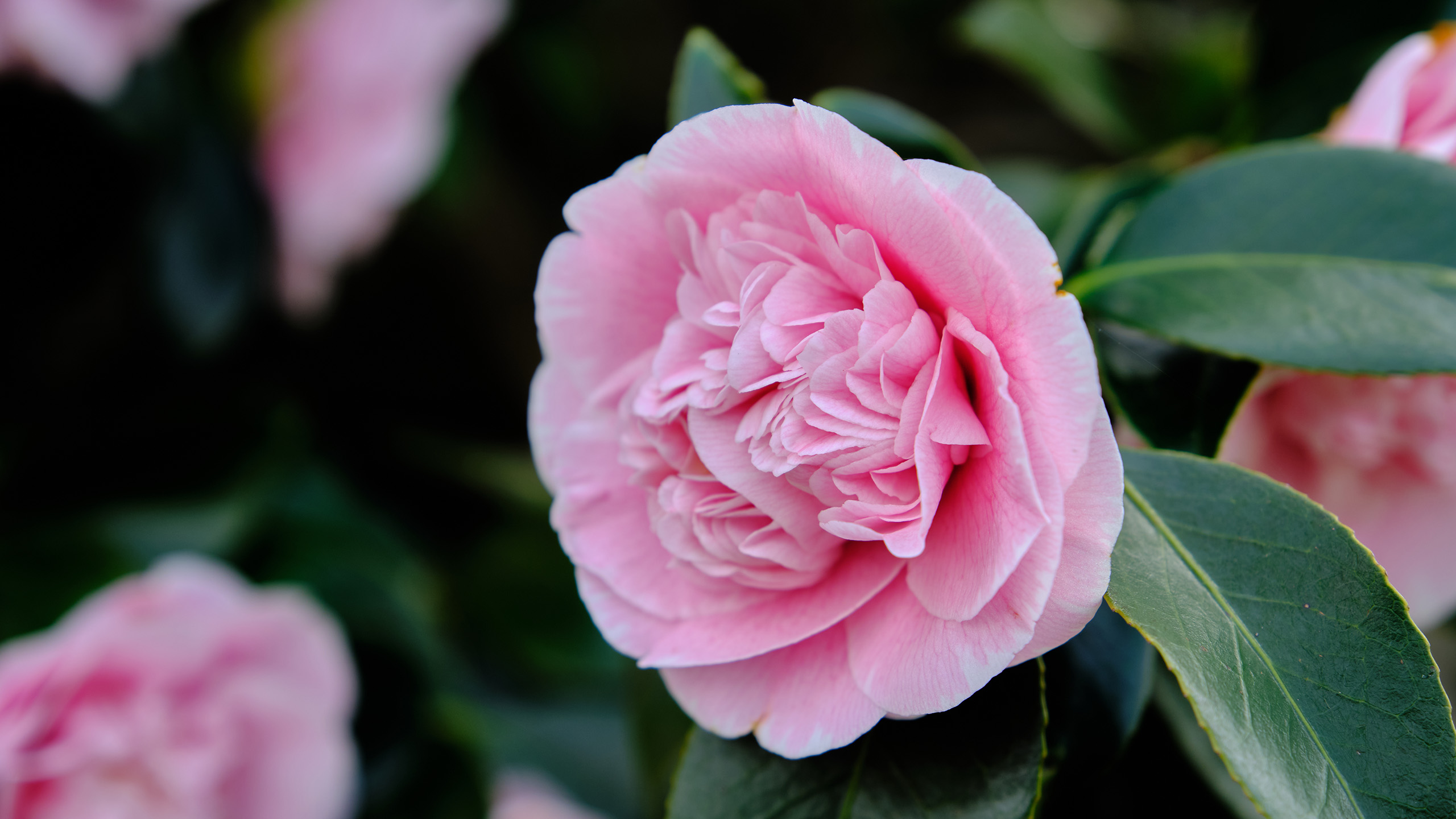
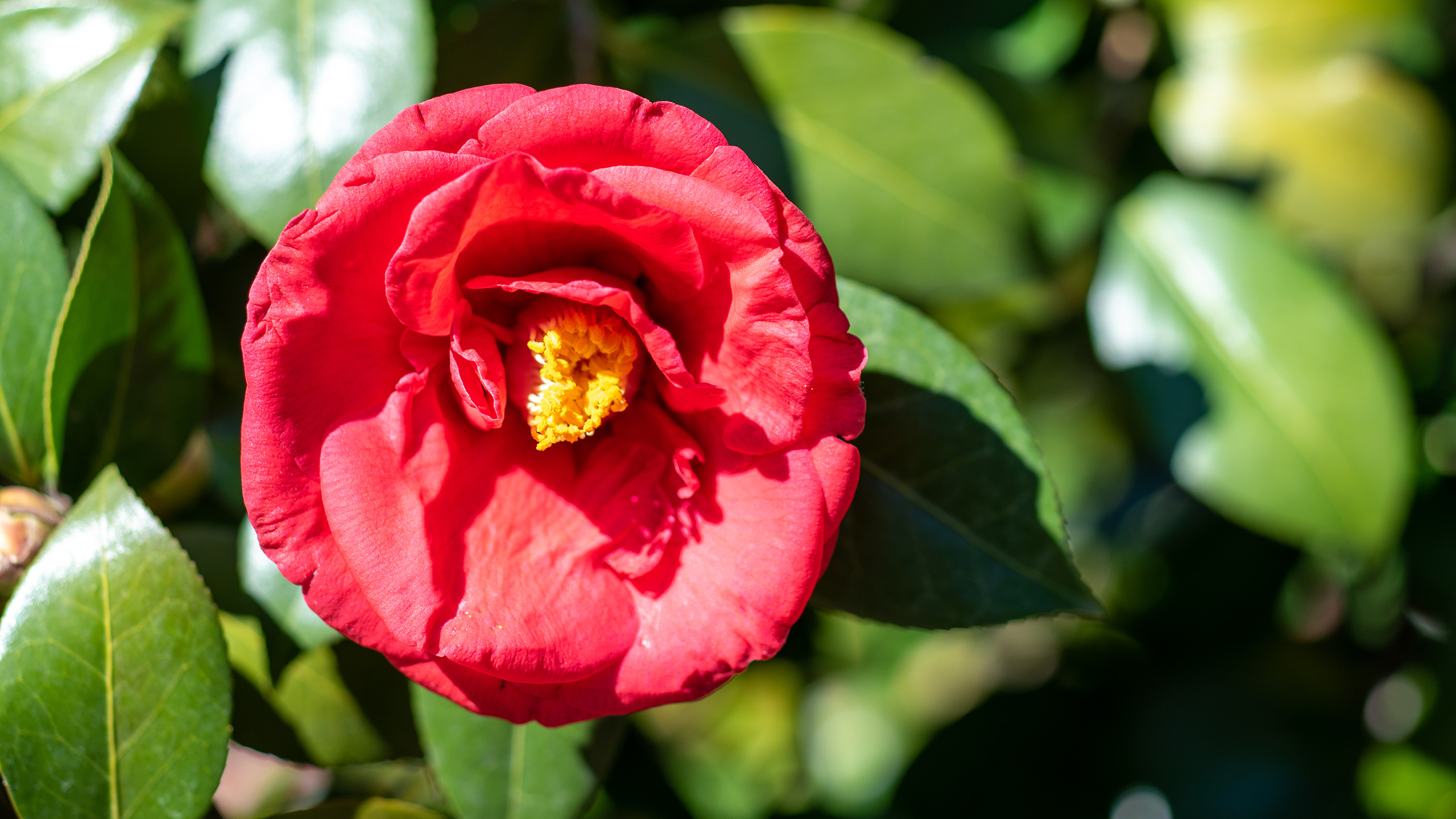
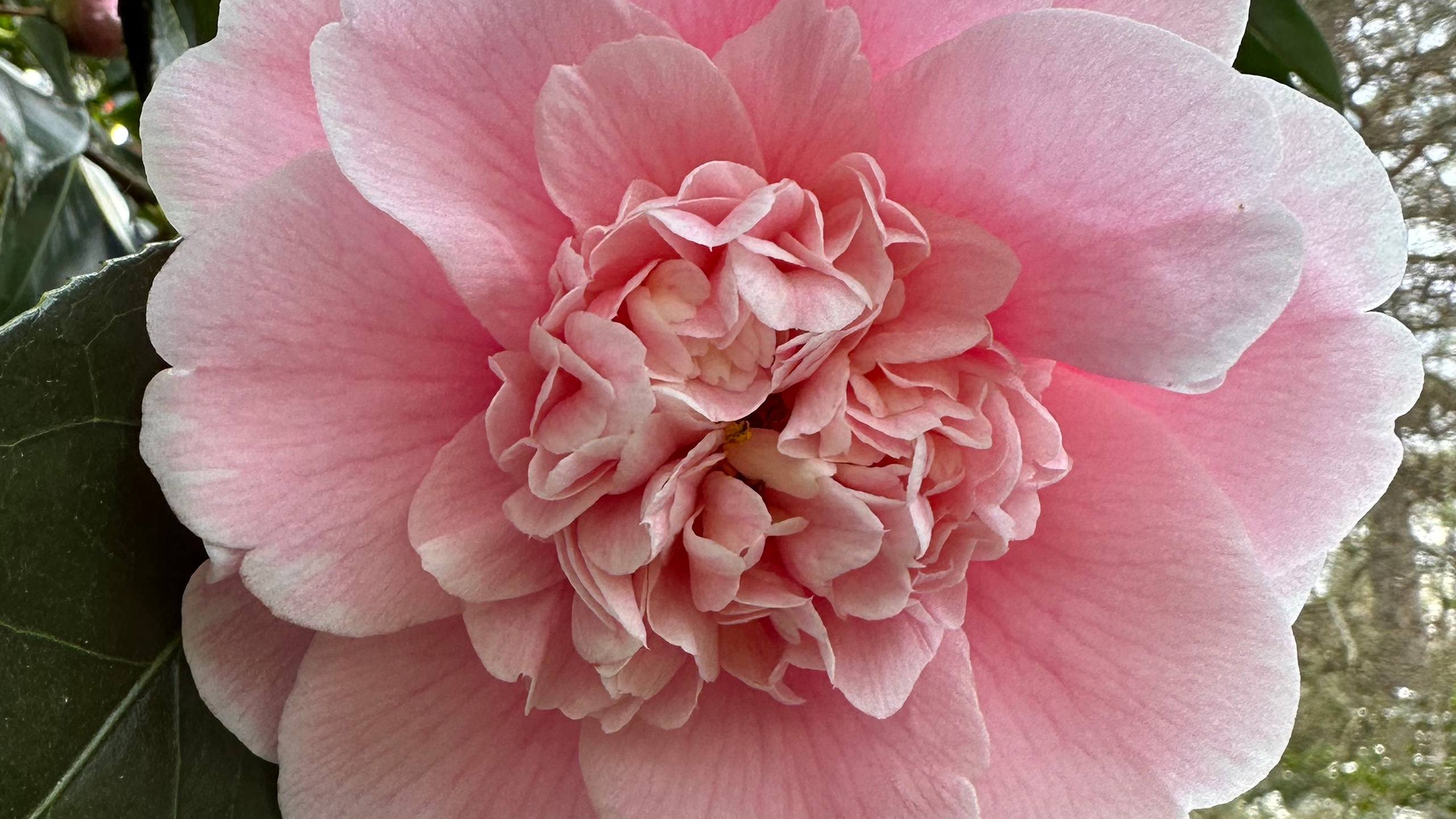
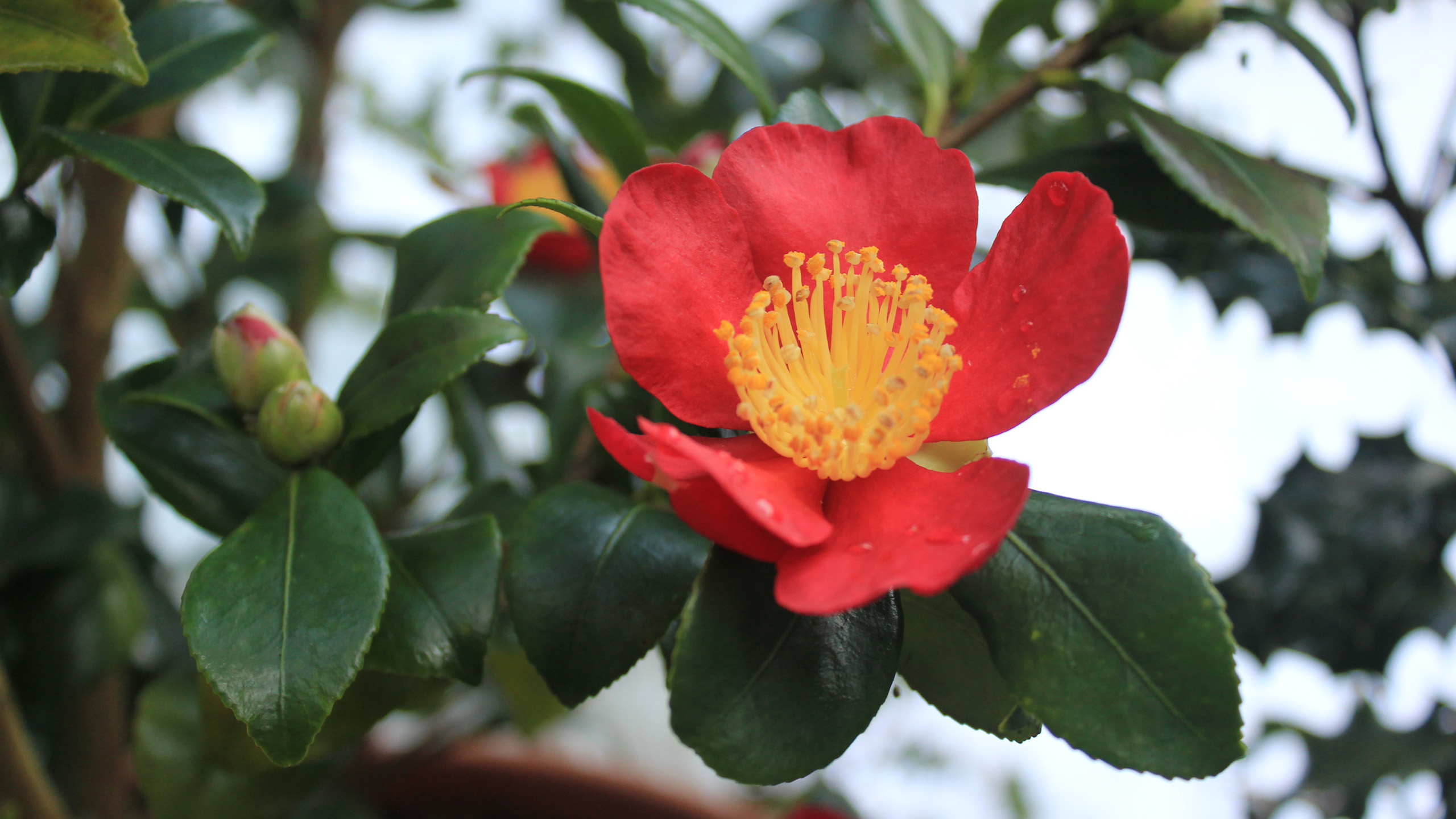
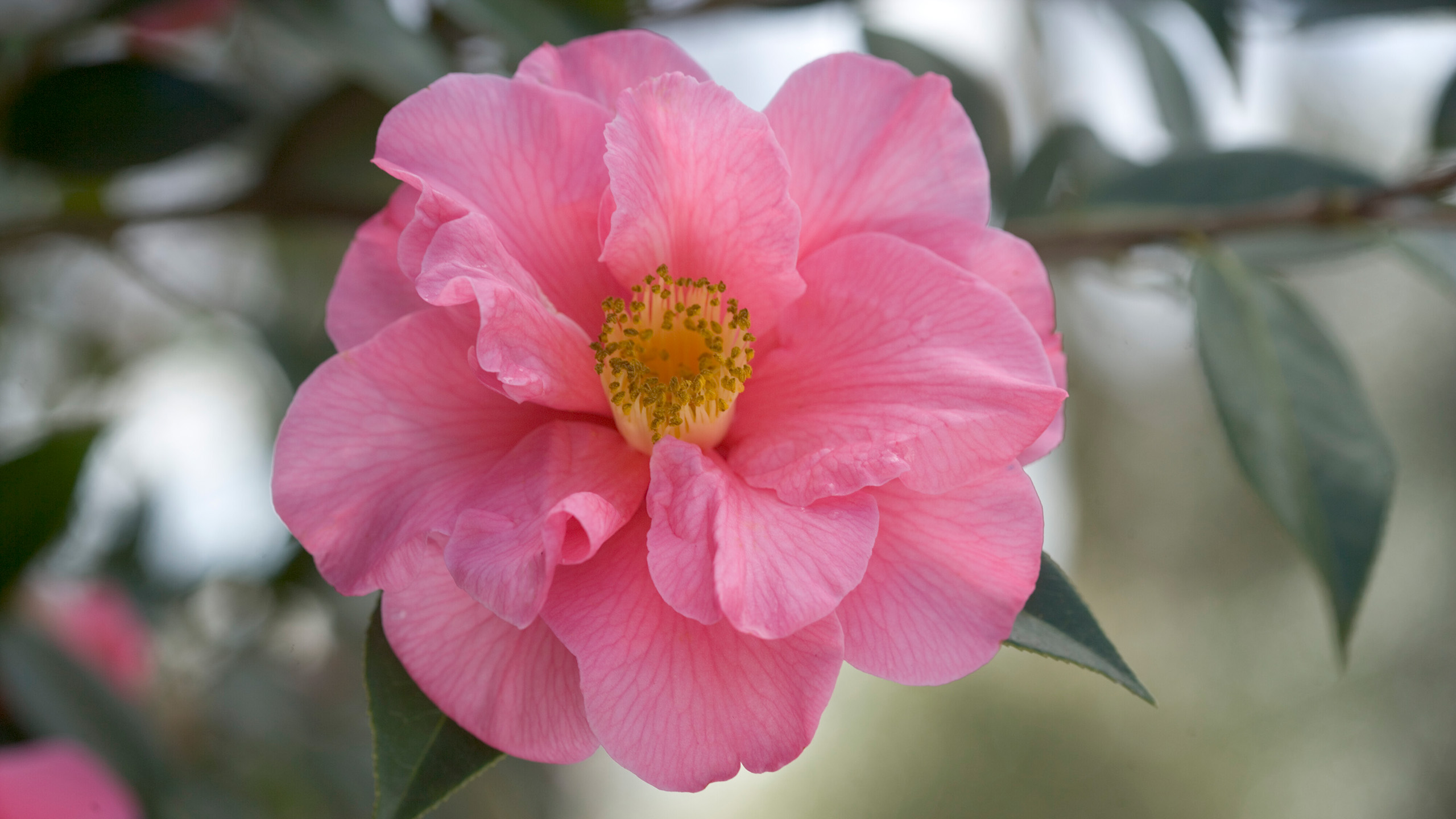
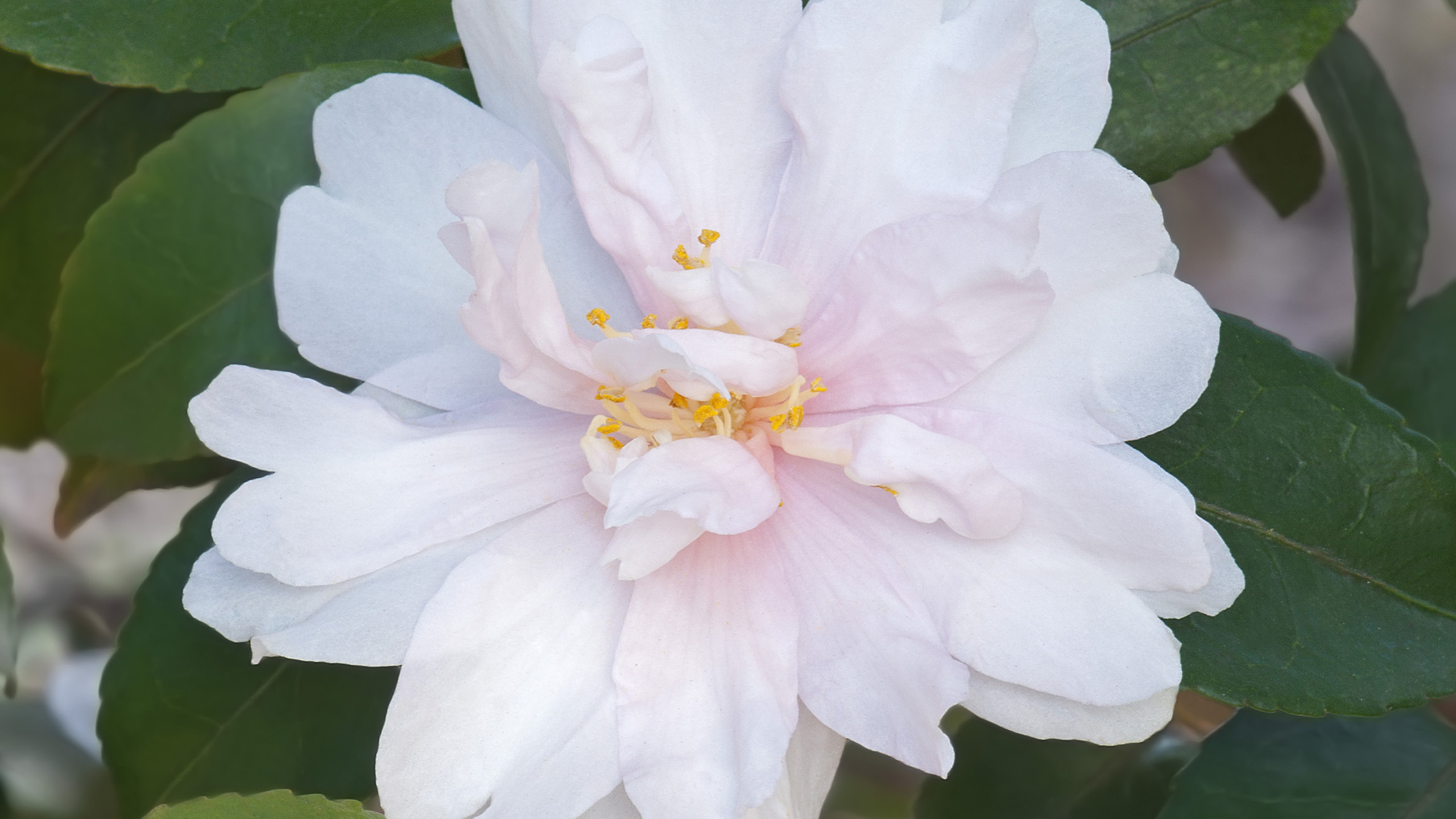
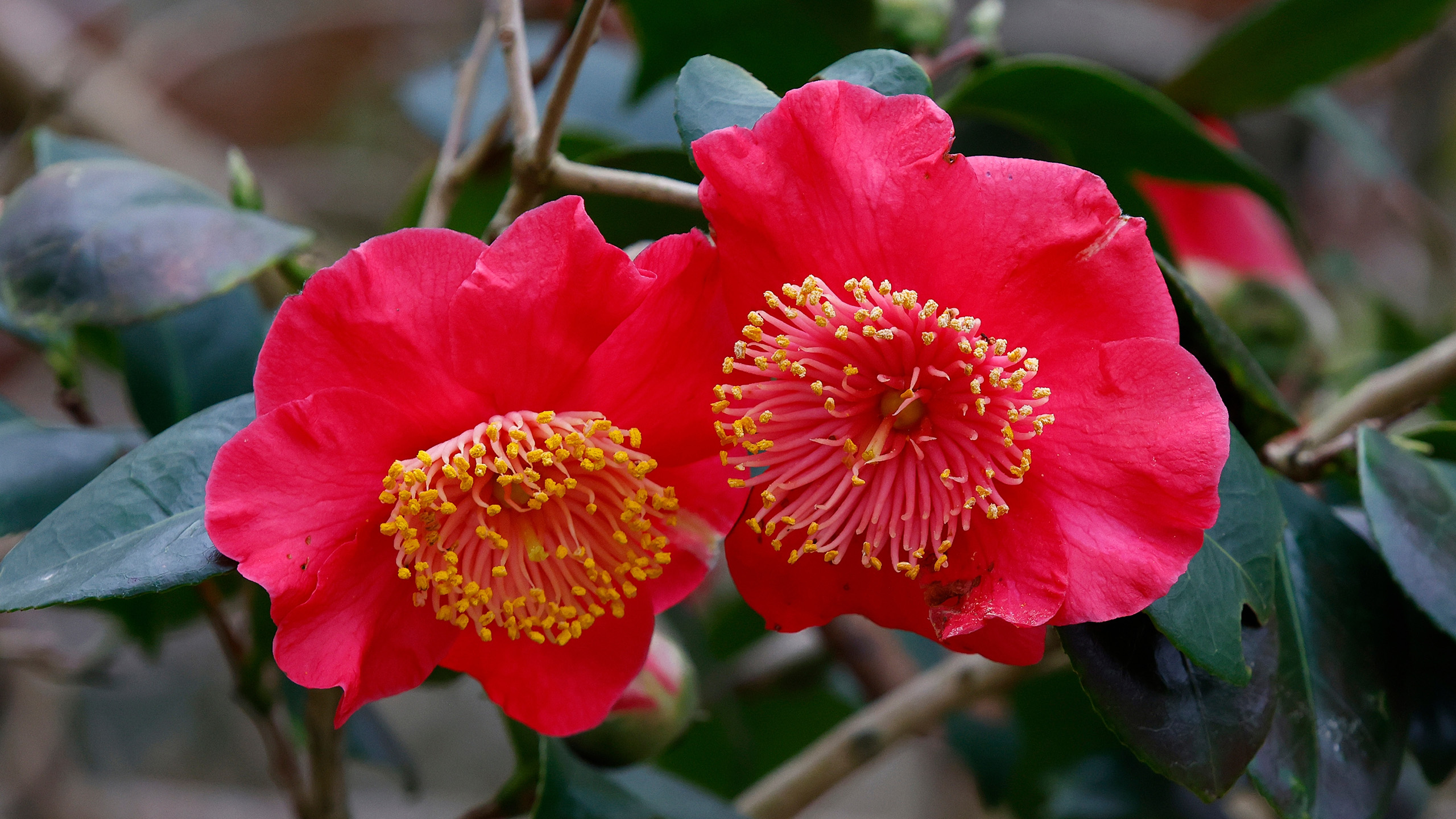
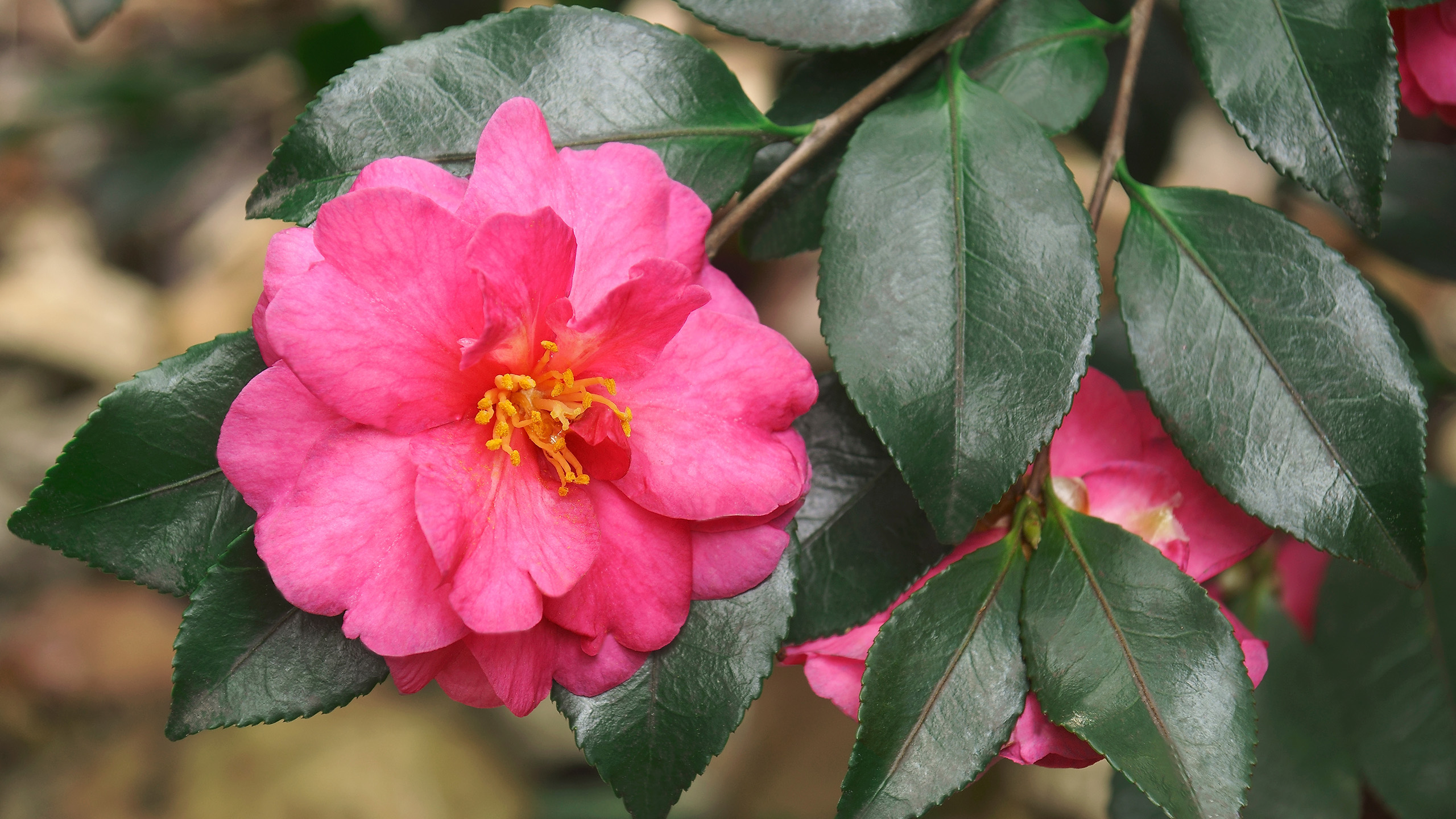
In the winter newsletter, John Anderson, Keeper of the Gardens highlighted the camellia as a welcome sight through the winter months. One of his favourites in The Savill Garden being Camellia japonica ‘Mrs D W Davis’ which is planted against the Queen Elizabeth Temperate House wall and will shortly be flowering.
This variety, bred by Mrs Davis’ husband in Florida, has a large, semi- double blush pink flower which has been described as soft pink tissue paper and one of the most beautiful camellias.
Camellia japonica ‘Mrs D W Davis’
There are many reasons to love camellia. As well as their glossy evergreen leaves for year-round attractive foliage, they flower from October through until late spring, are versatile in size, provide fragrance in a winter border, as well as colour through the gloomy winter months.
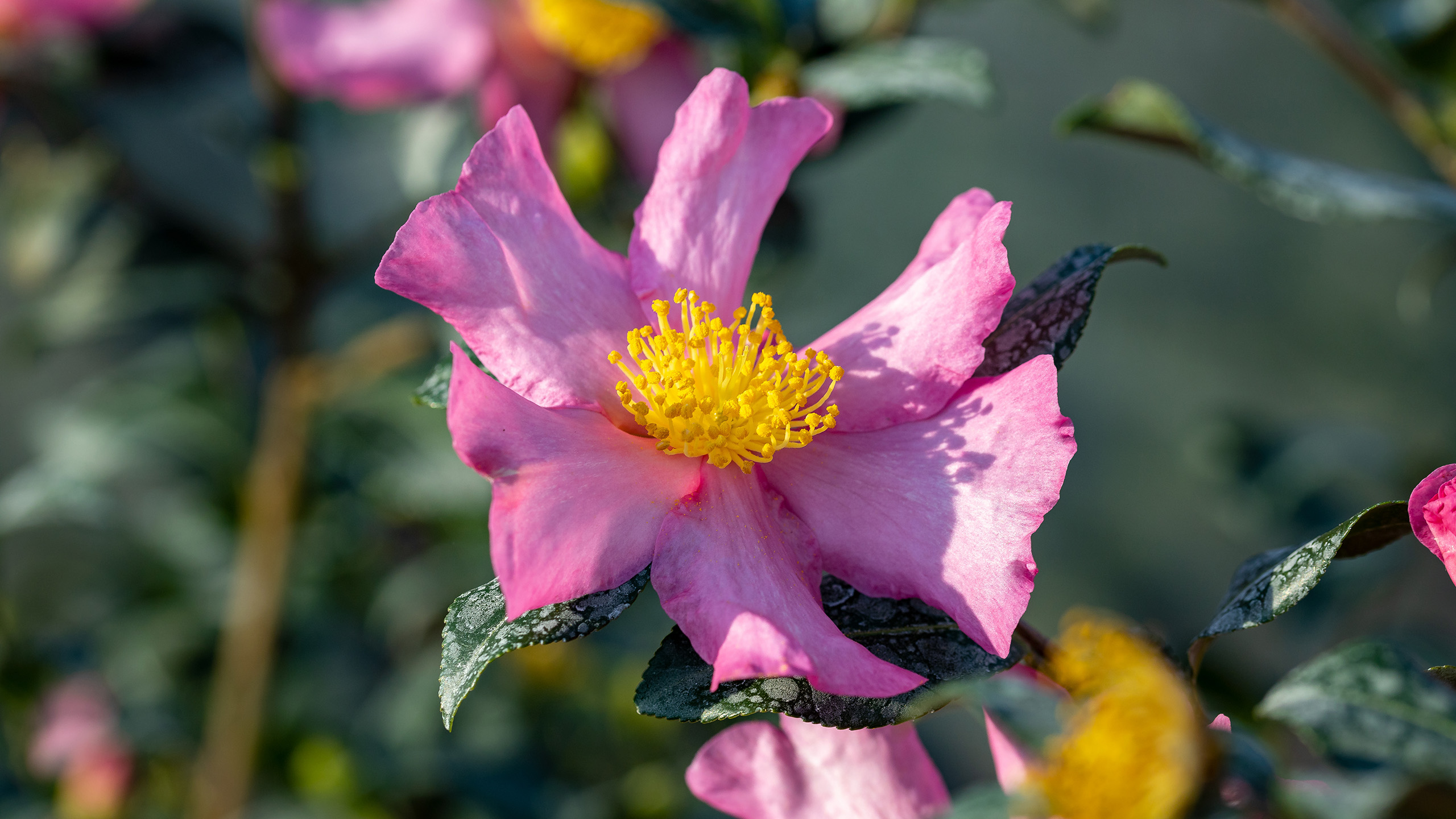
The autumn flowering Camellia sasanqua
It is for these reasons that the International Camellia Society recently called the Camellia sasanqua (the autumn early flowering camellia from Japan) a superstar of modern gardens.
Camellia sasanqua cultivation began in Japan 400 years ago on Hirado island, a small island on the north coast of Kyushu, which was the main landing point for European imports and for Japanese exports from 1550.
British Horticulturist Monty Don has shown hedges of flowering sasanqua in his series on Japanese Gardens and this versatility is testament to their growing popularity although some camellia lovers may argue that camellia just want to be trees!
Since October we have seen the early flowering Camellia sasanqua in flower in The Savill Garden – at the top of the garden near the summer house and in recent weeks in the Queen Elizabeth Temperate House.
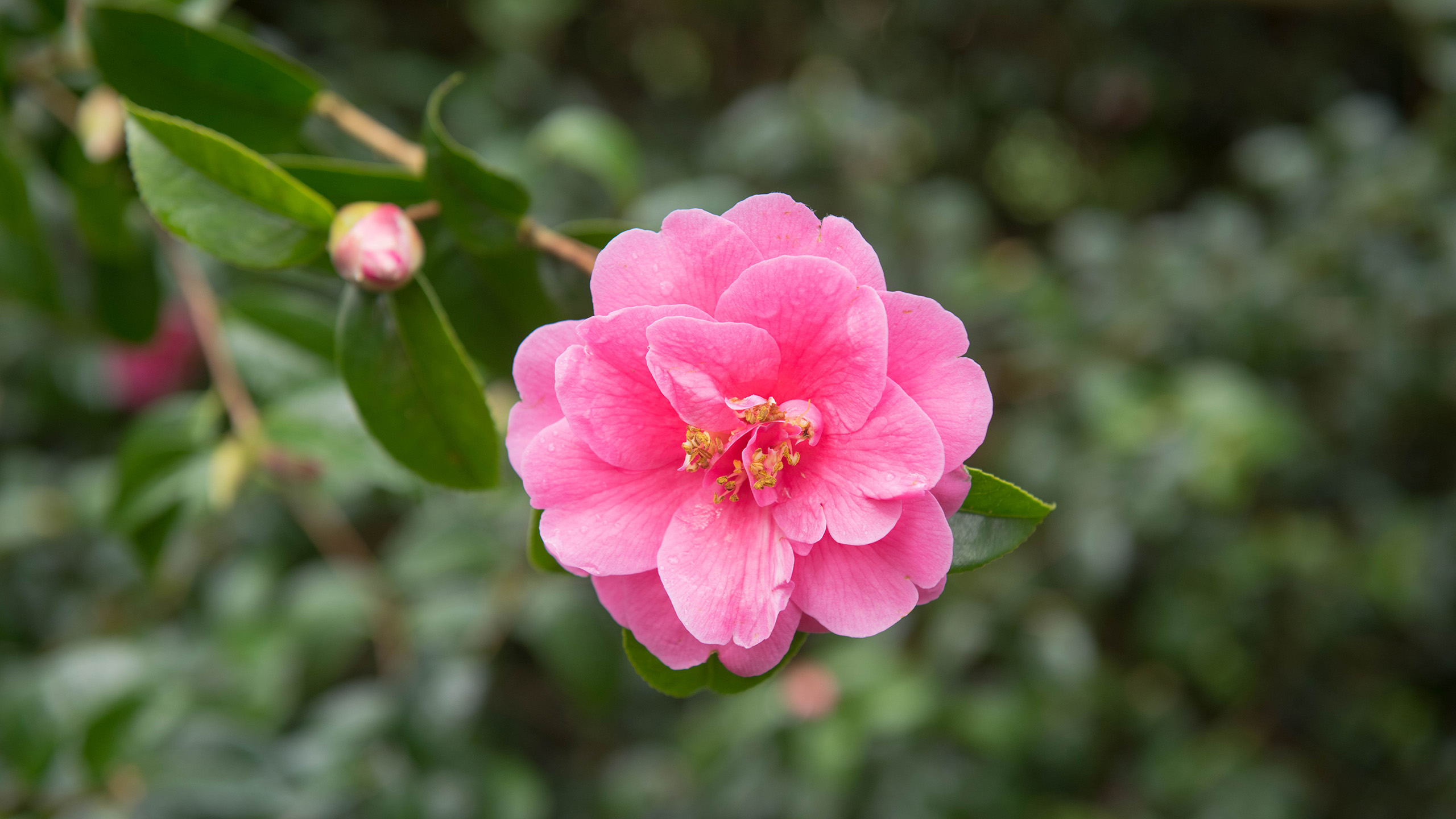
Other varieties in the Garden included Camellia ‘Hugh Evans’, ‘Plantation Pink’ and Camellia ‘Mignonne’, a formal double pink from Australia and bred in 1979.
Camellia ‘Plantation Pink’
A final highlight is the Camellia ‘Shishigashira’, a deep red double late-flowering sasanqua, that has been recorded in Japan as far back as 1884.
The first camellias of The Savill Garden
Soon into the New Year, the Camellia japonicas start flowering.
These were the first camellia species to be planted in the Garden, in 1935. Camellia ‘Gloire de Nante’s and Camellia ‘Adolph Audusson’, both originate from France, and can be found in Spring Wood.
‘Gloire de Nantes’, located near the old wisteria not far from the footpath, is a deep pink and flowers before Christmas each year until March. The species was first recorded from 1894.
The Camellia ‘Adolph Audusson’ sits beside ‘Gloire de Nantes’, but flowers later with deep red petals and was first recorded from 1877.
Camellia ‘Adolph Audusson’
Camellia japonica is the most popular camellia in cultivation and although it is believed to be native to Japan, this species was discovered and introduced from China. During the 1700’s Camellia japonica drawings and descriptions were sent to Europe from China and Japan and the plant arrived to the UK in 1819.
By the early 1830’s the fame of the beautiful new flower had spread over all the UK. Many new varieties arrived and by the 1850’s the camellia craze was at an all-time peak.
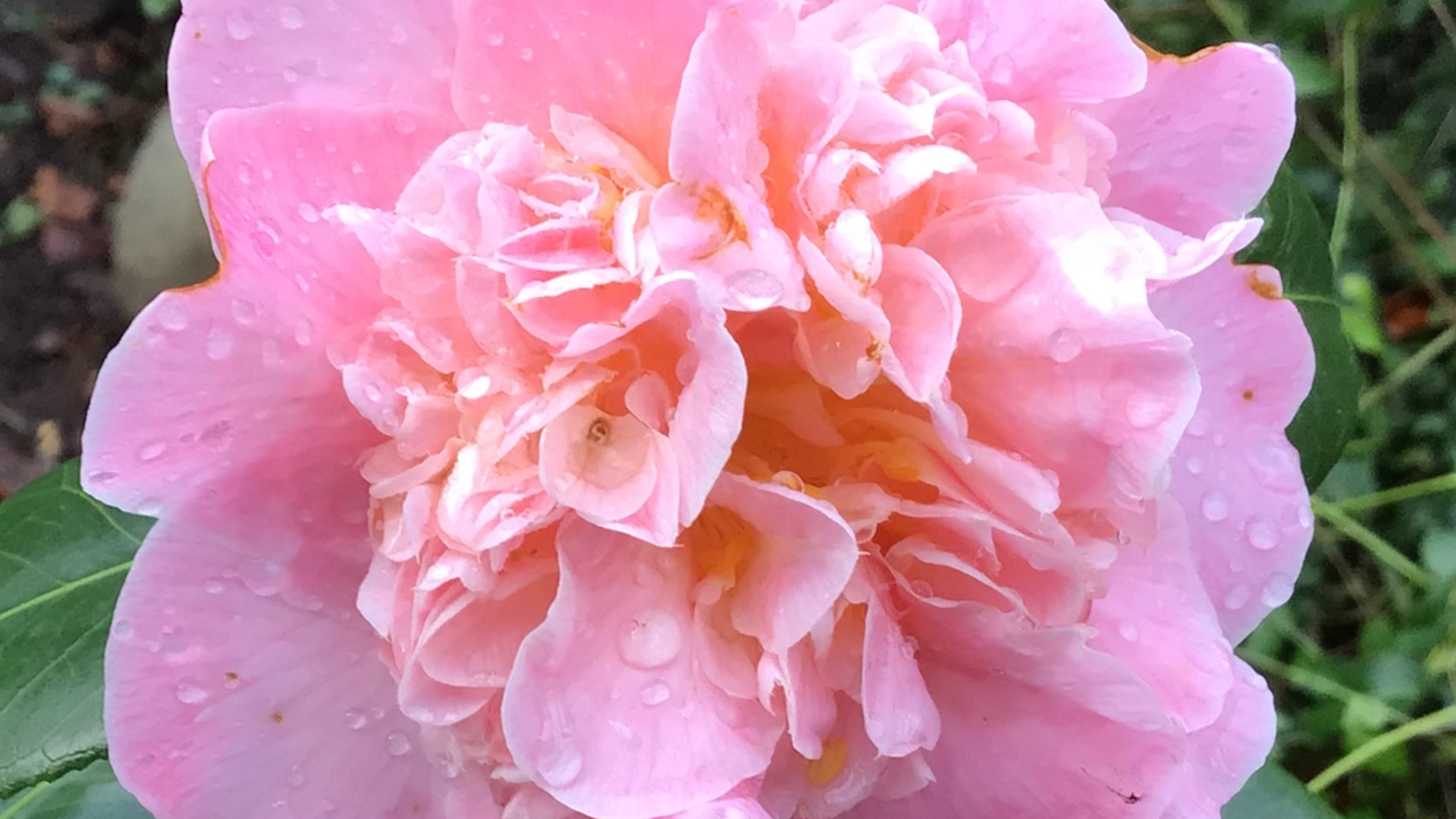
One such variety is the Camellia japonica ‘C M Wilson’, a beautiful pale pink peony form, which can be found in the middle of Spring Wood.
The origins of tea
The wild tea plant Camellia sinensis is native to Southwestern China and when we drink our morning cup of tea we can be reminded of how tea first originated.
Tea is made from the dried and powdered leaves of the camellia, which will either be loose or contained in a tea bag. The duration the leaves are left out to dry determines the tea’s colour, strength and tea, allowing for the difference variations from green tea, white tea, black tea and oolong.
The first tea plantation was in Ancient China with records dating as far back as 10 Century BC, and it was Robert Fortune the plant hunter who became famous for introducing British-controlled tea production to India in 1851.
With an increasingly warm climate, the first commercial tea plantation in the UK was founded in Tregothnan Cornwall in 1999.
A form of wild Chinese Camellia, Camellia pitardii var Yunnanica, with its small delicate pink flowers, can be seen on middle ride near the top of the Garden.
Camellia hybrids
In an article for the RHS in 1968, Hope Findlay, Keeper of the Gardens for Windsor Great Park wrote about the camellias at Windsor, and many of the japonicas he mentioned can still be seen in Autumn Wood and in Spring Wood in The Savill Garden today. In the article he also wrote about the arrival in the 1940’s of the camellia x williamsii hybrids from Cornwall.
During the 1930’s intense hybridisation of camellia occurred, particularly by John Charles Williams of Caerhays Castle in Cornwall. His williamsii hybrid crosses of Camellia japonica and Camellia saluenensis (introduced from China in 1926 by George Forrest) saw the introduction of more varieties which could be grown outside and flower freely in shady gardens.
We have many of the Camellia x williamsii hybrids in The Savill Garden. All along Azalea Walk and in Spring Wood are varieties of this popular and historic camellia hybrid, planted from 1946 onwards. They are also planted across the archway at the top of middle ride and start to flower from February.
At the top of Spring Wood, you will find Camellia ‘Inspiration’ and Camellia x williamsii ‘Donation’, both also early plantings in The Savill Garden.
Camellia x williamsii ‘Donation’
In Hope Findlay’s 1968 RHS article, he also mentions two other camellias in The Savill Garden – Camellia ‘Salutation’ which was raised at Borde Hill Sussex in 1936 and won the RHS Award of Garden Merit in the same year, and Camellia ‘Leonard Messel’. The latter is a fine flowering pink semi double camellia originating from Nymans Garden in Sussex in 1958 which also secured the Award of Garden Merit, and can be found growing along the Azalea Walk.
Camellias need friends
Finally, camellias can provide a backbone in the way of evergreen foliage and so much colour through the dark months of autumn, winter, and into early spring. They are hardy, good-natured plants but they do look lonely planted on their own and need a few friends around them.
On walks around the Garden, the Friends of The Savill Garden have been sharing their love of the plant and favourites in their own gardens.
Friend Christina Campion says:
‘My well-established camellias are about 45 years old and are full of bud but nowhere near flowering (Camellia ‘Salutation’ and I think Camellia ‘Donation’) the labels have long since gone. However, two of the five I bought last June from Trehane are about to burst and seem particularly vigorous. The first is ‘Kitty Berry’, and the other is the hybrid ‘Scented Sun’. The fragrance will be from ‘apple blossom’ and the buds are enormous and look as though they’ll open very soon. The three reds are lethargic and certainly won’t be with us for some weeks, which is probably the more sensible option.’
Next month we will visit Timber Hill and the garden of Friends Nick and Lavinia Sealy. They have been collecting camellia for fifty years and now have more than 300 plants. Asked why they love them, and their favourites Nick said:
‘My passion in the garden is the woodland landscape and I first planted three camellias in our wood in the 1960’s. The labels have since gone but they are all still in the garden – all Camellia japonica, a single white, another pure double white, and a deep red one. I find the camellia in the woodland garden spectacular and especially the sasanqua variety, providing flowers through the autumn and winter months.’
‘Twenty years after this first planting, my sister Ann Ala, a botanist and passionate gardener, gave me Camellia sasanqua ‘Cleopatra’, an imported pink variety from Japan in 1934 and she said, “I think you’ll find them worthwhile”. Ever since then I have loved them.’
Camellia sasanqua ‘Cleopatra’
‘Some of my favourite camellias are the old Japanese Camellias japonica ‘Adelina Patti’ and Camellia ‘Hagoromo’, a beautiful white flower. Also, Camellia japonica ‘Takanini’ a dark red anemone form and Camellia sasanqua ‘Jean May’ a pale pink compact fragrant variety.’
‘Lavinia picked up our first RHS Camellia book by David Trehane in the 1980’s.’
‘It was after that that we first went to Trehane. We also had sheep at that time. I became known as “the gentleman with the sheep trailer” whenever I went down to the nursery to collect plants.’
We discovered the famous Nuccio’s nursery in California and planted the very large and handsome salmon coloured Camellia japonica ‘Guilio Nuccio’, named after the first breeder, which is also planted in The Savill Garden.
‘Lavinia, my wife, is besotted with Camellia japonica ‘Adeyaka’, a deep red, which flowers in mid-January, and Camellia japonica ‘Bokuhan’ a miniature dark red anemone form, perfect for a buttonhole.‘
‘We are still buying camellia plants and our recent purchases were Camellia sasanqua ‘Yume’ from Trehane nursery. This was after being inspired by a talk by Caroline Bell from the RHS Rhododendron Camellia and Magnolia Group, which has reinvigorated our enthusiasm. Also, Camellia x vernalis ‘Yuletide’ and Camellia sasanqua ‘Paradise Audrey’ from Millais.’
Camellia x vernalis ‘Yuletide’
‘We have planted nearly twenty sasanquas near and around the house so that we can see them through winter. We look forward to meeting the Friends of The Savill Garden in March at Timber Hill.‘
Written by Sian Thomas, with thanks to Christina Campion, and Nick and Lavinia Sealy
Camellia ‘Leonard Messel’
Camellia sasanqua ‘Jean May’