The Landscape
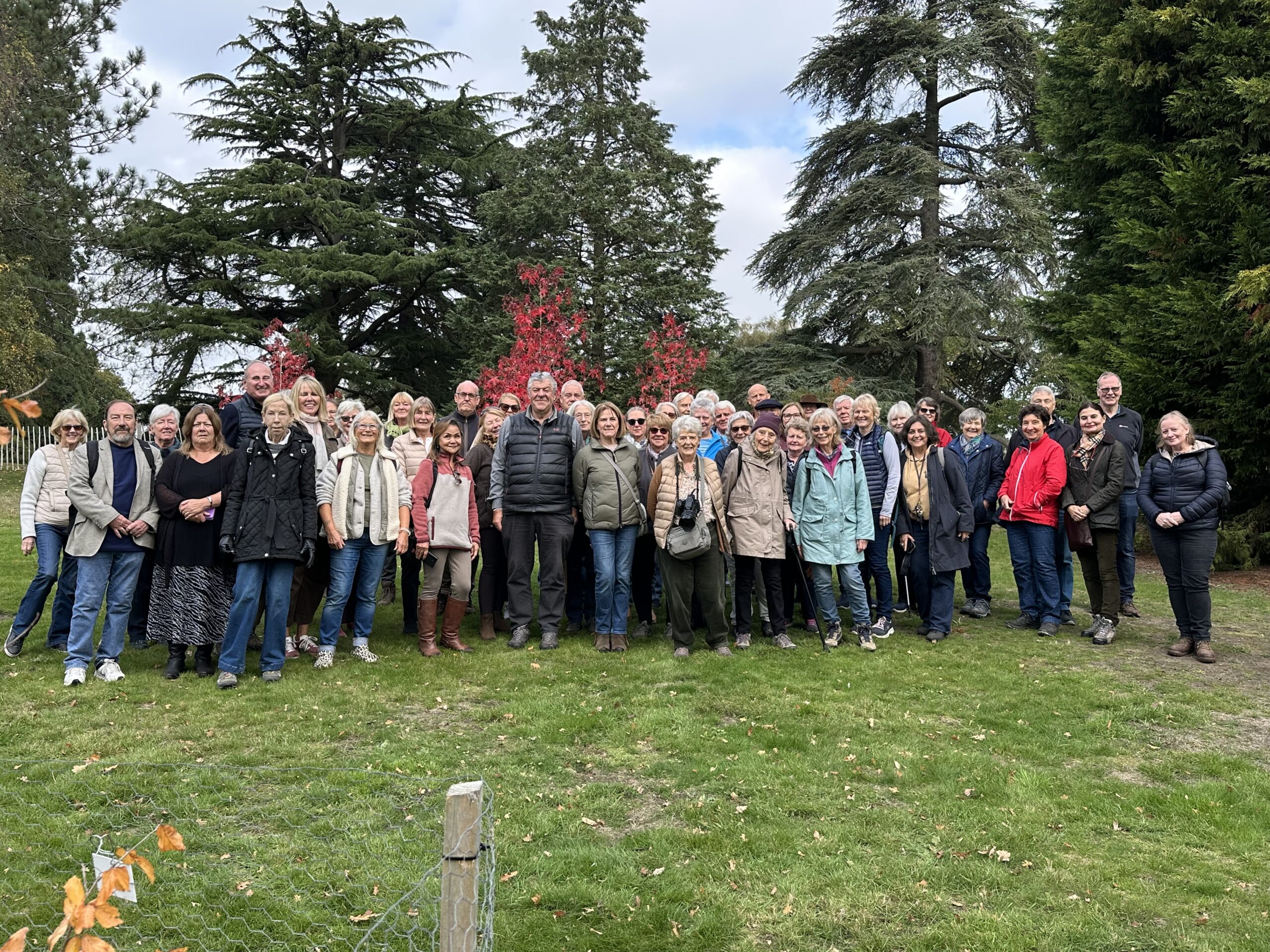
We began the Autumn Walk with John explaining that planting an autumn landscape starts with imagining you are painting one. We were taken to the new planting landscape at Obelisk Pond by walking through The Savill Garden and out through the side gate onto Obelisk Ride.
Before we left, we stopped to look at a very autumnal red tree near the acers and next to the Adventure Play fence. A healthy American ash tree called Fraxinus pennsylvanica was very red with autumn colour and had not been affected by disease. John shared with us that trials were taking place in the UK to see which ones are tolerant against ash die back.
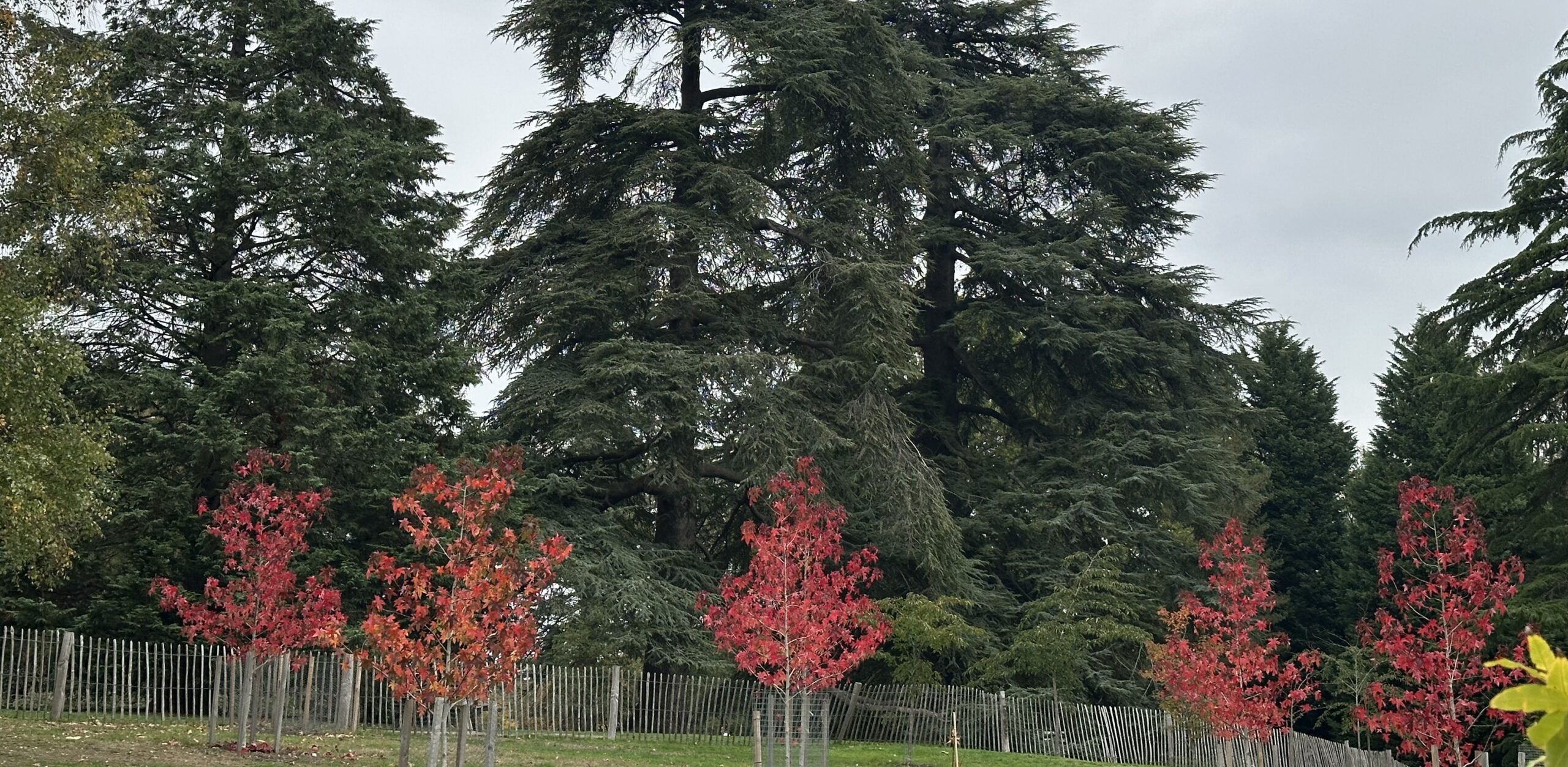
Walking towards the Obelisk Monument we turned and looked back down the ride and imagined the old avenue of Liquidamber trees which were planted there. Just one remains and we could see its red leaves, the highest amongst the other trees around it. The ride dates to 1712 and so was there before the 1750 monument. It runs parallel to The Savill Garden which will have a new perimeter fence later this year.
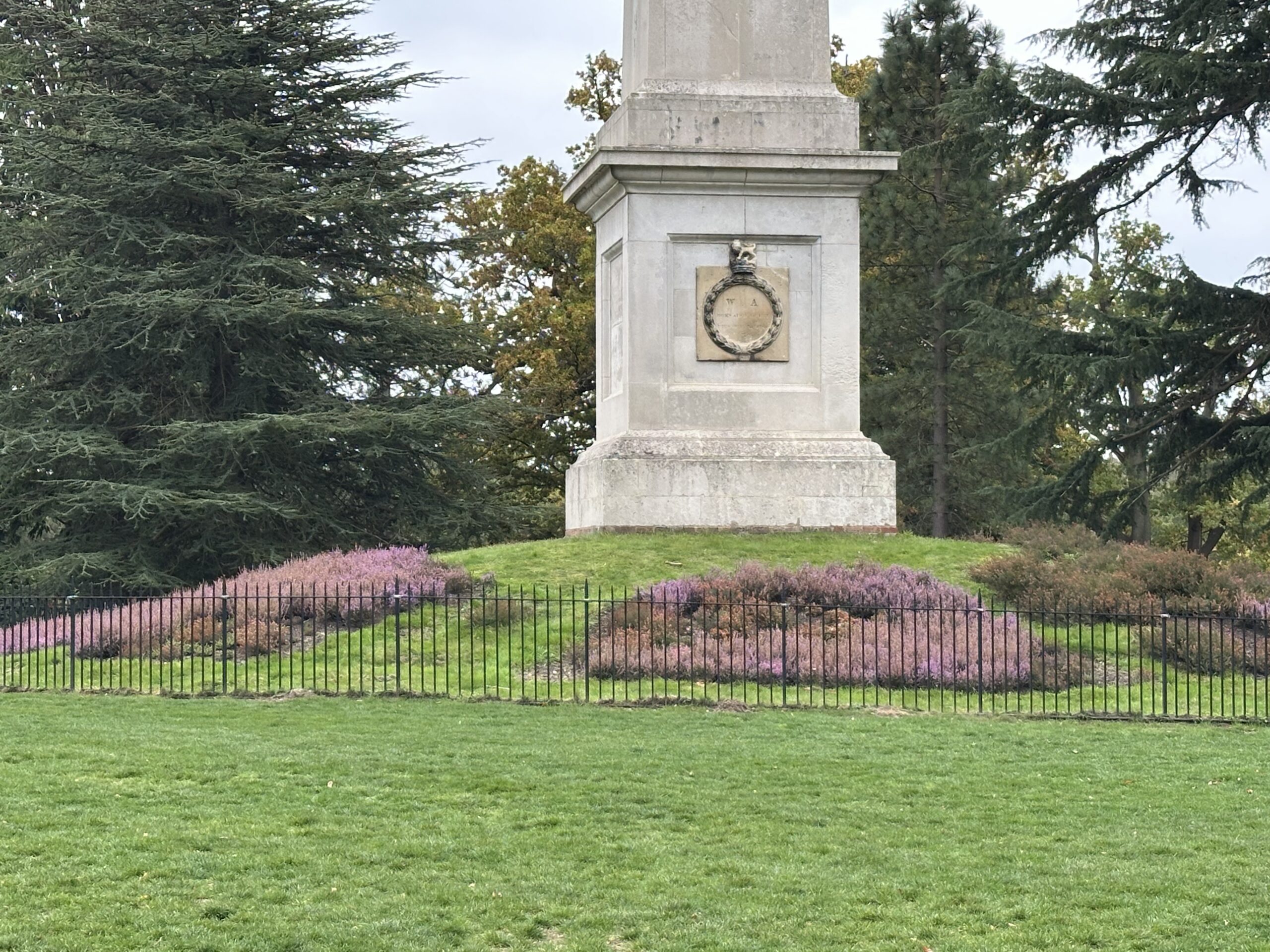
Heathers around the Obelisk
Heathers have always been planted around the monument; those planted there now are looked after by the garden team and against all odds from the rabbits and deer we saw deep purple and pink coloured flowers.
The new Obelisk landscape is not a garden or an arboretum; it is a planting of an autumn landscape. One which will be reflected onto the water in autumn and intended to be seen from across the pond at the far end of the dam. It is going to be an autumnal tree landscape. John explained how this visual painting was forming in his mind as the planting plan was unfolding.
The changing climate was central to John’s imagery of a painted landscape, and he spoke about how the sweet chestnuts in the park had struggled this year. We stopped at the top of the bank to look at the contoured landscape down to the pond. This had taken more than two years to prepare. The grass wasn’t growing, and 40 tonnes of soil was brought in to raise the pH to a more alkaline level, this followed the removal a few years before of the rhododendrons by Mark Flanagan, former Keeper of The Gardens.
Heathers around the Obelisk
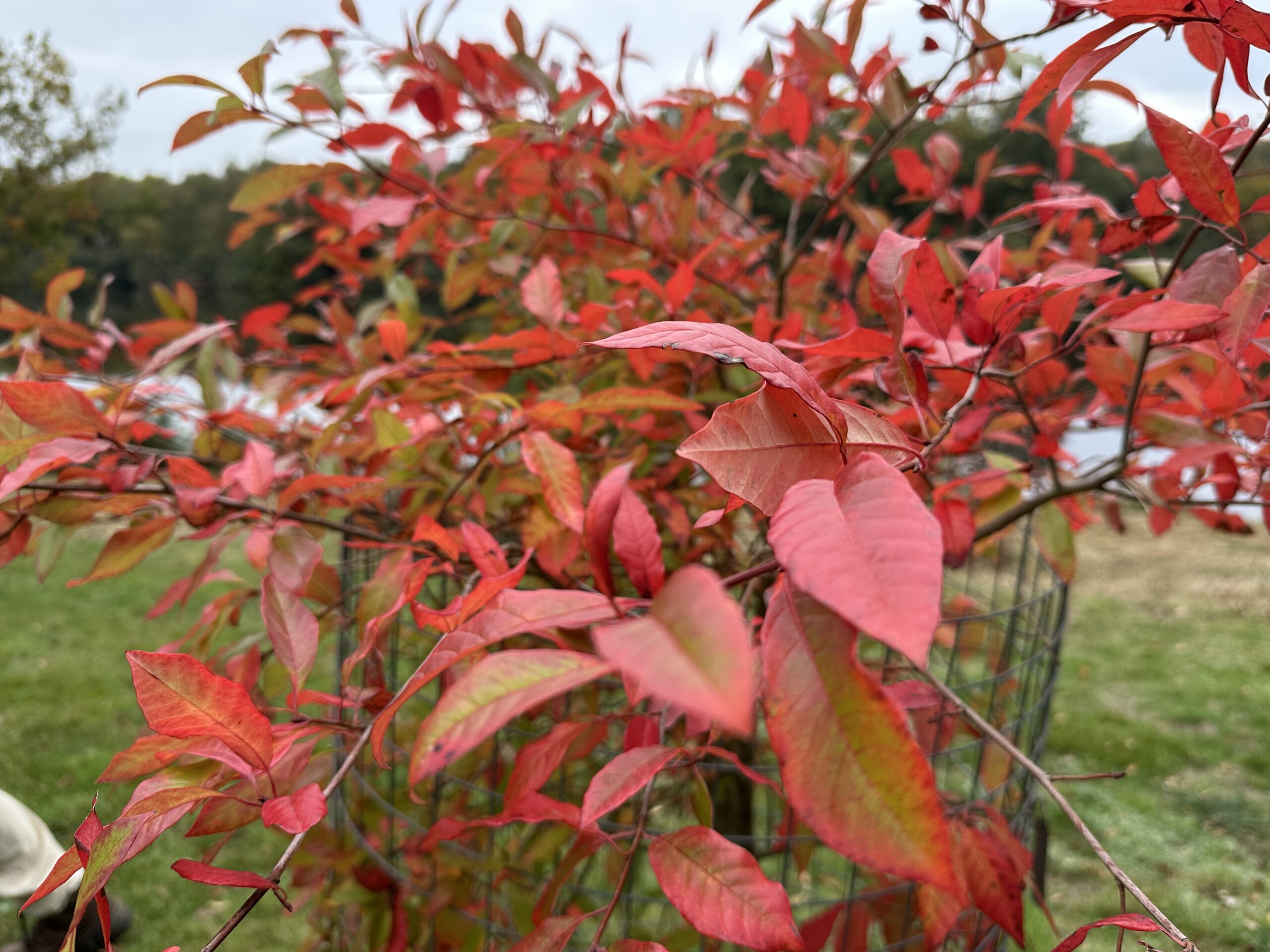
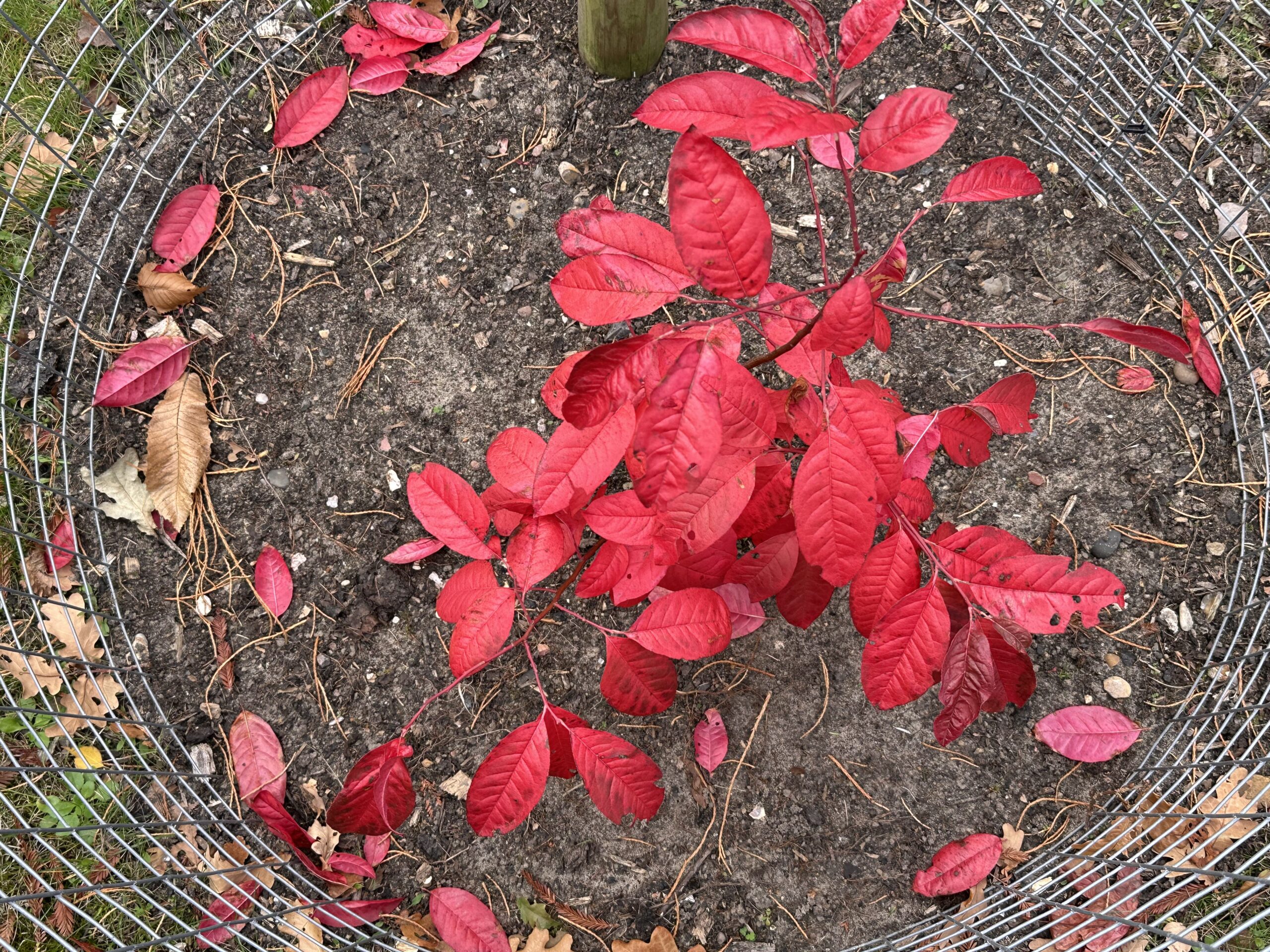
The lower-level planting near to the pond at the front of the landscape were mainly Nyssa sylvatica trees – many Nyssa cultivars including ‘Wisley Bonfire,’ ‘Jenny’s Flame,’ ‘Wildfire’ and ‘Isabel Grace’ (a Sheffield Park cultivar) also Nyssa sinensis. John’s advice when buying trees is to buy a good form clonal name; and plenty of these have been planted in this area.
Walking up from the pond, where these Nyssa trees skirt the edge, in this area of the middle slope is a swathe of newly planted trees including Cupressus arizona var montana, the critically endangered Mexican Pine, Sweet Gums and the outstanding cultivar of Rowan called Olympic Flame. All planted for a landscape display of red, orange, evergreen and blue. In amongst these was also a young red leafed Sorrel tree Oxydendron arboreum.
Nyssa sylvatica ‘Isabel Grace’
At the top of the slope, near to the path are more Tulip trees, American Oaks, and metasequoia, the dawn redwoods. At the end of the landscape are the planting of Sakora – Japanese cherries which John expected to last around 25 years, perhaps not as long as the other trees but, in the meantime, will give interest and colour.
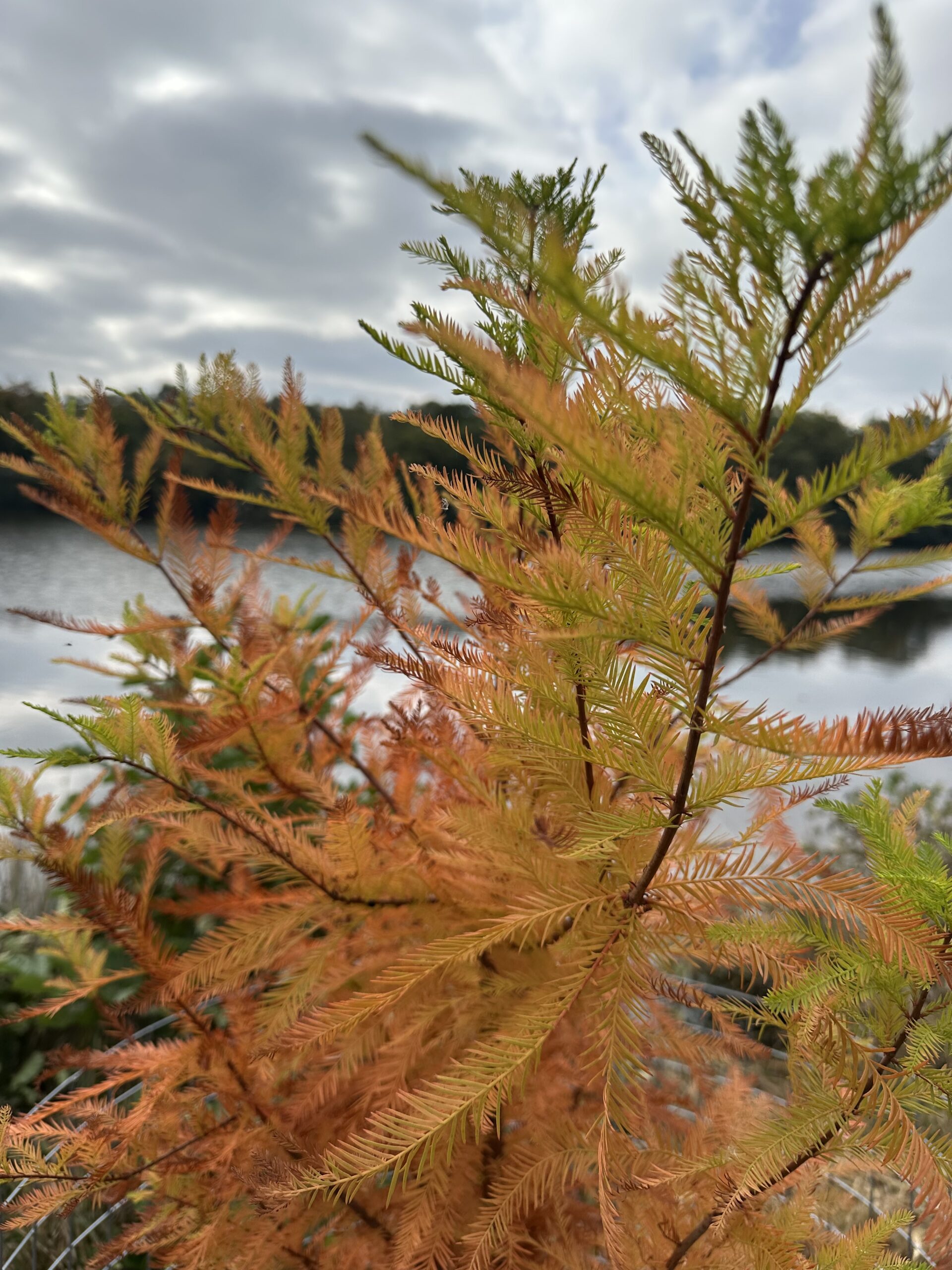
Swamp Cypress
At either end of the landscape have been planted some stand-out tall trees such as the Swamp Cypress and Golden Larch to frame this vast collection of autumn colour.
We thank John very much for taking us into this new landscape and building our excitement for what is to come in future years. A legacy planting at the historic Obelisk Pond and Cedars.