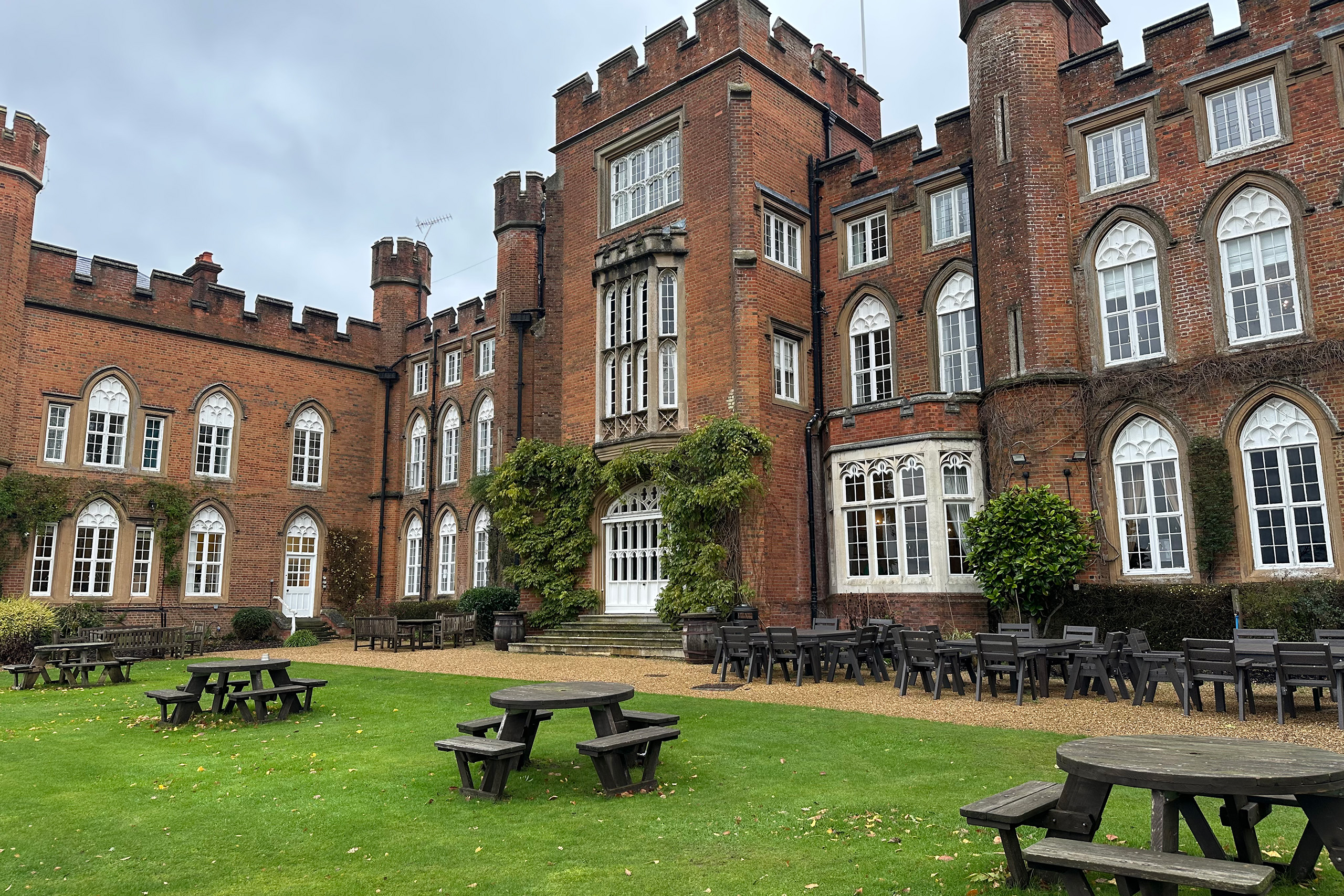
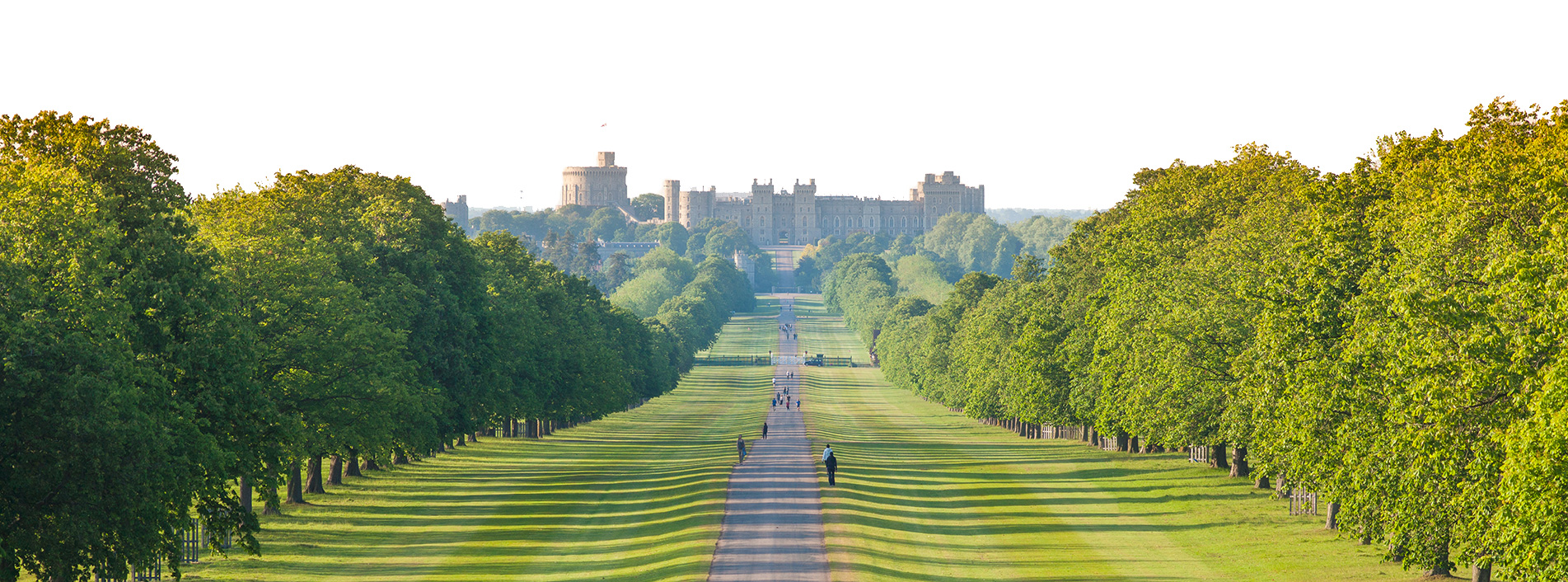
A group of 50 Friends met at Cumberland Lodge in Windsor Great Park for a morning tour of the historic building on Wednesday 27 November 2024.
The group were welcomed by the new CEO, Fergus Drake OBE who then handed the Friends over to the two guides, Munny and Tina.
Cumberland Lodge had been a royal residence but is now an educational charity and social enterprise. If you are interested in learning more about the work that they do, you can visit their website.
The tour
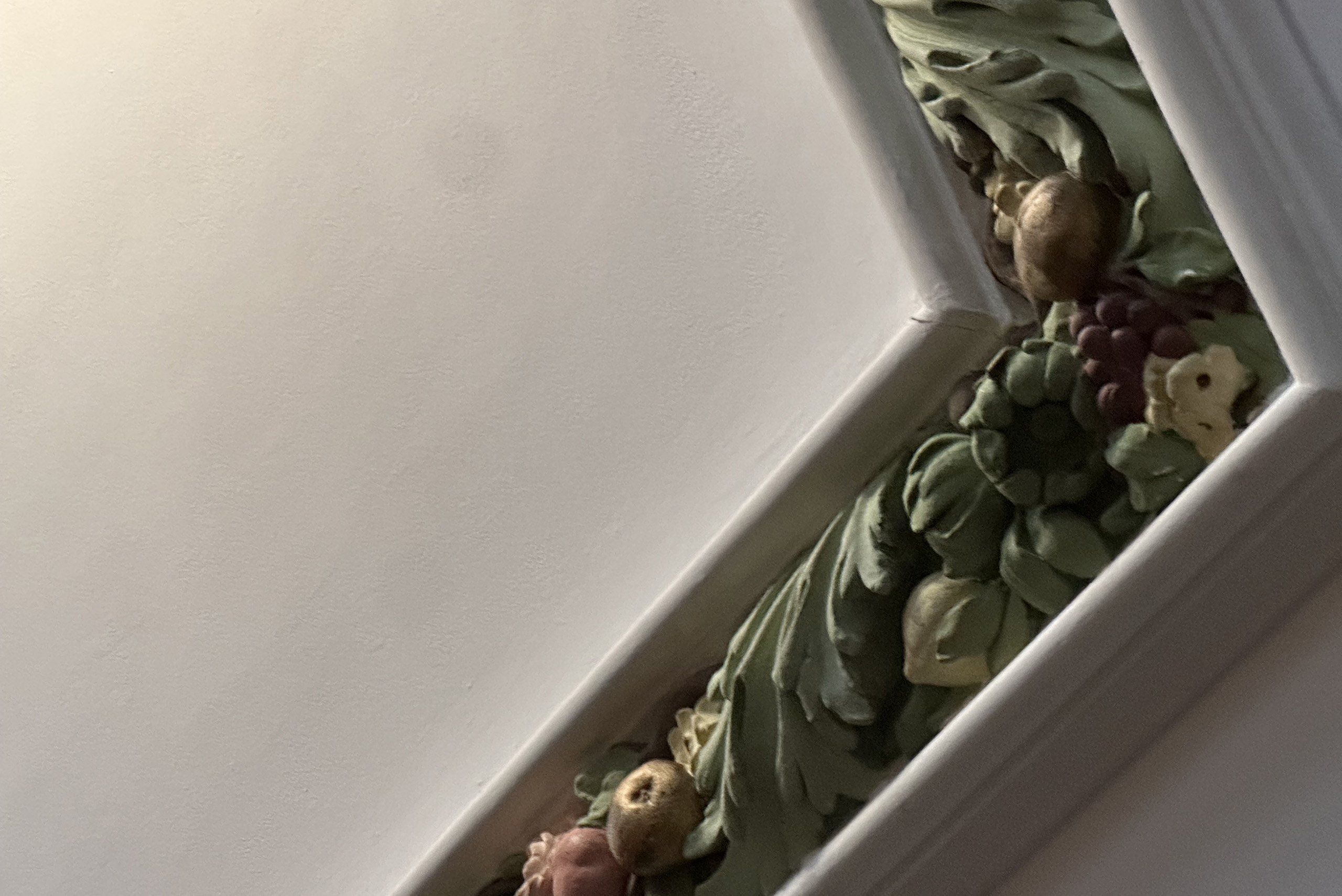
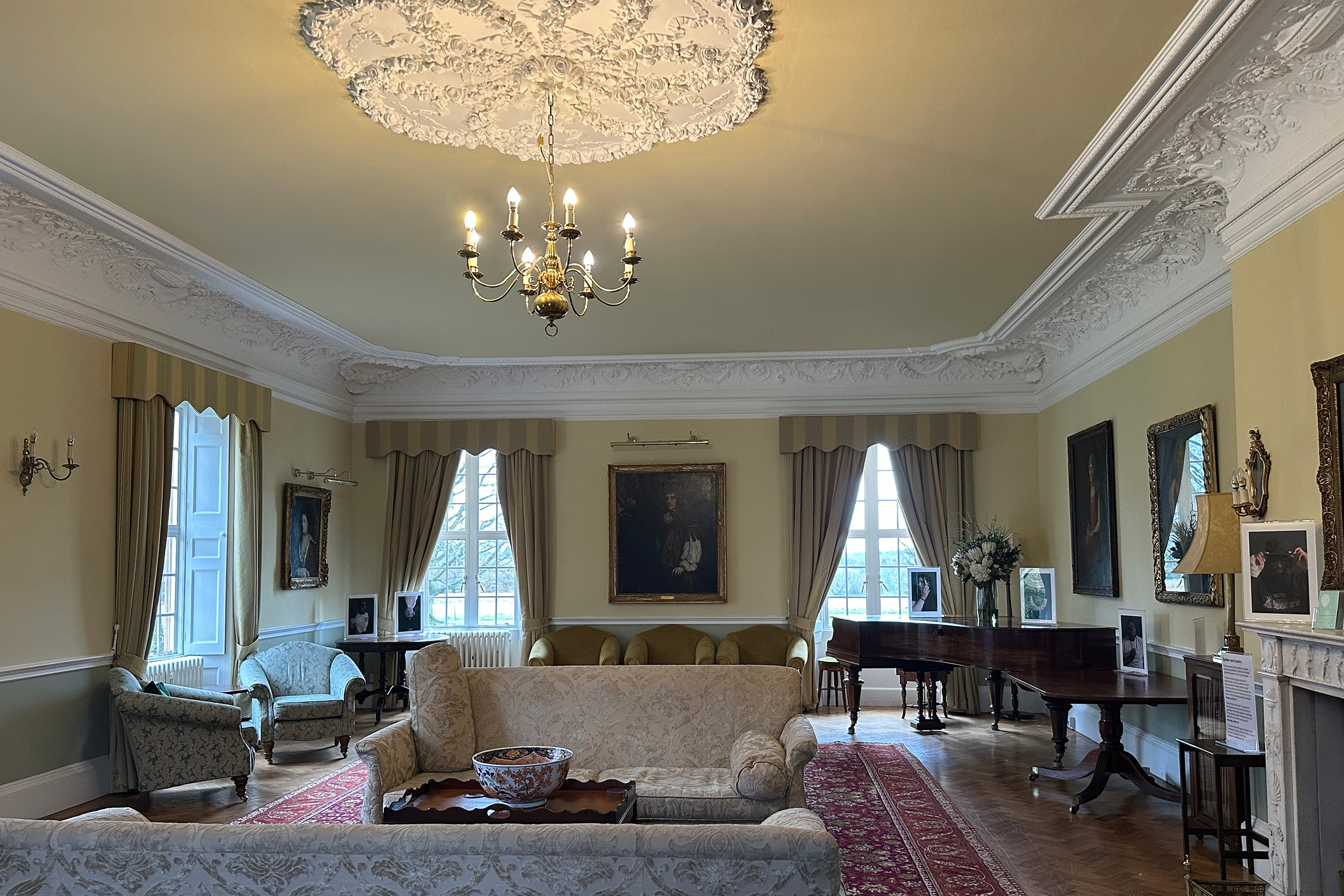
The Friends were split into two groups to tour the house, starting on different sides. The guides were knowledgeable and pointed out objects of interest, and portraits of members of the Royal Family and notable people hanging in the Drawing Room where we started our tour. All the ceilings throughout the building are beautifully decorated with intricate plaster work, some of which has been painted.
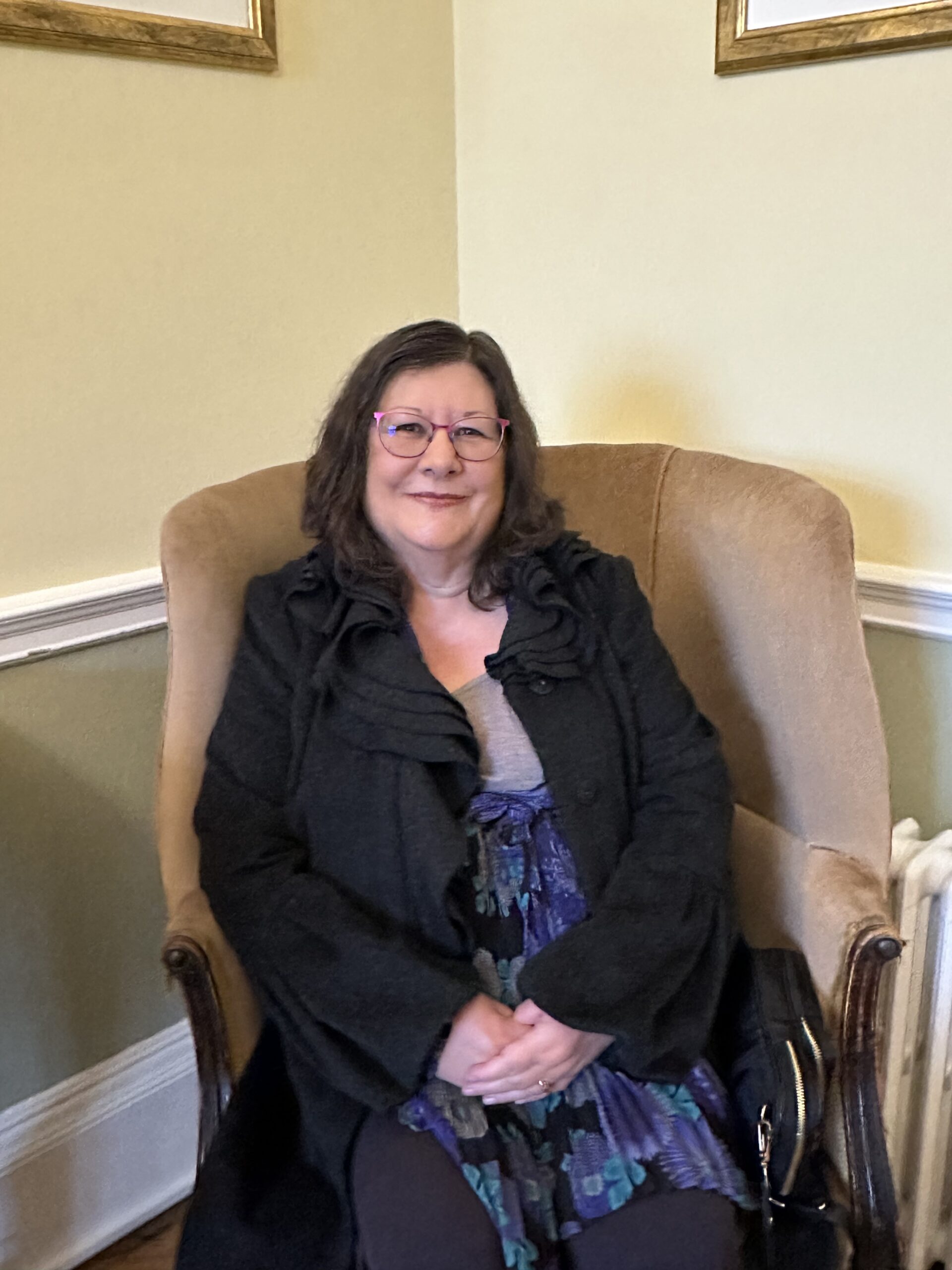
The next stop was the smaller Sitting Room containing some artwork gifted by Queen Elizabeth II, and the Queen Mother’s favourite chair which the group were invited to try.
The ceiling in the Drawing Room
Diana Bendall, Chair of the Friends sitting on the Queen Mother’s favourite chair
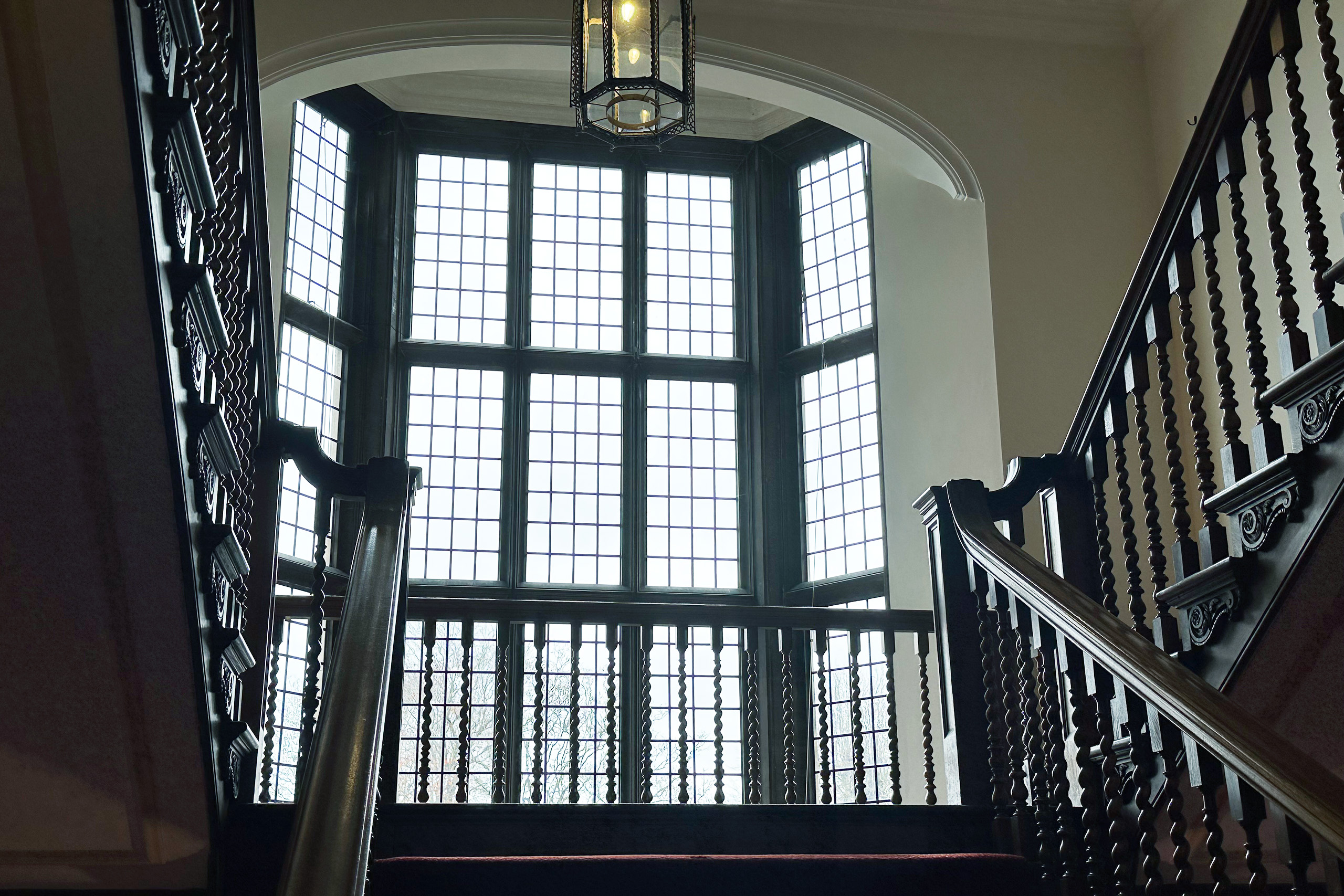
The group then made their way to the magnificent staircase, pausing to admire two huge tapestries. The story goes that there were originally three but when they were sent for dry cleaning, only two came back.
The reality is that after a fire in 1869 which destroyed a large portion of the Lodge, two tapestries were amalgamated.
The staircase in Cumberland Lodge
Upstairs
Upstairs the tour included Princess Helena’s room which has been turned into a library. It is now named after Amy Buller who believed in having “difficult conversations”, something which is continued in the work of Cumberland Lodge.
Friends peeped into the washroom and saw the “secret staircase” hidden in the corner – a very narrow circular staircase built into the wall, which allowed the Princess’ maids to attend her quickly when summoned from the room above.
The Rangers corridor, which housed pictures of all the Rangers from the first, Baptist May, to the current one, His Majesty The King, led us to the small Chapel, a room set aside for quiet reflection, meditation and prayer for all those attending conferences and courses.
The blue Hobson corridor followed, and the group saw lithographs of the Crimean War as well as pictures of the Lodge after the fire. There were pictures, too, of various members of the Royal family taken long ago.
The Dining Room
Downstairs the tour entered the Dining Room, and the guide explained that the oak panelling was a gift from Lord FitzAlan of Derwent. A close friend to King George V and Queen Consort Mary, when Lord FitzAlan’s house was flooded, they invited him to stay at the Lodge.
He was joined by his granddaughter, Althea who wrote a book about her time in Windsor called “The Windsor Diaries”.
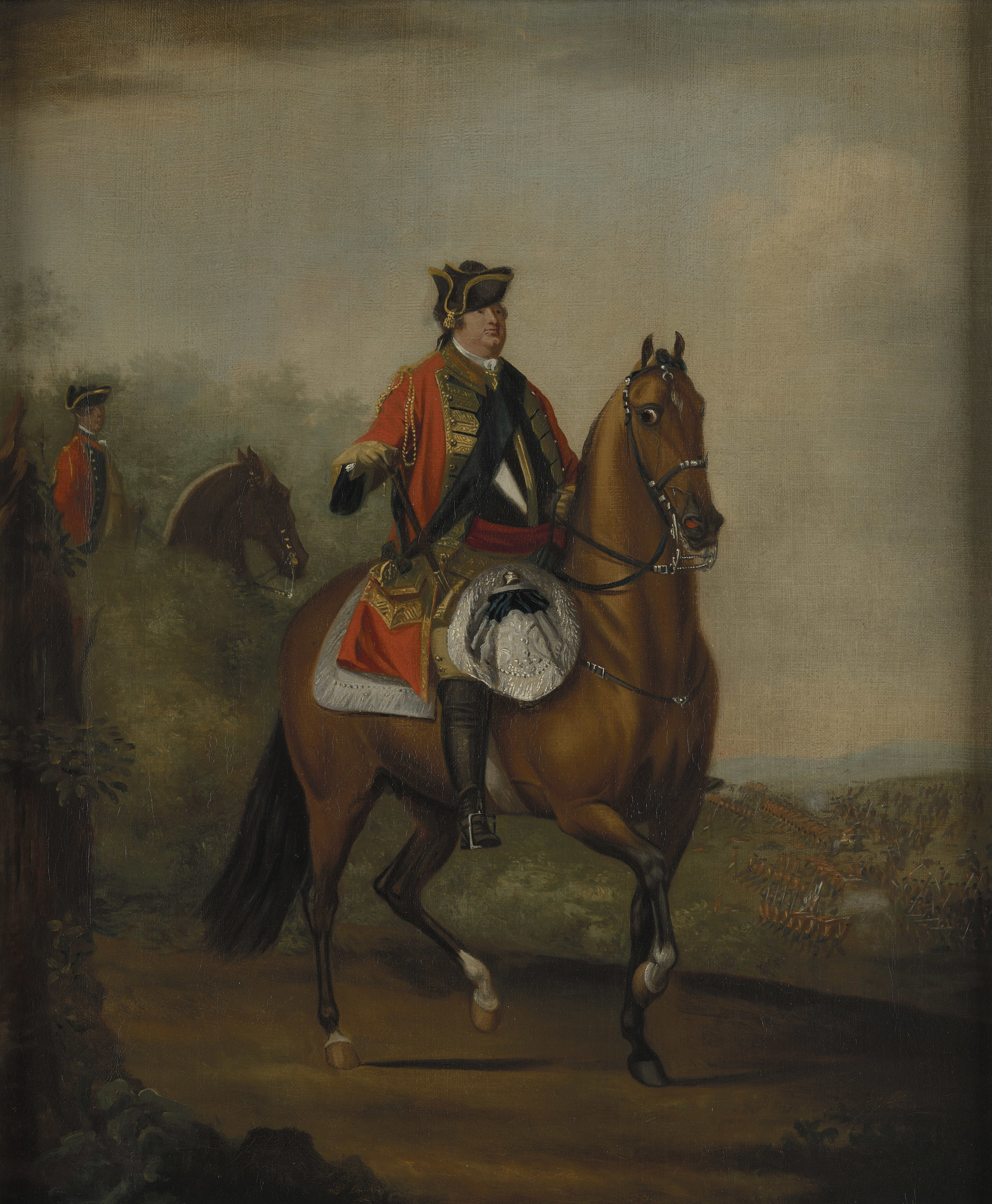
At one end of the room was a huge portrait of Prince William Augustus, Duke of Cumberland, and son of George III. He is best remembered as the general that put down a Jacobite rebellion, at the Battle of Culloden, outside of Inverness in Scotland, in 1746.
Although praised in certain parts of Britain, others nicknamed him ‘The Butcher’ for his zeal and treatment towards the rebels.
William Augustus, Duke of Cumberland (1721-65)
Painted to celebrate the Duke’s victory at Culloden, now at Kew Palace
Royal Collection Trust/ © His Majesty King Charles III
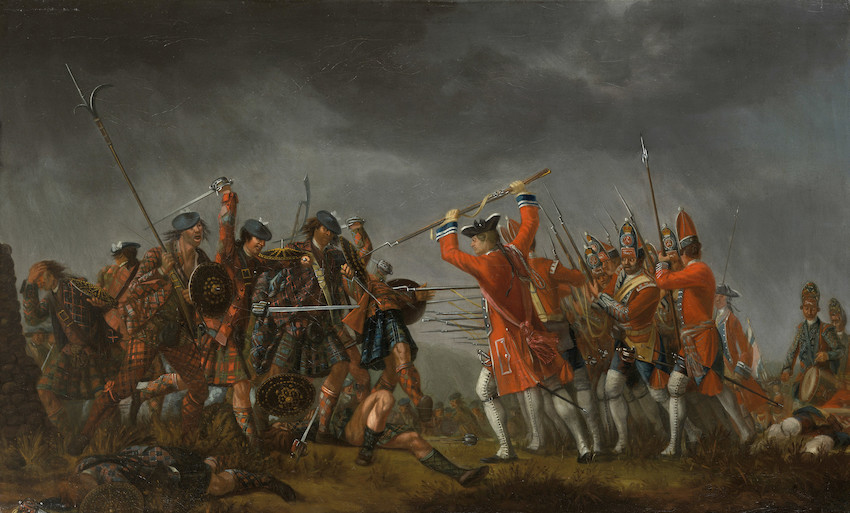
An Incident in the Rebellion of 1745
A painting demonstrating the prowess of Highland warriors and a Grenadier company, now in Holyroodhouse
Royal Collection Trust/ © His Majesty King Charles III
In the aftermath of the battle Prince William Augustus was sent to Cumberland Lodge, which takes its name from him, to ‘cool off’.
The Dining Room is also where King Edward VIII’s abdication speech was discussed and written.
Outside the Dining Room was a display case showing Althea’s book and a visitors’ book, gifted by her, containing the signatures of, amongst others, Queen Elizabeth II, Princess Margaret, Prince Albert (later George VI), Winston Churchill and Frederick Lindemann, prime scientific adviser to Churchill.
Finishing the tour
There is magnificent artwork throughout, all of which is taken from the archives of the Royal Trust and is rotated, so visitors may not see the same piece should they visit again.
The Friends were able to admire the vistas of parkland from every room, and as one Friend remarked, not see another building. The Lodge grounds are cared for by just one gardener.
After the tour the Friends had a welcome cup of coffee and a biscuit and learned a little about the work of Cumberland Lodge.
The group left with the realization that Cumberland Lodge is a place full of history, and a tranquil but energized retreat.
Wednesday 4 December
One week later saw a second group of 25 Friends meet in the drawing room at Cumberland Lodge. The Friends were taken on a tour of the historic building by Tina. They followed in the footsteps of the previous week’s tour but were unable to visit the library.
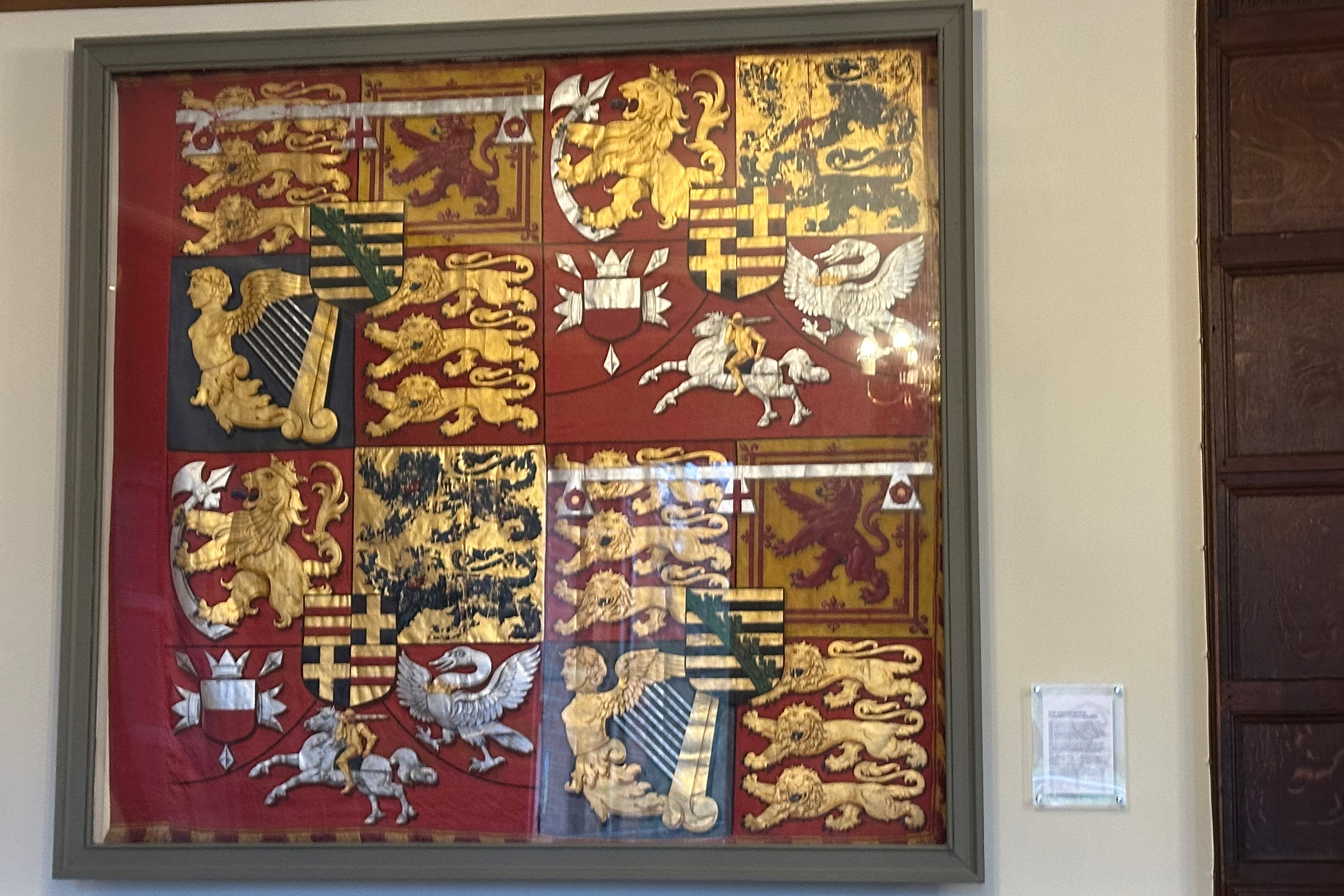
In the Dining Room one additional item that was discussed was the banner on display. This banner symbolized Prince Albert of Schleswig-Holstein being appointed to the of the Order of the Bath, one of the most senior orders of chivalry, in 1900.
Albert was the youngest son of Prince Christian of Schleswig-Holstein and Princess Helena (Queen Victoria’s third daughter) and grew up at Cumberland Lodge.
While his brother, Prince Christian Victor, served as an officer in the British Army, Albert became an officer in the Prussian Army.
It meant that when the First World War began in 1914, Albert found himself on the opposing side of the war to the rest of his family. Understandably, the Prince was reluctant to fight and so the German Kaiser (Albert’s cousin via Queen Victoria’s first daughter), excused him from service and Albert carried out a non-combatant role, performing administrative duties.
Despite this, his service was controversial, and his knighthood was revoked by King Geroge V (another of Albert’s cousins) in 1917, and the banner was removed from Westminster Abbey.
The group finished the tour back in the Drawing Room with a welcome cup of coffee and time to talk.