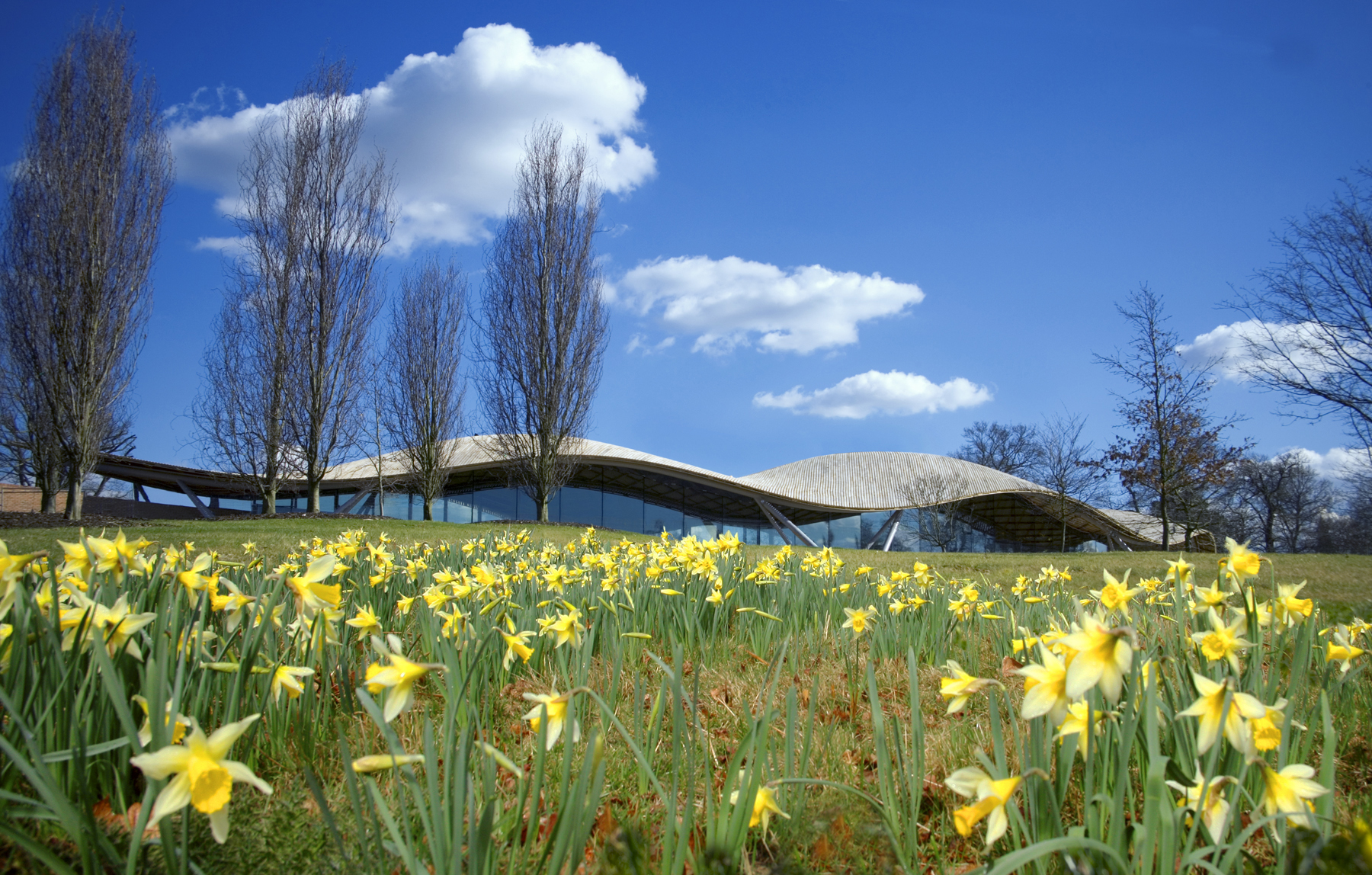
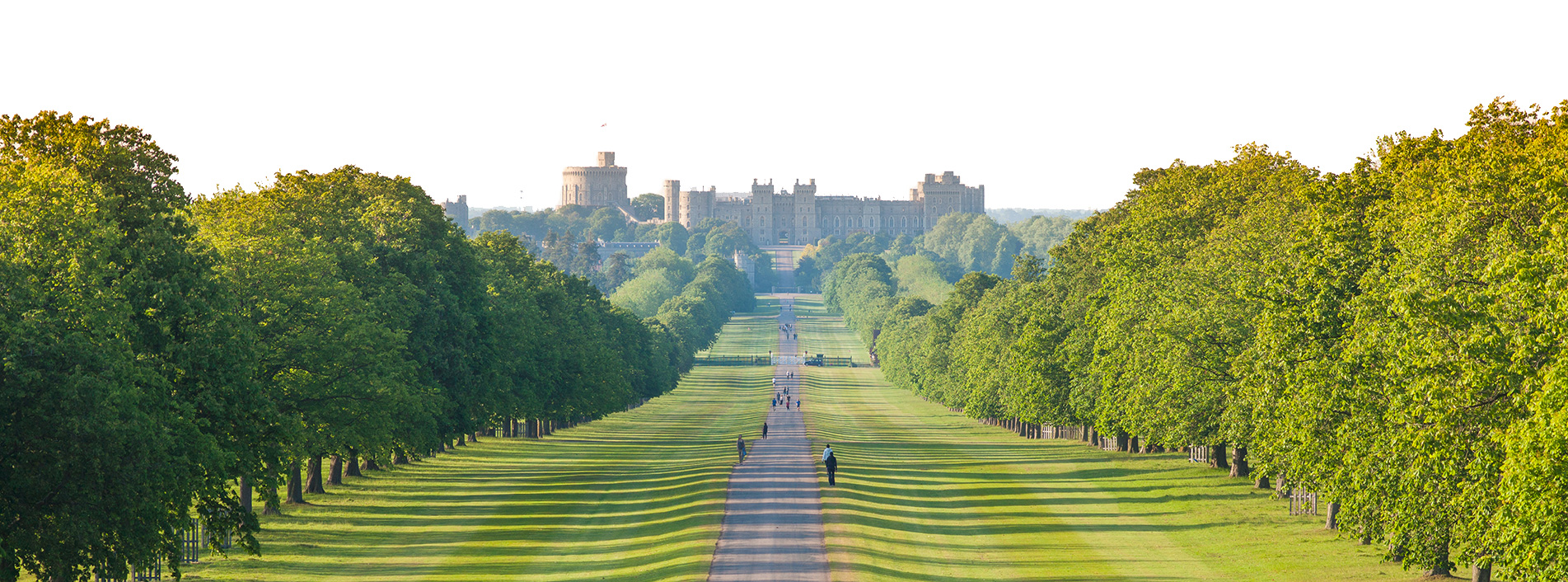
In the heart of the historic Windsor Great Park sits a modern architectural icon – The Savill Building. Spanning 90 metres (295 feet) with a stunning roofline which mimics the undulating curves of the landscape, this extraordinary feat of engineering serves as the gateway for millions of people each year who come to visit The Savill Garden, Adventure Play, the Valley Gardens and Virginia Water.
Its award-winning bold and innovative design has made it far more than a gateway, becoming an attraction where visitors can meet up, enjoy the variety of food, drink, and shopping experiences inside, and, whilst doing so, enjoy the spectacle of the breath-taking roof above.
On its 20th anniversary we look at the story of The Savill Building and how it has earned its place in Windsor Great Park’s evolving landscape and history.
A new vision for a new era
In 2003, The Crown Estate, which manages Windsor Great Park, decided to replace the original Visitor Centre, built in the 1960s, with a new facility. The plan was to provide a fitting starting point for visits to The Savill Garden, Virginia Water, and the Valley Gardens, and later to include Adventure Play, which opened in 2023. The aim was to create a building that was environmentally sensitive while still making a dramatic impression on the landscape.
A shortlist of younger, lesser-known, architects was drawn up to encourage a truly contemporary and innovative design. Despite the historic nature of Windsor Great Park, this drive for innovation reflects a long history of reimagining and evolving the landscape to meet the needs of the day, from building new gardens and vistas, to introducing renewable energy, and adding new structures and focal points.
A pioneering roof design
The winning submission was from Howells ( formerly Glenn Howells Architects), whose proposed design was described by the then Keeper of the Gardens, Mark Flanagan, as one that ‘knocked us out.’
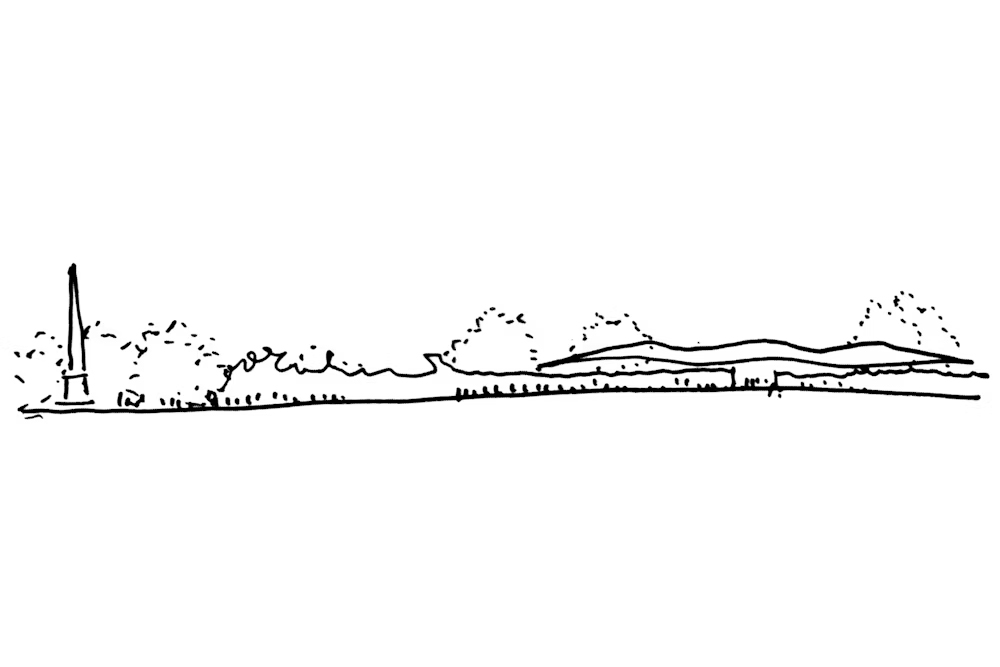
The vision was to create a building that melds into the landscape with a subdued exterior and curved roof to blend into, and mimic, the stunning natural landscape within which it would sit.
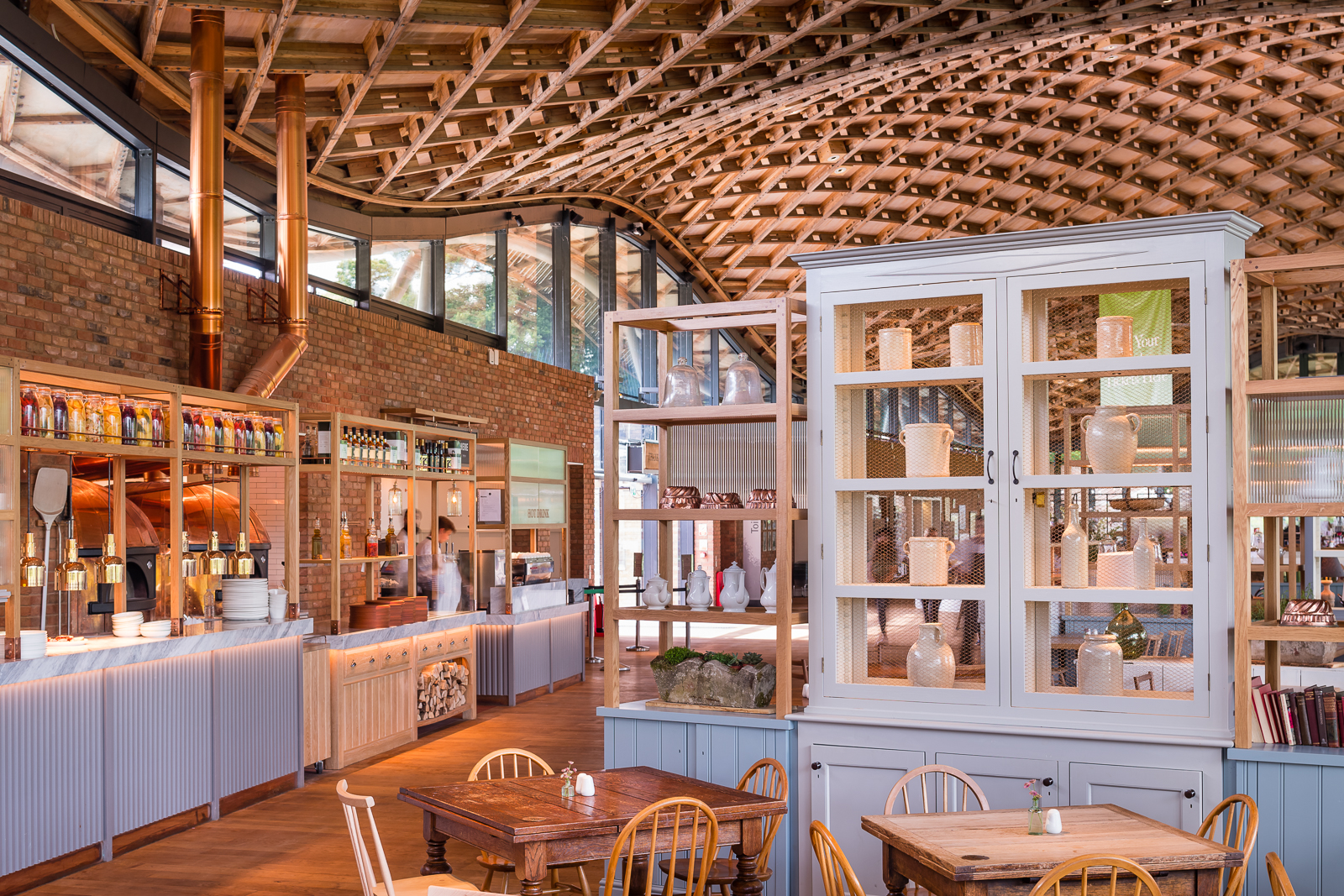
The interior would be altogether more dramatic thanks to the heart of the design, the pioneering timber ‘gridshell’ roof, the largest in the UK, and, one of the few in existence in the world – at that time.
What is a timber gridshell
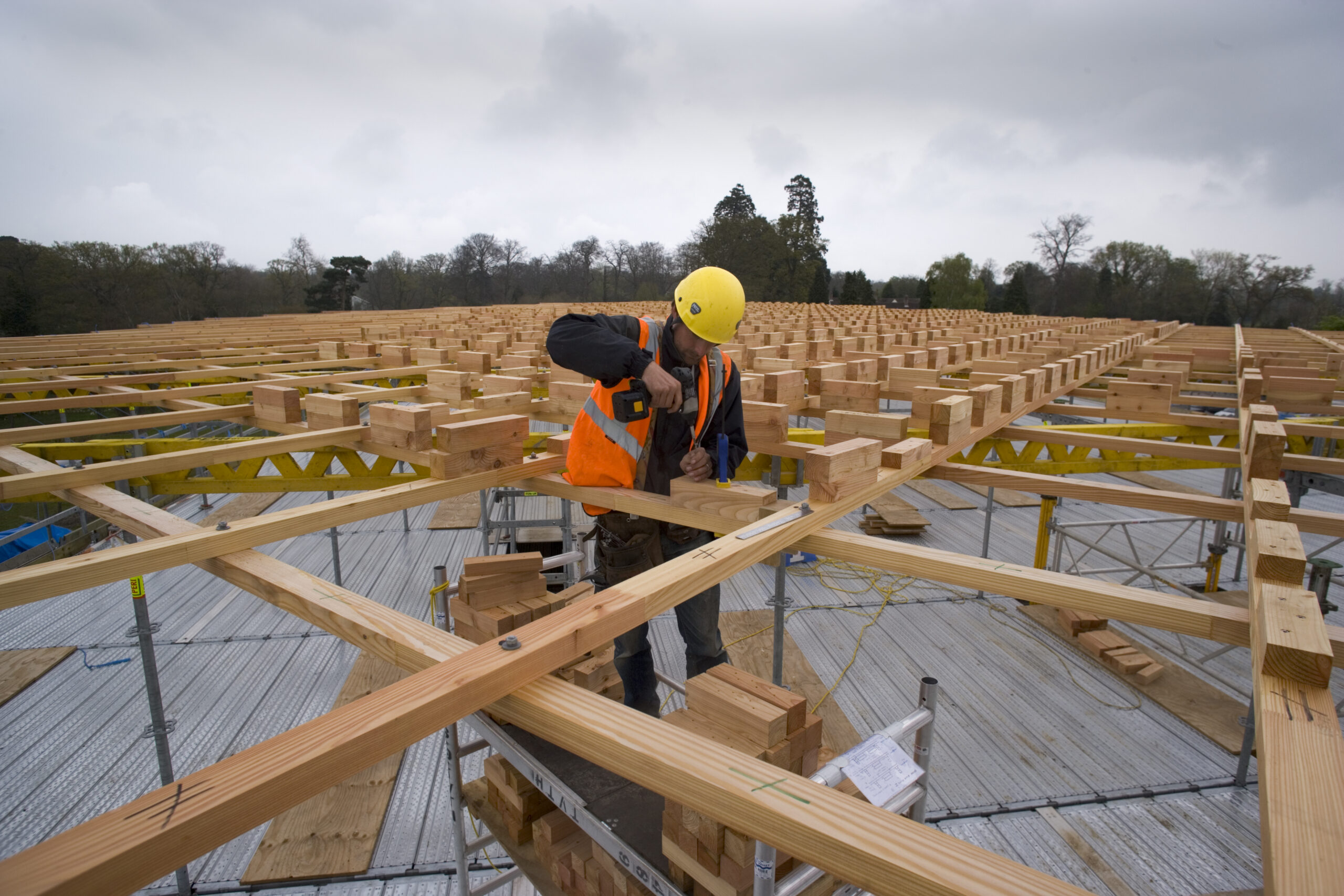
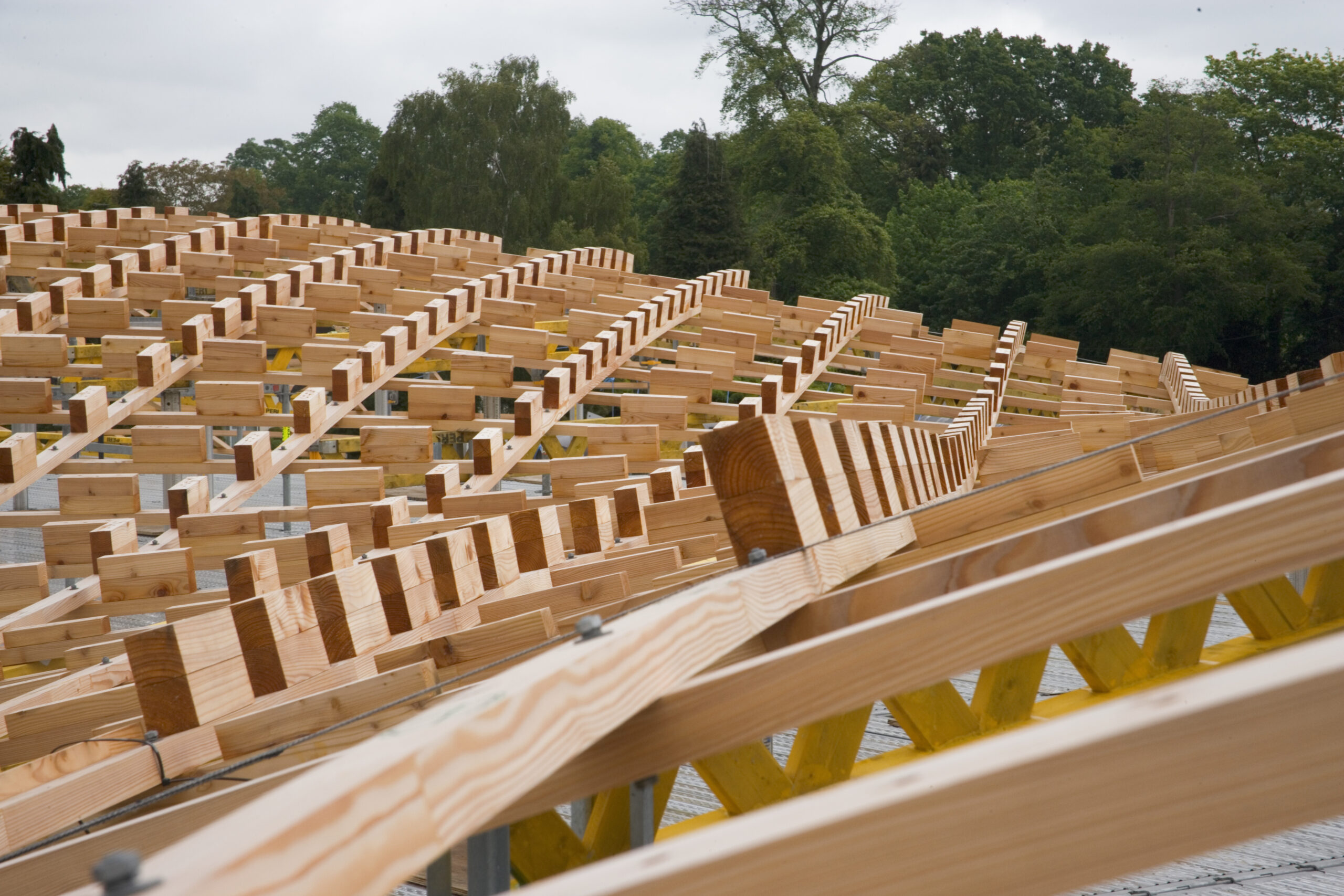
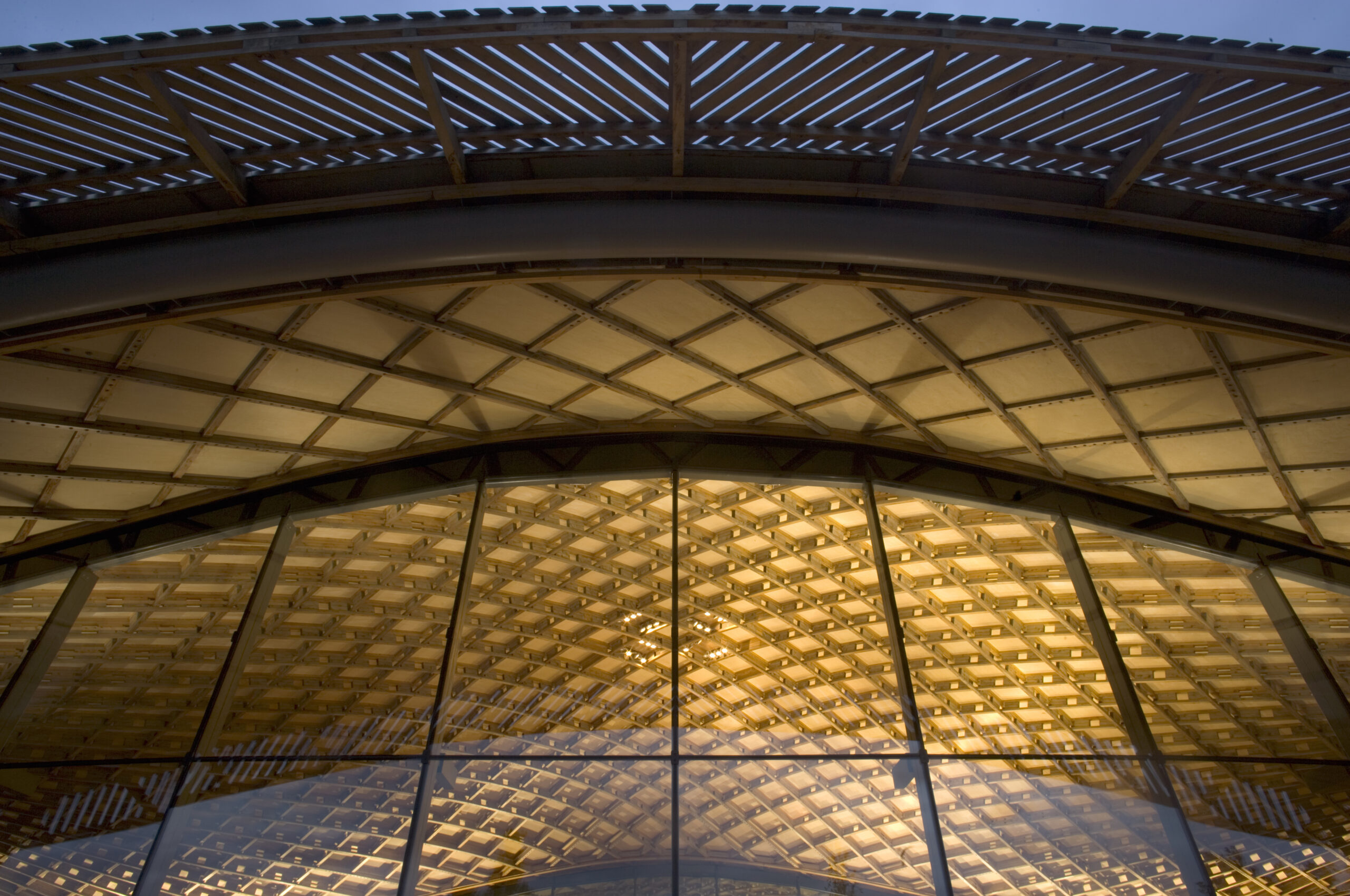
A timber gridshell is a structure made from a curved, criss‑crossing lattice of wooden beams. The lattice beams are thin and flexible when flat, but once bent and locked into position, the structure becomes extremely strong and rigid. The curve is vital to its strength and beauty, distributing loads evenly so the structure can be light but still extraordinarily strong, and allowing the creation of beautiful, organic shapes – fitting for a roof which needed to settle into the landscape of such an iconic natural landscape.
Attaching the separating blocks to the gridshell.
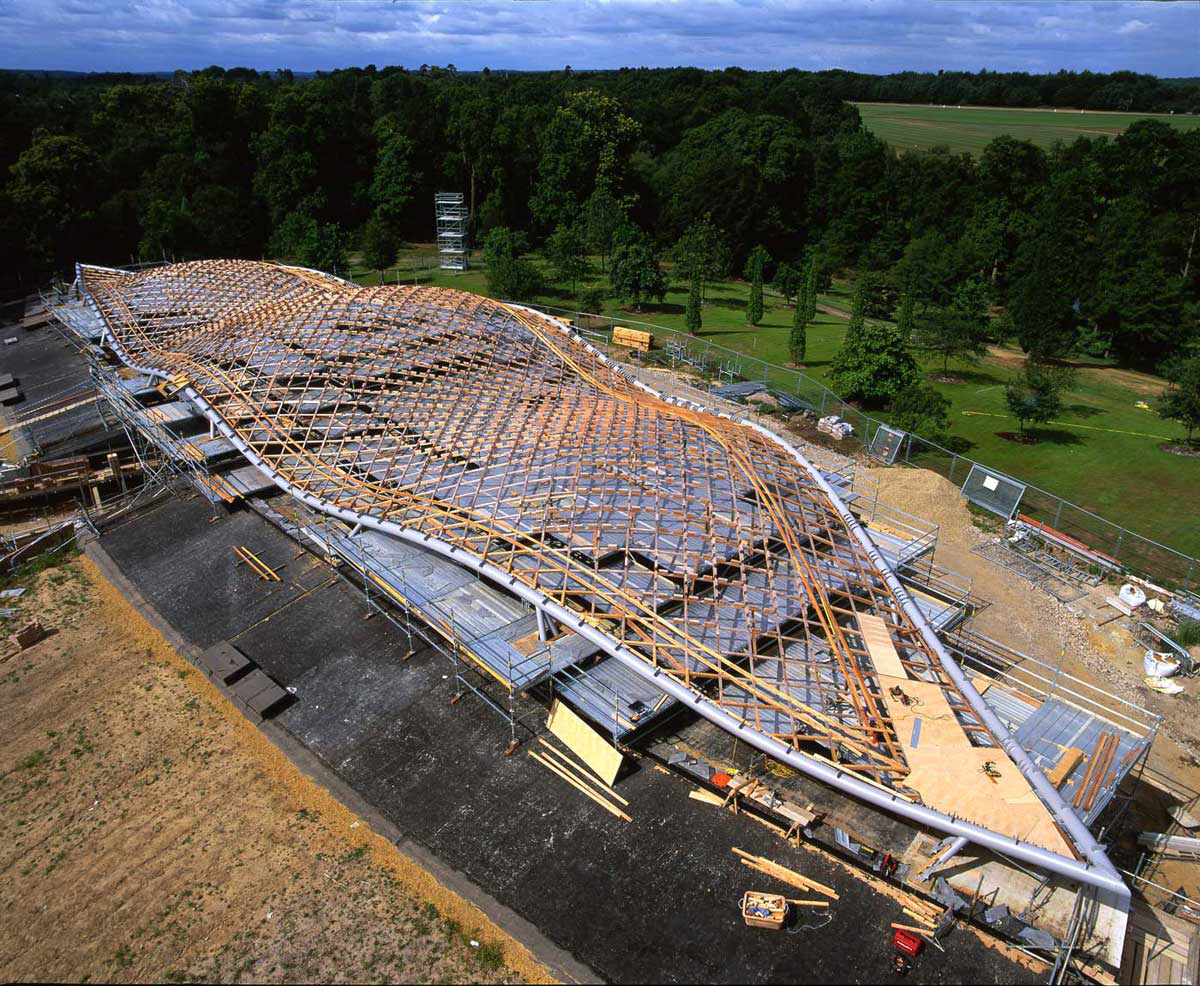
Complete gridshell of The Savill Building.
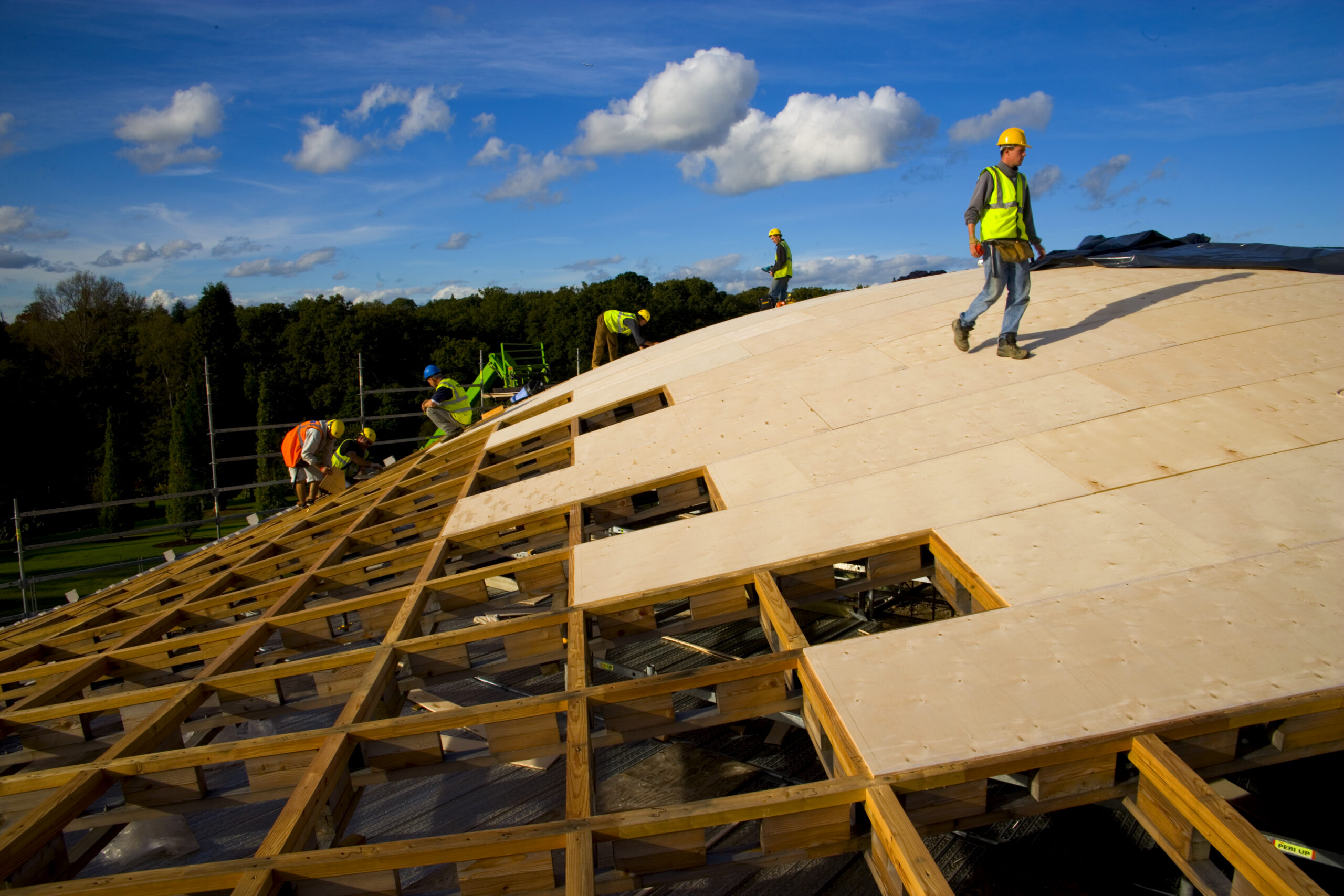
Laying ply to the gridshell.
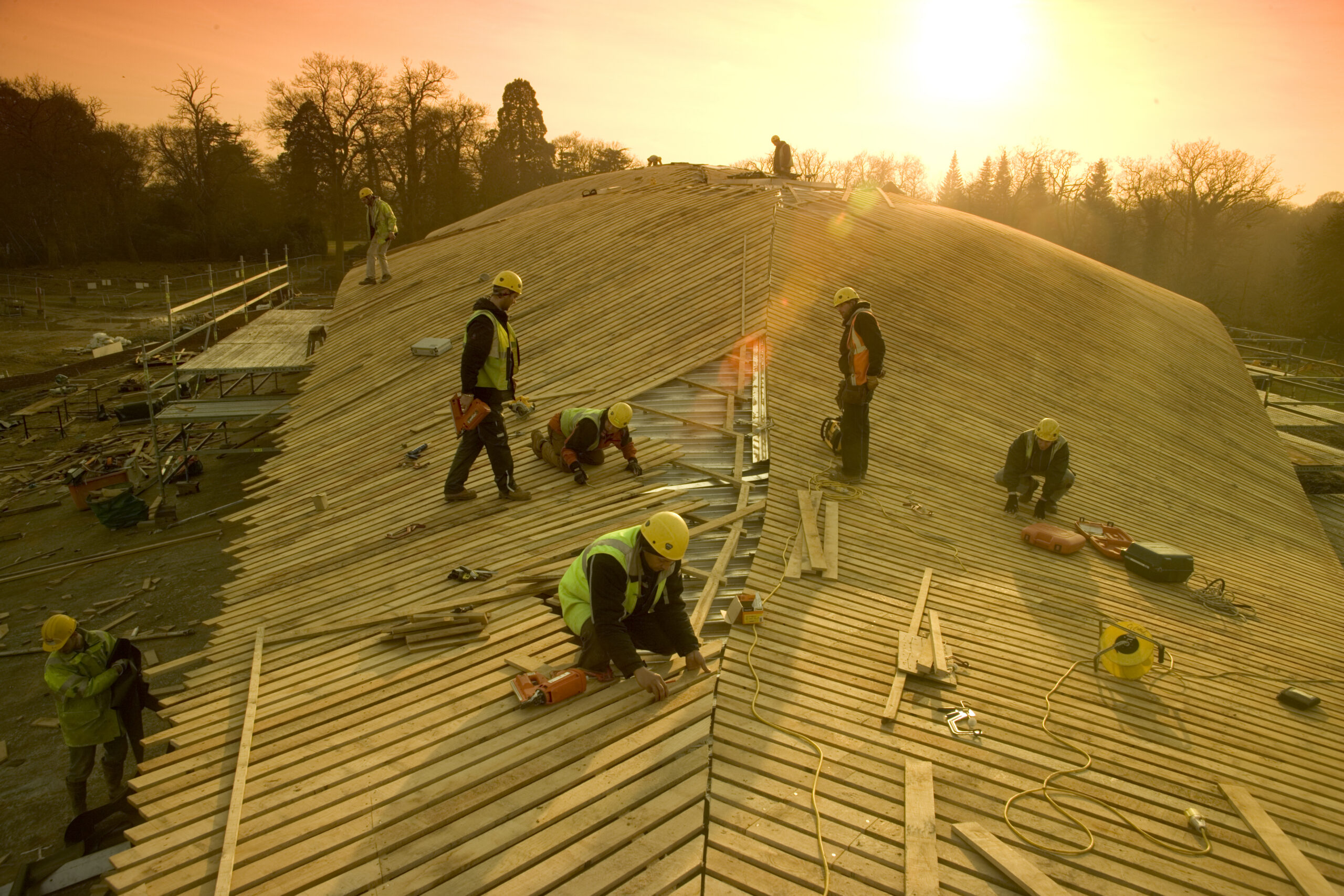
Laying the oak rainscreen (protective exterior wall).
Aerial view of the timber gridshell roof of The Savill Building.
Sustainability and Stewardship
From the outset, the innovative design reflected The Crown Estate’s commitment to stewardship and long-term environmental care.
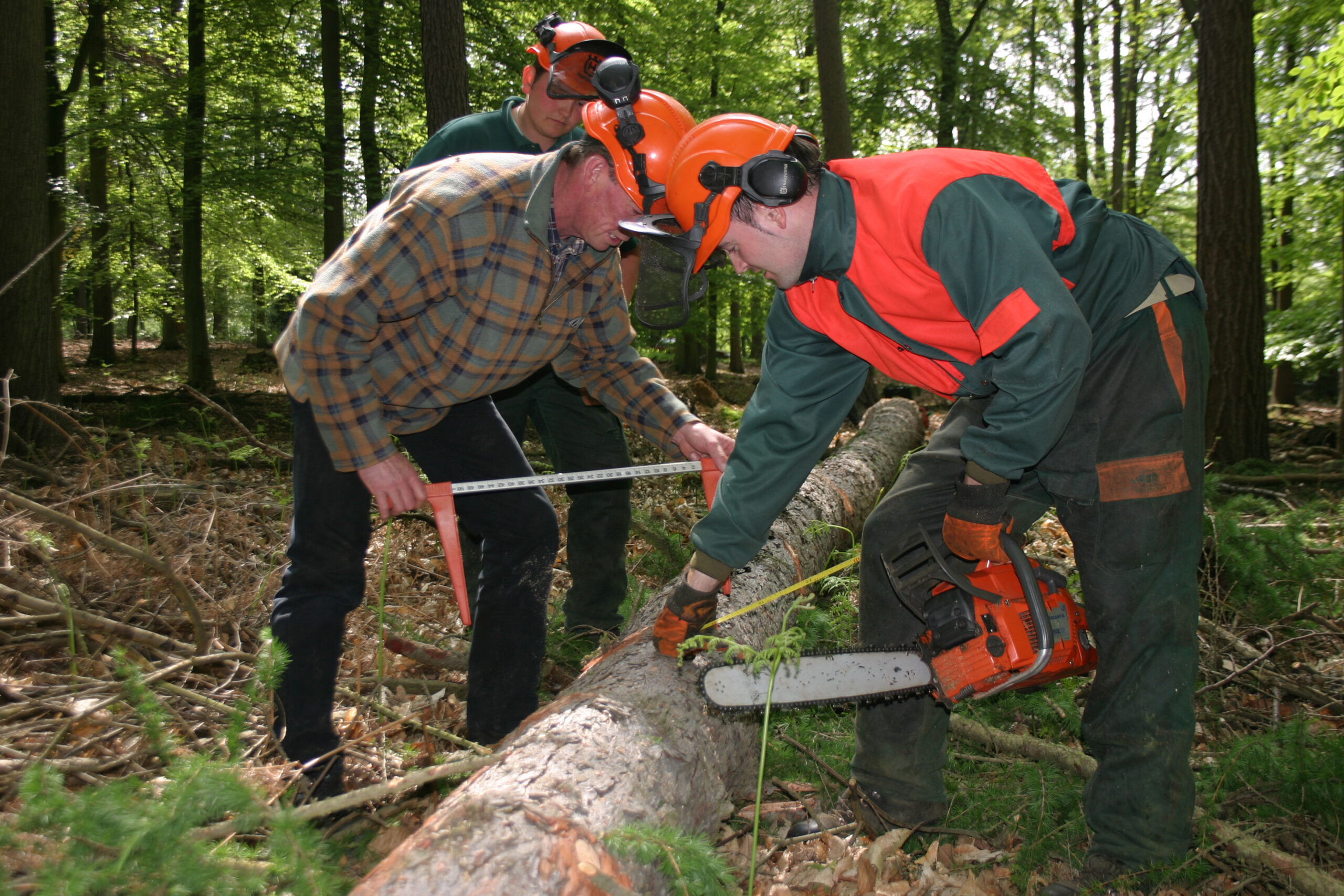
Constructed from larch, the roof design required more than 20 kilometres (12 miles) of timber. This, along with the oak cladding chosen for the exterior, could all be sourced directly from the Windsor Estate’s commercially managed woodland reducing environmental impact and allowing The Crown Estate to ensure ecological continuity through careful woodland management. The lightweight gridshell system also meant that far less material was required than conventional alternatives.
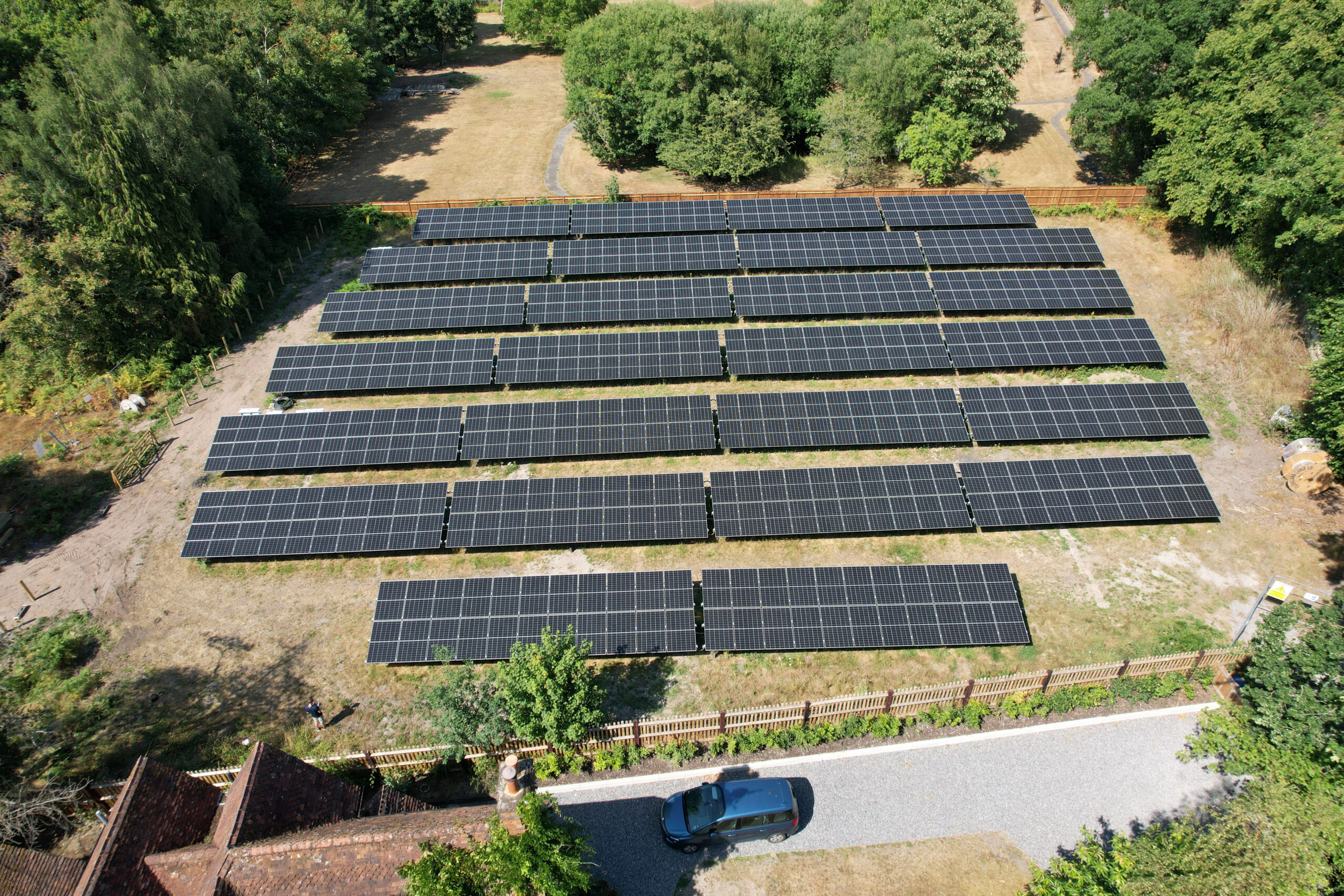
With a continued eye on sustainability, later upgrades allowed solar energy to power the building. This careful approach forms part of a much wider commitment to care for the landscape in a sustainable way – safeguarding its beauty, biodiversity, and accessibility for generations to come.
Felling the Larch for the Savill Building roof.
Solar Panels providing power to The Savill Building.
Combining structural engineering with traditional craftsmanship
Once the 20 kilometres (12 miles) of larch was felled, each length was visually inspected by skilled carpenters to identify any defects, with only the highest grade used in the roof lattices, whilst lower grades were used elsewhere, minimising waste.
To create the structure, lengths of larch were jointed together into 260 continuous single pieces – laths – up to 35 metres (114 feet) long. They were made to the precise requirements dictated by extensive structural analysis modelling and carpenter’s sketches to ensure the detailing was of the highest quality. The laths were formed into a grid which was then lowered and fixed into place to form the distinctive form of gentle curves, resulting in a vast, column-free, space spanning 90 metres by 30 metres (295 feet by 98 feet).
This combination of engineering and craftsmanship reflects a long tradition across the Windsor Estate, delivering architecture which stands the test of time and showcases beauty, innovation, and creativity.
Finger joints used to create the laths.
The beauty of the roof lit up at night.
Designed for you
While architecturally striking, The Savill Building was always designed with the visitor experience at its heart.
Externally, the building offers a warm, gentle welcome, with the now silvered, curved roof integrated into its surroundings and emerging from planting and terrain rather than dominating the scene.
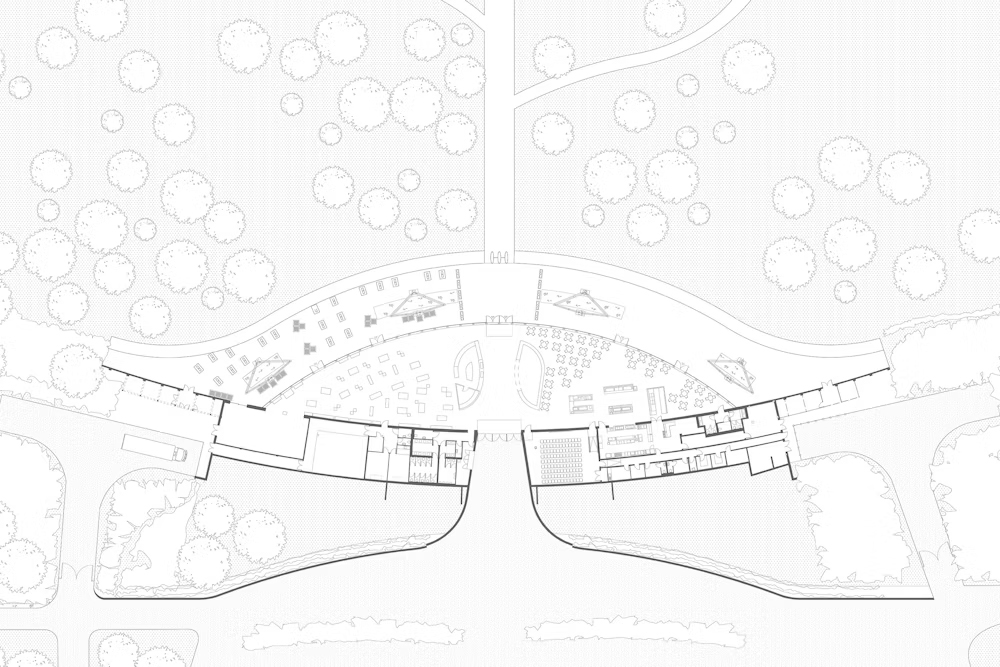
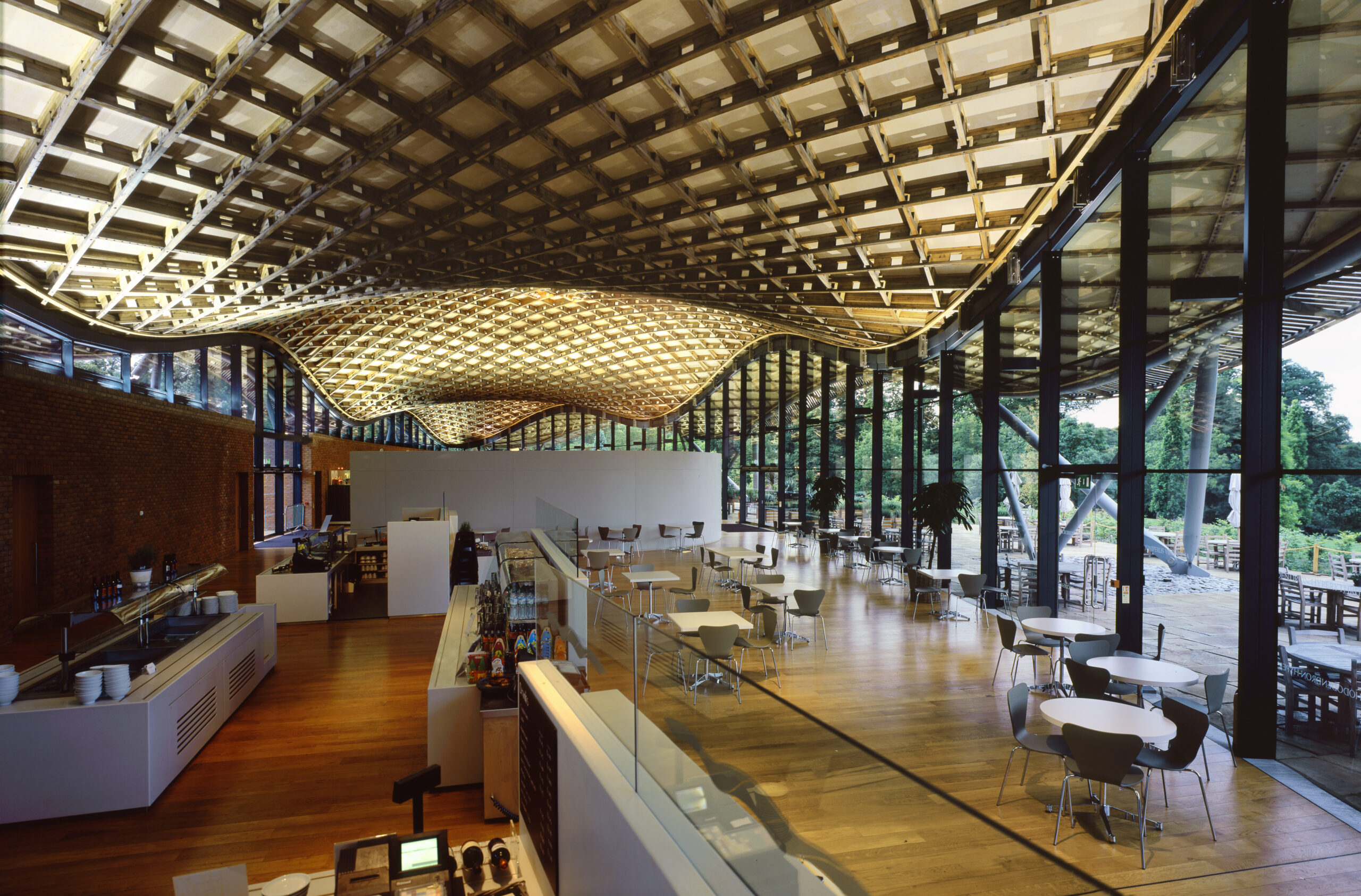
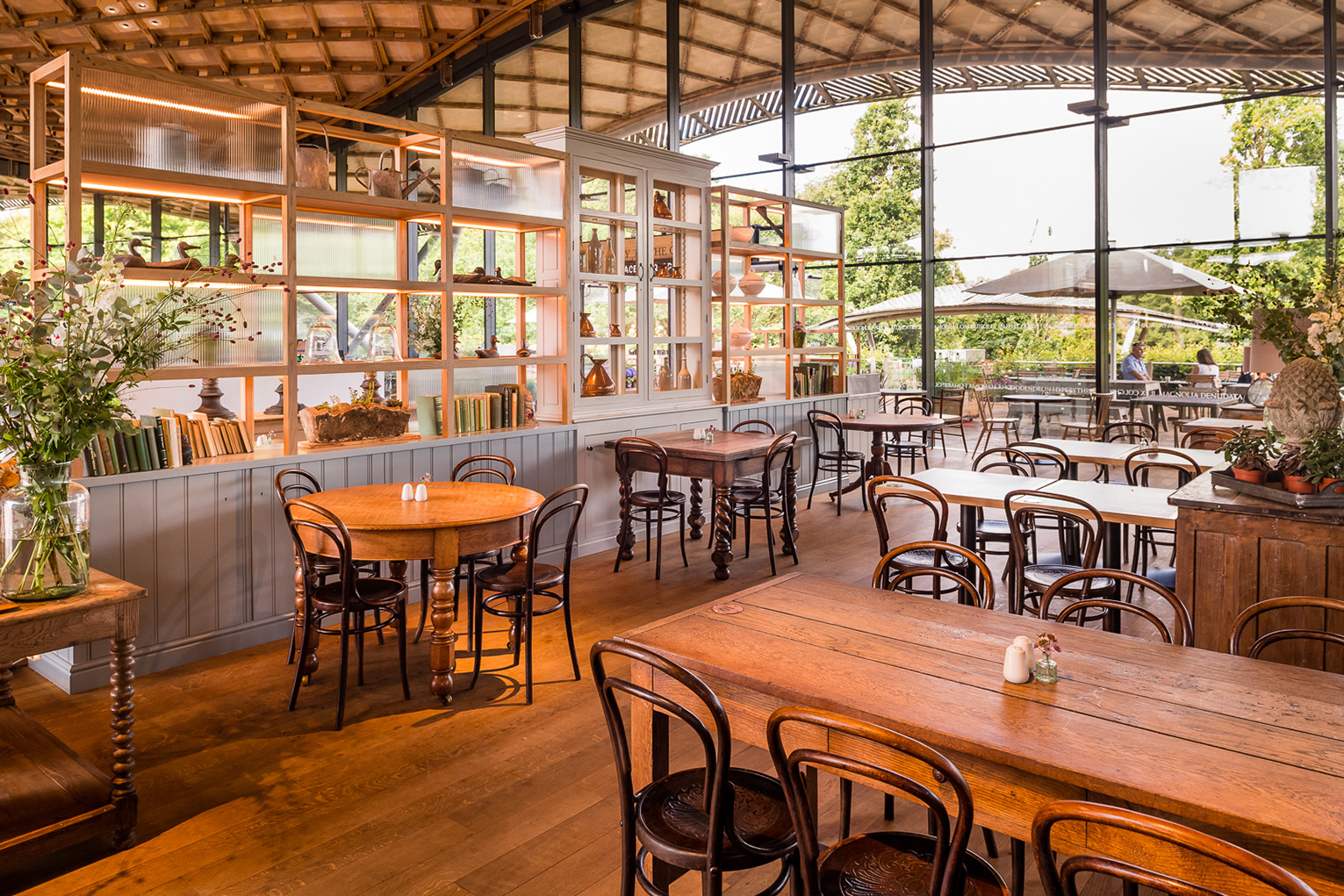
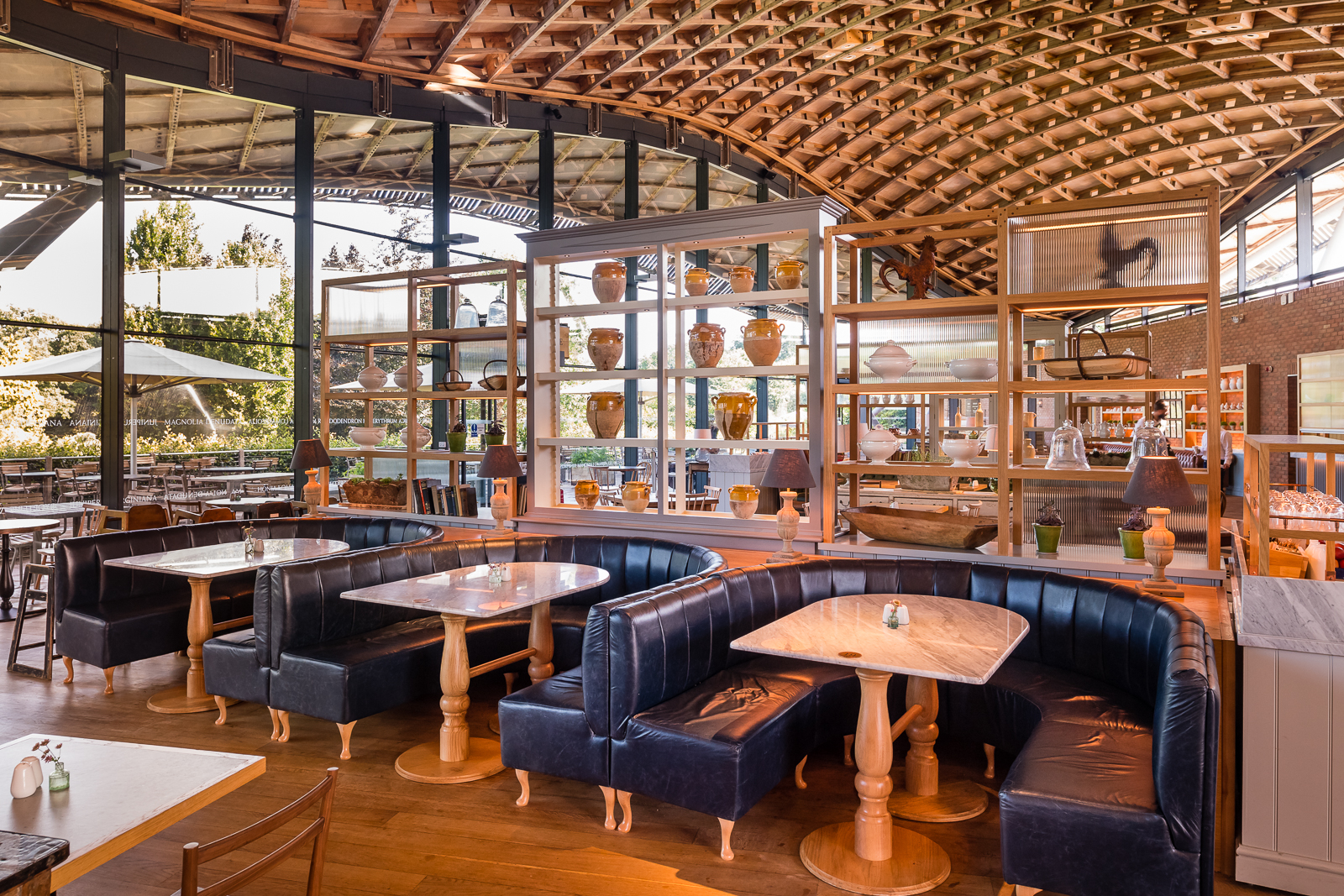
Inside, it is home to a restaurant and café, a retail space including a plant terrace and visitor facilities, arranged within an open plan allowing the roof structure to remain the focal point.
The internal space is defined by openness and light. The curved lattice design creates an immediate sense of space and awe, as visitors enter their eyes are immediately drawn upwards to the cathedral-like space. A noticeable contrast to the gentle, silvery-grey, rolling exterior.
Once their eyes return to ground level, they are drawn through the space to the equally impressive vast curved, glass wall, designed to provide spectacular views across the landscape and immerse visitors in the beautiful surroundings.
Interior view of the original restaurant.
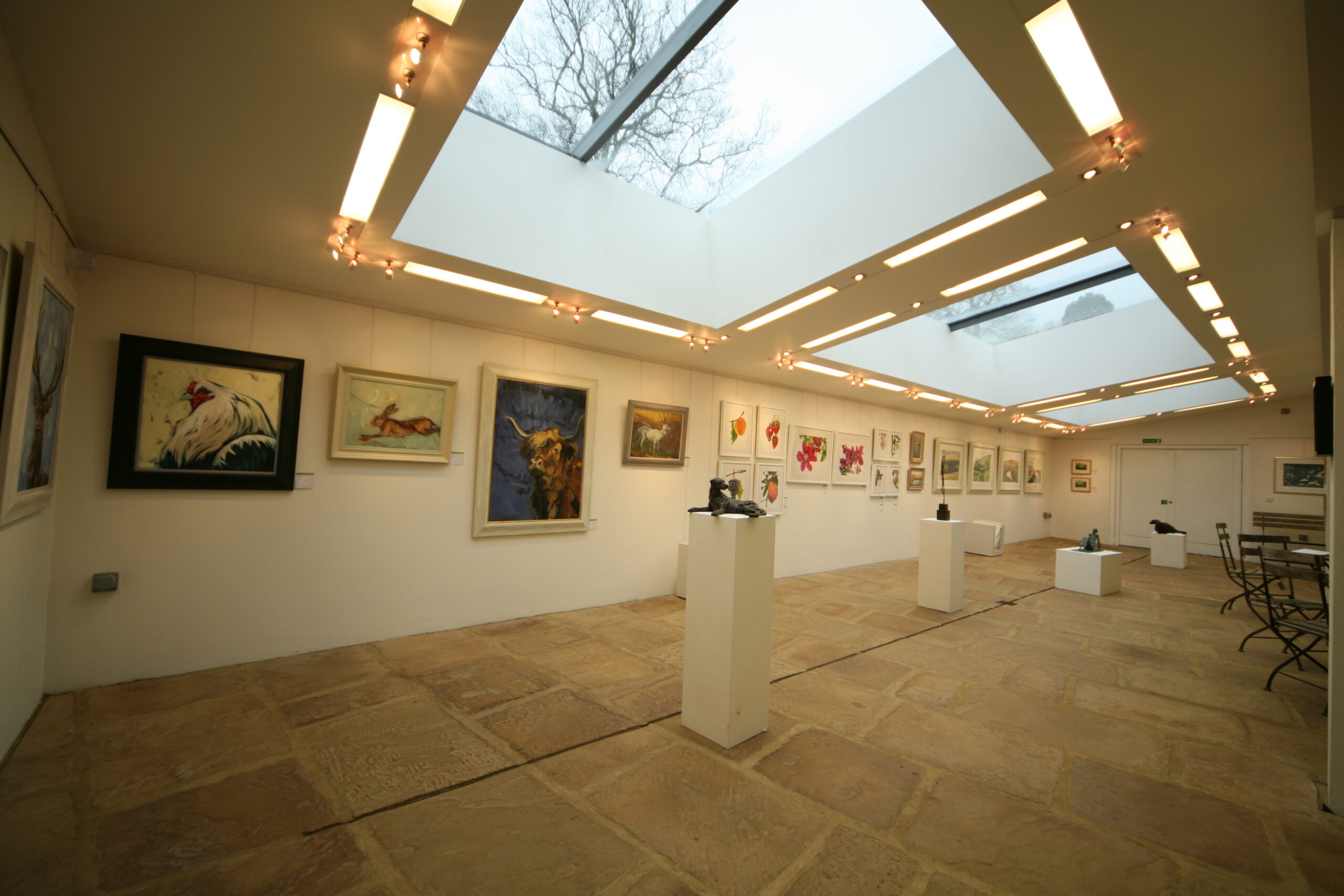
The original Gallery of art and sculptures.
The Prince Philip, Duke of Edinburgh
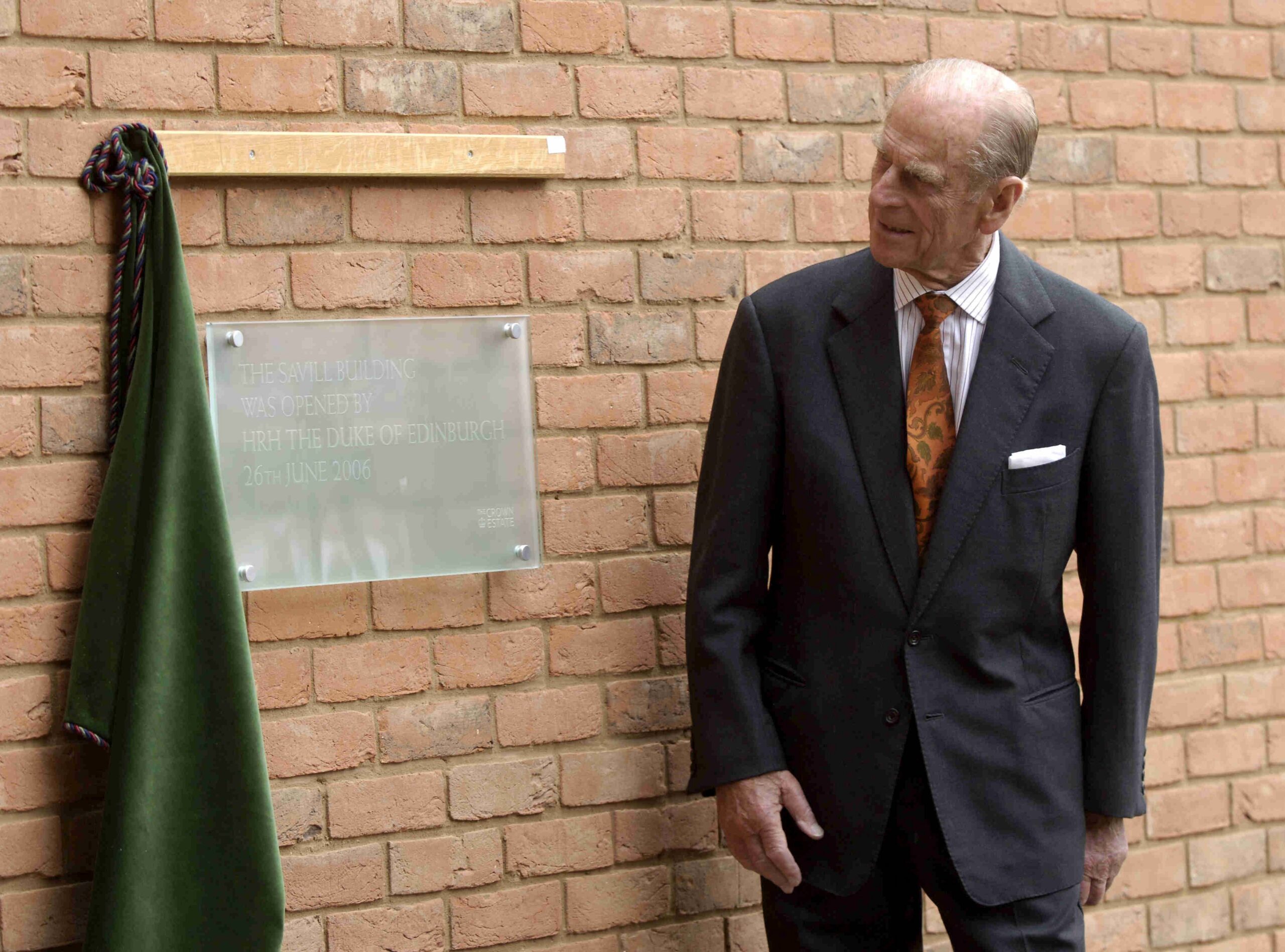
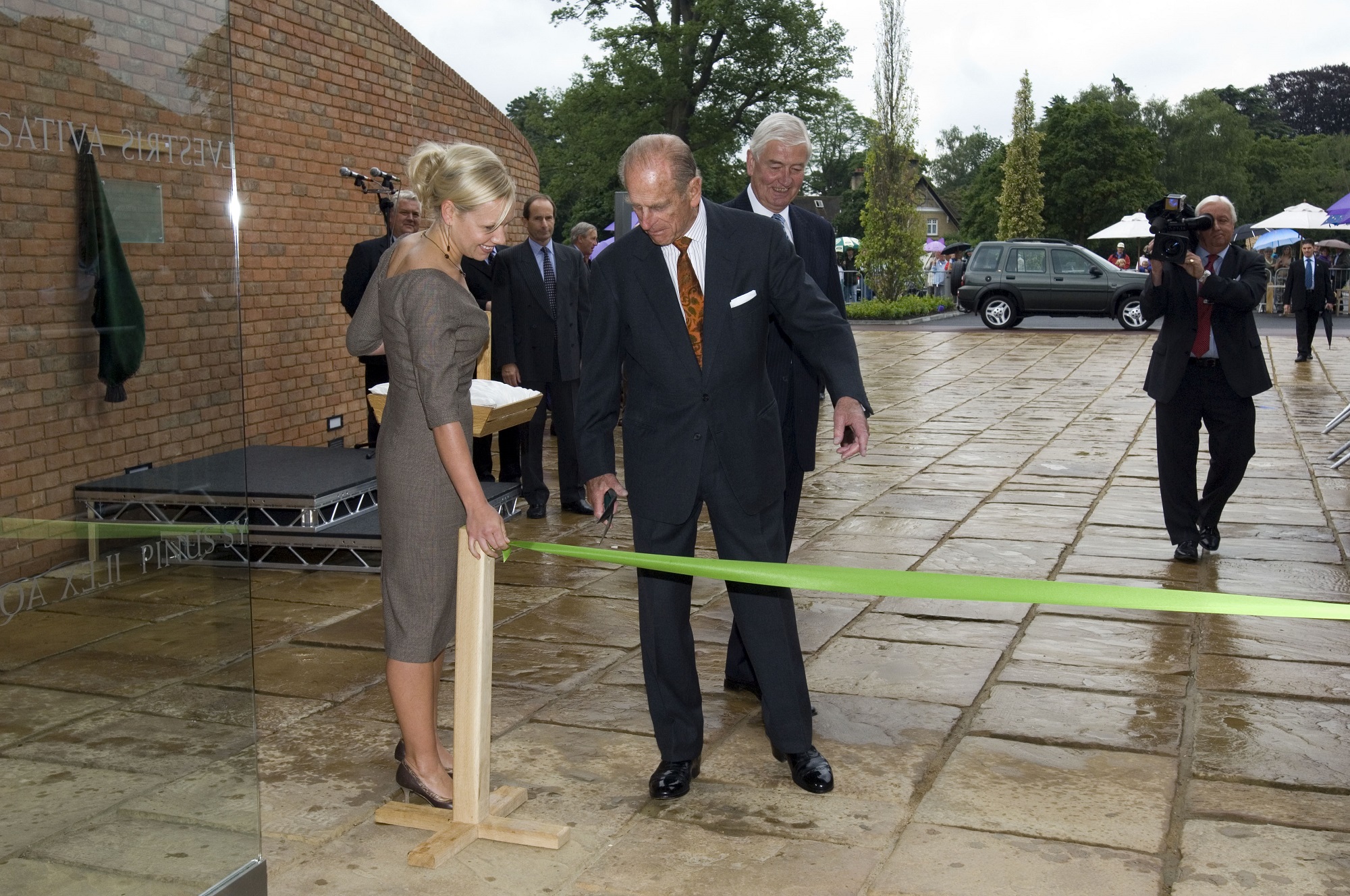
The Savill Building was completed in 2006 and on 26 June it was officially opened by The Prince Philip, Duke of Edinburgh, who was Ranger of Windsor Great Park at that time. Its modern architecture served as a visual reminder of the Duke’s commitment to both preserve and innovate within the landscape.
Since opening, The Savill Building has received widespread acclaim, earning major architectural awards including Gold at the prestigious Wood Awards and being shortlisted for the Stirling Prize. Its 14 awards recognise the exceptional craftsmanship, innovative use of timber, balance between technology and nature and its ability to create a calm, uplifting visitor experience.
The Prince Philip, Duke of Edinburgh – © David Hartley.
Cutting the ribbon – 26 June 2006.
A story of evolution
Over the last 20 years, The Savill Building has continued to evolve to serve the needs of visitors – in much the same way as Windsor Great Park has evolved over centuries.
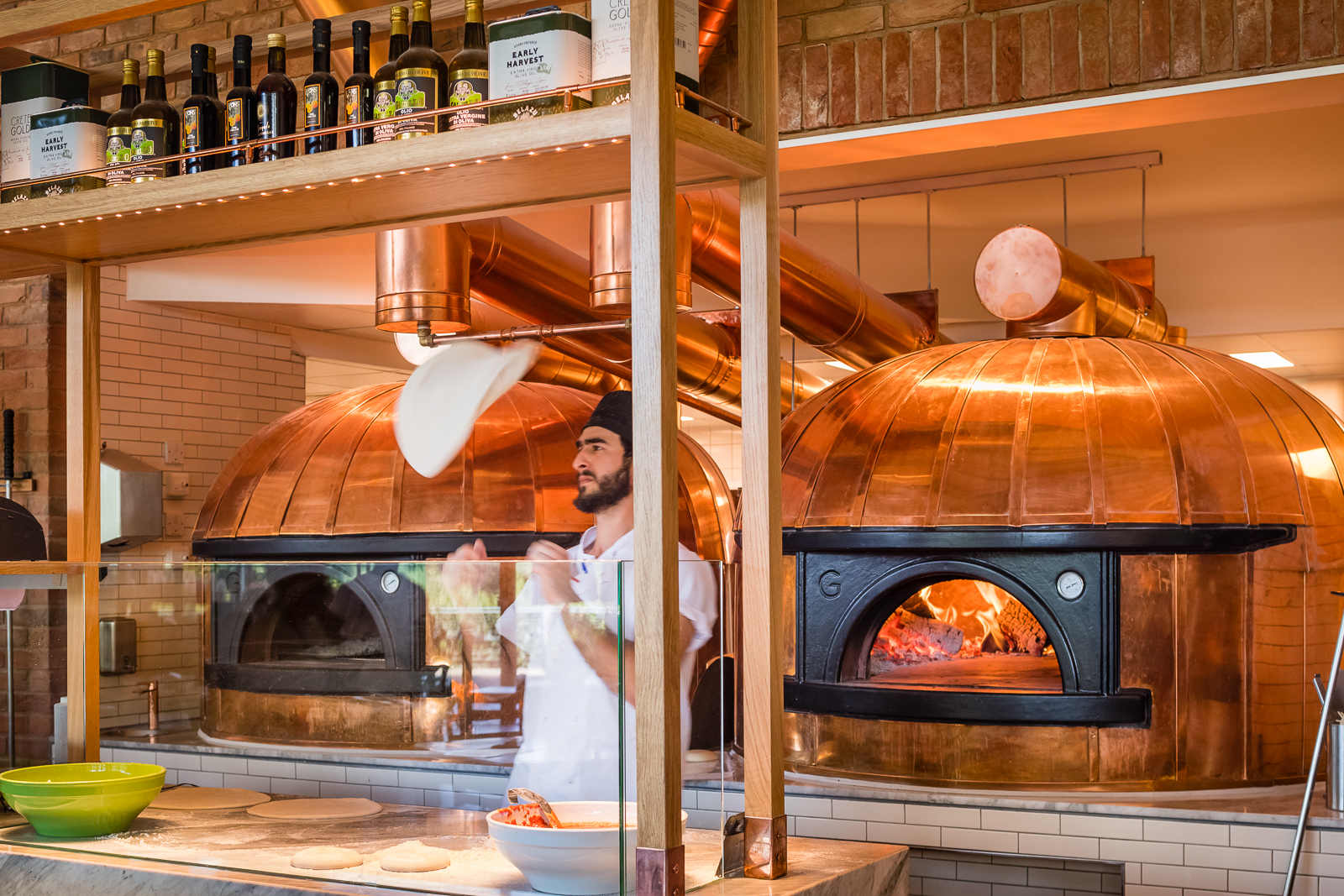
Between 2016 and 2019, this evolution was further shaped by Path Design, who led a significant refurbishment of the visitor centre. This included the creation of a new commercial kitchen and restaurant, with structural alterations, a full power upgrade, specialist lighting, and a complete interior fit-out. The project also introduced feature copper-clad pizza ovens, bespoke joinery incorporating reclaimed materials, and new revolving doors at the main entrance, enhancing both functionality and visitor experience.
Solar energy has since been added; the building now serves as a gateway to the award-winning Adventure Play, and its facilities continue to be refined to deliver an exceptional experience for visitors.
Today, the Visitor Centre remains a defining feature of Windsor Great Park, contributing to the evolving story of this majestic landscape. It stands as an example of how contemporary design can exist in harmony with historic surroundings … helping ensure Windsor Great Park remains a place of beauty, relevance, and inspiration – carefully sustained, thoughtfully experienced, and protected in harmony with nature, for generations to come.
Copper-clad wood burning pizza ovens.
Mix of reclaimed and off-the-shelf tables and chairs.
Large over-sized banquettes.
Room dividers to help break up the space.