On Monday 11 August, 75 of the Friends met at the York Club to hear Des, Biodiversity and Conservation Manager, tell us all about fungi and lichens including those which grow in Windsor Great Park.
Our familiar phrase “flora and fauna” misses the most important group – fungi. Most fungi appear during the autumn but there are a few species which grow in spring.
We have a lot to thank fungi for. They help the plants in our gardens, woods, and countryside grow; they help farm animals to digest grass; they help to recycle twigs and leaves to organic soil; they’re in yeast which we use in food and drink and there are medicines such as penicillin which are produced by fungi.
Fungi at Windsor
Des said that the habitats on the Estate are very diverse and as a result the fungi and lichens are diverse as well. Many species are becoming rare and declining, and they need identifying and protecting.
Since about 1970, 1300 species have been identified at Windsor; 59 are priority and red-listed species and 446 are wood decay fungi. To put this figure into context, there are 100 species of birds and 30 species of butterflies to be found in Windsor Great Park.
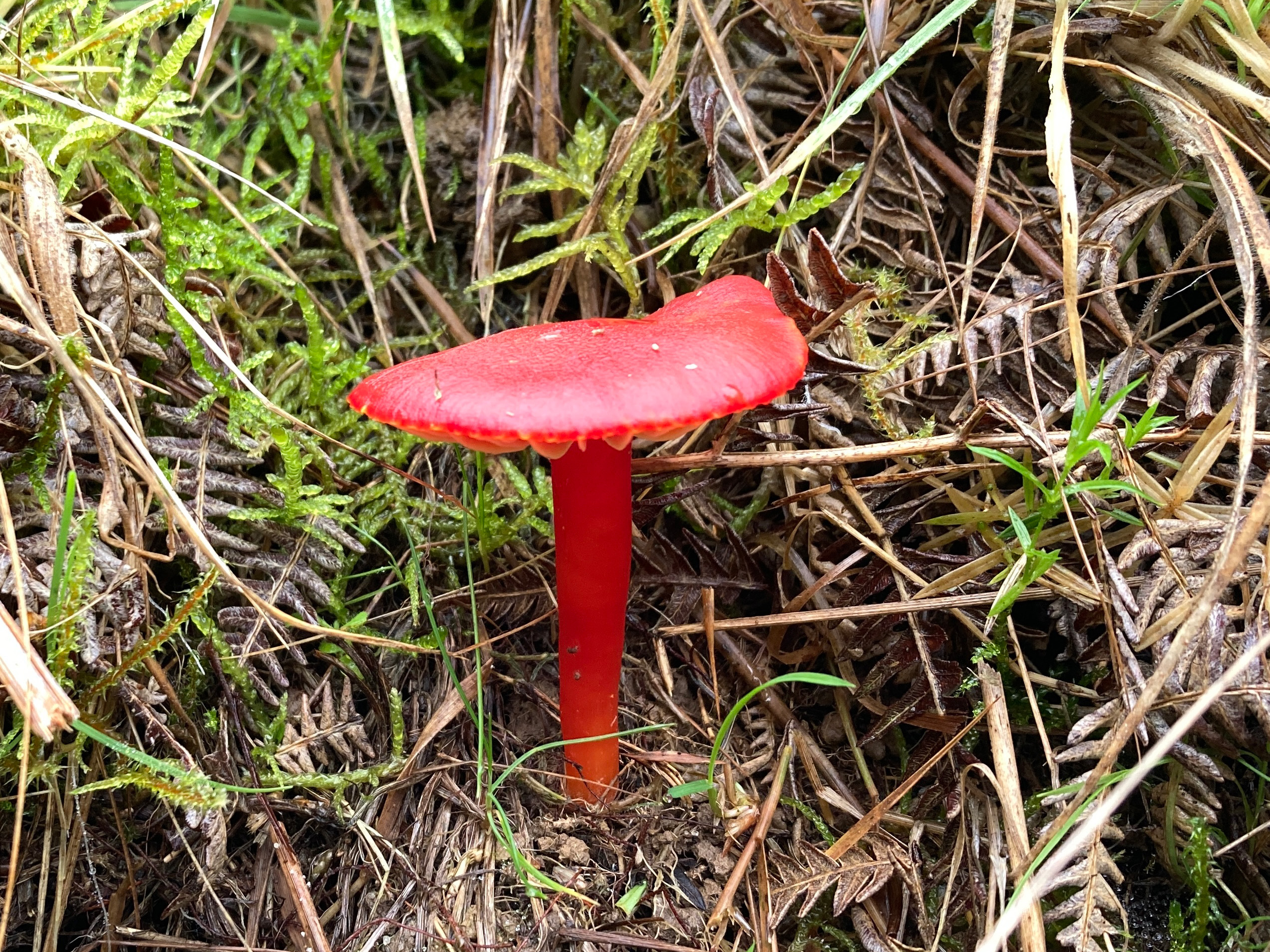
There are some nationally important fungi assemblages on the Estate too including wax caps on some of our grassland. Assemblages are groups which have the same lifestyle, such as wax caps come in a variety of shades ranging from golden to deep red.
Conservation
Conservation measures include:
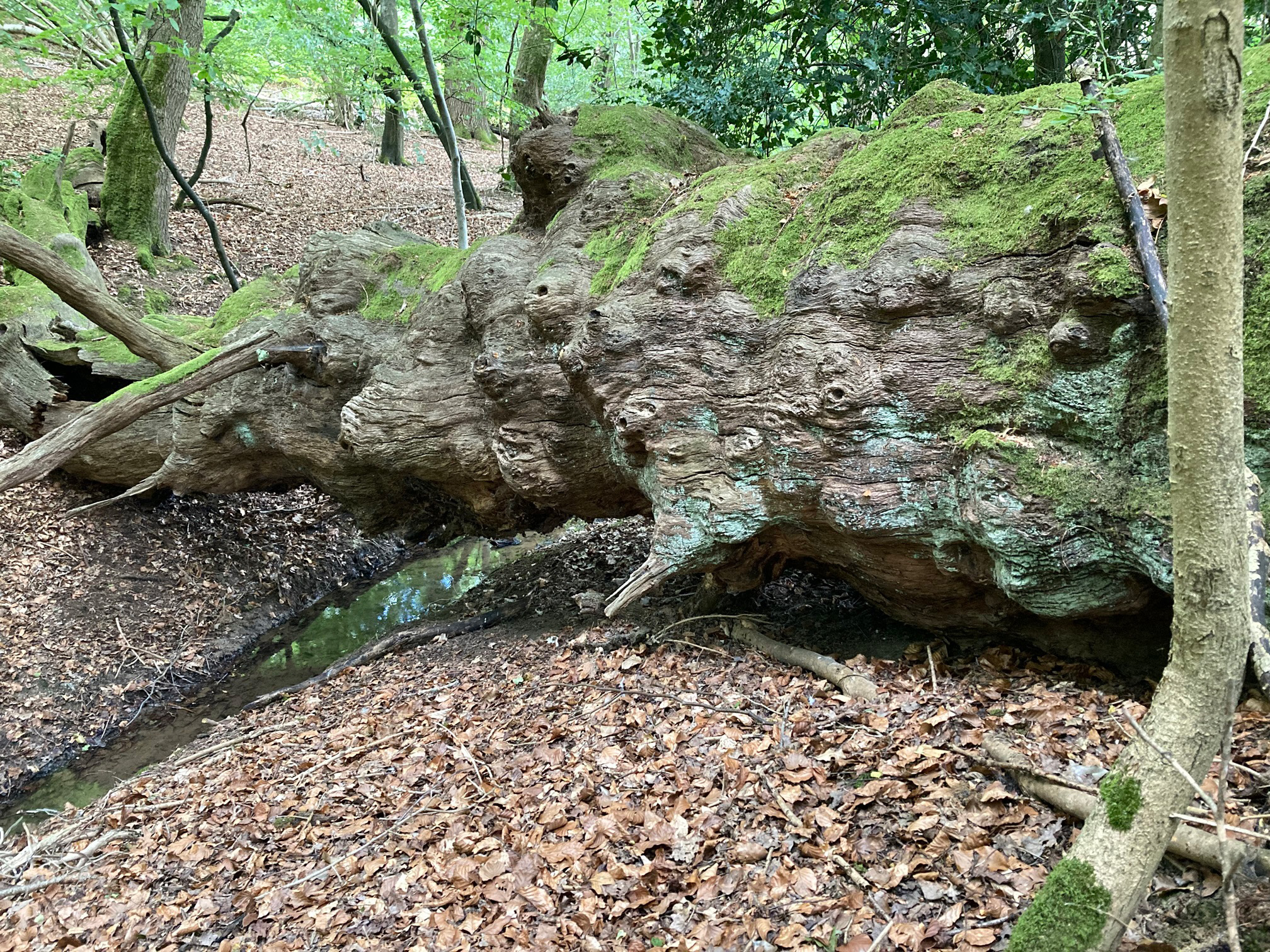
- Protecting ancient and veteran trees, both alive and dead and allowing natural processes where possible
- Retaining fallen logs in large pieces
- Ensuring the next generation of large old trees are established
- Protecting soils from compaction, physical damage, fertilisers, and pesticides
Pickers are banned; with commercial pickers in particularly stripping whole areas but discarding most of what they gather. Wardens patrol the most vulnerable areas.
Des delighted us with pictures of some beautiful fungi which we might see on our walks around Windsor Great Park. What we see are the fruiting bodies above ground, but beneath the soil and inside trees you will find threads of mycelium. Underneath the cap of the fungi are millions and millions of spores which are dispersed by the wind.
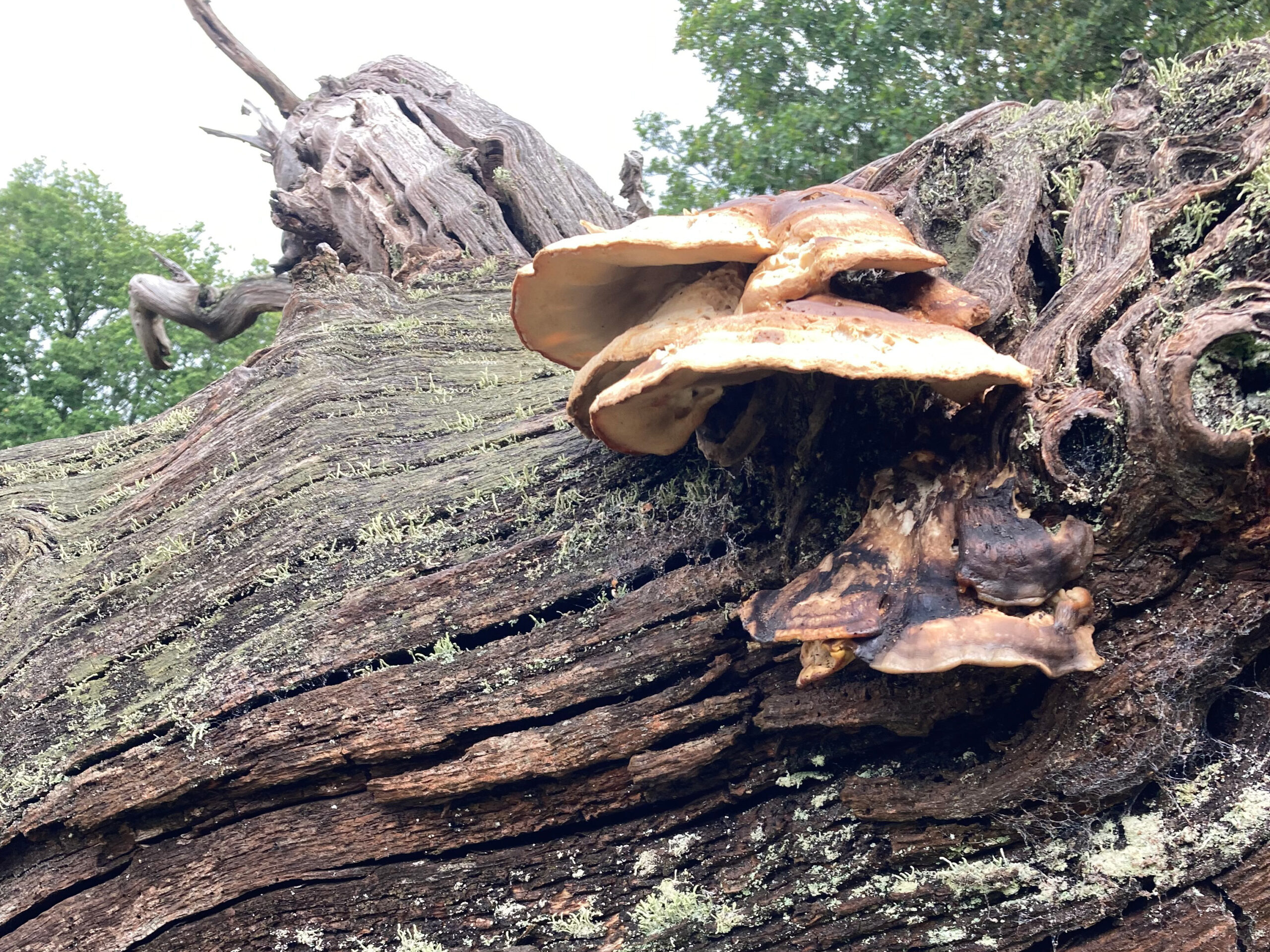
The rare and red-listed oak polypore
Some of the fungi that we see are edible but Des stressed that caution was needed and they should only be eaten if you knew what you were doing!
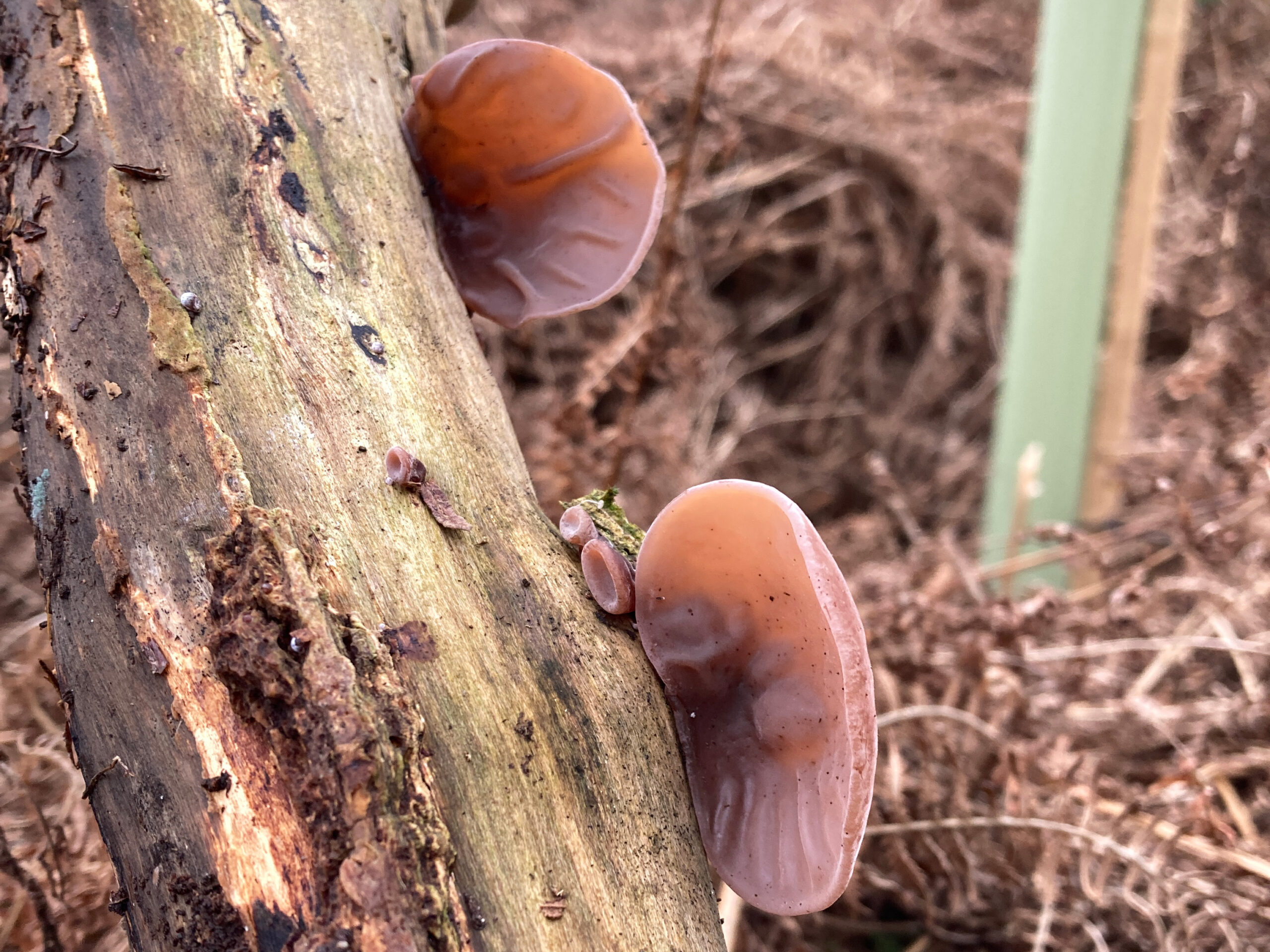
Des showed us more slides of fungi to be found in Windsor Great Park, such as the Fly Agaric, Magpie, Shaggy Ink Cap and Jelly Ears, all of which were stunning. These names so accurately describe the fungi itself.
Lichens
Des professed to know little about lichens but then astounded us with an abundance of facts.
A lichen is a symbiotic association between a fungus and a green alga; they do not have roots. The algae provide the green colour through photosynthesis, and the fungi threads provide protection and capture nutrients. There are three growth forms; crustose (where thin crusts are formed); foliose (leaf like) and fruticose (bushy or shrubby).
Lichens can be indicators of habitat quality and air quality. The Windsor Team manage rare lichens by ensuring clean air quality as far as possible, clearing Bramble and bracken overgrowth around old tree trunks, and managing areas of deadwood.
Lichens growing on deadwood
There is very little data about lichens on the Windsor Estate but the results of a three-day survey of a small area of parkland in 2018 showed that there were 95 species and 50 of those were new site records. Two rare species have good populations in Windsor Great Park. As for the fungi, the richness of the differing “veteran tree” habitats provides for a good diversity of lichens.
We are very grateful to Des for such an informative and inspiring talk. We will all now be much more aware of the fungi and lichens that we see on our walks and I’m sure we’ll have fun trying to identify them – I for one want to find the lemon tart lichen!