A small group of Friends found our way through the M25 roadworks to meet at Wakehurst, Kew’s wild botanic garden in Sussex.
The group was smaller than expected as a third of Friends that booked had to cancel for all sorts of reasons including the very high temperature.
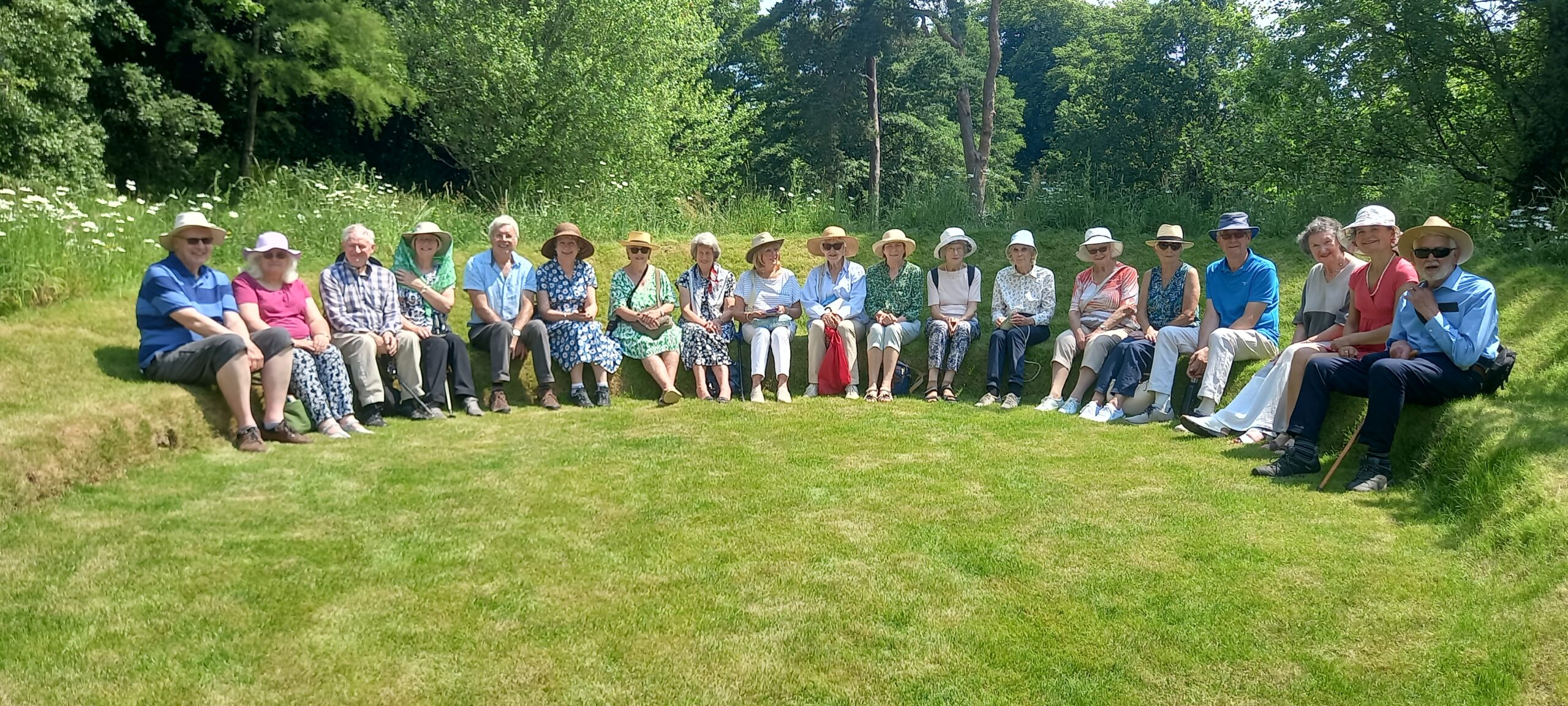
After refreshing ourselves from the drive and filling our water bottles 19 Friends assembled in the shade to meet our guide, Iain Parkinson.
Iain is the Head of Landscape at Wakehurst and had offered to take us on our tour after hearing that we had links with Mark Flanagan. Mark was the previous Keeper of The Gardens at Windsor Great Park and was the curator at Wakehurst between 1992-1997, when Iain was part of his team.
The Asian Heath Garden
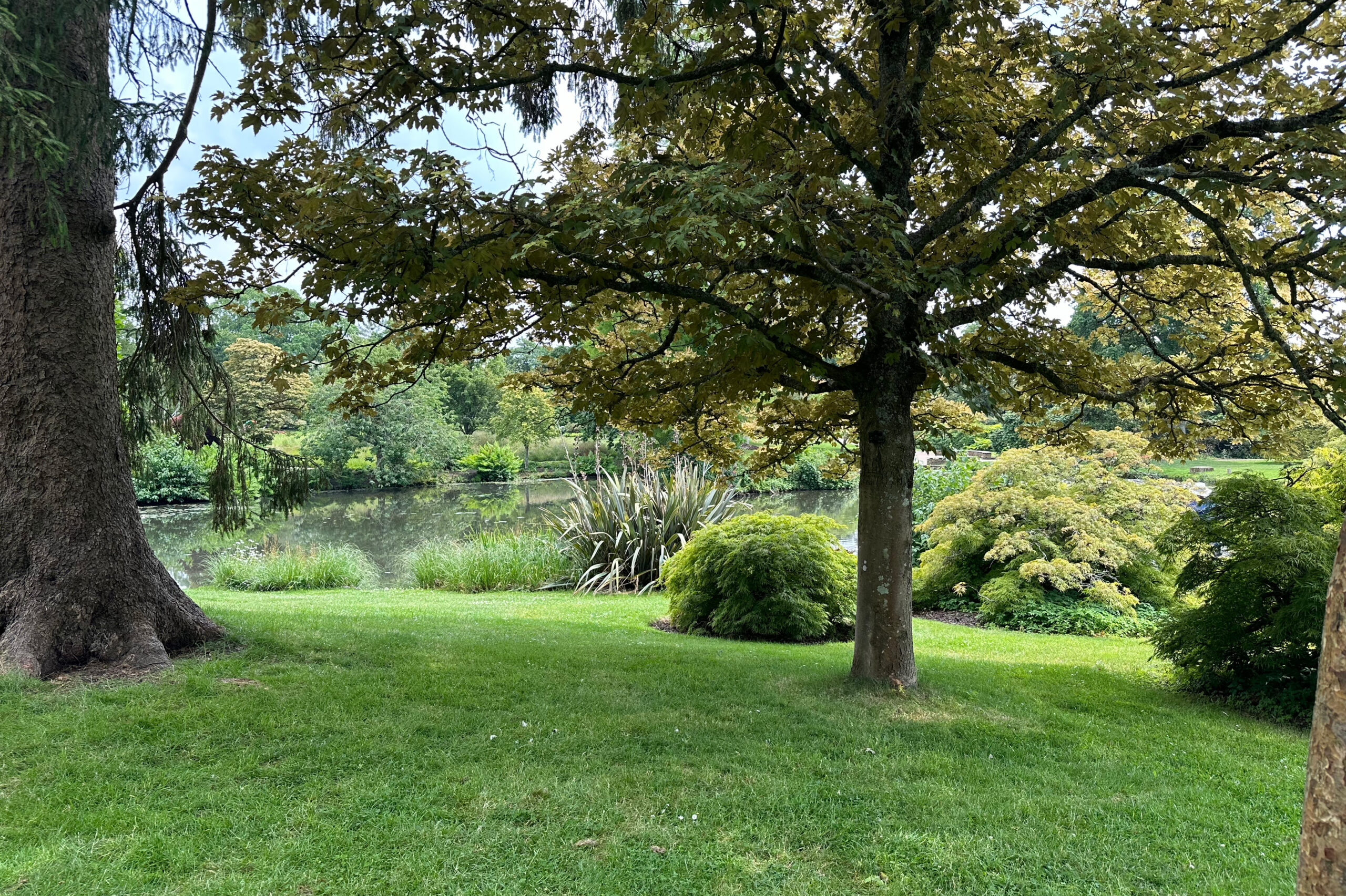
We stopped to look at the Asian Heath Garden. Iain explained that the area was developed after the Great Storm in 1987 when Wakehurst suffered the loss of 20,000 trees.
Mark Flannagan was involved with the development of the area. It is one of Wakehurst’s first wild landscapes. The area is now 30 years old and with climate change and trees in the area coming to the end of their aesthetic lives there are plans to redevelop the area.
Iain explained that the new development will be based on the Silk Road, the network of Eurasian trade routes which spanned 4,000 miles (6,437km). The plants will be from the Silk Road also known as the Silk Routes area.
The land will be reshaped with grass terraces and the pond reshaped to show the flow of the sea routes. Also planned is the creation of an ancestral orchard of trees from the Caucasus, a region between the Black Sea and the Caspian Sea, grown from wild collected seed. This will provide scientific information and visually spring blossom. The changes are planned to start in about eighteen months.
The Wakehurst landscape
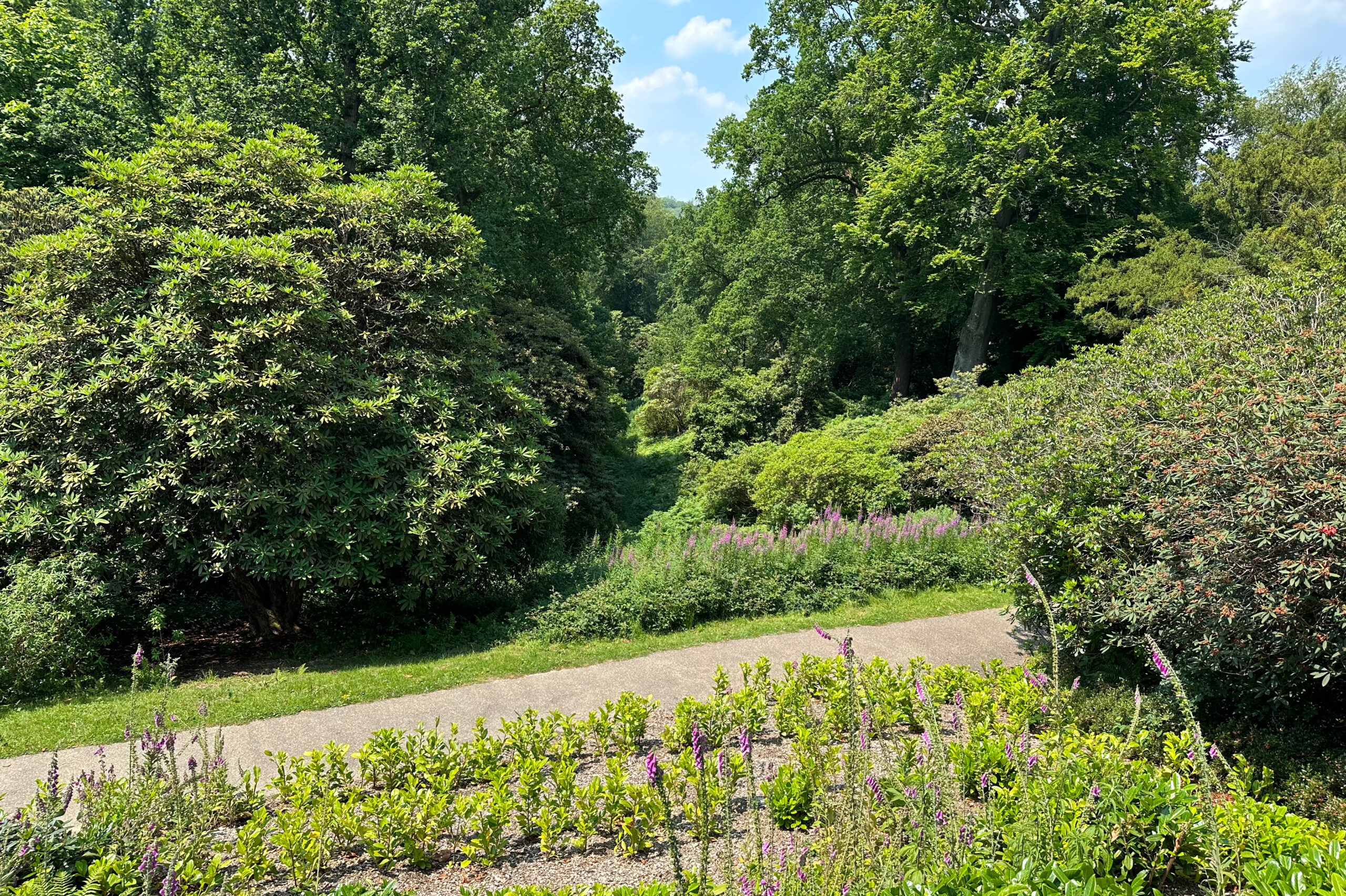
We braved the heat of the sun and continued to a viewpoint which overlooked one of the valleys.
The valley planting reflects the trees and shrubs found in the Himalayas with many rhododendrons.
The landscape of Wakehurst has better growing conditions than at Kew Gardens. It’s an area of 535 acres compared to Kew which is 300 acres. The area has a high rainfall like the west coast.
The gardens at Wakehurst were created by Gerald Loder (later Lord Wakehurst) who purchased the estate in 1903 and transformed the garden into a botanic collection.
He helped to fund expeditions of plant hunting all over the world. In 1963 Loder’s successor left the estate to the National Trust and it was leased to the Royal Botanic Gardens in 1965.
Planting in the valley at Wakehurst
The American Prairie Garden
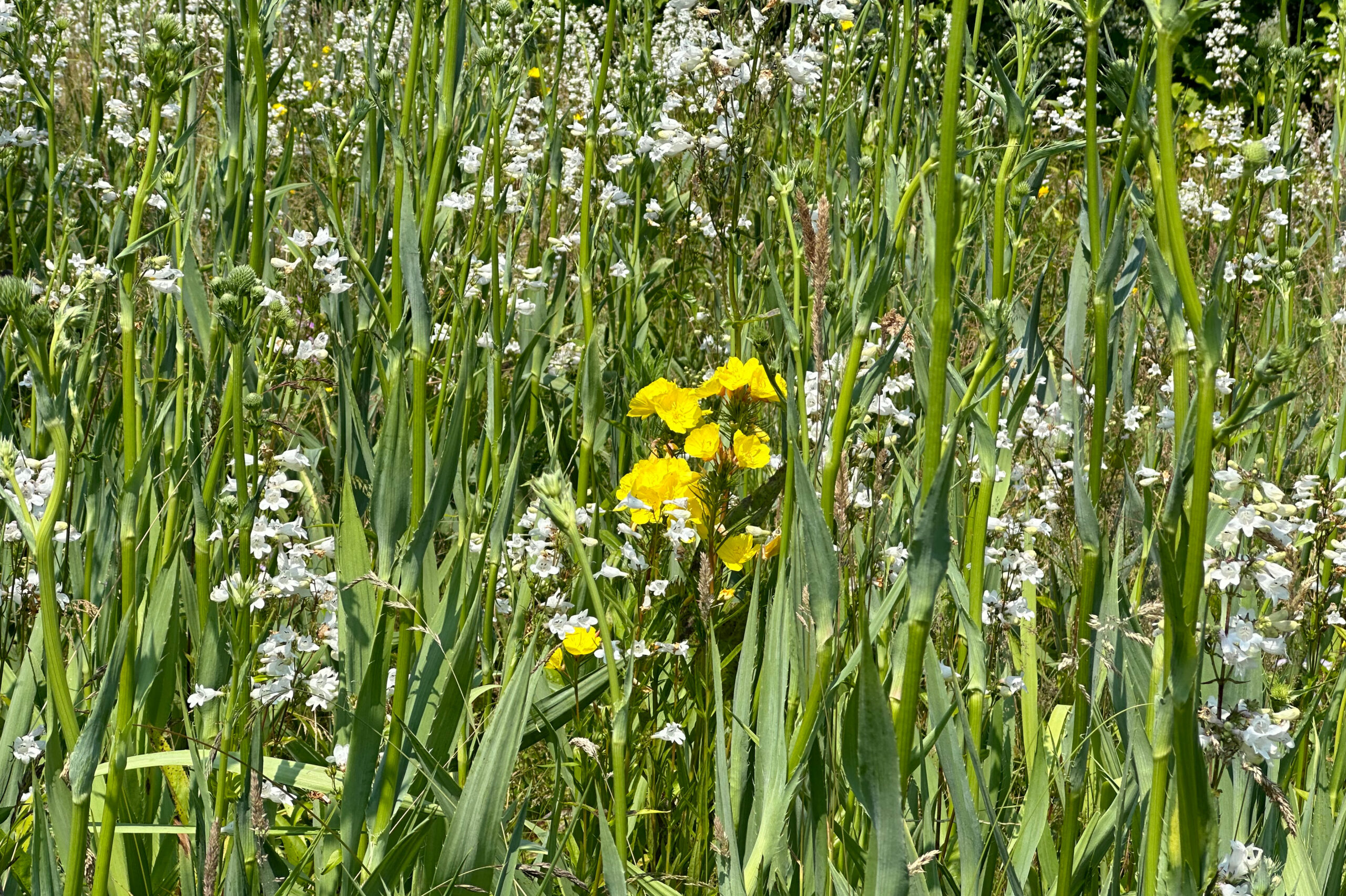
Our next stopping point was the American Prairie Garden. The planting shows the different plants from the Atlantic Coastal Plain through the South-Central Prairie to the Pacific Northwest Coast.
A path meanders through with the grasses changing from compact grasses to lush tall grass plants to low rolling grasses. An ecological approach is being used where the ecosystem provides a balance of species all with equal opportunity to stand out.
The area is cut once a year or preferably burnt as in The Prairies if weather conditions allow. The hope is that the area will take less looking after than the previous planted specimen beds but in its young state it currently takes more effort.
The American Prairie Garden
The Coronation Meadow
Our final stop was at the Coronation Meadow. The meadow was planted on farmland 10 years ago.
After wandering down a path admiring the many colourful plants, we learnt that it is maintained by growing seed offsite and hand sowing; plug plants are also used. Recently paths have been mowed through the area to allow visitors selected access to the plants.
After a short walk from the meadow to the walled garden, with the temperature soaring into the high twenties, we thanked Iain for sharing his knowledge and time. We made our way to the courtyard restaurant for a sit down in the shade with food and drink. The remainder of the day was left to further explore.
Written by Maggie Elkin, Friends of The Savill Garden Events Co-ordinator