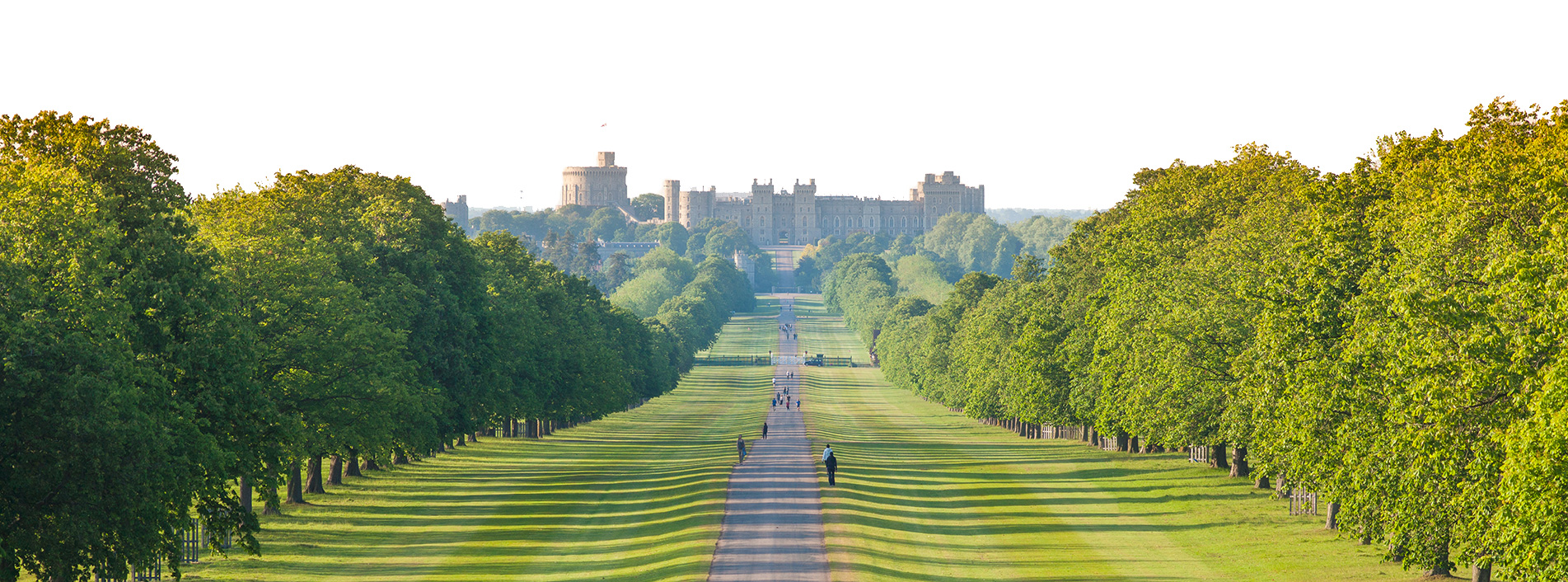
Forty of us made our way to Arundel Castle on a chilly but dry day to see the tulips during their Tulip Festival.
Unfortunately, due to an early spring, the Festival had finished, but although some of the tulips had gone over, the majority were still in bloom and looked magnificent.
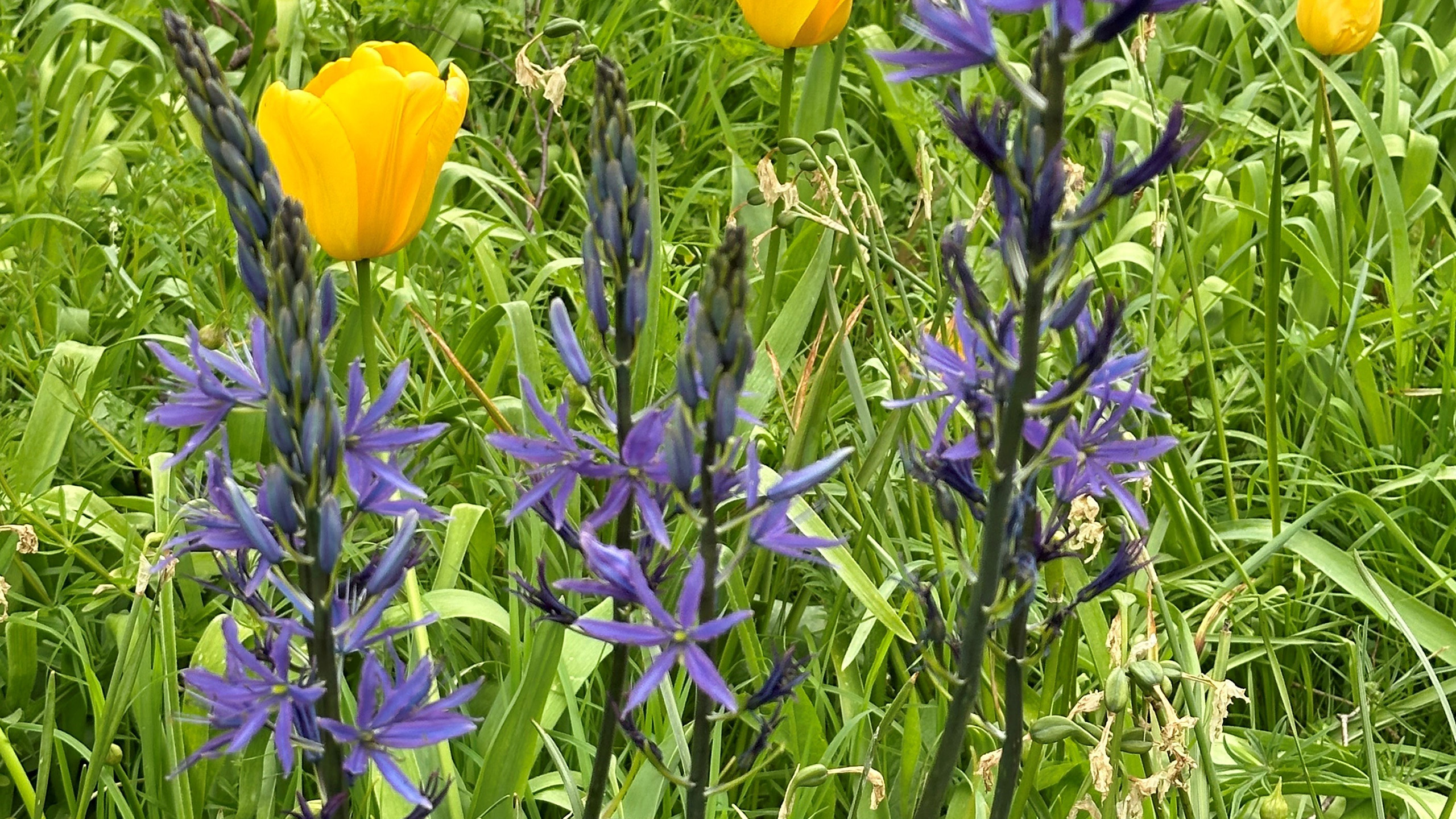
We were, however, fortunate to find the Camassia in full bloom so everywhere we went we were greeted by swathes of the beautiful vivid blue spikes of Camassia quamash and Camassia Leichtinii Caerulia, some interspersed with tulips and some planted under trees and in beds … truly spectacular.
Camassias in Arundel Castle Gardens
Also beyond our control was the number of guides who were available to show us round and talk to us.
Grace, our guide, managed to take our whole group, and, although it was sometimes difficult to hear, she was more than willing to repeat herself and to take questions as we went.
The tour
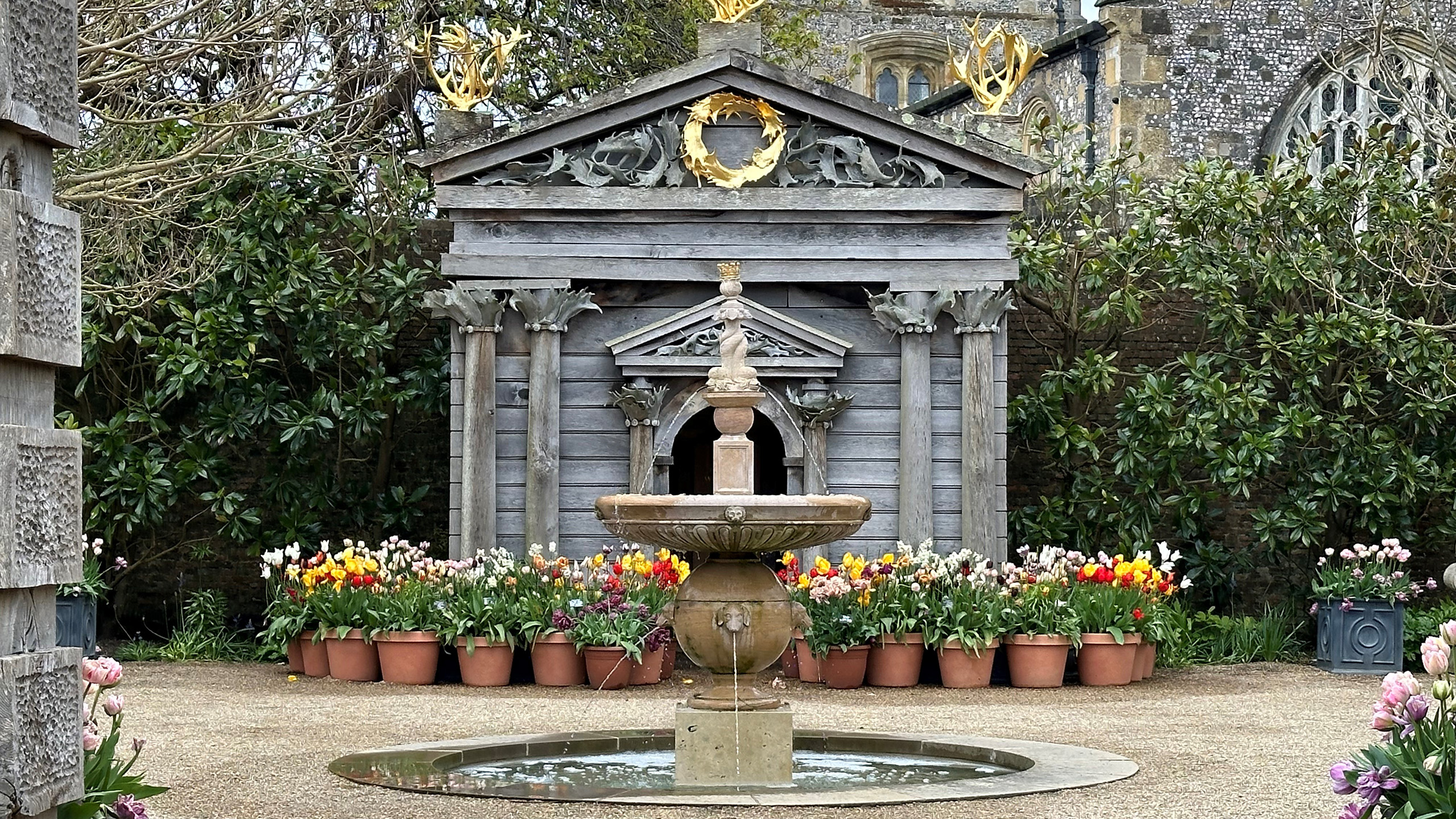
We gathered in the Collector Earl’s Garden, which was designed by Julian and Isabel Bannerman. Formerly the Castle car park, it has been transformed into a series of intimate, hedged gardens, all displaying different styles.
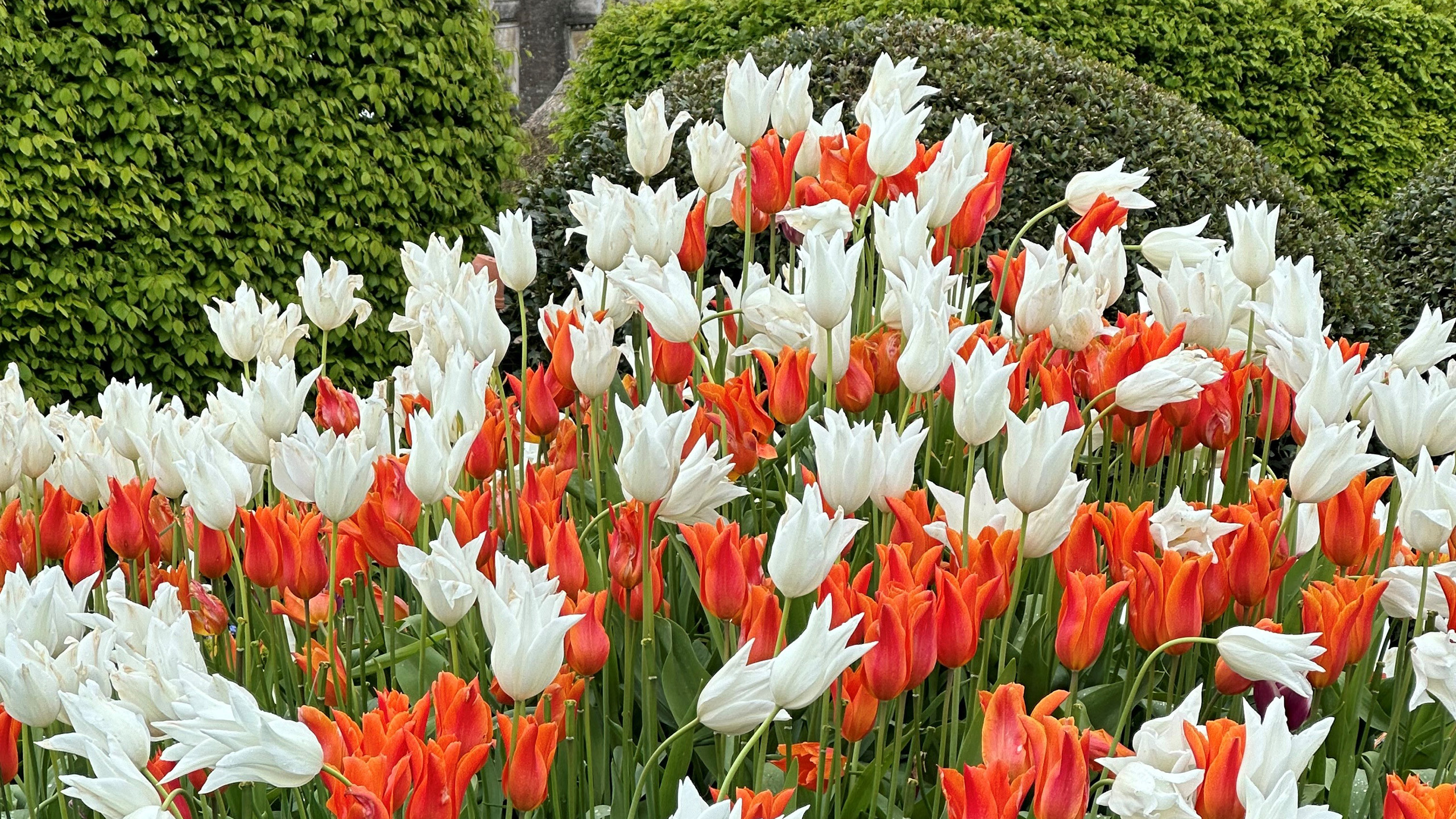
In every corner were huge planters filled with a profusion of tulips in various colour combinations, all chosen to allow a progression of colour over several weeks.
Over 100 bulbs are planted in each container, and 100,000 bulbs planted each year! It was pleasing to learn that, at the end of the season, all these bulbs are lifted, dried, and donated to the Red Cross.
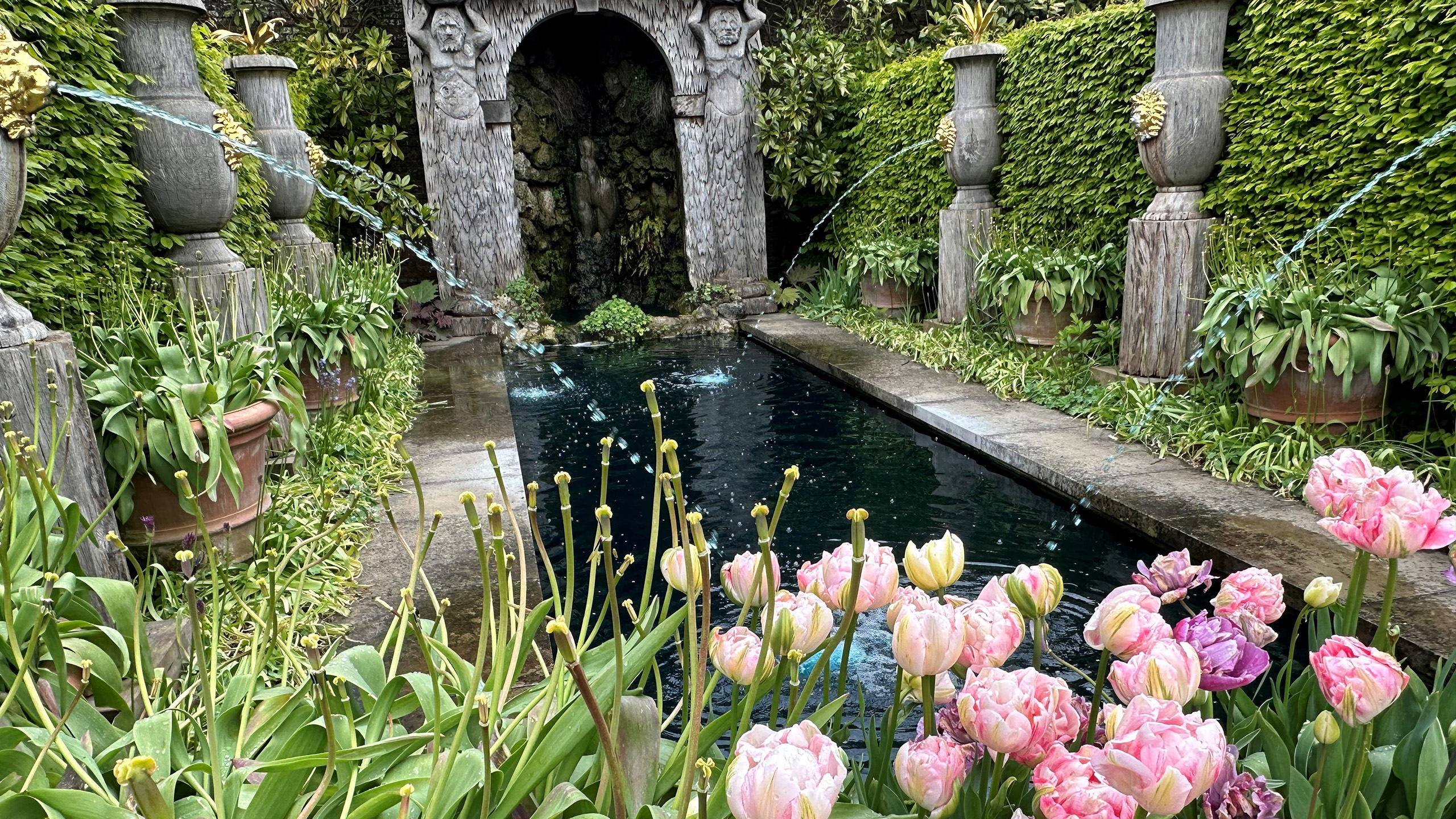
We peeped inside a moss-covered grotto in the Italianate garden and admired the “floating crown” (a replica crown floating on the top of a fountain of water) in “Oberon’s Palace”, another larger grotto inspired by a design by Inigo Jones.
Red and white tulips in a container
The herbaceous borders were planted with Camassias, alliums (which were just starting to flower) geraniums and other plants especially chosen by the Head Gardener in consultation with the Duke and Duchess, who enjoy the pinks and purples.
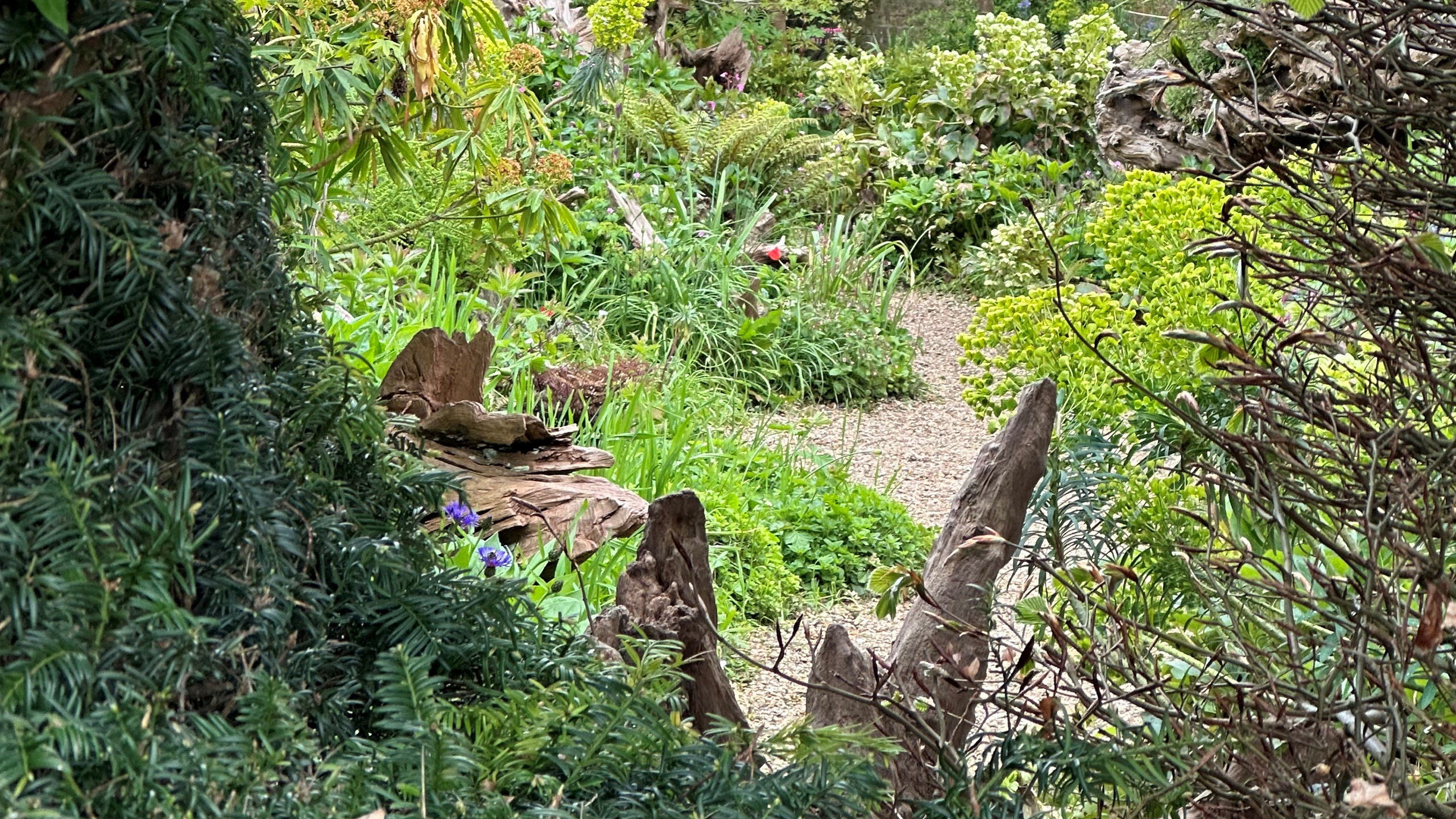
The centre of the herbaceous garden is surrounded by a tall yew hedge, in which the Head Gardener decided to cut two circular “windows” to open the views to two other gardens: the Stumpery and another herbaceous garden. Apparently, he did this without prior permission, so was very relieved when the Duke approved it!
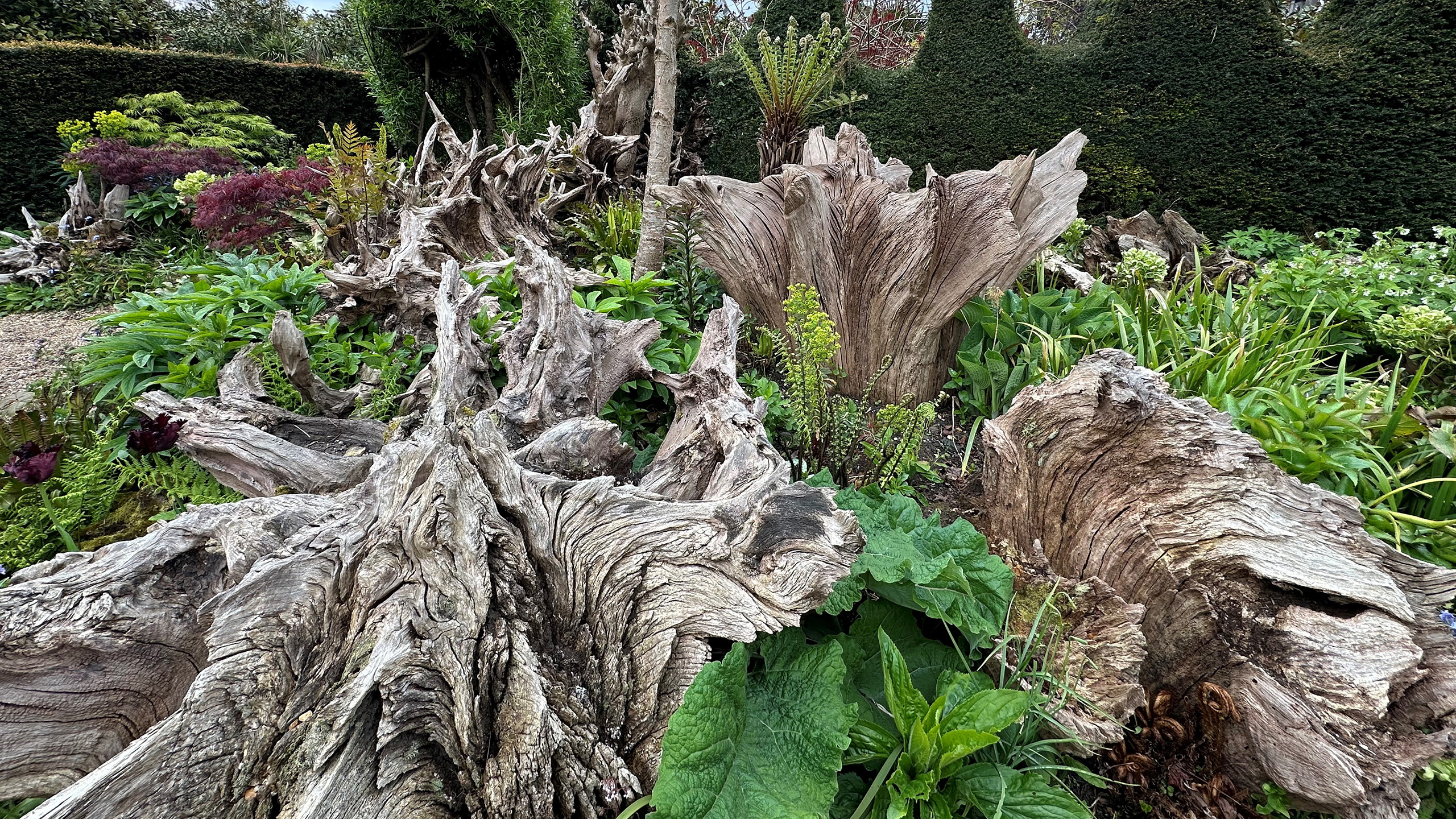
The Stumpery was fascinating, and all the trees stumps, sweet chestnut, and oak, were recycled from the estate. Another stumpery is being created just under the Castle walls by the dry moat and that too will be filled with stumps from within the estate.
A ‘window’ into the Stumpery
Grace showed us some botanical tulips in the Stumpery and explained that these are tiny tulips with delicate heads, in red and yellow.
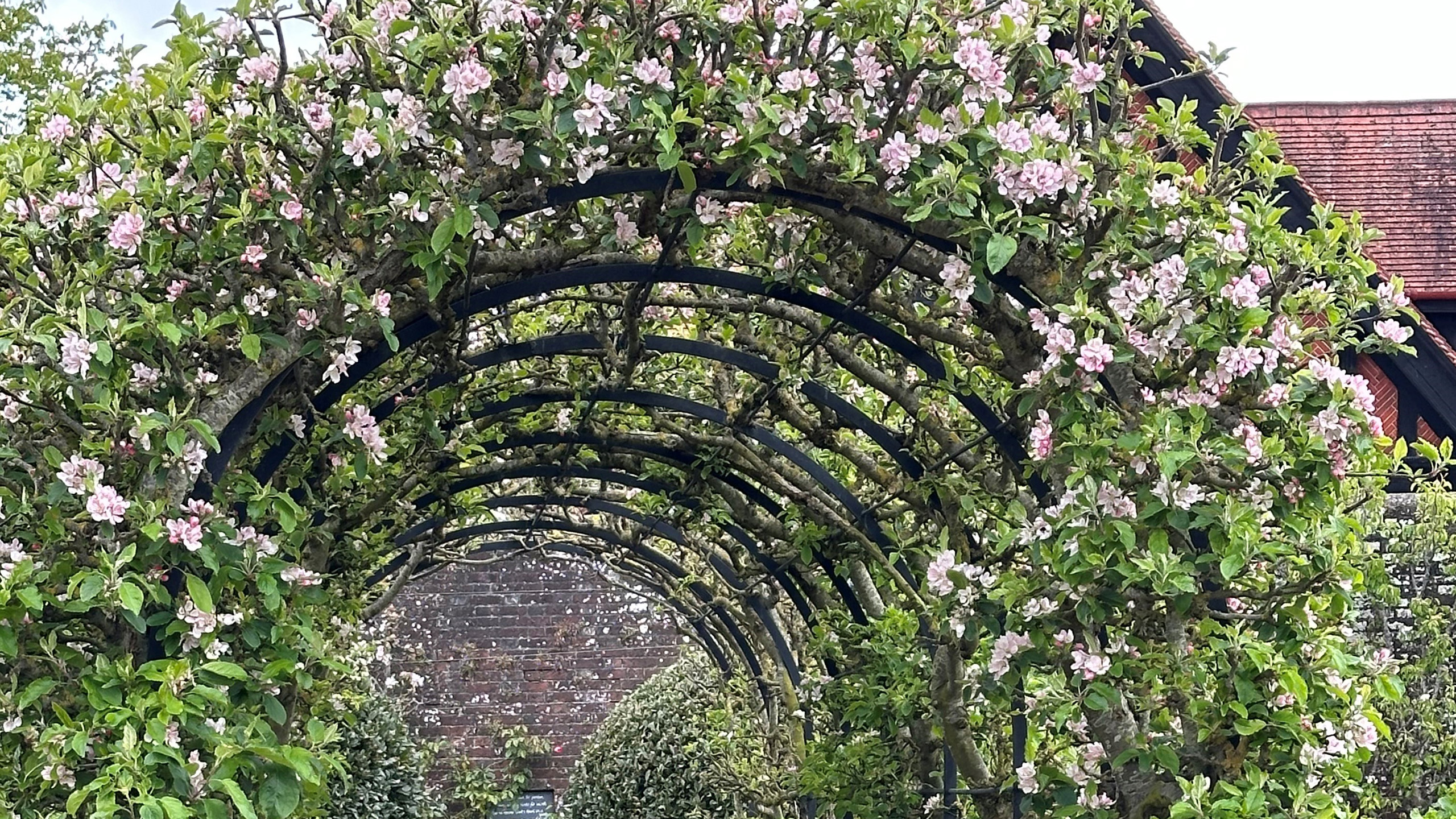
The kitchen garden was bordered by espaliered apple trees (eating apples) and avenues of espaliered apple trees (cooking – Peasgood’s Nonsuch) all of which were in blossom. Companion planting is evident throughout, with a wonderful mix of flowers and vegetables.
All the fruit is gathered and made into jams and chutneys which are sold in the giftshop, and if there is a glut, vegetables are sold off to the public too. Some hives provide honey, which is also available to buy.
Apple blossom in the kitchen garden
Many of the individual beds are lined with box which is being replaced with lavender this year an exercise that has already been undertaken in the separate rose garden.
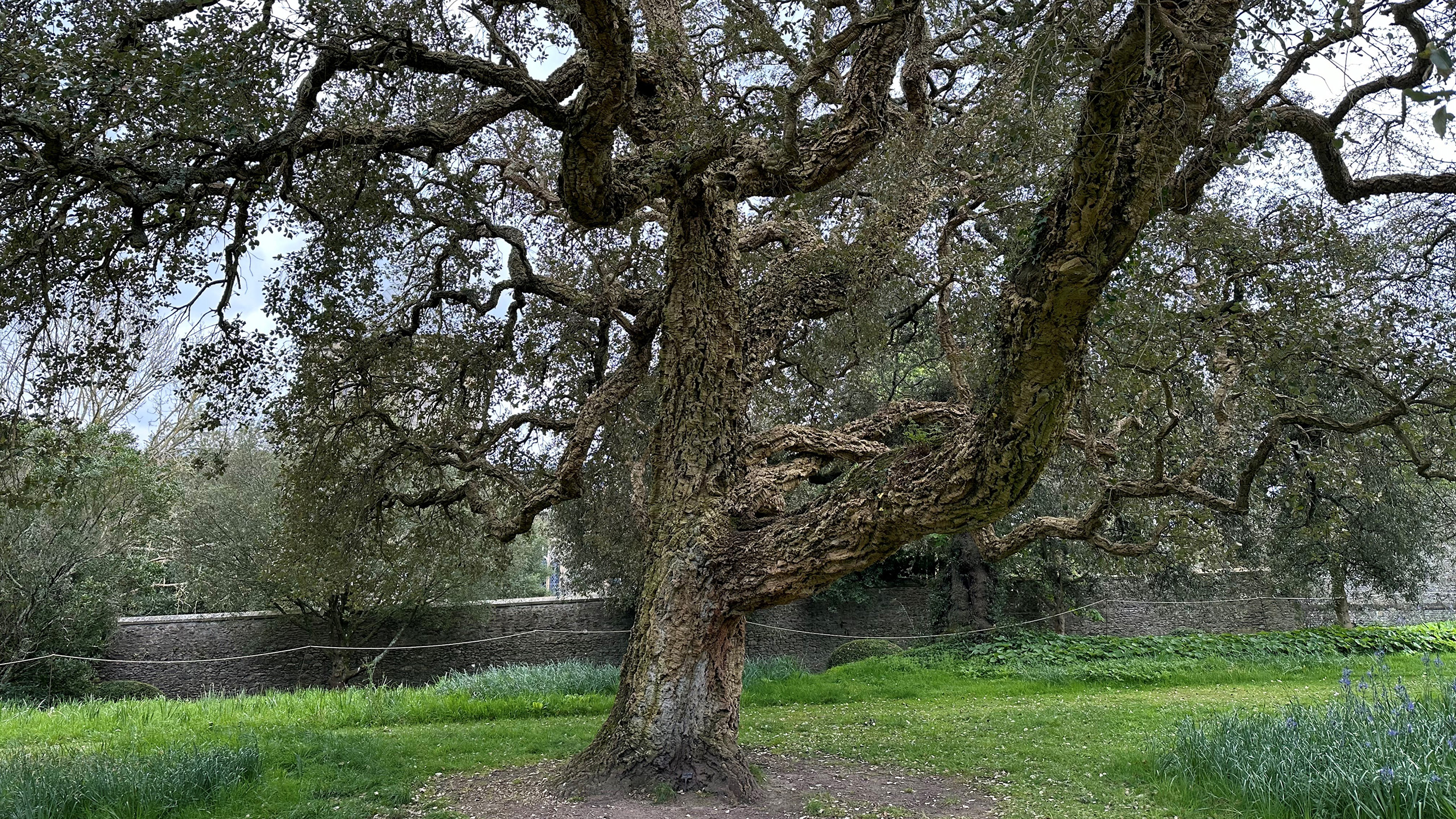
After our tour of the gardens, Grace took us to see a magnificent 270-year-old cork oak (Quercus suber) in the Castle grounds, near to a young apple orchard (replete with Camassias) containing all Sussex varieties.
She explained that, although not yet in flower, the banks and some grassy areas are wildflower meadows which are scythed in late summer and seeds planted elsewhere in the grounds.
The 270 year-old cork oak
Exploring more of the Arundel estate
There was time after the tour to wander through the gardens and visit parts of the estate that we had not been shown.
Many of the Friends also toured the Castle (some even made it to the top!) after the garden tour.
All in all, a fabulous estate, and a great trip, with lots to see, and a promise of much more during the rest of the year.
On returning to the barn, Friends admired the display of cut camellia flowers. Conversations flowed as we stood in the warm sunshine before leaving.
Written by Gill Sloan, Joint Event Coordinator