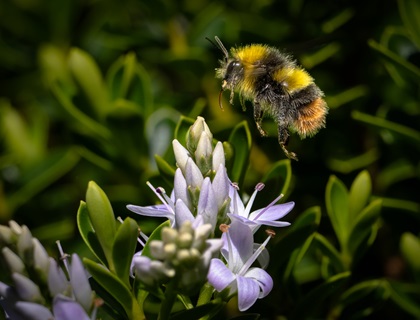
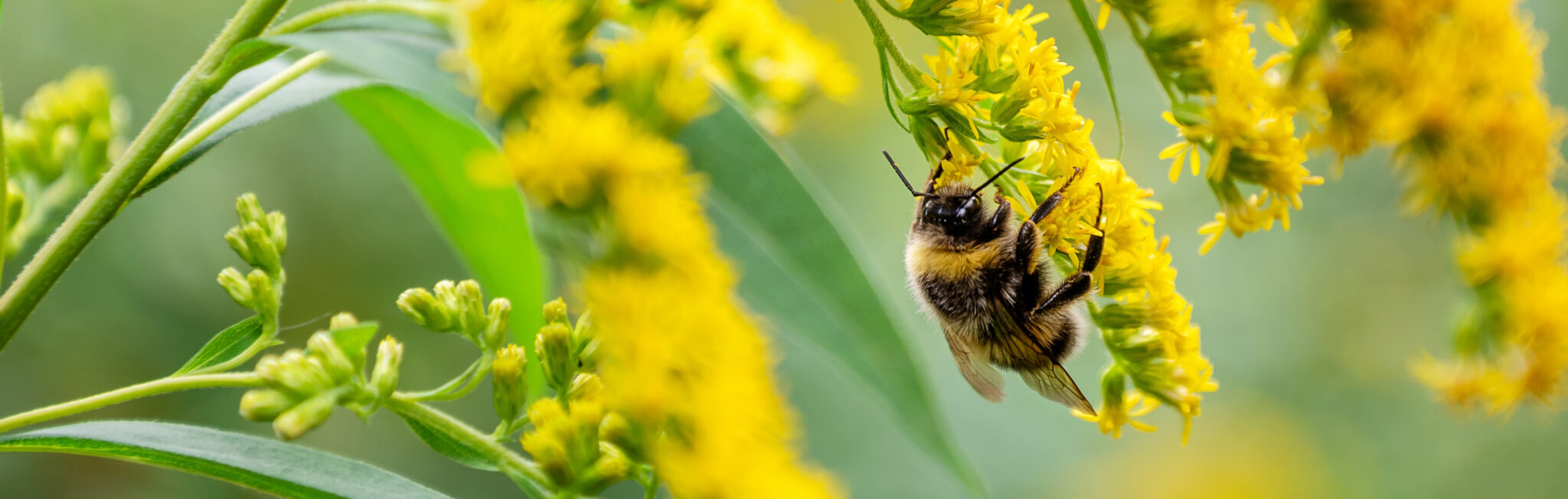
Bumble Bee on Yellow Goldenrod.

Invertebrates

Invertebrates are crucial for pollination, soil health, and food webs, relying on diverse habitats. Grasslands, wood pasture, ponds, and ditches provide essential resources and movement corridors. Effective management – such as sensitive grazing, wetland restoration, and preventing over-shading – maintains resilience and biodiversity. Without these measures, fragmentation leads to decline. Integrated management across the Windsor Estate sustains ecosystems and vital natural services.

Bees

Bumblebees are vital pollinators, but UK populations are falling due to habitat loss, pesticides, and climate change. To help, plant bee-friendly flowers, avoid harmful chemicals, create wild spaces as we do in the Great Park like the banks at the entrance of The Savill Garden Visitor Centre.

Find out more
Bumble Bee on a pink rose.
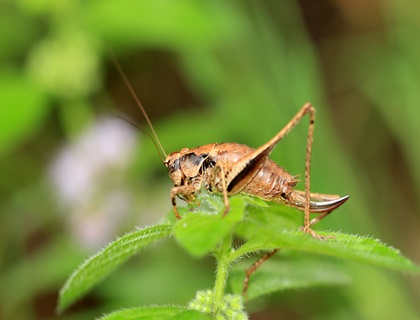
Bog Bush Cricket

The Bog Bush-cricket is a short-winged bush-cricket found in our wetlands, bogs, and heathland areas. Brown and green with long antennae, it feeds on buds and flowers. Adults appear July to autumn, laying eggs on Purple Moor Grass. Habitat loss threatens this declining species.

Find out more
A Bog Bush Cricket
Centipede

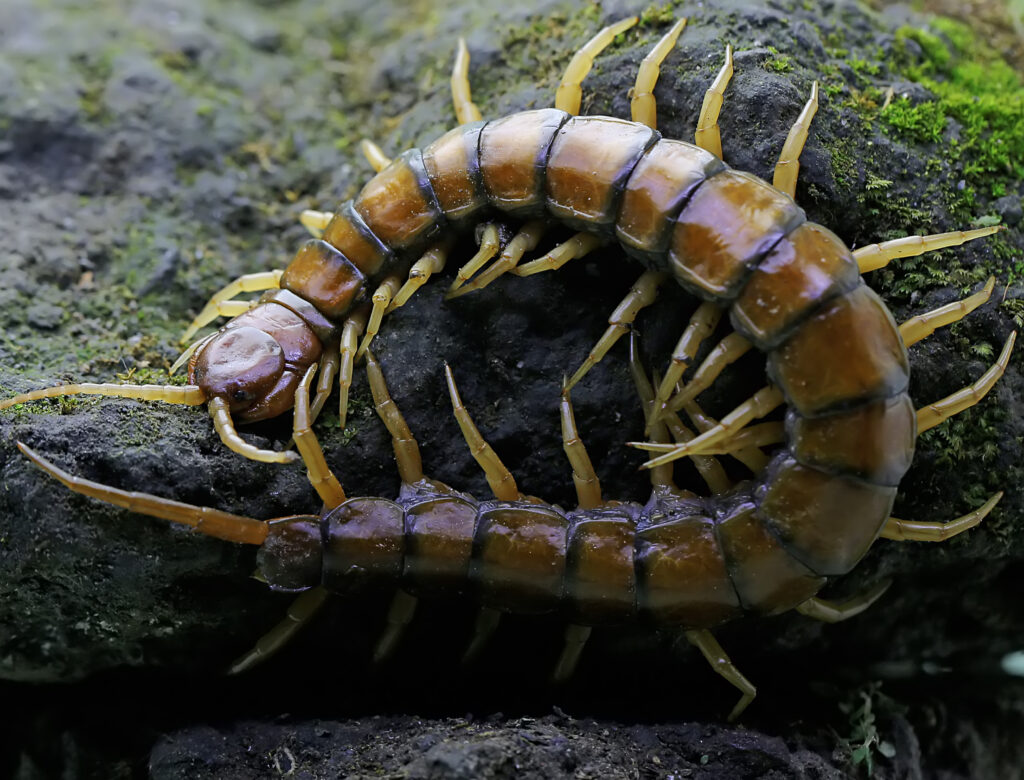
Also known as the stone centipede or common centipede, this fast-moving invertebrate is one of several centipede species found in the UK. It lives in soil, under rocks, in compost heaps, and beneath tree bark—emerging at night to hunt. Though some centipedes have over 100 legs, the brown centipede has 15 pairs – one per body segment. Equipped with venomous claws and strong jaws for catching prey, it poses no threat to humans.

Find out more
Centipede.
Common Carder Bee

The common carder bee is a fluffy, gingery bumble bee that can often be found in gardens and woods, and on farmland and heaths. It is a social bee, nesting in cavities, old birds’ nests and mossy lawns.

Find out more
Common Carder Bee
Common Green Grasshopper

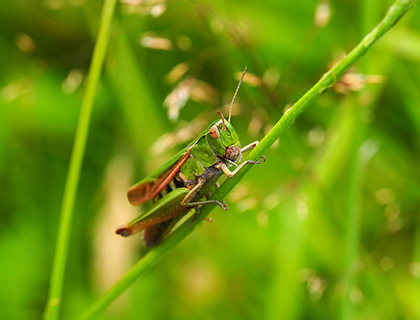
The Common green grasshopper can be found in damp meadows and woodland rides throughout summer. Males can be seen rubbing their legs against their wings to create a ‘song’ for the females.

Find out more
Common Green Grasshopper
Common Woodlouse

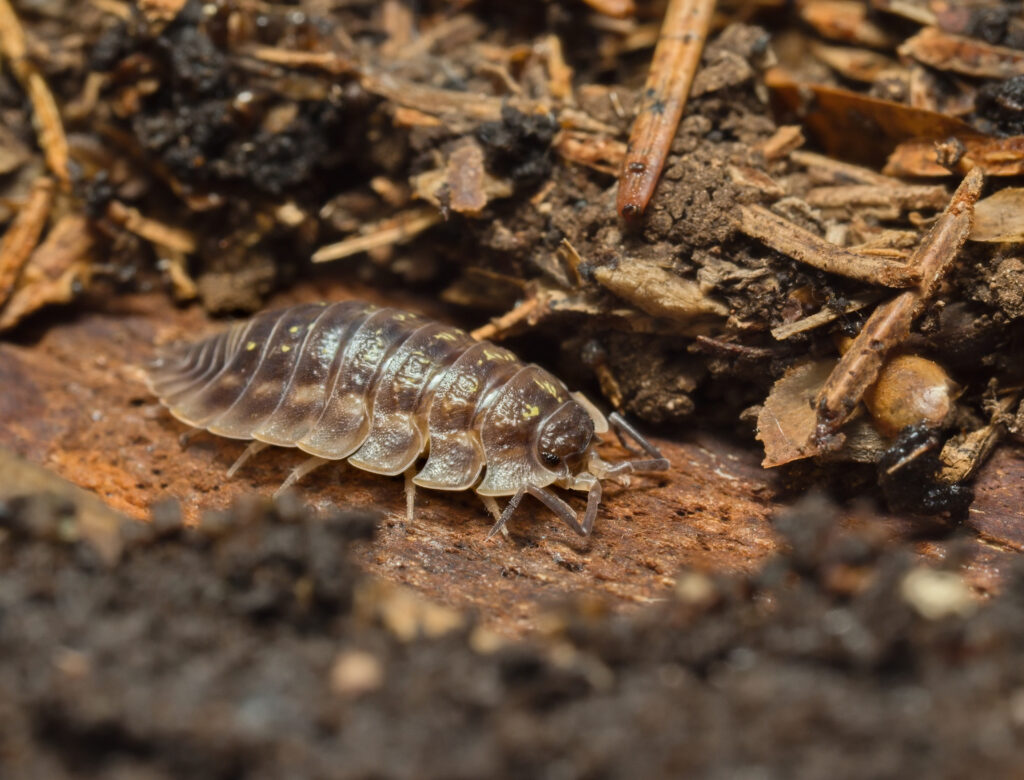
These invertebrates thrive in damp, sheltered spots—often found beneath rocks or nestled in compost heaps, where they avoid drying out in hot weather. Common woodlice play a vital role in the ecosystem by feeding on dead plants and animals, helping to recycle nutrients back into the soil.

Find out more
Common Woodlouse.
Diving Beetles

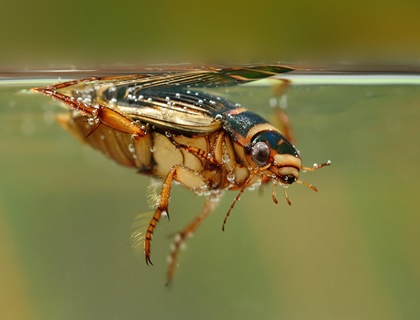
The Great diving beetle is a large and voracious predator of ponds and slow-moving waterways. Blackish-green in colour, it can be spotted coming to the surface to replenish the air supply it stores beneath its wing cases.

Find out more
Diving Beetle
Early Bumble Bee

The Early Bumble Bee has a bright orange tail and lemon-yellow bands on its body. It is very common and can be found in all kinds of habitats in early spring.

Find out more
Early Bumble Bee
Giant Wood Wasp

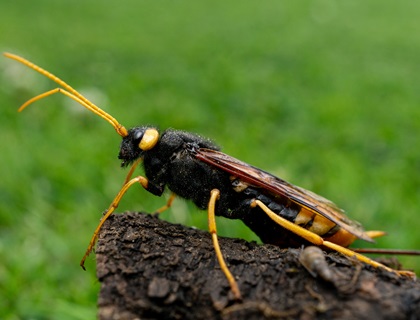
The giant horntail is a massive sawfly that is also known as the ‘giant woodwasp’ or ‘greater horntail wasp’. Found near pine woods, or places where pine timbers are used.

Find out more
A closeup image of a giant wood wasp insect with yellow legs standing on the stone
Heath Potter Wasp

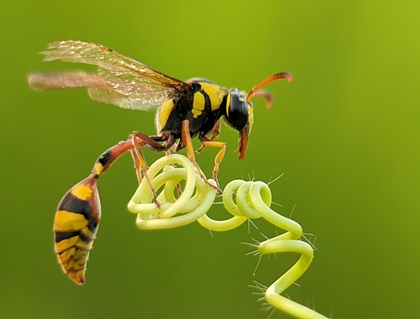
The Heath Potter Wasp is a rare, solitary wasp species found primarily on heaths in southern England. Known for its remarkable nest-building skills, the female wasp meticulously crafts a small, spherical pot from mud to house her young.

Find out more
Heath Potter Wasp
Millipedes

The Windsor Estate is home to several species of millipede, including the well-known flat-backed millipede. These creatures are commonly found beneath rocks, in compost heaps, and within decaying trees in woodland areas. Millipedes are elongated, multi-segmented invertebrates that typically inhabit soil, the undersides of rocks, and the bark of trees.

Find out more
Millipede.
Mottled Grasshopper

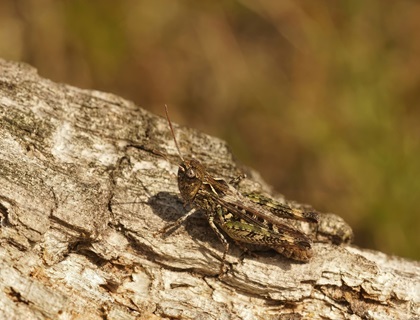
The Mottled grasshopper can be found in dry grasslands, such as railway cuttings, and heathlands throughout summer. Males can be seen rubbing their legs against their wings to create a ‘song’ for the females.

Find out more
A Mottled Grasshopper
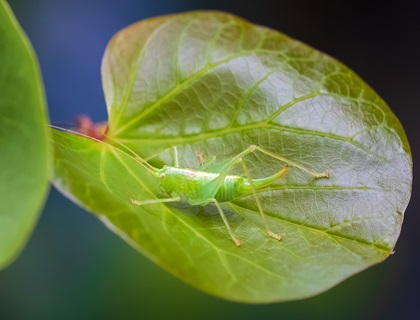
Oak Bush Cricket

The oak bush-cricket is usually found in warm ancient woodland, parklands and hedgerows from June to November. It can often be hard to spot as it is well-camouflaged and spends most of its time hidden in the canopy of mature trees.

Find out more
Oak Bush Cricket
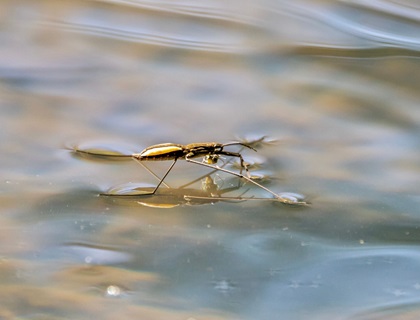
Pond Skater

The common pond skater can be seen ‘skating’ over the surface of ponds, lakes, ditches and slow-moving rivers. It is predatory, feeding on small insects by detecting vibrations in the water’s surface.

Find out more
A closeup shot of a Pond Skater
Raft Spider

The chocolate-brown raft spider inhabits bogs and ponds. It can be spotted sitting near the water, its legs touching the surface. When it feels the vibrations of potential prey, it rushes out to catch it, floating like a raft.

Find out more
Raft Spider
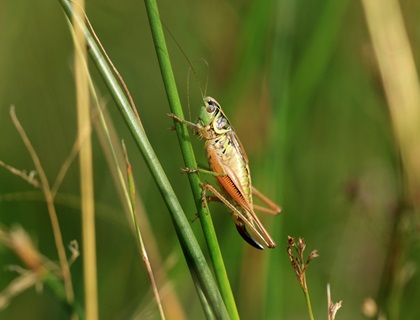
Roesel’s Bush-Cricket

The Roesel’s Bush-cricket is a medium-sized, short-winged cricket, usually brown with green tinges and cream-bordered thorax. Common in damp meadows and rough grassland, it feeds on vegetation and sings a distinctive mechanical buzz. Adults appear June to autumn, with rare long-winged forms aiding range expansion.

Find out more
The Roesel's Bush-cricket
Ruby-tailed Wasp

If seen up close, the glittering Ruby-tailed wasp is, perhaps, one of the UK’s most beautiful insects. A solitary wasp, it can be found in sandy and rocky habitats like quarries, outcrops and walls.

Find out more
A closeup shot of a ruby tail wasp on a rock surface
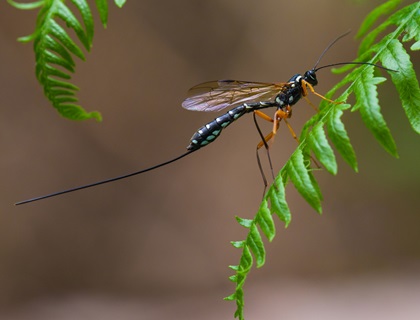
Sabre Wasp

The Sabre Wasp, also known as the Giant Ichneumon Wasp, is the largest ichneumon wasp found in the UK. Despite its fearsome appearance and long, needle-like ovipositor, it is harmless to humans and does not sting. Maintaining dead wood and standing dead timber in woodlands is crucial for the survival of the Sabre Wasp.

Find out more
Sabre wasp resting on green bracken
Wasp Spider

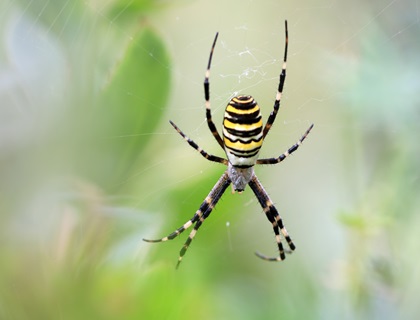
The wasp spider is a great mimic – looking just like a common wasp keeps it safe from predators, even though it is not dangerous itself. It can be found in southern England, but is spreading north.

Find out more
The Wasp Spider
Water Boatman

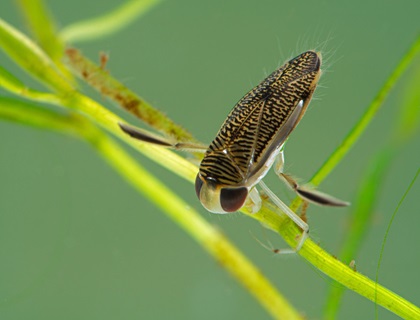
The Lesser water boatman has oar-like legs to help it swim, but it does not swim upside-down. It is herbivorous and can be found at the surface of ponds, lakes and ditches.

Find out more
Water Boatman
Water Scorpion

The water scorpion is dark brown with large, pincer-like front legs, a flattened, leaf-shaped body, and a long ‘tail’, giving it the appearance of its namesake. It lives in still-water ponds and lakes, and is common around the shallow edges of garden ponds.

Find out more
Water Scorpion
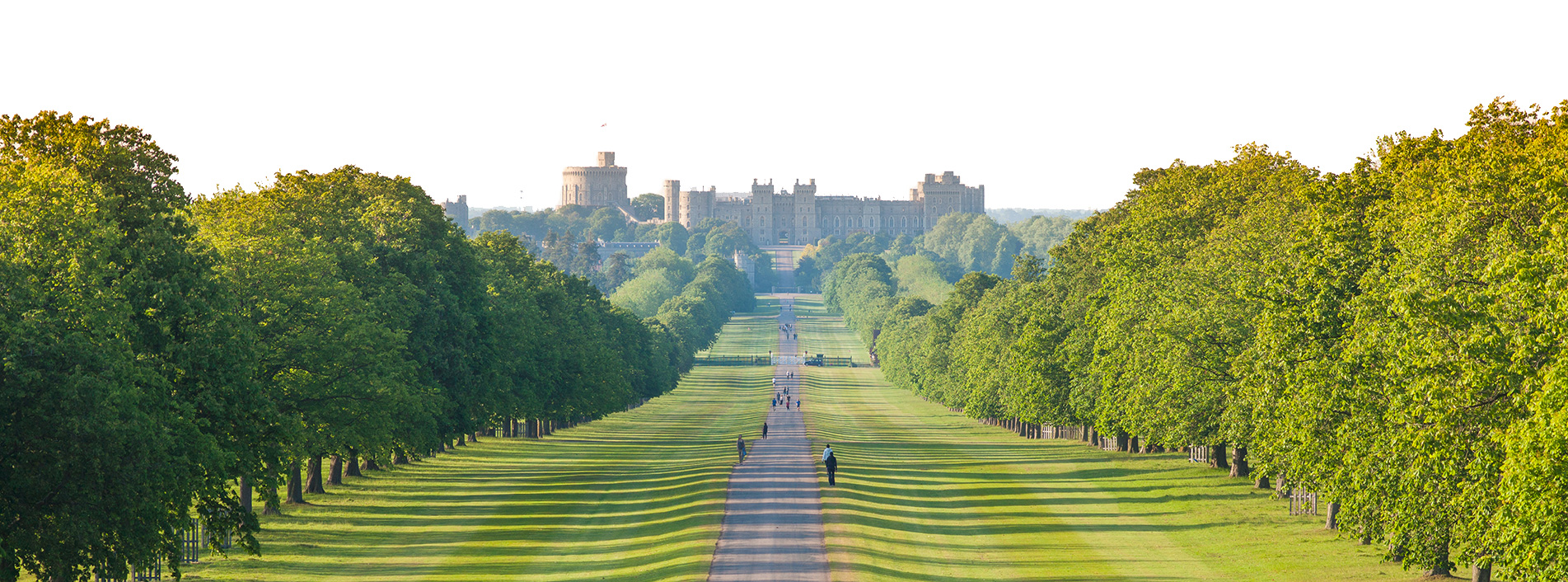
Windsor Great Park
Windsor Great Park

More from us

News & Articles

FAQs

Careers

Get in touch

Contact us

Newsletter

Sign up to our newsletter

The Crown Estate logo.

User support

Accessibility

Site map

Our policies

Terms of use

Privacy statement

Cookies statement

Modern slavery act

Freedom of information

Designed by Bewonder*