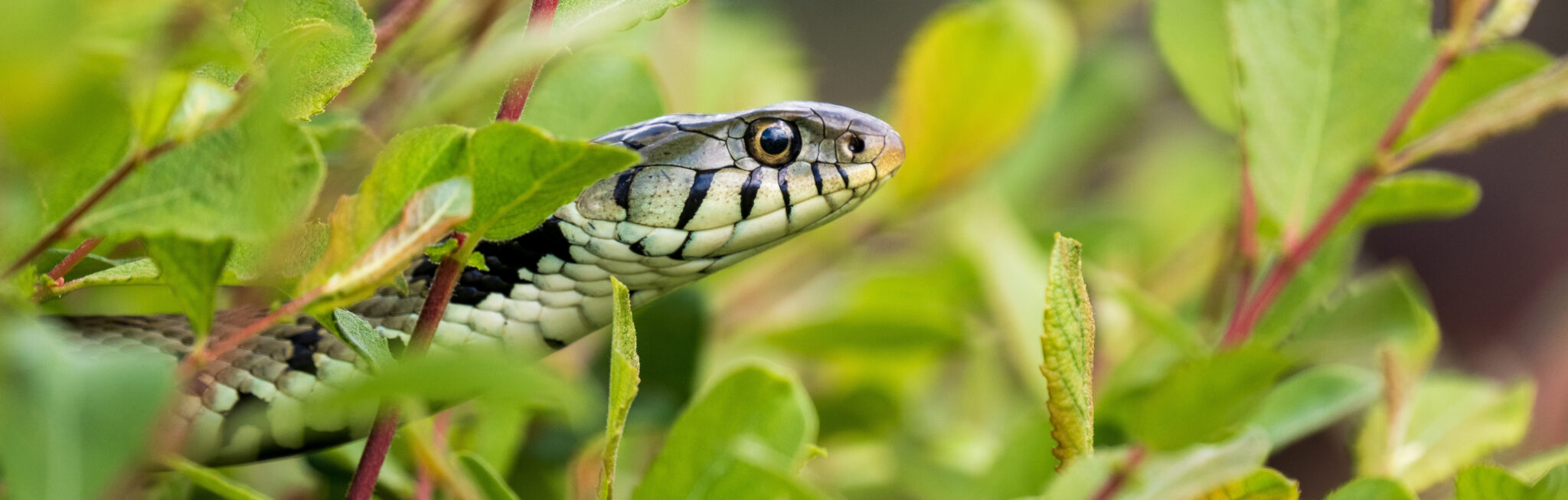
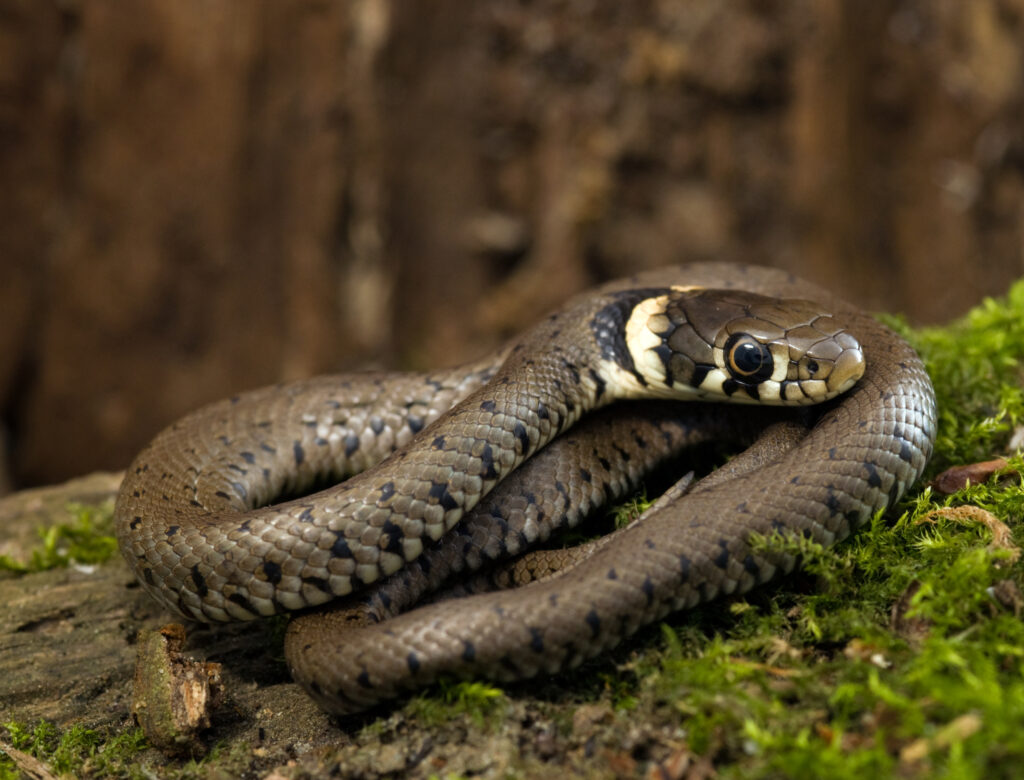
Head of a grass snake amongst green foliage.

Reptiles

The Park and Forest areas are home to four species of reptile, particularly in locations where heather, grasses, and gorse scrub are present.

These reptiles are drawn to open habitats that provide access to warm sunshine, which is essential for their survival and activity. The combination of vegetation and exposure creates ideal conditions for basking and thermoregulation. These environments support their daily behaviours such as hunting, mating, and sheltering.

To enhance conservation, we have created reptile refugia across the Estate. These refugia provide safe, insulated spaces for reptiles to hibernate during winter and shelter in adverse conditions, complementing the open, sunlit areas they need for feeding and breeding.

Conservation of these habitats, alongside refugia, is vital to maintain healthy reptile populations and biodiversity within our managed landscapes.

Adder

The adder, or viper, is Britain’s only native venomous snake. It’s a shy species found in heathland and and young woodland at Swinley Forest and Crowthorne Woods. Recognisable by its zigzag back pattern, it hibernates in winter and rarely bites unless provoked.

Find out more
Adder.
Grass snake

The grass snake is Britain’s largest native snake growing to over a metre long. It lives near ponds and wetlands, feeding on amphibians and fish. It’s regularly seen swimming at the edges of Virginia Water Lake and Obelisk Pond. 

Find out more
Young grass snake.
Slow-worm

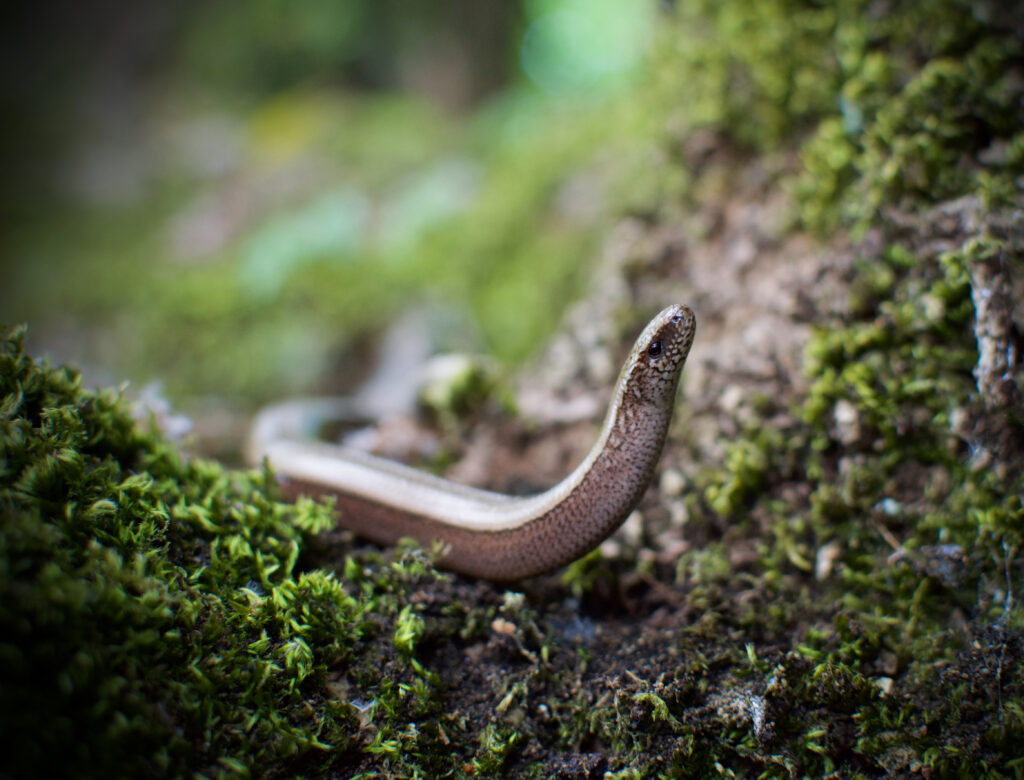
The slow-worm is a legless lizard, not a snake. It is the most widespread reptile across the Windsor Estate, being found in open woodland, parkland, rough grassland and heathland habitats. It prefers dense vegetation and often burrows into leaf litter and soft soils. 

Find out more
Slow-worm.
Viviparous lizard

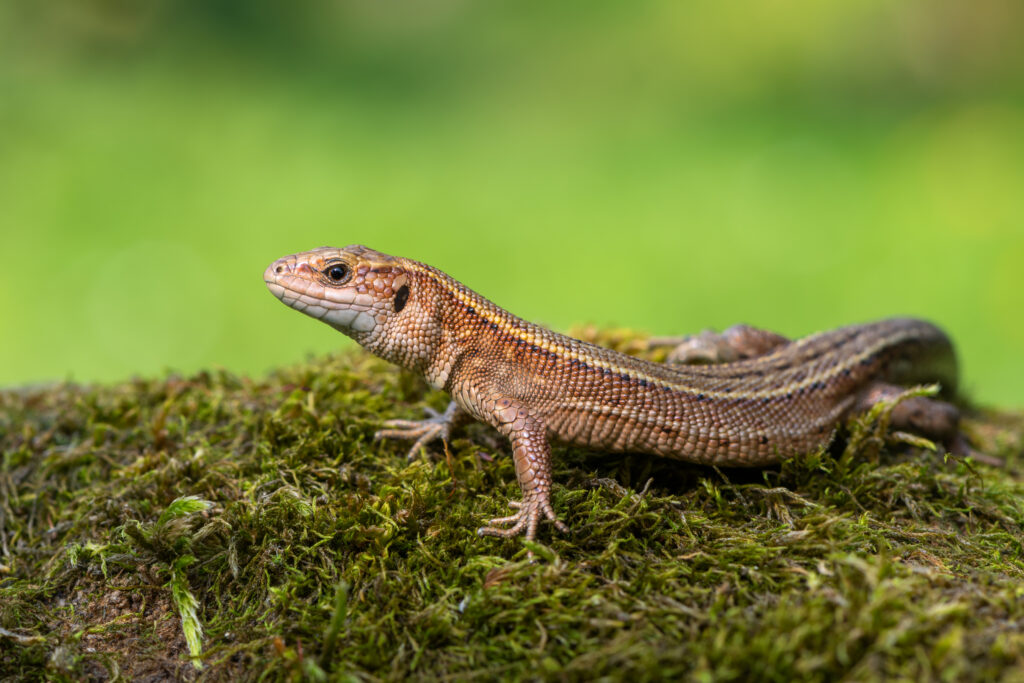
The viviparous lizard, also known as the common lizard, is the UK’s most widespread reptile. It gives birth to live young, not eggs, and can be found in young plantations and heathland at Swinley Forest. It hibernates in winter and is protected under UK law.

Find out more
Viviparous lizard.
Windsor Great Park
Windsor Great Park

More from us

News & Articles

FAQs

Careers

Get in touch

Contact us

Newsletter

Sign up to our newsletter

The Crown Estate logo.

User support

Accessibility

Site map

Our policies

Terms of use

Privacy statement

Cookies statement

Modern slavery act

Freedom of information

Designed by Bewonder*