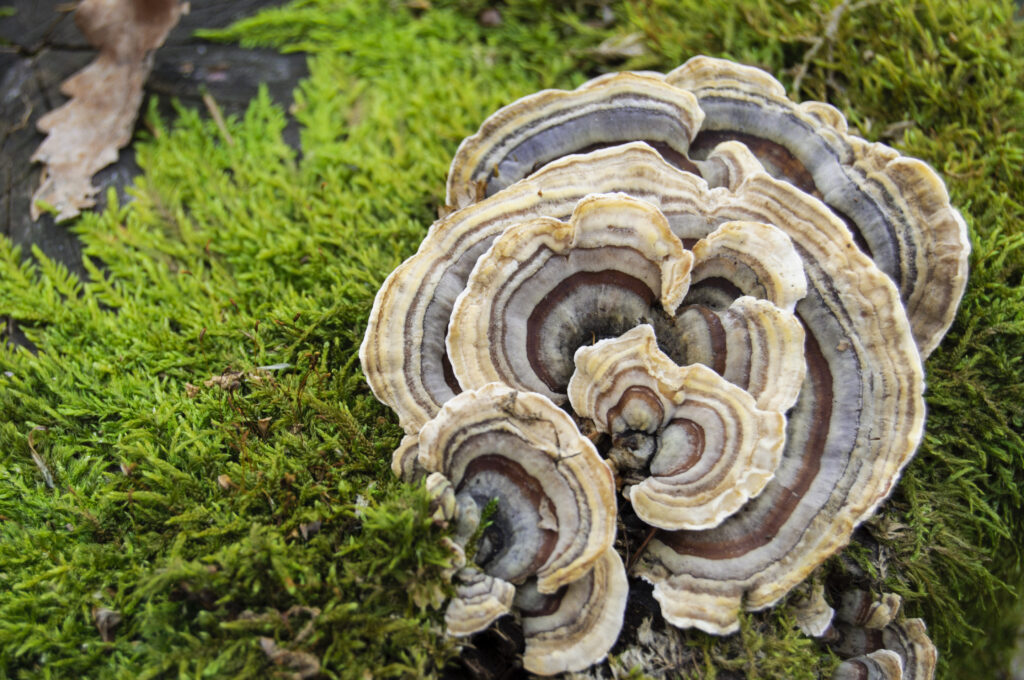
Chicken of the woods fungi.

Fungi

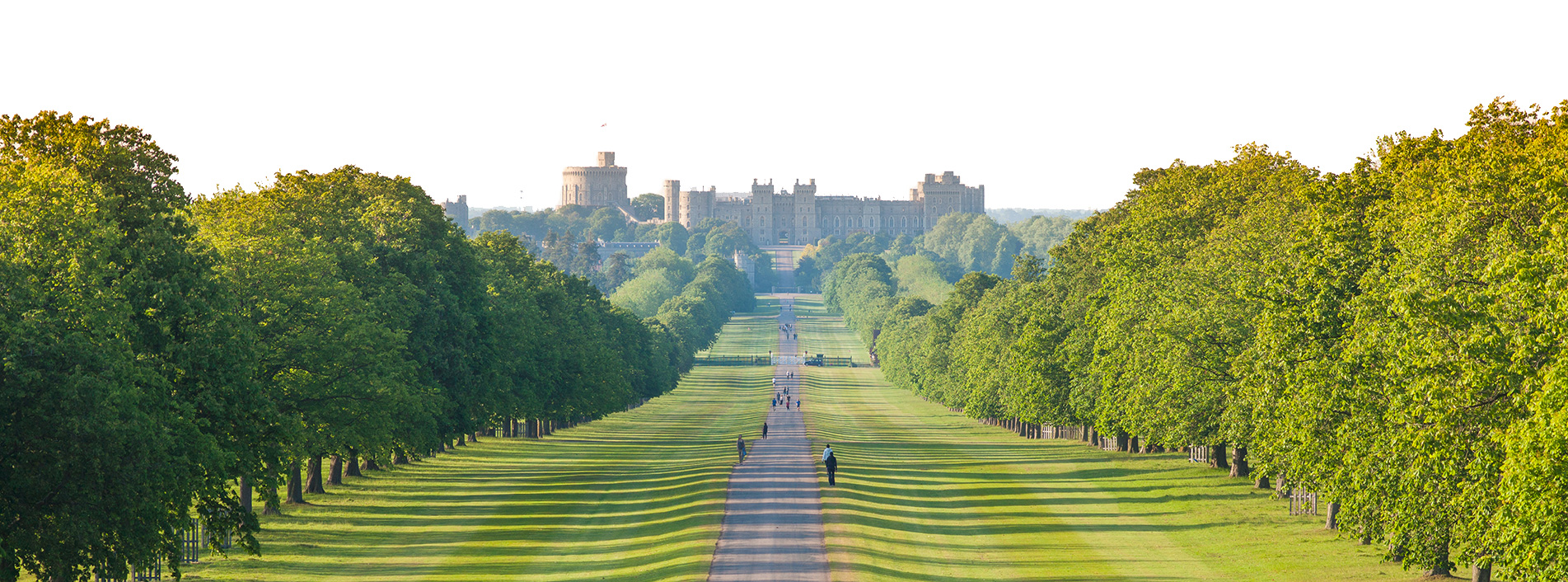
The Windsor Estate is a nationally important site for rare species and assemblages of fungi.

Over 1,000 species of macro-fungi (those that produce easily visible fruiting bodies) have been recorded on the Estate, 250 of which are rare with 43 of these rare species confined almost entirely to the Estate.

Fungi are important for many other species on the Windsor Estate; their threads in the soil form a network which helps trees and flowers to grow, they can create new habitats such as hollow trees and branches, and they provide food for many animals, bugs and slugs.

Fungi can be seen at any time of year, but late summer and autumn are generally best.

Here are just a few examples of what you might see as you walk around the Estate.
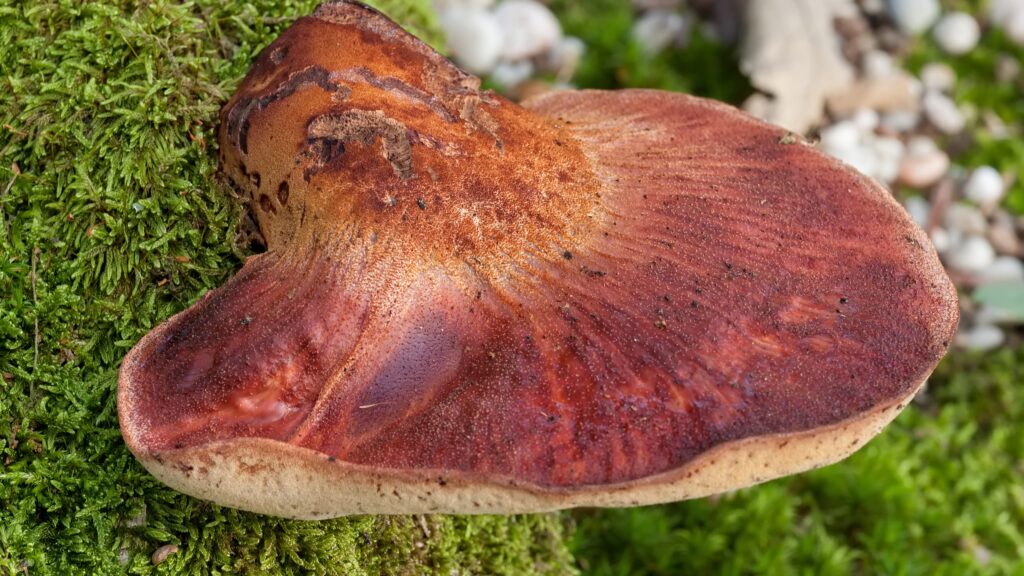
Beefsteak fungus

This bracket fungus can be found in broadleaved woodland, growing low on the trunks of oaks trees and sometimes on recently-cut oak stumps. As it matures this sticky fungus takes on the appearance of a raw cut of meat. Supporting in wood decomposition, the fungi gives the timber a rich colour known as brown oak.

Find out more
Beefsteak fungi.
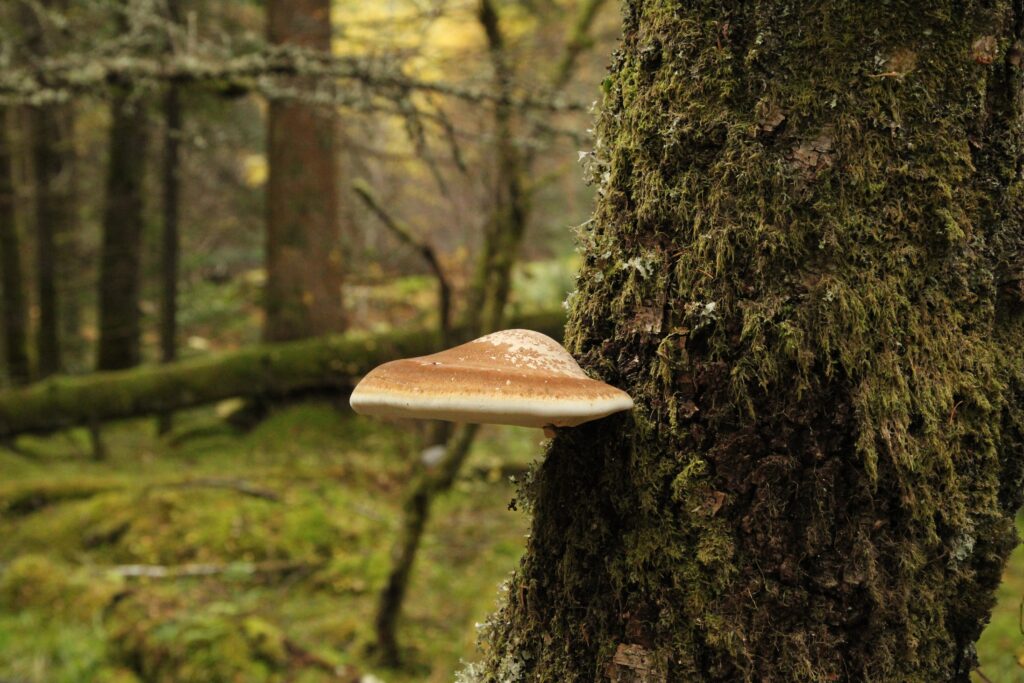
Birch polypore

As its name suggests, this fungus grows on Birch trees, both living and deadwood. This leathery bracket fungus has a rounded, coffee-coloured cap and white pores underneath.

Find out more
A semi-circular pale brown fungus growing from the trunk of a birch tree.
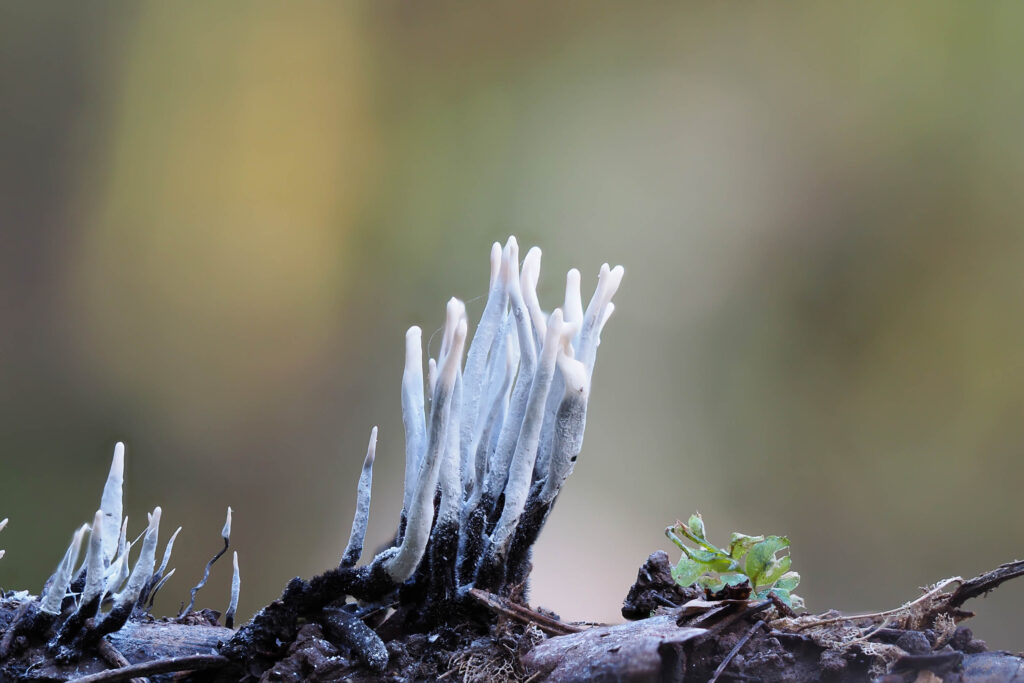
Candlesnuff fungus

Growing in groups on dead and rotting wood, these mushrooms look like a snuffed-out candle wick with a black base. The stem can become flattened and branched in a fork like an antler, so is sometimes also called ‘Stag’s Horn.’

Find out more
Erect, white, stick-like mushrooms growing on a branch.
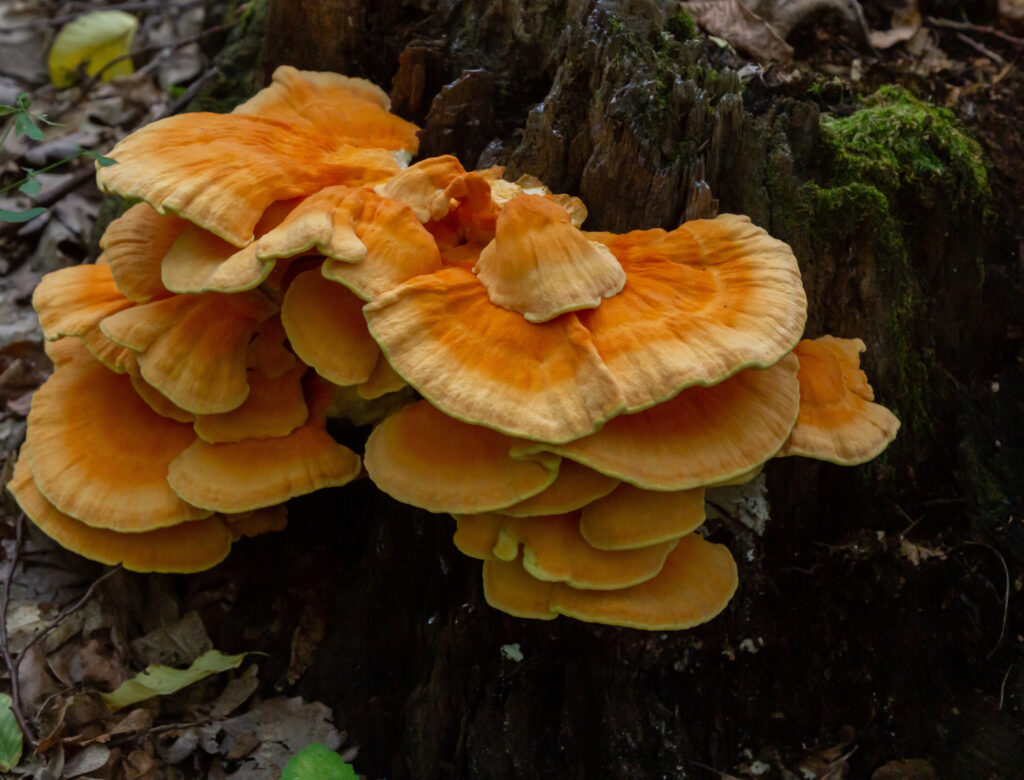
Chicken of the woods

The chicken of the woods is a striking sulphur-yellow bracket fungus found on oak and other hardwoods. It grows in shelf-like clusters and plays a key ecological role by decomposing wood and recycling nutrients in forest ecosystems.

Find out more
Chicken of the woods fungi.
Common earthball

This rounded mushroom is dirty yellow to brown in colour with no stem but covered in warty scales. When mature, the outer skin ruptures, creating a large hole which releases the spores to be dispersed by wind and rain.

Find out more
A spherical mushroom growing from the ground and covered in warty scales.
Common puffball

These rounded mushrooms grow on the ground in woodlands and grasslands, often occurring in small clusters. As they mature, the fruit becomes brown and a hole opens at the top. When the puffball is bumped by a passing animal or even hit by raindrops, a cloud of spores is released and will drift away on the wind to help spread the fungus.

Find out more
Puffball fungi releasing spores.
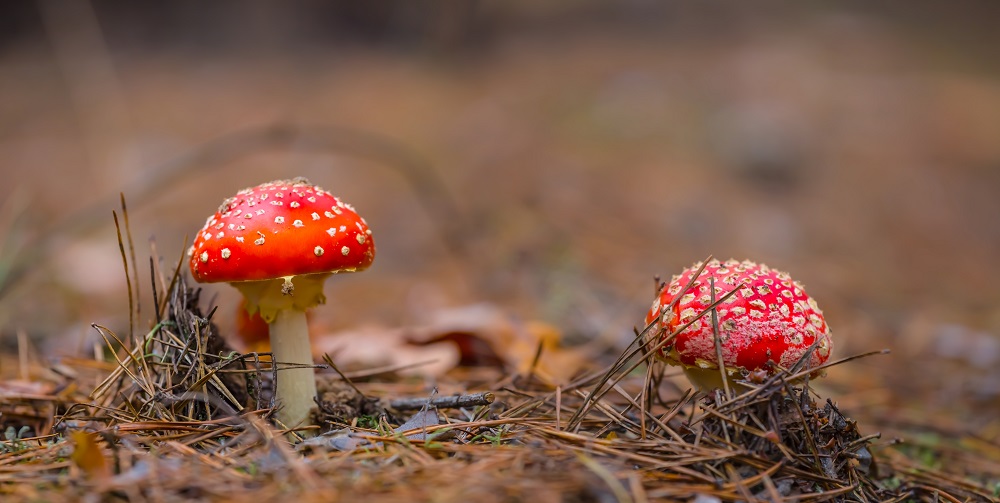
Fly Agaric

The fly agaric has a distinctive red cap with white spots and a white stalk, and can be found growing in woodland and heathland on light soils among birch, pine and spruce. The network of mycelium beneath the fruiting bodies wrap around the roots of these trees supplying them with nutrients taken from the soil in exchange for sugars produced by the trees.

Find out more
Close up of red Flyagaric mushroom.
Golden Spindles

This brightly coloured coral fungus can be found in unimproved grassland areas across Windsor Great Park. Like earthtongues and waxcaps, this species is one of nationally important assemblages that can be found in this rare grassland habitat,

Find out more
A mushroom with golden fronds growing from a trunk like coral.
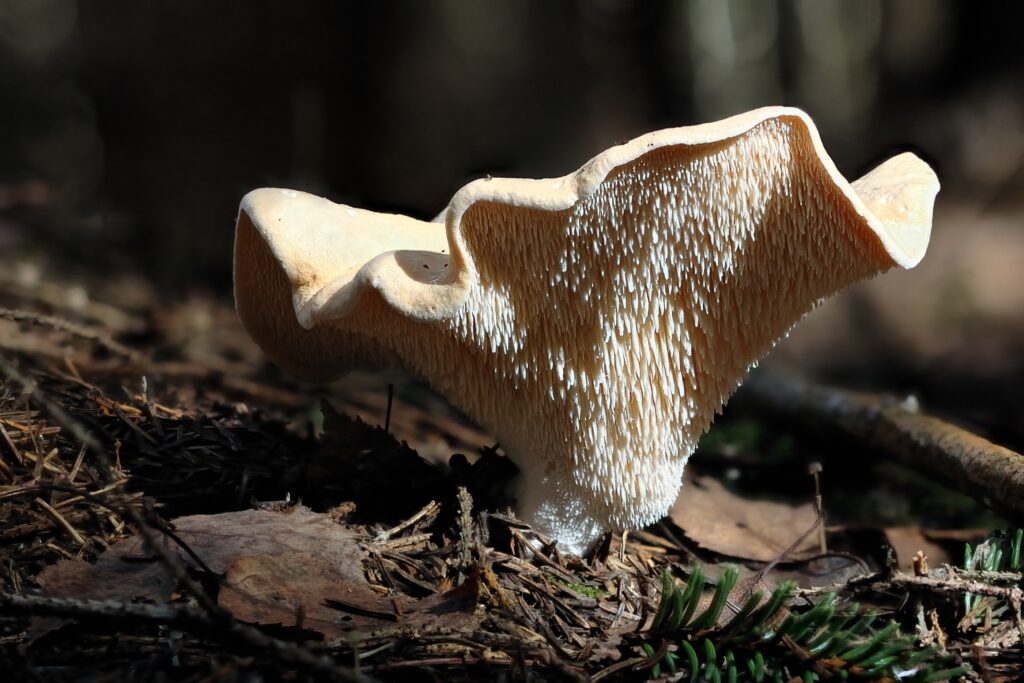
Hedgehog mushroom

The hedgehog mushroom is a widespread member of the assemblage of species known as tooth fungi because they have spines or teeth growing down from their cap. Windsor Great Park has some rare tooth fungi that grow in the woodland, often growing with the roots of trees like the chestnut.

Find out more
A mushroom cap with spines growing on the underside.
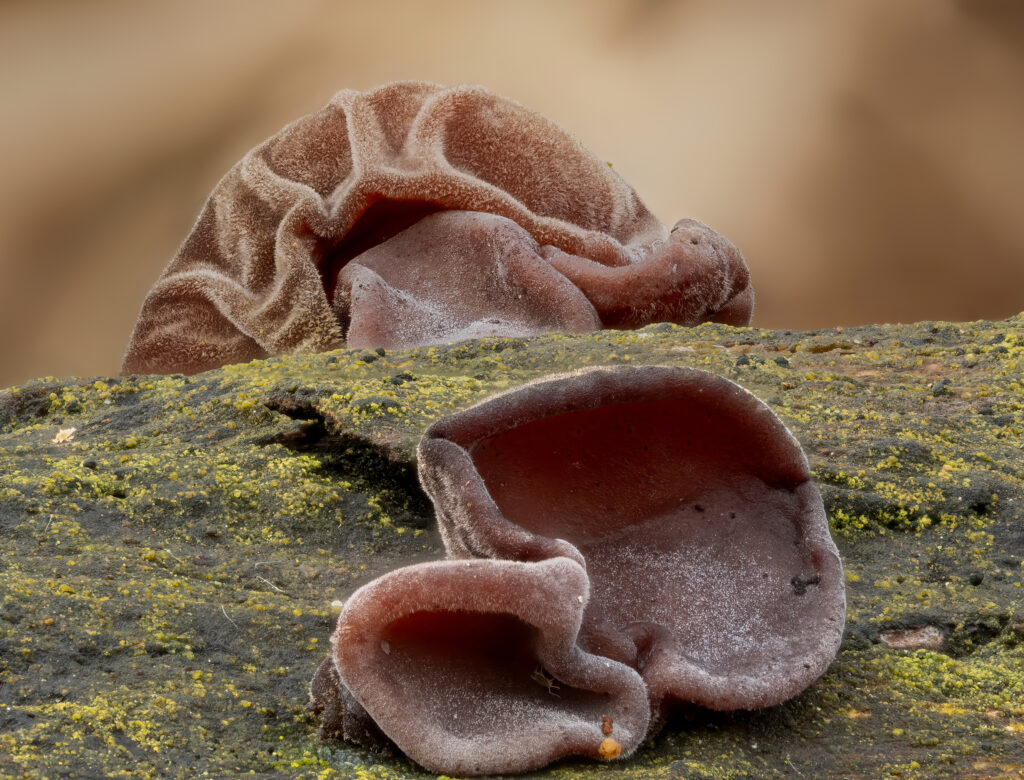
Jelly ear

The jelly ear fungus is a brown, gelatinous species with an ear-like shape. It grows mainly on elder and other broadleaf trees, playing a role in wood decomposition and nutrient recycling. Its host range has expanded in response to climate change.

Find out more
Jelly ear fungi.
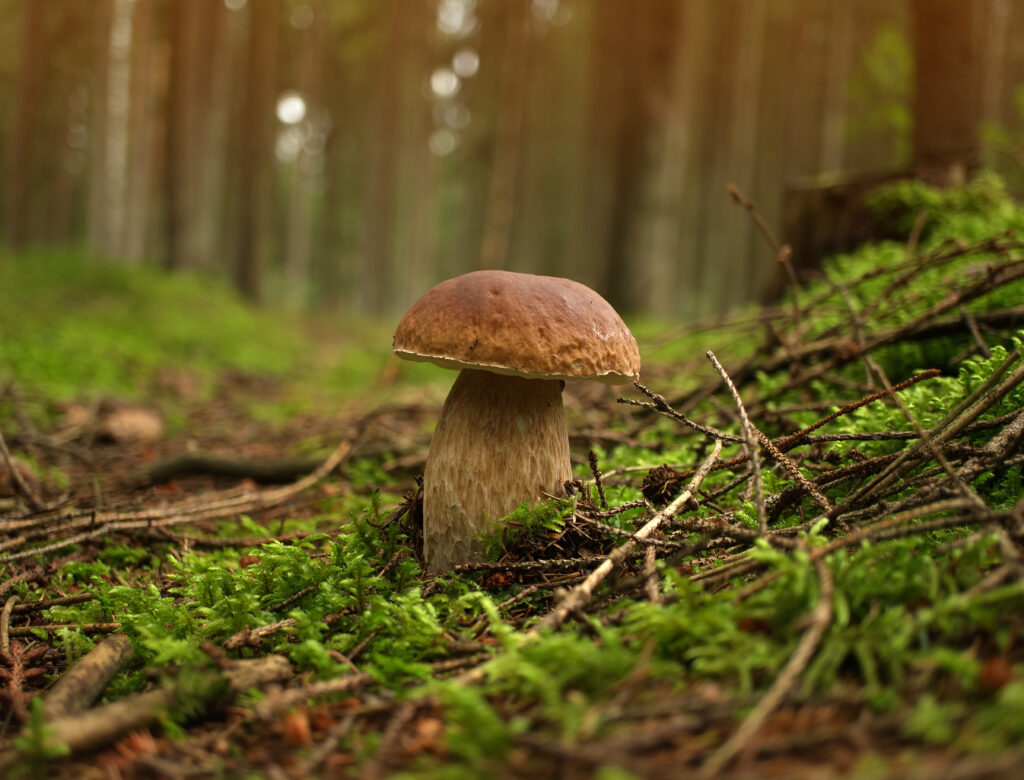
Penny bun

The penny bun, also known as cep or porcini, is a stout, brown-capped fungus found in broadleaf and coniferous woodlands. It forms symbiotic relationships with trees and appears from summer to autumn, playing a vital role in forest ecosystems by supporting nutrient exchange.

Find out more
Penny bun fungi.
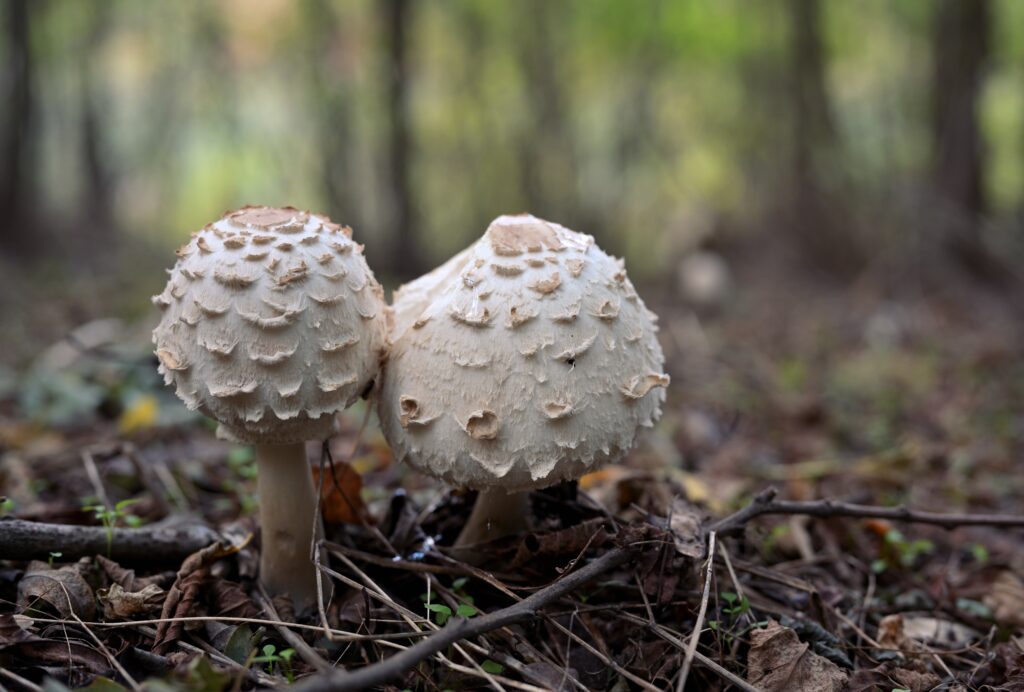
Shaggy Parasol

Named for its convex cap covered in raised brown scales, the shaggy parasol can be found near woods and hedges. The shaggy parasol has a habit of growing in rings. This is due to the network of mycelium beneath the ground that will start at a single point and grow outwards in a circular motion searching for more nutrients.

Find out more
Parasol fungus
Turkeytail

A colourful fungus of semi-circular caps that grow in tiers around tree trunks and deadwood. The caps themselves are thin and tough, with very clear, velvety, concentric rings that can come in a variety of colours.

Find out more
Semi-circular fungus growing from a branch in colourful concentric rings.
Windsor Great Park
Windsor Great Park

More from us

News & Articles

FAQs

Careers

Get in touch

Contact us

Newsletter

Sign up to our newsletter

The Crown Estate logo.

User support

Accessibility

Site map

Our policies

Terms of use

Privacy statement

Cookies statement

Modern slavery act

Freedom of information

Designed by Bewonder*