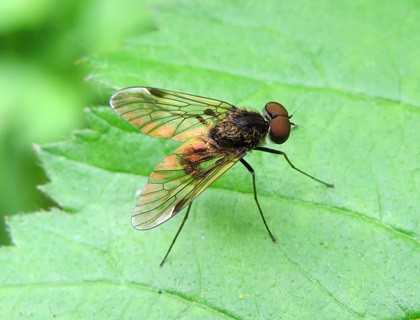
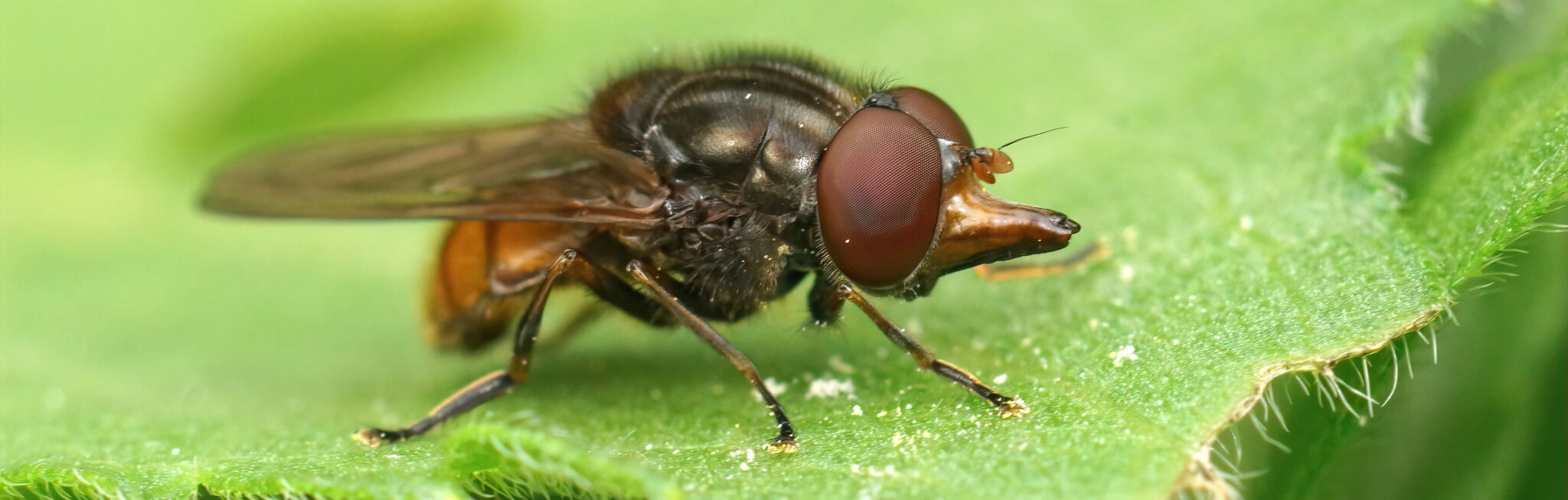
Common snout fly.

Flies

Over 1,800 species of fly have been recorded at the Windsor Estate, including the distinctive royal splinter crane fly – a species found nowhere else. Its habitat preferences remain largely unknown.

The exceptional diversity of specialist flies is one of the key reasons why the Windsor Estate has been designated a Site of Special Scientific Interest (SSSI), and ongoing surveys confirm its continued national significance.

Specialist research into fly populations has revealed that much of this ecological interest stems from the rich variety of decaying wood microhabitats, which support the complex life cycles of these species.
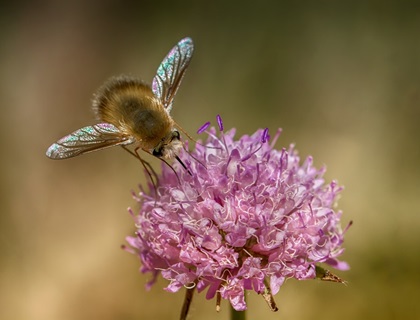
Bee Fly

The Bee-fly is a fluffy, bee-mimicking fly with a long proboscis (long stiff, straw like tongue) for sipping nectar. Common in spring, it hovers around flowers but neither bites nor stings. Its larvae parasitise solitary bee nests, making this harmless pollinator an intriguing part of Britain’s wildlife.

Find out more
Bee Fly
Caddis Fly

Caddisflies are a large order of insects that can be found in all kinds of wetlands. The larvae are known for making cases to pupate in, gathering stones, sand and leaves, and wrapping them with silk.

Find out more
Caddis fly
Comb-Horned Crane Fly

The Comb-Horned Crane Fly is an exotic-looking insect found in Windsor Estate’s ancient woodlands. Males are notable for their striking comb-like antennae, while larvae develop in decaying wood, playing a vital role in nutrient recycling. Adults are short-lived and do not feed, relying on energy stored from their larval stage. This species highlights the Estate’s importance for rare saproxylic invertebrates.

Comb horned cranefly Ctenophora 420 x 320
Downland Villa

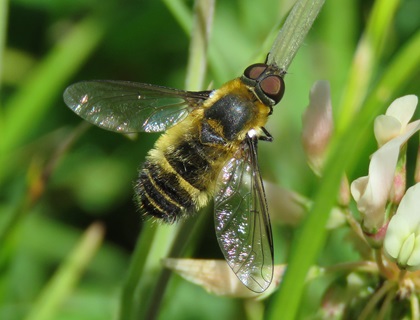
Despite its name and small size, which can cause it to be mistaken for a bee, it is a type of fly. It has a furry body and distinctive delta-shaped wings. It can be distinguished from other bee-fly species by its short fur and the striped bands across its abdomen. It is typically found in flower rich grassland, as well as in clearings of woods on the Estate.

Find out more
Downland Villa Fly
Hornet Mimic Hoverfly

With black-and-yellow markings, the hornet mimic hoverfly looks like its namesake, but is harmless to us. This mimicry helps to protect it from predators while it searches for nectar. The hornet mimic hoverfly is mainly orangey-yellow on the abdomen, with dark bands and a dark brown thorax. It is our largest hoverfly. It can be distinguished from the hornet by its much larger eyes, broader body and the lack of a sting.

Find out more
Hornet mimic hoverfly
Marmalade Hoverfly

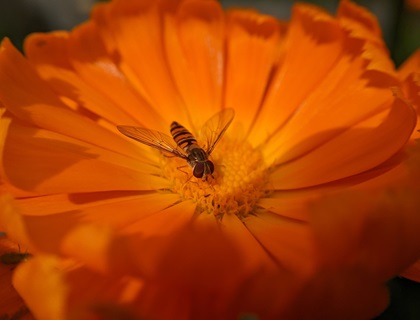
The marmalade fly is orange with black bands across its body. It feeds on flowers like tansy, ragwort and cow parsley in gardens, hedgerows, parks and woodlands.

Find out more
A closeup of a marmalade hoverfly in the middle of a pot marigold flower
Royal Splinter Crane Fly

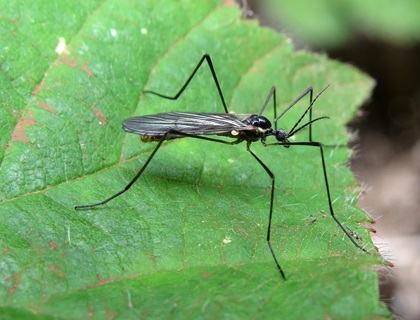
The Royal Splinter Crane Fly is an extremely rare and medium-sized crane fly. It is known from only two locations worldwide: Windsor Great Park and a single site in Slovakia. This species is classified as endangered in the UK. It requires the decomposing matter found inside the hollow trunks and stumps of ancient beech trees.

Find out more
Royal Splinter Crane Fly
Snipe Fly

The Snipe Fly is a slender, long-legged fly, 8–15 mm long, with a tapering abdomen and piercing mouthparts. Adults inhabit damp woodlands and meadows, while larvae live in soil or water. Predatory in nature, they help control insect populations and rarely bite humans.

Snip fly Chrysopilus cristatus 420
Stilt Legged Fly

The Band-winged Stilt-legged Fly, is an extremely rare and striking insect associated with ancient beech woodlands. It has a particularly slender, shiny black body with distinctive dark bands on its wings.

Stilt legged fly
Windsor Great Park
Windsor Great Park

More from us

News & Articles

FAQs

Careers

Get in touch

Contact us

Newsletter

Sign up to our newsletter

The Crown Estate logo.

User support

Accessibility

Site map

Our policies

Terms of use

Privacy statement

Cookies statement

Modern slavery act

Freedom of information

Designed by Bewonder*