Unlocking flavour: A guide to the art of dry-aging meat

Published by
Michael Gale
Butchery Development Manager
Jan 25 2026
Share this article
Dry-aging comes to Windsor Farm Shop
Dry aging has long been regarded as the gold standard for achieving deep, complex, and uniquely tender beef. With precise control of temperature, humidity, and airflow, dry aging transforms quality beef into an extraordinary culinary experience.
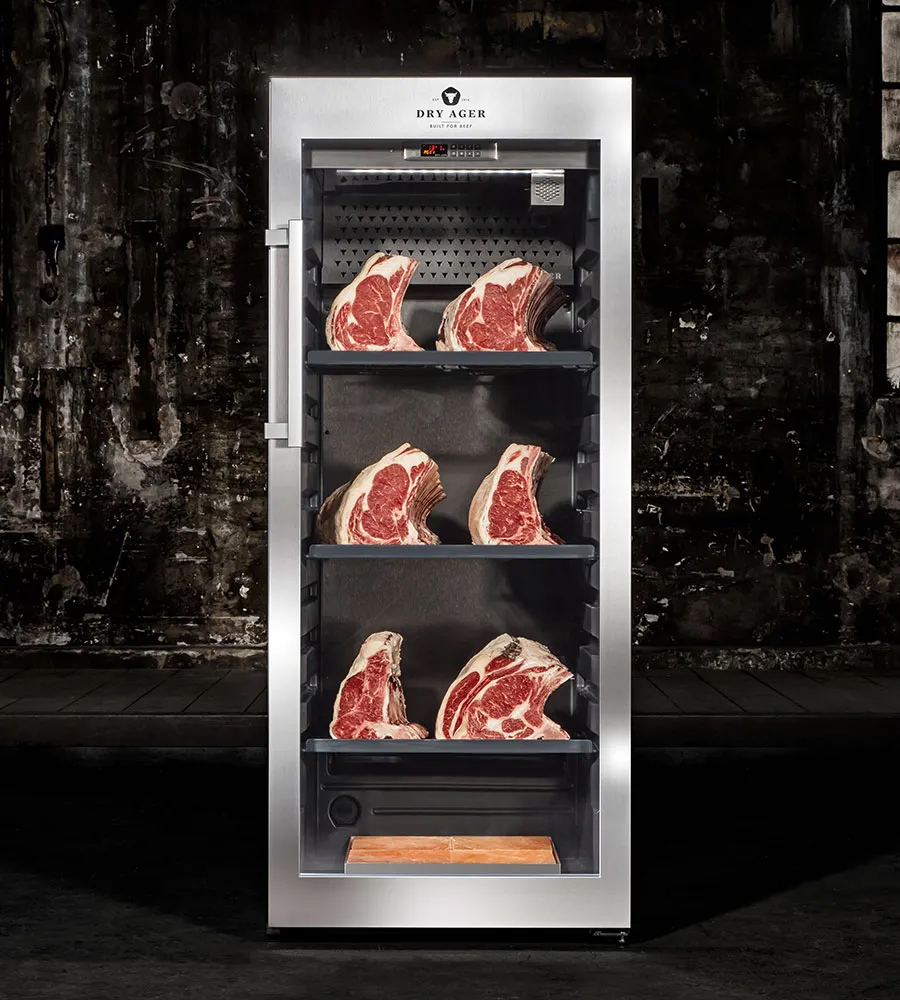
Windsor Farm Shop is now embracing the growing passion for premium beef by installing two dedicated dry-aging fridges.
These new additions allow our Craft Butchers to:
- Offer consistently aged, premium cuts
- Experiment with different ageing durations and cuts
- Display the process visually, helping our customers see how the flavour is created
- Support the shop’s positioning as a destination for high‑quality British produce
For our customers, this means more choice, more flavour, and the opportunity to enjoy the unique character of properly dry‑aged beef – all crafted with care on the Windsor Estate.
What exactly is dry-aging?
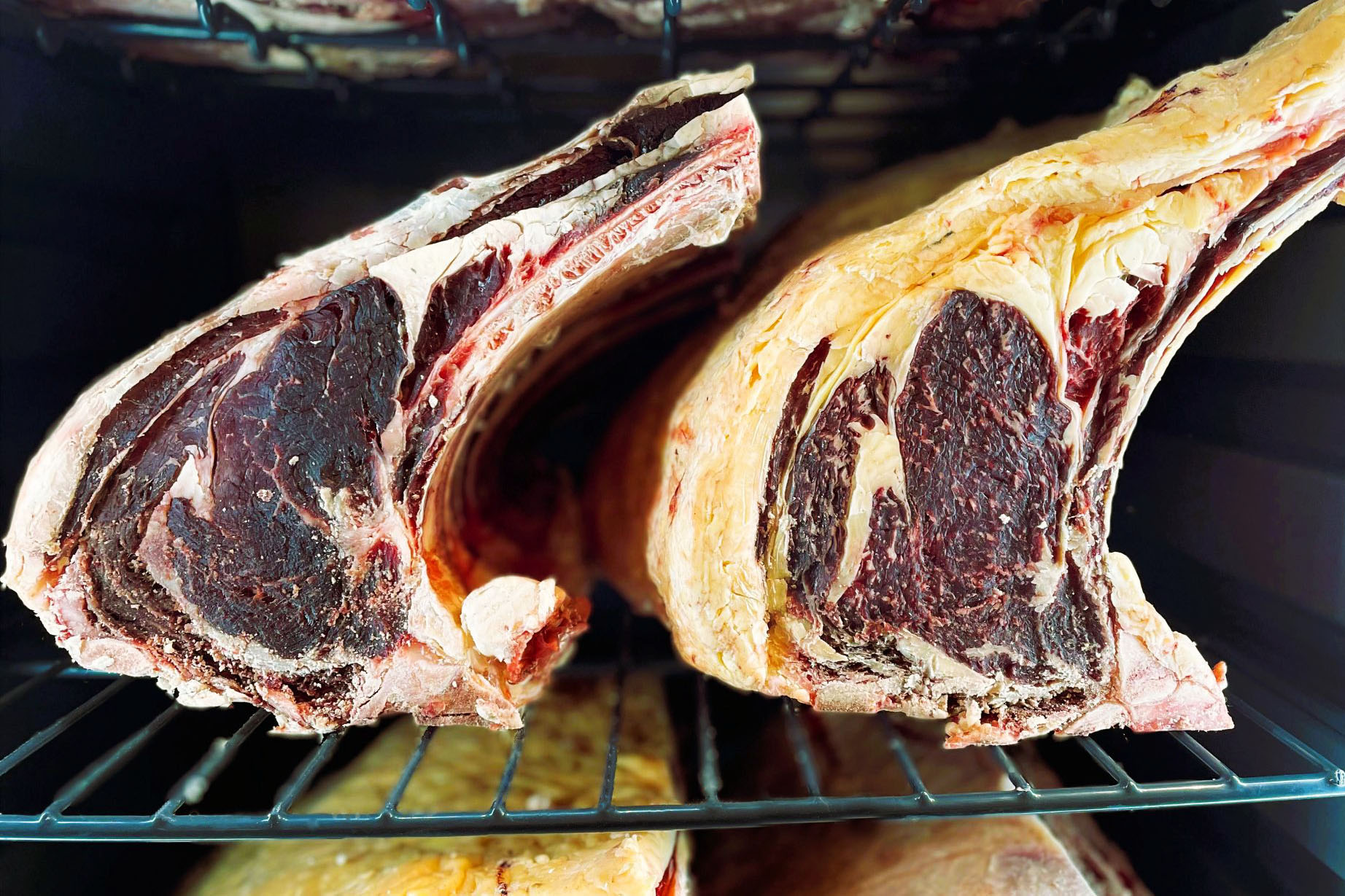
Dry‑aging is a controlled process in which large cuts of beef – typically rib, striploin, or sirloin – are aged in a specialist environment for several weeks. During this period:
- Enzymes naturally tenderise the meat, breaking down tough connective tissues
- Moisture gradually evaporates, intensifying the beef’s natural flavours
- A protective crust forms, which is trimmed away before cutting and cooking
The result is beef with remarkable tenderness, aroma, and a rich, nutty flavour profile.
The science behind the flavour
Enzymatic breakdown
Over time, the meat’s natural enzymes gently dissolve structural proteins, resulting in a more tender bite. This process is comparable to slow natural tenderisation but with far greater nuance and depth.
Moisture loss and concentration
As moisture evaporates, the beef’s flavour becomes more intense. Think of it like reducing a sauce – what remains is richer, more complex, and more savoury.
Aroma development
Depending on how long the meat is aged, flavours can evolve from subtle nuttiness at 21 days to bold, blue‑cheese‑like characteristics after 60+ days.
Choosing the right cut
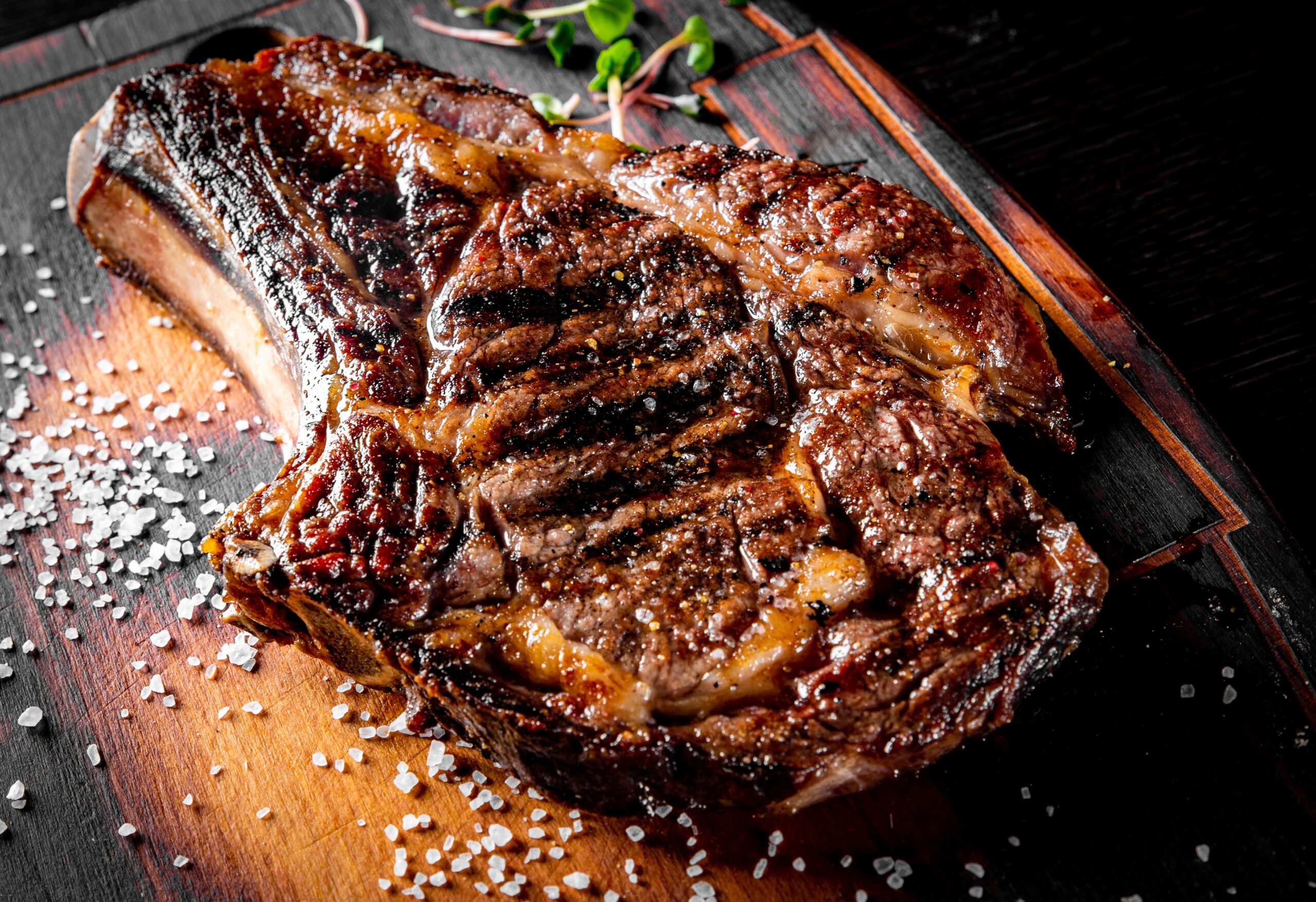
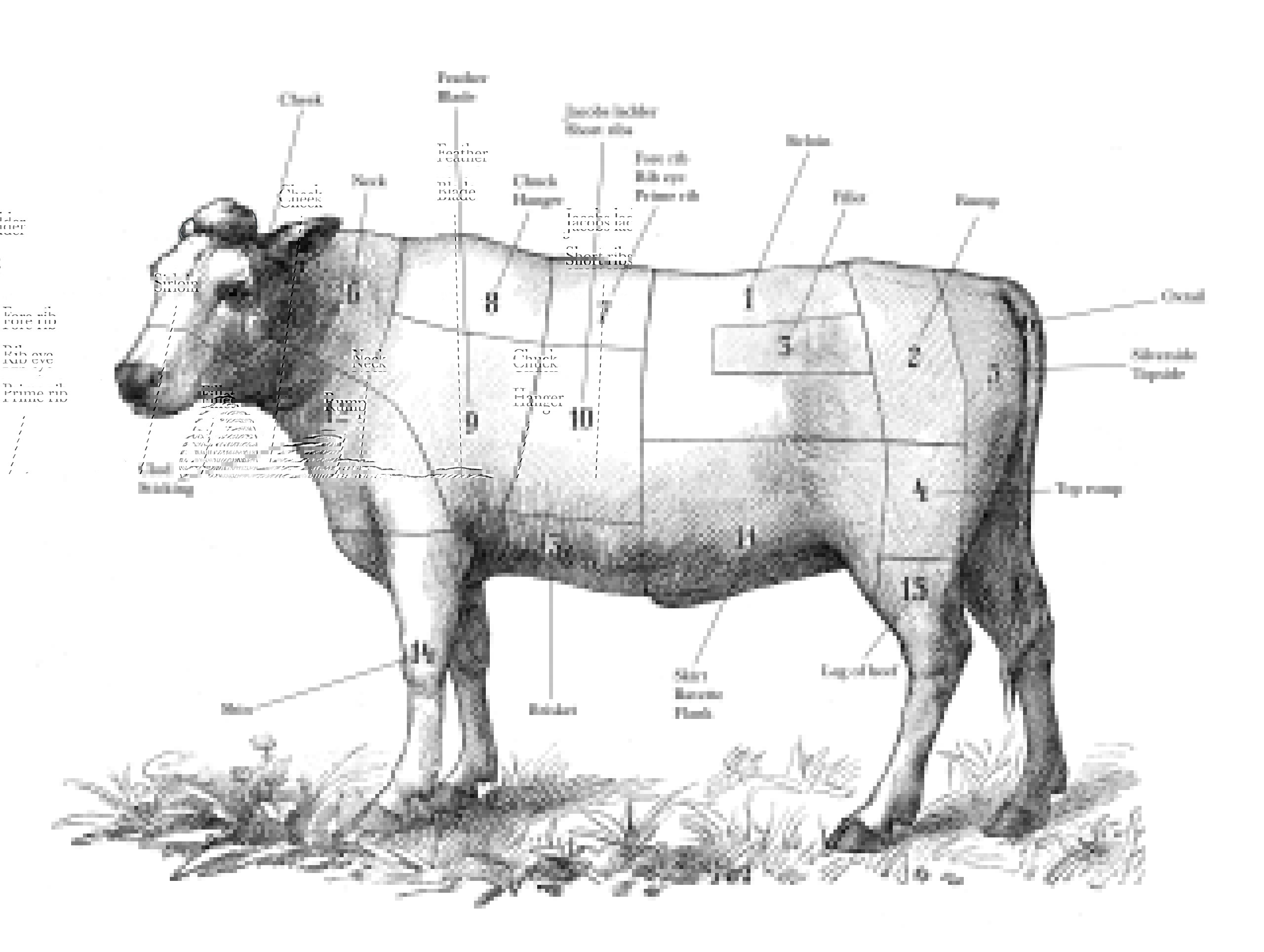
Not every cut is suitable for dry‑aging. The best candidates are:
- Bone-in rib
- Striploin
- Top sirloin
- Cuts with good fat coverage
Fat protects the meat and enhances flavour during the process.
Creating the perfect aging environment
Achieving great dry‑aged beef requires consistency and precision:
- Temperature: 1–3°C
- Humidity: 75–85%
- Airflow: Steady and continuous
Modern dry‑aging fridges like the brand that we are now using at Windsor Farm Shop maintain these conditions with scientific accuracy.
Cooking dry-aged meat

Dry‑aged beef behaves slightly differently in the kitchen:
- It cooks faster because of reduced moisture
- It benefits from a hot sear and gentle finishing
- It shines with simple seasoning – salt and pepper are often enough
Reverse‑searing is a popular method that helps preserve the nuanced flavours.
Share this article